
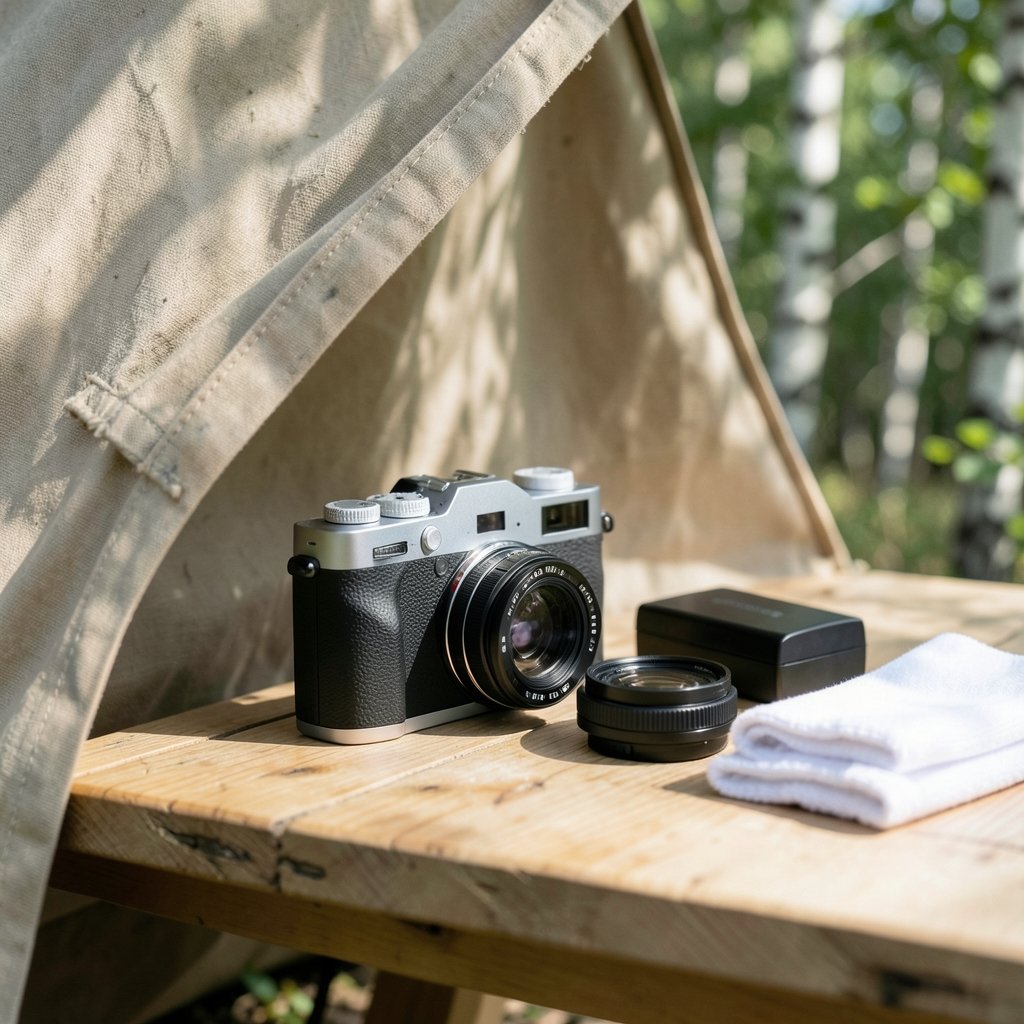
Is the Fujifilm X-T30 III the small mirrorless camera that finally gets everything right, or just another spec-sheet refresh in a crowded field? That question matters more than usual, because the X-T30 line has always sat in an awkward but appealing spot: compact enough to carry all day, capable enough for serious work, and priced below the flagship bodies. Understanding what this model is, who it suits, and where it falls short is the difference between a camera that gets used constantly and one that lives in a drawer.
What the X-T30 Line Represents
Fujifilm’s X-T30 family is the trickle-down branch of the X series. The original X-T30 arrived in February 2019, and the X-T30 II followed in September 2021. Both packed the same 26.1 MP X-Trans CMOS 4 sensor and X-Processor 4 combination into a body noticeably smaller and lighter than the flagship X-T4 and later X-T5, while keeping the physical dials that Fujifilm users love.
That formula is the heart of the appeal. You get an APS-C sensor rather than a smaller one-inch or Four Thirds chip, which means better low-light behavior and more control over shallow depth of field. You also get Fujifilm’s film simulation modes, a genuinely useful set of color profiles that many photographers use as a starting point instead of editing raw files from scratch.
The trade-offs are consistent across generations: fewer direct controls than the flagship bodies, a smaller electronic viewfinder, no in-body image stabilization on the earlier models, and a single card slot. Anyone stepping up from a beginner camera should weigh those omissions carefully, since the gap between an entry-level body and a mid-range one is often smaller than the marketing suggests.
Where the Third Generation Fits

Here is the honest part that a lot of coverage glosses over: the X-T30 III is not a camera you should buy on the strength of a name alone. Specifications, pricing, and availability need to be confirmed against the manufacturer’s own published material before any purchase decision, because rumor cycles and regional launch timing routinely produce conflicting reports.
What can be said with confidence is how a third-generation X-T30 would need to justify itself. The X-T30 II was a modest refresh rather than a rebuild, retaining the same sensor and processor as its predecessor and leaning on firmware improvements. A third generation that deserves the name would need to improve on at least three fronts:
| Area | What Buyers Should Look For | Why It Matters |
|---|---|---|
| Autofocus | Subject detection for people, animals, and vehicles | The II’s tracking felt dated next to newer rivals |
| Stabilization | In-body stabilization or improved electronic stabilization | Handheld video and slow shutter work |
| Video | Higher frame rates, better oversampling, cleaner HDMI output | Hybrid shooters outnumber stills-only buyers now |
| Handling | Larger grip, brighter viewfinder, joystick | Small bodies get cramped with big lenses |
If a new model delivers on autofocus and stabilization, it becomes a genuinely different camera. If it only adds a mode dial tweak and a new film simulation, existing X-T30 II owners can safely sit it out.
Handling and Ergonomics in Real Use
Compact bodies photograph beautifully in reviews and behave differently in the hand. The X-T30 chassis is small enough that a long zoom lens makes it front-heavy, and the grip is shallow. Photographers with larger hands often add a thumb rest or a baseplate grip, which quietly erases part of the size advantage.
The dial layout is the bigger story. Shutter speed, exposure compensation, and aperture (on lenses with aperture rings) are physical controls, so you can read your settings with the camera switched off. That is a real workflow benefit for street and travel photography, where you often want to raise the camera and shoot without chimping at a screen.
Practical tips that actually help on this body:
- Set the rear command dial to adjust ISO, since there is no dedicated ISO dial.
- Assign the function buttons before your first outing, not after you miss a shot.
- Use the electronic shutter in quiet settings, but watch for banding under artificial light.
- Turn on the histogram in the viewfinder rather than relying on the exposure meter alone.
- Carry a spare battery. Small bodies mean small batteries, and mirrorless cameras drain them faster than DSLRs.
A common mistake is buying the smallest possible bag to match the small body, then discovering that a zoom lens and a spare battery do not fit. Sizing up slightly is almost always the right call; a look at best camera bags shows how much difference a few centimeters of internal depth makes. (Best camera bag for hiking) (Mirrorless camera)
Image Quality Expectations
The APS-C sensor in this line has been well understood for years. In good light, JPEG output straight from camera is excellent, and the film simulations give you genuinely usable color without editing. In poor light, the sensor holds up reasonably well up to moderate ISO settings before noise reduction starts smearing fine detail.
Dynamic range is the area where expectations should be calibrated. Highlight recovery from a single raw file is limited compared with larger sensors, so exposing for the highlights and lifting shadows in post is the reliable approach. Fujifilm’s raw files are supported by major editing software, though some editors render X-Trans files differently, so it pays to test your own workflow rather than trusting forum claims.
For anyone moving up from a smaller sensor, the jump in control over depth of field is the most tangible change. Portraits separate from backgrounds more cleanly, and available-light shooting becomes far less of a compromise.
Lenses, Cards, and the Accessories That Matter
A camera body is only half a system. Fujifilm’s X-mount lineup includes compact primes that pair naturally with a small body, and those primes are usually the better first purchase than a slow kit zoom.
Storage deserves more attention than it usually gets. High frame rates and 4K video push write speeds hard, and an underperforming card causes buffering at exactly the wrong moment. Matching the card’s rating to the camera’s recording demands is worth ten minutes of reading; a breakdown of SD card V30 vs V60 vs V90 speed classes explains which tier actually matters for burst shooting versus video.
Two other accessories earn their place quickly. A second battery is not optional. And a screen protector plus a small microfiber cloth prevents the kind of slow wear that makes a camera look tired after a year of daily carry.
Who Should Buy It, and Who Should Not
The X-T30 line suits photographers who want a light, capable body with direct controls, who shoot a mix of stills and casual video, and who value color straight out of camera. It also suits travelers who have learned that the camera you carry is the camera that takes pictures.
It suits less well anyone who needs dual card slots for paid event work, who shoots handheld video in low light and needs stabilization, or who regularly uses long, heavy lenses. Those buyers are better served by a larger body in the same system, even at higher cost and weight.
A realistic checklist before buying:
| Question | If Yes | If No |
|---|---|---|
| Do you shoot mostly in daylight or with fast primes? | Strong fit | Consider a stabilized body |
| Do you need two card slots? | Look elsewhere | Fine |
| Is compact size a priority? | Strong fit | A larger body may handle better |
| Do you shoot handheld video often? | Check stabilization carefully | Fine |
| Are you already in the X-mount system? | Easy upgrade | Factor in lens cost |
Common Mistakes and What Works in Practice
The most frequent error is buying on specification rather than on handling. A camera that feels wrong in the hand stays home, no matter how good its sensor scores. Handling it in a store, even briefly, resolves more doubt than any comparison table.
The second mistake is underestimating the learning curve of a dial-driven interface. Photographers raised on mode dials sometimes find the aperture-ring-plus-shutter-dial approach confusing for the first week. It becomes second nature, but plan for that adjustment period rather than scheduling a paid shoot on day two.
The third is skipping the firmware update on a used body. Fujifilm has historically added features through firmware, so checking the installed version is one of the first things to do after unboxing. Similarly, anyone buying used should verify the shutter count and check the sensor for dust before the return window closes.
Conclusion
The Fujifilm X-T30 III sits in a lineage defined by a simple promise: flagship-adjacent image quality in a body you will actually carry. Whether a given generation delivers on that promise depends on how much it improves autofocus, stabilization, and video rather than how many new color profiles it adds. Buyers should confirm current specifications and pricing against official sources, handle the camera if possible, and budget for a spare battery, a fast enough memory card, and a bag with a little breathing room. Get those basics right and the camera disappears into the shooting experience, which is exactly what a small mirrorless body is for. For anyone weighing a first serious camera against a step-up model, the honest answer is that the X-T30 line rewards photographers who know what they shoot and choose accordingly, rather than those chasing the newest badge on the body.
Frequently Asked Questions
Is the Fujifilm X-T30 III a full-frame camera?
No. The X-T30 line uses an APS-C sensor, which is smaller than full-frame but larger than Four Thirds and one-inch sensors. That size sits in a sweet spot for travelers and enthusiasts: meaningfully better low-light performance and depth-of-field control than compact cameras, without the size and lens cost of a full-frame system.
How is the X-T30 III different from the X-T30 II?
That depends entirely on the official specification sheet, and buyers should verify it directly rather than relying on secondhand summaries. The X-T30 II was itself a modest refresh of the original, keeping the same sensor and processor. A third generation would need real gains in autofocus, stabilization, or video to justify an upgrade from the II.
Does the X-T30 III have in-body image stabilization?
Earlier X-T30 models did not include in-body stabilization, relying instead on lens-based stabilization where available. This is one of the most important specifications to confirm for any new generation, especially for anyone planning handheld video or slow-shutter work in low light.
Is the X-T30 III good for beginners?
It can be, but it is not the most forgiving first camera. The dial-based interface teaches exposure fundamentals well, yet the lack of automated scene modes and the compact grip can frustrate newcomers. Beginners who want to learn manual control will grow into it; those who want point-and-shoot simplicity may prefer an entry-level body.
What memory card does the X-T30 III need?
Match the card to the camera’s recording demands. For stills and moderate bursts, a mid-tier UHS-I card is usually sufficient. For 4K video or long high-speed bursts, a faster UHS-II card reduces buffering. Check the manufacturer’s recommended card list before buying, since some cards cause recording errors in specific bodies.
Should I buy the X-T30 III or a used X-T30 II?
If the newer model’s improvements center on autofocus and stabilization, and you shoot moving subjects or handheld video, the newer body is worth the premium. If you mainly shoot stills in good light, a clean used X-T30 II delivers most of the image quality for considerably less money, leaving budget for a good prime lens instead.



