
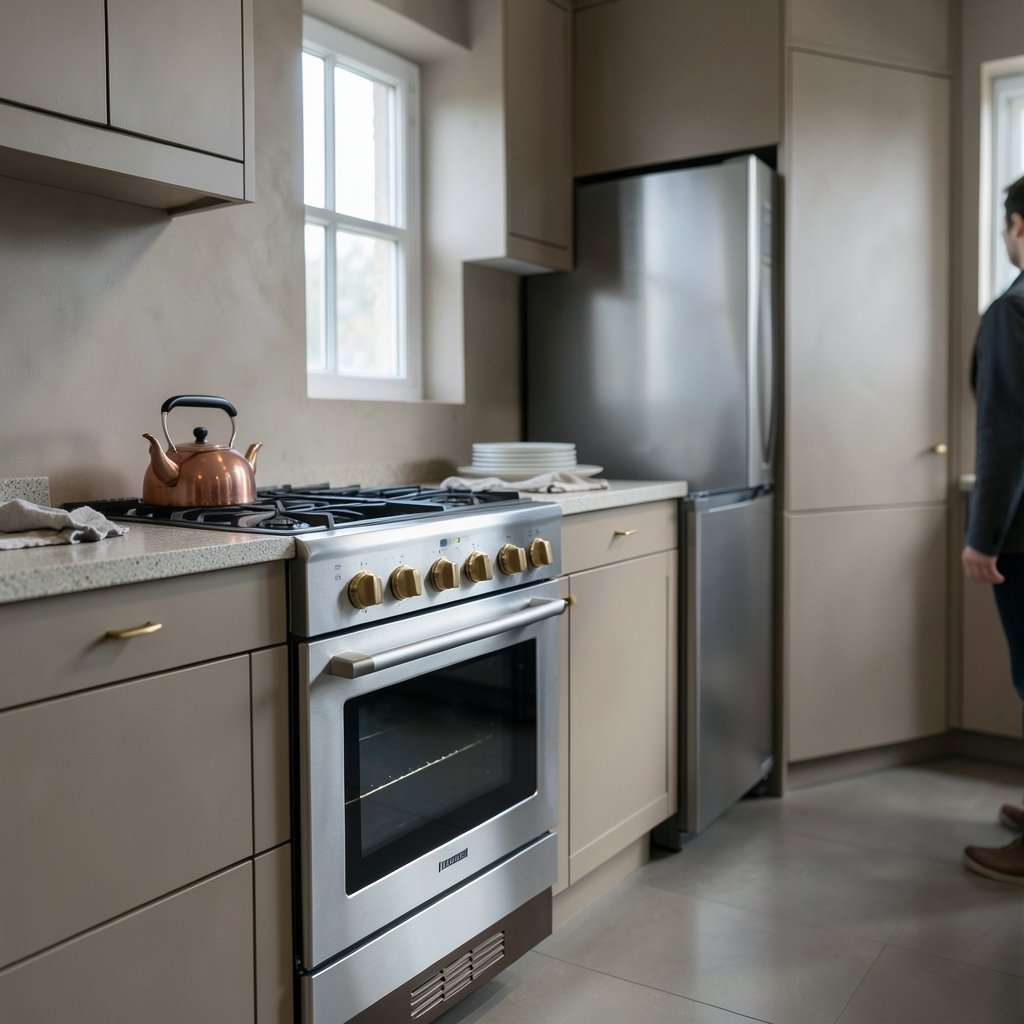
What separates a genuine high-end appliance showroom from a store that simply stocks expensive refrigerators? The answer matters more than most buyers expect. A showroom visit can be the difference between a kitchen that performs beautifully for twenty years and one that fights you every single day.
The phrase “high-end appliance showroom near me” gets typed into search bars thousands of times a day, usually by someone standing in a half-demolished kitchen or staring at a design mood board. The intent is clear: find a place to see, touch, and buy premium appliances. But the results are messier than they look. Search engines infer location from device signals or IP addresses, so two people in the same city can get different lists. More importantly, “showroom” means wildly different things depending on who is using the word.
This guide walks through what actually distinguishes a serious premium showroom, how to read a “near me” result set critically, what to ask before handing over a deposit, and where buyers routinely trip up.
What “Near Me” Results Actually Tell You
The first thing to understand is that a “near me” search is not a ranking. It is a guess. Search engines estimate location and return a different set of results for each user, so the list you see is not a stable directory of the best showrooms in your area. It is a snapshot shaped by proximity, prominence, and signals the engine has collected about you.
That has practical consequences. A shop five minutes away may outrank a better showroom twenty minutes out, simply because distance is a strong signal. If you are serious about a premium kitchen, widen the radius manually. Type the metro area name instead of “near me,” or search for specific brand names plus your city.
It also helps to know who owns what. Sub-Zero and Wolf are sister brands under Sub-Zero Group, Inc. Thermador, Bosch, and Gaggenau all sit under BSH Home Appliances, itself part of the Bosch Group. Corporate ownership shifts over time, so confirm current structure on a manufacturer’s own corporate page rather than trusting a decade-old blog post.
Why does ownership matter? Because premium brands typically sell through authorized dealers rather than mass-market channels. A manufacturer’s dealer-locator tool is usually the most reliable way to find a showroom that can actually sell and support the product with full warranty backing.
Showroom, Dealer, or Builder Gallery: Know the Difference

Three very different business models hide behind the same word. Buyers who confuse them end up disappointed, sometimes after a long drive.
| Type | What you’ll typically find | Best for |
|---|---|---|
| Brand-owned or brand-partnered showroom | Live, plumbed appliances, full kitchens, lighting setups | Seeing finishes and features in person |
| Authorized dealer with a design studio | A handful of floor models, samples, design consultations | Buying with design support and warranty coverage |
| Independent retailer | Mixed inventory, limited premium depth | Bargain hunting, though verify authorization |
| Builder showroom | Packages tied to new construction or renovation contracts | Buyers already working with a builder |
A brand-owned space may display working ranges and refrigerators you can open, hear, and evaluate under real lighting. An authorized dealer might be a kitchen design firm with two or three premium pieces on the floor and a catalog for everything else. Neither is inherently better, but the visit serves a different purpose.
The key question to ask on the phone, before you drive anywhere: “Are you an authorized dealer for this brand, and do you perform warranty service or coordinate it?” A vague answer is a warning sign. Third-party review sites often mix authorized and unauthorized sellers, so reviews alone cannot confirm dealer status.
What a Genuine Premium Showroom Does Differently
Walking into a real high-end showroom feels different. The appliances are powered. The lighting is calibrated. Someone can explain why a particular refrigerator uses a dual compressor or how a range hood’s capture rate changes with mounting height.
Here is what to look for in practice:
Working displays. A premium refrigerator that is plugged in, cold, and lit tells you far more than a dead floor model. Open the doors. Listen to the compressor. Pull out the drawers.
Finish samples under real light. Stainless steel, paneled fronts, and matte finishes all read differently under showroom lighting versus your kitchen’s afternoon sun. Ask to take samples home if possible.
Ventilation expertise. Range hoods are rated in CFM (cubic feet per minute), and local building codes, including provisions in the International Residential Code, address kitchen exhaust. A good showroom can talk through ducting, make-up air, and code requirements without blinking.
Installation and delivery clarity. Premium appliances often require site surveys, custom cabinetry coordination, and manufacturer-authorized service. Ask who handles delivery, who installs, and who answers the phone when something fails in year three.
Straight answers on efficiency. In the U.S., the Department of Energy’s Appliance and Equipment Standards Program sets minimum efficiency standards for many appliances, and ENERGY STAR is a voluntary labeling program run by the EPA and DOE. A showroom that can explain the difference between a legal minimum and a voluntary certification is worth your time.
The Practical Walkthrough: How to Visit Without Wasting a Trip
Most buyers visit a showroom once, get overwhelmed, and leave with a brochure. A better approach is structured. Here is a sequence that works.
- Call ahead and confirm what is on display. Ask specifically whether the models you want to see are live and in which finishes. “We carry that brand” is not the same as “that model is on the floor.”
- Bring your kitchen dimensions and cabinet plan. Appliance depth, clearance, and door swing are where premium projects go sideways. A 48-inch refrigerator needs the right opening, and paneled models need cabinet coordination from day one.
- Test the things you will actually touch. Ice makers, drawer glides, control panels, oven racks. Premium price does not automatically mean premium ergonomics for your hands.
- Ask about lead times in writing. Custom panel fronts and premium brands can run months. Get the estimate on paper.
- Ask who services the appliance. Warranty terms vary by dealer. Find out whether service is in-house, manufacturer-authorized, or outsourced.
- Get the quote itemized. Delivery, installation, haul-away, trim kits, and extended warranties should each appear as a line item, not a lump sum.
One common mistake: buyers negotiate hard on the appliance price and ignore the installation quote, which is where cost overruns hide. Another: assuming the showroom’s display model is the exact configuration shipping to the house. Verify model numbers character by character.
Budgeting Beyond the Sticker Price
Premium appliances are rarely a standalone purchase. They pull cabinetry, electrical, plumbing, and ventilation work along with them. A realistic budget accounts for the whole envelope.
Federal incentives for efficient appliances have shifted over time, including Inflation Reduction Act-related rebates announced from 2022 onward, with state rollout varying widely. Program status changes, so check current IRS and state energy office guidance before counting on a rebate. The same discipline applies to financial planning around a renovation: if you are juggling savings goals alongside a kitchen project, it helps to know what your cash actually earns, and a look at which high interest money market accounts actually pays in 2026 can inform how you park funds before the invoice lands.
For buyers renovating multiple rooms at once, sequencing matters. A kitchen project often overlaps with other household upgrades, and small delays compound. If a garage door or a wall-mounted television is also on the list, tackle the simpler jobs first so the kitchen crew has a clear path. Practical guides help here, like this walkthrough on how to mount a TV on the wall step by step without tears, or finding a trustworthy garage door pro fast when the old one finally quits mid-renovation.
Gas, Ventilation, and Indoor Air: Questions Worth Asking
Gas cooking has drawn real public-health attention. A 2023 peer-reviewed study linked gas stove use to indoor nitrogen dioxide (NO₂) exposure, and the U.S. Consumer Product Safety Commission has discussed related hazards, though policy positions have shifted over time. Buyers considering a pro-style gas range should ask the showroom directly about ventilation sizing and whether the display includes a hood rated for the range’s output.
Induction is the counterargument, and premium showrooms increasingly display it alongside gas. The honest framing is that both can work well; the difference is ventilation and personal cooking style. A showroom that can explain CFM requirements, duct routing, and make-up air without deflection is doing its job.
Red Flags That Should Slow You Down
Not every glossy floor is a premium operation. Watch for these:
- No live appliances. Everything is unplugged and roped off.
- No clear answer on authorized dealer status. Especially for brands with strict dealer networks.
- Pressure to sign before a site survey. Premium installations need measurements.
- Warranty service described vaguely. “We’ll take care of it” is not a service plan.
- Quotes that omit installation and haul-away. The number looks great until it doubles.
- No samples to take home. Finish matching matters, and lighting lies.
Conclusion
Finding a high-end appliance showroom near you is less about the search bar and more about the questions you bring through the door. “Near me” results are location guesses, not rankings, so widen the radius and search by brand and metro area. Confirm whether a location is brand-owned, an authorized dealer, or an independent retailer. Insist on live displays, itemized quotes, written lead times, and a clear answer about who performs warranty service.
The payoff is a kitchen that behaves the way the showroom promised. Do the homework before the deposit, and the appliances will quietly do their job for the next two decades.
Frequently Asked Questions
How do I find an authorized dealer for a premium appliance brand?
Use the manufacturer’s own dealer-locator tool rather than a general search engine. Premium brands typically sell through authorized dealers, and the manufacturer’s locator is the most reliable confirmation. Call the showroom and ask directly whether they are authorized and who handles warranty service. Third-party review sites can mix authorized and unauthorized sellers, so treat reviews as a starting point, not proof.
Is a brand-owned showroom better than an authorized dealer?
They serve different purposes. A brand-owned or brand-partnered showroom usually has more live, plumbed appliances you can see and hear in realistic settings, which is ideal for comparing finishes and features. An authorized dealer, often a kitchen design firm, may carry fewer floor models but offer design support and a clear purchase path. Many buyers visit a brand showroom to decide, then buy through an authorized dealer.
Why do “near me” search results differ between people in the same city?
Search engines estimate location from device signals or IP addresses, so results are personalized rather than fixed. Proximity is a strong ranking signal, which means a closer store can outrank a better one. To get a fuller picture, search by metro area or by specific brand names plus your city instead of relying only on “near me.”
What should I bring to a showroom appointment?
Bring kitchen dimensions, a cabinet plan or elevation drawing, and photos of the space. Note your electrical and gas hookups if known. If you are matching finishes, bring a cabinet door sample or paint chip. These details let the showroom flag clearance, depth, and ventilation issues before you commit to a model.
Do premium appliances qualify for rebates or tax incentives?
Sometimes, but programs change. Federal incentives for efficient appliances have shifted over time, including Inflation Reduction Act-related rebates announced from 2022 onward, with state rollout varying. Check current IRS and state energy office guidance rather than relying on a showroom’s memory. ENERGY STAR certification is a useful starting filter, but it does not guarantee a rebate.
How far in advance should I order high-end appliances?
Earlier than most people expect. Custom panel fronts and premium brands can carry long lead times, and kitchen schedules are built around appliance delivery. Ask for a written lead-time estimate at the showroom and build slack into the renovation timeline. Ordering after cabinets are installed is one of the most common and expensive sequencing mistakes in a premium kitchen project.



