
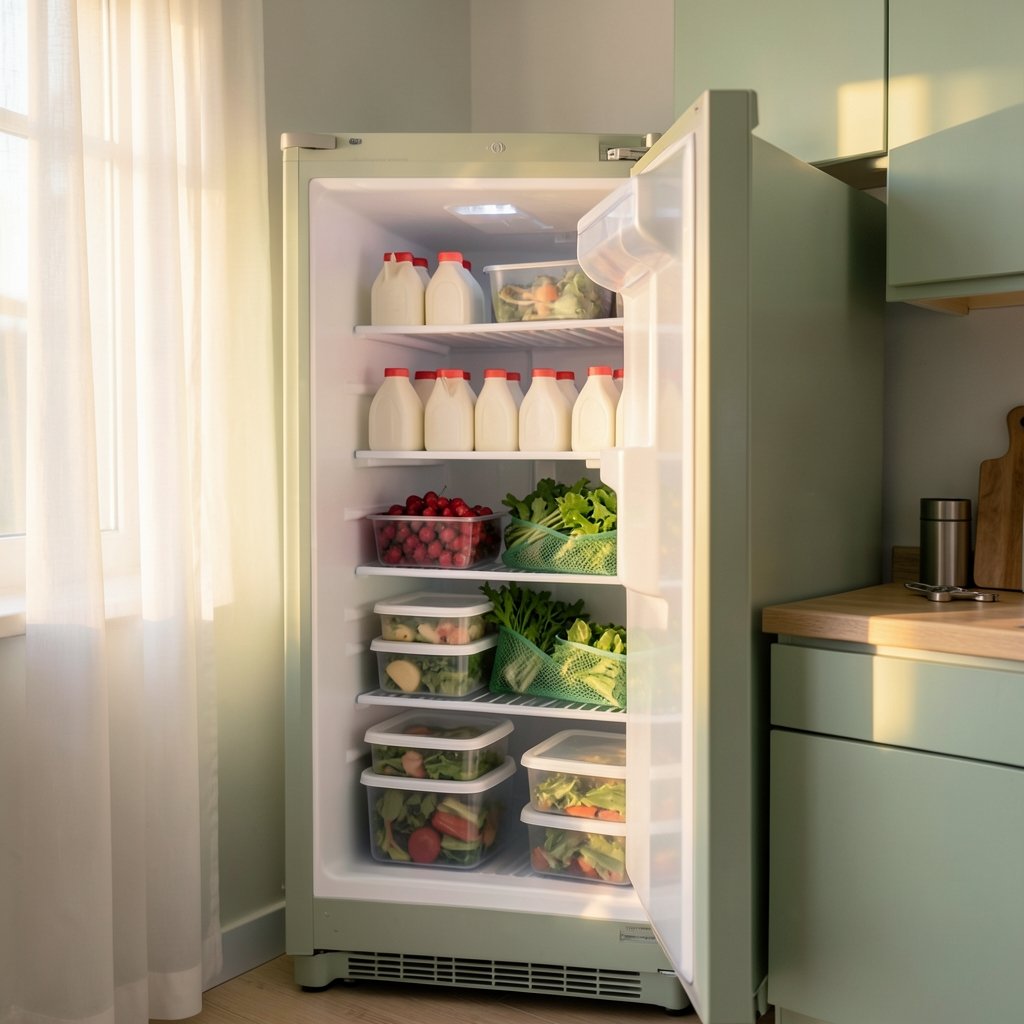
What exactly makes a refrigerator “midsize”? Walk into any appliance showroom and you will see tiny dorm units, towering French-door giants, and a confusing middle ground where labels start to blur. That middle ground is where most real kitchens, apartments, and basement backup plans actually live. This guide cuts through the marketing fog so you can pick a fridge that fits your space, your power bill, and your grocery habits without overpaying for capacity you will never fill.
What Counts as a Midsize Fridge?
There is no official standard for “midsize.” That is the first thing to understand, and it saves a lot of frustration. In U.S. retail and consumer-guide usage, the term usually covers roughly 10 to 18 cubic feet (about 280 to 510 liters). Below that sits the compact or mini category, and above it you find full-size kitchen units at 18 to 25-plus cubic feet.
Because capacity is quoted in cubic feet in the U.S. and liters almost everywhere else, it helps to keep the conversion handy: 1 cubic foot equals about 28.3 liters. A 14 cu ft model is roughly 396 liters. When you compare listings across retailers, do the math before assuming one fridge is bigger than another.
The practical definition matters more than the number. A midsize fridge is the one you buy when a full-size unit will not fit, is not needed, or is overkill for the household. That covers apartment kitchens, small condos, garage backups, basement bars, and offices. If you are sizing other household purchases at the same time, the same logic of matching dimensions to real use applies to things like choosing dining room rugs by size, pile, and material, where a number on a tag means nothing until it meets your floor. (Zod vs valibot vs arktype 2026 bundle size speed type safety)
The Real-World Sizes and Configurations
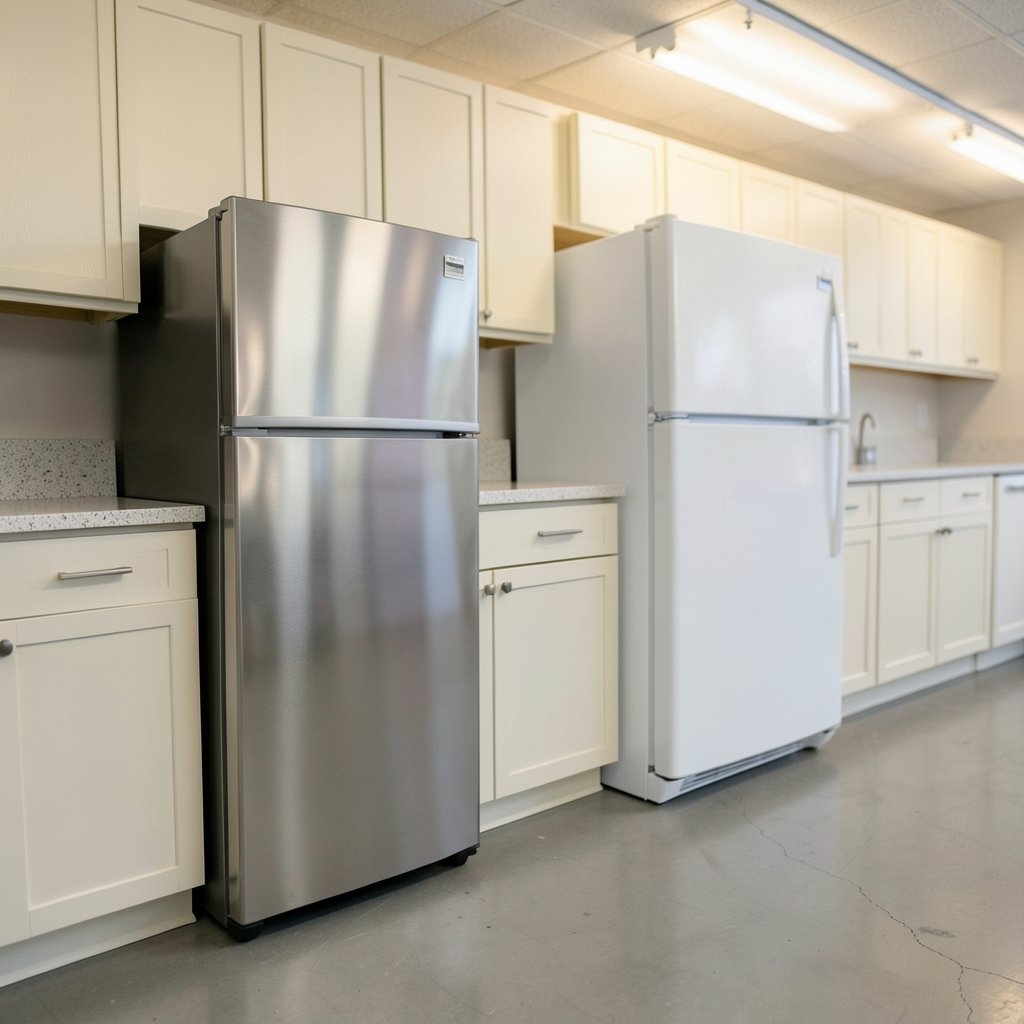
Midsize fridges come in the same basic layouts as larger units, just scaled down. Each has trade-offs that show up daily.
| Configuration | Typical Capacity | Best For | Watch Out For |
|---|---|---|---|
| Top-freezer | 10–16 cu ft | Tight budgets, rentals, garages | Bending to reach the freezer |
| Bottom-freezer | 12–18 cu ft | Everyday kitchens, less bending | Pricier than top-freezer |
| Single-door with icebox | 10–14 cu ft | Apartments, offices | Tiny freezer space |
| Counter-depth full-size | 18–22 cu ft | Kitchens where depth is the problem | Narrow interior shelves |
Top-freezer models remain the value pick. They use simple mechanics, cost less to repair, and generally deliver the most usable cubic feet per dollar. Bottom-freezer units put fresh food at eye level, which most people appreciate after a few years of crouching. Single-door fridges with a small freezer compartment suit people who mostly chill drinks and leftovers.
One configuration deserves special mention: the counter-depth fridge. It is technically full-size in capacity but shallow enough to sit closer to flush with standard 24-inch-deep base cabinets. Many full-size fridges are 30 to 36 inches wide and stick out well past the counter line. If your kitchen feels cramped, a counter-depth model often solves the visual problem without dropping into the small-capacity range. (Nvidia shader cache size set clear move it without breaking)
How to Measure Before You Buy
The single most common mistake is buying by capacity and ignoring the doorway. A fridge that cannot make it into the kitchen is a fridge you will be returning.
- Measure the opening width, height, and depth, not the old fridge. Cabinets, trim, and flooring can shift the real numbers.
- Add clearance for doors to swing and for ventilation at the back or sides. Most makers specify minimum gaps, and ignoring them shortens the compressor’s life.
- Measure every doorway and stairwell on the delivery path, including the front door, hallway turns, and elevator if you have one.
- Check the hinge side. Many models let you reverse the door, but not all do. A right-hinged fridge against a wall can block its own drawers.
- Confirm the electrical outlet location and whether the cord reaches without an extension cord, which manufacturers generally advise against.
A useful trick: cut a cardboard template to the fridge’s footprint and tape it to the floor. Walk around it for a day. You will immediately feel whether the doors and traffic flow work.
Energy Use: The Part Buyers Get Wrong
Here is a counterintuitive fact. Smaller fridges are not automatically more efficient. U.S. minimum efficiency standards, set under the Energy Policy and Conservation Act and administered by the Department of Energy, generally allow smaller-capacity units to use more energy per cubic foot than large ones. A 12 cu ft fridge can therefore draw more power per unit of space than a well-built 22 cu ft model.
That does not mean midsize fridges are wasteful. It means you should compare annual kilowatt-hour estimates, rather than size alone. Every U.S. fridge sold must meet federal minimum standards, and the current standards took effect in 2014. The voluntary ENERGY STAR program typically recognizes models roughly 10 percent or more efficient than the federal floor, though the exact threshold shifts with each program version, so verify current criteria before you buy.
A few practical habits matter more than the label:
- Keep it out of hot garages unless the model is rated for it. Many fridges struggle in temperature swings, and compressors run constantly trying to compensate.
- Leave breathing room around the coils. A fridge jammed into a cabinet burns more power.
- Set the fridge around 37 to 40°F and the freezer near 0°F. Colder settings cost money and do not improve food safety.
- Clean the condenser coils once or twice a year. Dusty coils are one of the most common causes of premature failure.
If you enjoy the technical side of sizing decisions, the same “measure the real constraint first” mindset shows up in odd places, like working out how to measure ring size at home without guessing. Get the measurement right and everything downstream gets easier.
Refrigerants, Safety, and Disposal
A fridge is also a sealed refrigerant system, and that matters at both ends of its life. Older units may contain CFCs, which deplete the ozone layer. Newer ones use HFCs or HFOs, which are potent greenhouse gases. U.S. rules under the Clean Air Act Section 608 govern how refrigerant must be handled, and the AIM Act phases down HFC production over time. In the EU, fridges fall under WEEE take-back rules for electronic waste plus the F-gas Regulation for refrigerants.
The takeaway for buyers is simple. Never dump an old fridge at the curb or in a field. Use a retailer haul-away program, a municipal collection event, or a certified recycler. They recover the refrigerant and foam-blowing agents properly, and many utilities offer a rebate for retiring a working second fridge.
Midsize Fridge vs. the Alternatives
It helps to see where midsize sits against the extremes.
| Option | Capacity | Typical Use | Trade-off |
|---|---|---|---|
| Mini or compact | Under 10 cu ft | Dorms, offices, bars | Very limited fresh food space |
| Midsize | 10–18 cu ft | Apartments, small kitchens, backups | Fewer premium features |
| Full-size | 18–25+ cu ft | Family kitchens | Needs space and clearance |
| Second fridge | Any size | Garage, basement, bulk storage | Extra energy draw |
A second midsize fridge is a common purchase in U.S. households, often for the garage or basement. Survey estimates of second-fridge ownership have hovered in the low-to-mid twenties as a percentage of households, though reliable current figures are hard to pin down. If you are adding one, treat it as a real appliance decision, not an afterthought. It will run for years and show up on every power bill.
Budget planning works the same way as picking software or support tools for a small team: match the tool to the actual job, not to the biggest spec sheet. Teams comparing helpdesk options often find that a smaller, right-sized platform beats an enterprise suite, which is why guides like these real-world Zendesk alternatives for every support team size are useful. The principle transfers directly to appliances. Buy for your real usage, not the showroom.
Features Worth Paying For (and Ones That Aren’t)
Midsize fridges often trim features to hit a price point, so choose carefully.
Worth it:
- Adjustable glass shelves that let you fit a stockpot or a sheet pan.
- LED interior lighting, which is brighter and cooler than bulbs.
- A freezer that actually freezes, meaning a real separate compartment rather than a tiny icebox.
- Reversible door hinges for tight layouts.
Usually skip:
- Ice makers and water dispensers on small units. They eat interior space and add failure points.
- Smart connectivity on a backup fridge. You will not use it.
- Fancy door-in-door designs that mostly add cost at this size.
One more practical note: check the warranty terms on the sealed system separately from the general warranty. Compressor coverage often runs longer, and that is the repair you actually care about.
Common Mistakes and What Actually Works
After enough showroom visits and delivery-day surprises, patterns emerge.
- Buying by cubic feet alone. Interior layout matters more. Two 14 cu ft fridges can hold very different groceries depending on shelf spacing and door bin depth.
- Skipping the delivery path check. Measure the front door, the stairwell turn, and the hallway width. Remove doors if needed, and confirm the delivery team will do it.
- Ignoring garage ratings. A standard fridge in a freezing garage may stop cooling entirely. Look for models rated for garage use if that is the plan.
- Forgetting the old unit. Schedule haul-away at purchase. Otherwise the old fridge sits in the garage drawing power for another decade.
- Chasing the lowest price online without checking the return window and who handles warranty service. A cheap fridge with no local service network is a gamble.
What works, in practice, is boring and effective. Measure twice, template the floor, compare annual energy estimates, and buy from a seller with a clear return policy and a service network in your area.
Conclusion
A midsize fridge is less a category than a solution to a specific problem: you need real refrigeration without full-size bulk. The working range of roughly 10 to 18 cubic feet covers apartments, small kitchens, offices, and second-fridge duty, but the number on the box is only the starting point. Measure your opening and your delivery path, compare annual energy use rather than assuming smaller means greener, and pick a configuration that matches how you actually eat. Get those basics right and the fridge you choose will quietly do its job for a decade or more.
Frequently Asked Questions
What size is considered a midsize refrigerator?
There is no formal standard, but retail and consumer guides generally place midsize fridges between about 10 and 18 cubic feet, or roughly 280 to 510 liters. That sits above compact and mini units and below full-size kitchen refrigerators of 18 to 25-plus cubic feet. Treat the range as a working guideline rather than a rule.
Is a smaller fridge cheaper to run than a large one?
Not necessarily. Federal efficiency standards generally allow smaller-capacity refrigerators to use more energy per cubic foot than larger ones, so a midsize unit can draw more power per unit of space. Compare the annual kilowatt-hour estimate on the yellow energy label rather than assuming size equals savings.
Can a midsize fridge go in a garage?
Only if the model is rated for garage or outdoor use. Standard fridges may struggle in temperature extremes, and some stop cooling when the surrounding air gets too cold or too hot. If garage placement is the plan, look specifically for a garage-ready rating and check the manufacturer’s stated temperature range.
How do I know if a fridge will fit through my door?
Measure the width and height of every doorway, hallway turn, and stairwell on the delivery path, then compare those numbers to the fridge with its doors and handles removed. Most listings give dimensions with doors off, which is often several inches narrower. When in doubt, ask the retailer to confirm the delivery requirements.
What should I do with my old refrigerator?
Use a retailer haul-away program, a municipal collection event, or a certified recycler. Refrigerants and foam-blowing agents must be recovered properly, and dumping a fridge is illegal in many places. Many utilities also offer rebates for retiring a working second fridge, so check before you haul.
Do midsize fridges have fewer features?
Often, yes. Manufacturers tend to trim extras like ice makers, water dispensers, and smart connectivity at this size to hit a price point. That is usually good news, since those features consume interior space and add failure points. Prioritize adjustable shelves, good lighting, and a solid sealed-system warranty instead.



