Every small business keeps records: invoices, contracts, customer details, employee files, emails, and backups. Most of them keep those records far longer than they need to, in inboxes, shared drives, and filing cabinets nobody has sorted in years. A business data retention policy is the written rule that ends that drift. It states how long each type of record is kept, where it lives, who may see it, and how it is safely deleted when its time is up.
The policy matters for three reasons. The first is legal: tax records, employment files, and contracts must be kept for set periods in most countries, and deleting them too early can leave a business unable to answer a tax query, a dispute, or an audit. The second is risk: every old record is something that can be leaked or stolen, and a business holding ten years of customer data it no longer needs is carrying ten years of exposure. The third is practical: staff waste time searching through clutter, storage costs grow, and nobody knows which copy of a file is the real one.
This guide shows how to create a business data retention policy in 2027, step by step, for a team of five to fifty people. It covers what the policy should contain, how to set retention periods for each type of record, how to handle legal holds and secure deletion, and how to get the team to follow it. No consultant and no special software is needed: an afternoon, a list of what the business holds, and a willingness to delete things on schedule.
Key takeaways
- A data retention policy states how long each type of business record is kept, where it lives, and how it is deleted when its time is up.
- Keep records long enough to meet tax, legal, and contract duties, but no longer: old data is a security risk and a cost.
- Build the policy from a real inventory of records, then set a retention period for each type, with one named owner.
- Some records must be frozen, not deleted, when a dispute or investigation starts; that is called a legal hold.
- Review the schedule at least once a year, and delete on schedule: a policy nobody enforces is decoration.
What a data retention policy is, and what it is not
A data retention policy is a short written document, usually two to four pages, that sets the rules for how long the business keeps its records. It lists the types of records the business holds, gives each type a retention period, says where each type is stored, names who is responsible for it, and explains how records are deleted securely when the period ends. It covers paper and digital records alike: invoices, contracts, customer files, employee records, emails, chat logs, and backups.
It is not a filing system and it is not a backup plan, though it works with both. A filing system decides where a record goes; a backup plan decides how copies are protected; the retention policy decides how long the record lives. It is also not the same as the wider rules that govern the business’s data. Our guide to what a data governance policy is for small businesses explains the broader rulebook covering ownership, quality, and access for every dataset the firm holds. Retention is one part of that rulebook, given its own document because the dates matter: the policy is where the business writes down that invoices are kept for seven years and job applications for six months, rather than leaving the decision to whoever happens to be tidying up.
The policy is also distinct from a privacy policy, which states what personal data the business collects and the rights customers have over it. The two overlap on one point: personal data should not be kept longer than needed. But the retention policy is the document that turns that principle into dates, and it covers records that are not personal at all, such as supplier contracts, tax filings, and board minutes. For a small business, it is usually the most useful of these documents to write first, because it forces the owner to list everything the business holds.
How to build the policy, step by step
Step one is the inventory. List every place the business keeps records: the accounting system, the email inbox, the customer relationship tool, the shared drive, the website, the payment processor, the laptops and phones people use for work, and any paper files. For each place, note what it holds and who uses it. Most small businesses finish this in an afternoon, and the result is often a surprise: old email accounts nobody uses, a shared drive full of duplicates, and customer data in places the owner had forgotten about.
Step two is to sort the inventory into record types and assign a retention period to each one. Start with the categories in the table below, and adjust the periods to the laws where the business operates: tax rules differ by country, and employment law sets its own minimums. The key decision for each type is the reason for the period. Tax records are kept because the law requires it; contracts are kept because they may be needed in a dispute; marketing lists are kept only while the person is still a customer or subscriber.
Step three is to name an owner for each record type and decide how deletion works. The owner is the person who makes sure the schedule is followed: the bookkeeper for invoices, the owner for contracts, the person who runs sales for the customer list. Deletion must be real: files deleted from the shared drive, emails removed from the inbox, and backups allowed to expire on their normal cycle. A regular review of the business’s records also helps. Our guide to how to run a security audit for your small business in 2027 explains how to check what the business holds and who can reach it.
Step four is to write the policy down in plain language and get it approved by the owner. Keep it short: the schedule itself can sit in a separate table that is updated without a fresh approval, so the policy stays stable while the dates can change. Step five is to train the team in a short session, showing them where records live and how to delete things properly. Step six is to set the review: a calendar reminder once a year, and a review after any incident, new law, or change of tools.
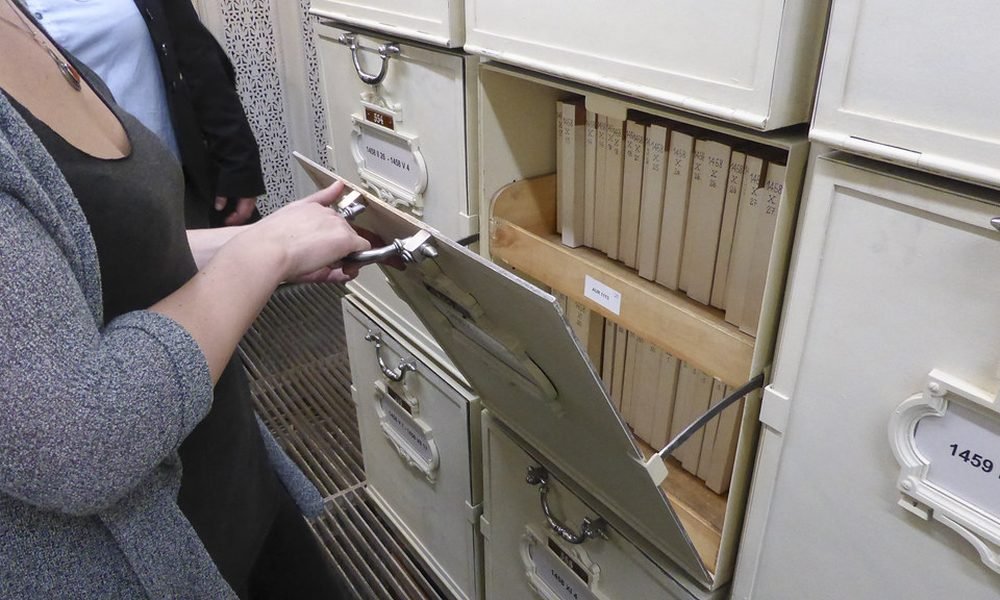
Retention periods that work for a small business
The periods below are a starting point for a small business, not legal advice: the exact numbers depend on the country and the sector, and the business should check the rules that apply to it. The pattern to notice is the shape of the schedule. Records the law or a contract requires are kept for years; records tied to a live relationship are kept while the relationship lasts; records with no purpose are kept briefly and then deleted.
| Record type | Typical period | Why |
|---|---|---|
| Invoices and tax records | 6 to 7 years | Tax law in most countries |
| Contracts and agreements | 6 years after the contract ends | Contract disputes and claims |
| Employee records | 6 years after employment ends | Employment law and references |
| Customer order records | 6 years after the order | Tax, warranty, and disputes |
| Job applications (unsuccessful) | 6 to 12 months | Hiring disputes and fairness |
| Marketing lists | Until the person unsubscribes | Consent and privacy rules |
| General emails and messages | 12 months | Day-to-day business needs |
| Backups | 30 to 90 days on rotation | Recovery, not long-term storage |
Checklist: putting the policy into practice
Writing the policy is the easy half. The checklist below is the test a small business should apply in the first month, and again at each annual review, to make sure the schedule is actually being followed.
- Finish the inventory first, and include paper files, old email accounts, and backups, not just the live systems.
- Give every record type one owner and one retention period, and write both in the schedule.
- Delete on schedule: set a monthly reminder, and record what was deleted and when.
- Use secure deletion for sensitive records, such as shredding paper and wiping drives, not just moving files to the bin.
- Freeze deletions when a dispute, audit, or investigation starts, and tell the team the freeze is in force.
- Review the schedule once a year, and update it when the business changes tools, takes on regulated work, or moves country.
Frequently asked questions
What is a data retention policy?
It is a short written document stating how long a business keeps each type of record, where the records live, who is responsible for them, and how they are deleted when the period ends. It covers paper and digital records, from invoices and contracts to emails and backups.
How long should a small business keep invoices?
In most countries, six to seven years, because tax law requires it. The exact period depends on the country and sometimes the sector, so the business should check the rules where it operates. The policy should state the period and the reason for it.
What is a legal hold, and when does it apply?
A legal hold is an instruction to stop deleting records when a dispute, audit, or investigation starts or is expected. Normal deletion must pause until the matter is resolved, even if the retention period has ended. The policy should name who can declare a hold and how the team is told.
Should backups be deleted too?
Yes, on rotation. Backups exist to recover from a failure, not to store records forever, so they should expire on a normal cycle of 30 to 90 days. If a deleted record still sits in a backup kept for years, the business has not really deleted it. Tools that manage data loss can help; our roundup of the best data loss prevention software covers software that tracks where sensitive data lives.
What happens if we delete records too early?
The business may be unable to answer a tax query, defend a claim, or prove what was agreed with a customer or supplier. That is why the policy sets periods from legal and contract duties first, and only then shortens them for records with no legal purpose. When in doubt, keep the record and ask a qualified adviser.
How often should the retention schedule be reviewed?
At least once a year, and again after any major change: new tools, new types of records, a new law, or a security incident. Each review should check that the periods still match the law and that deletion is actually happening on schedule.
The bottom line
A business data retention policy is one of the cheapest risk controls a small business can put in place. It costs an afternoon to write, it answers the question every owner eventually faces, which records can we delete, and it turns a growing pile of old data into a deliberate choice. The businesses that struggle are not the ones with too little data; they are the ones holding years of records nobody needs, in places nobody remembers.
Start with the inventory, set honest periods, name an owner for each record type, and delete on schedule. Then put the review in the calendar and treat it like any other business routine. A retention policy that is followed is a quiet advantage: less clutter, less risk, lower costs, and a business that can prove, on demand, that it knows exactly what it holds and why.
Note: This article is general information for small business owners, not legal advice. Retention periods differ by country and sector, so check the rules that apply to your business, and ask a qualified adviser before setting periods for regulated records.