A phone that fits your routines is a better choice than the one with the louder brand reputation. For an iPhone vs Samsung choice, the right fit depends on how you use a phone each day. Ease of use, camera needs, battery habits, budget, and existing devices can all change the answer.
One person may want a phone that works smoothly with a laptop and watch. Another may care more about a wide choice of models or more control over the home screen. Your best pick starts with what you already own and what you notice most.
This comparison gives you a direct recommendation for different buyer situations, not a brand-wide winner without conditions. It also helps you spot the trade-offs that could matter after the first week, when a new phone becomes part of your routine.
The most useful comparison starts with the features you notice every day and the compromises you will actually accept.
Key Takeaways
- Choose Samsung for more model choices and Android customization.
- Choose iPhone for a simpler experience or Apple-device integration.
- Compare exact phone models, not just brand names.
- Check camera reach, charging support, storage, and total cost.
- Think about your current watch, computer, and phone accessories.
iPhone vs Samsung: Which Phone Is Better for Most People?
For a first-time buyer who wants more choice and control, Samsung is the stronger default; an existing Apple-device user will usually find iPhone the easier fit. Your current devices can change the best choice.
Samsung sells Galaxy A, S, and Z phones, so you can compare different phone types and budgets within one brand. Apple’s Mac, iPad, and Apple Watch can make iPhone a natural fit if those devices already shape your day.
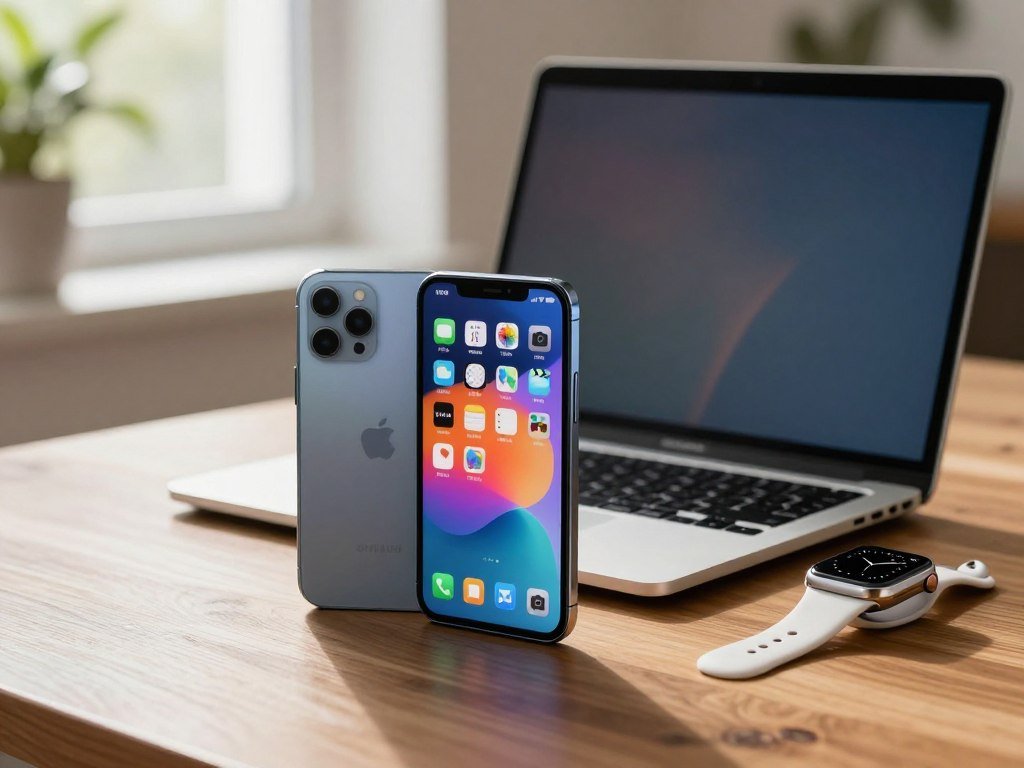
- Existing Apple Watch or Mac users: iPhone.
- Buyers who want more customization: Samsung.
- Shoppers comparing varied phone types and budgets: Samsung.
- People who prefer a familiar, straightforward experience: iPhone.
The iPhone and Galaxy flagship matchup can help if you are weighing premium models. A phone can also change how you handle messages, photos, and files across your other devices.
Choose around the devices you already use most. A brand’s wider feature list matters less if your daily accessories stop working well.
Before switching, check whether your most-used accessories work with the phone you plan to buy. That includes a watch, earbuds, charging gear, and any car system you use often.
How Do the iPhone 17e and Galaxy S25 Compare?
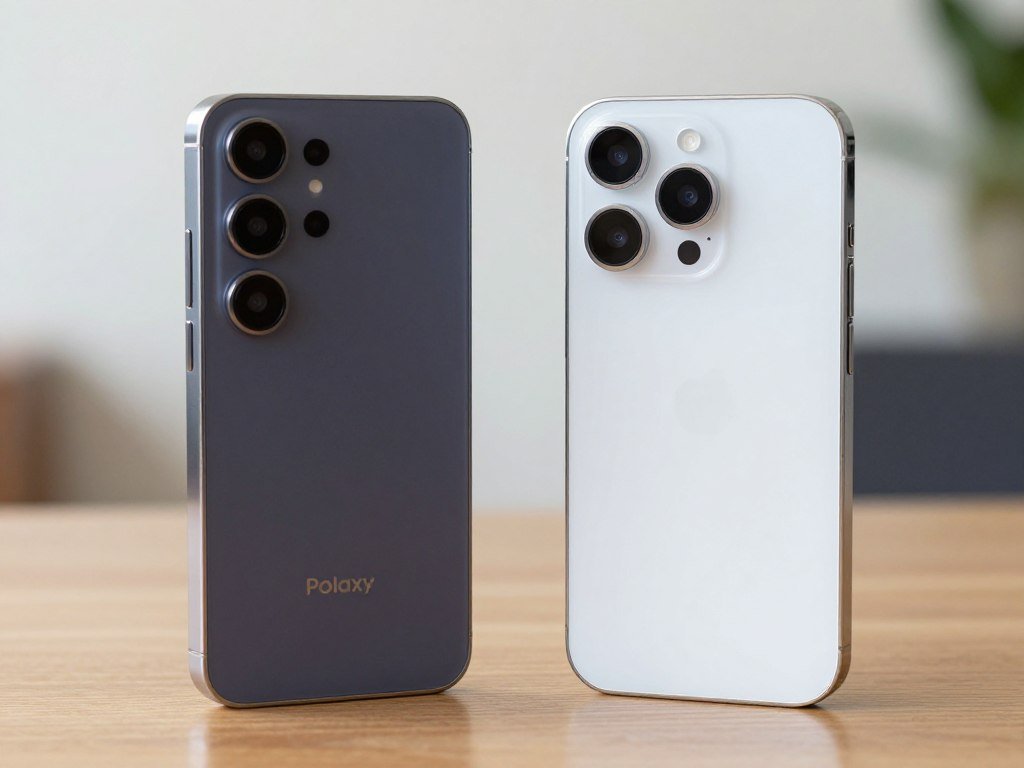
The Galaxy S25 is the better fit for a dedicated 3x zoom lens, while the iPhone 17e starts with more storage. The S25 also has more RAM, while the 17e supports a 2x telephoto option.
This iPhone Samsung comparison shows a clear split in features rather than one phone winning every spec. The Galaxy offers more rear-camera range and memory. The iPhone gives you more storage at its base configuration.
| Feature | Galaxy S25 | iPhone 17e |
|---|---|---|
| Rear camera system | 50MP wide, 10MP 3x optical telephoto, 12MP ultrawide | 48MP Fusion system with 2x telephoto option |
| RAM | 12GB | Not specified |
| Storage options | 128GB or 256GB | 256GB or 512GB |
| Wi-Fi generation | Wi-Fi 7 | Wi-Fi 6 |
The Galaxy S25’s 10-megapixel telephoto camera gives it a dedicated 3x optical lens. The iPhone 17e instead offers a 2x telephoto option through its 48-megapixel Fusion camera system.
The iPhone 17e starts with 256GB of storage, while the S25 begins at 128GB. That difference may matter if you keep large video files or many apps on your phone.
Both models suit everyday use, but their memory and camera setups serve different habits. Choose by the feature you will use most, not by the longest specification list.
Which Camera Takes Better Photos and Video?
The Galaxy S26 Ultra has more dedicated zoom options, while the iPhone 18 Pro’s tested photos leaned warmer and more vibrant. Samsung favors zoom reach and crisp detail; Apple’s look favors warm color.
Optical zoom means magnification created by a telephoto lens rather than by cropping into a digital image. A specific shooting style matters more than a megapixel count when you choose a camera.
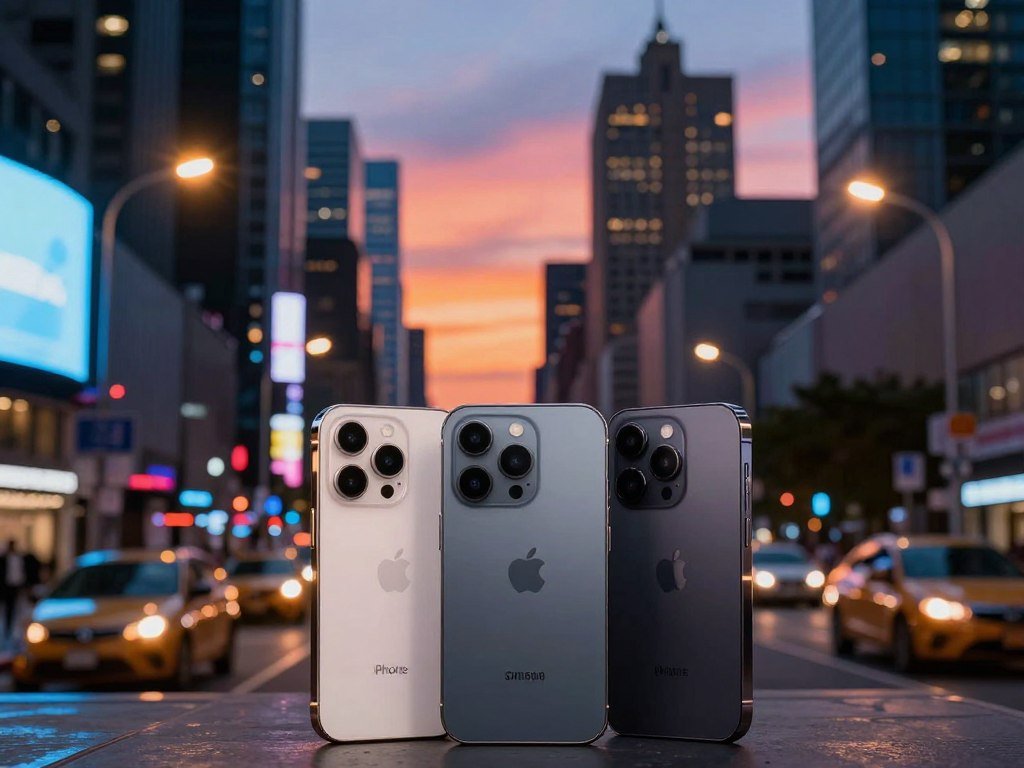
How the Main Cameras Render Color and Detail
The iPhone 18 Pro has three 48-megapixel rear cameras: wide, ultrawide, and 4x telephoto. The Galaxy S26 Ultra has a 200-megapixel wide camera and a 50-megapixel ultrawide camera.
In a side-by-side test, the iPhone 18 Pro made colors warmer and more vibrant. The Galaxy S26 Ultra made images brighter, with softer shadows and crisper detail.
The side-by-side flagship camera test shows how those looks differ in real scenes. Neither style is always better; skin, light, and the subject can change which image feels right.
What You Get From Zoom and Telephoto Lenses
The Galaxy S26 Ultra has two telephoto cameras: a 10-megapixel 3x lens and a 50-megapixel 5x lens. The iPhone 18 Pro has a dedicated 4x telephoto camera.
At 10x zoom, the Galaxy kept slightly more sharpness than the iPhone in the comparison. The iPhone offers an 8x zoom preset, but a preset does not add a new optical lens.
Optical reach comes from the lens, while digital zoom enlarges or crops the image. That is why a zoom preset and a telephoto camera are not the same feature.
Selfies and Night Photos
The iPhone 18 Pro uses an 18-megapixel selfie camera, while the Galaxy S26 Ultra has a 12-megapixel selfie camera. The reviewer preferred the iPhone’s warmer, smoother-looking selfies.
The Galaxy kept more fine detail, including lines and blemishes. For nighttime scenes, the reviewer preferred its more lifelike color, though the iPhone showed a richer sky and more saturated leaves.
Setting the iPhone 18 Pro aperture to f/4 created a starburst effect around nighttime lights. For portraits, zoom shots, and night scenes, decide which specific result looks right to your eye before you buy.
How Should You Compare Battery Life and Charging?
A fair battery-life comparison uses the exact models under similar conditions, not a brand reputation or battery-capacity number alone. Battery capacity by itself cannot tell you how long a phone lasts.
Screen size and brightness affect battery use, as do mobile signal, gaming, video, and background activity. A phone used for long games on weak service may run down sooner than one used mostly for messages.
Compare runtime tests that use the same steps and settings for the exact phones you are considering. A CNET phone-testing overview describes checks such as video calls, streaming, gaming, and video playback.
- Screen-on runtime in tests with similar conditions.
- Charging method and charging speed.
- Battery-health condition for a used phone.
- Support for the charging accessories you own.
The iPhone 17e supports MagSafe and Qi2 wireless charging up to 15W. That is a charging feature, not proof that it lasts longer between charges.
Charging speed and battery life answer different questions. If buying used, check battery health before treating a runtime result as representative of the device in hand.
Which Screen Size and Design Suit Your Routine?
A 6.9-inch screen gives more room for video and multitasking, but it can be harder to manage one-handed. Compact models are easier to carry, while large displays give you more viewing space.
The table compares common screen sizes, but diagonal measurements do not capture weight, grip, or one-handed comfort. If you can, hold a large model before buying and try reaching its top corners.
| Model | Screen diagonal | Practical size category |
|---|---|---|
| iPhone 17e | 6.1 inches | Compact |
| Galaxy S25 | 6.2 inches | Compact |
| iPhone 17 | 6.3 inches | Mid-size |
| iPhone 17 Pro Max | 6.9 inches | Large |
| Galaxy S26 Ultra | 6.9 inches | Large |
The 6.1-inch iPhone 17e and 6.2-inch Galaxy S25 fit the compact group. The 6.3-inch iPhone 17 gives a little more screen room without moving into the large category.
Both the iPhone 17 Pro Max and Galaxy S26 Ultra have 6.9-inch displays. They can make videos and split-screen tasks easier to see, though their size may feel awkward in a small pocket.
Samsung also sells Galaxy Z Fold and Z Flip phones, which use foldable designs. They are different form factors, not direct screen-size matches for standard phones.
Screen size is only one part of daily comfort. If comfortable reach matters, test the phone’s corners with your thumb before choosing a larger screen.
Which Phone Fits Your Performance and Gaming Needs?
The A19 and Snapdragon 8 Elite for Galaxy identify the phones’ processors, but everyday gaming depends on more than the chip name. Long-session performance is more useful than a short peak score.
The Galaxy S25 uses Qualcomm’s Snapdragon 8 Elite for Galaxy chipset, while the iPhone 17e uses Apple’s A19 chip. Those names come from different product lines and do not prove which full phone wins every task.
Match performance checks to what you do: sustained gaming, app launch speed, heat, multitasking, and the games you play. A fast opening score may not show how a phone feels after a long gaming session.
Benchmarks can help compare devices when the test conditions match. They do not replace checking the specific games and apps you care about.
For example, a game may run well on one device but have a different feature set or control layout on another. Your own game library matters as much as general hardware claims.
Snapdragon 8 Elite for Galaxy benchmark results cover tested devices, so those scores should not stand in for a direct A19 comparison.
Check performance in the games and apps you actually use, especially if long sessions are part of your routine.
How Different Are iOS and Samsung Android in Daily Use?
Samsung phones run Android with Samsung’s own interface, while iPhones run iOS; that difference matters most for customization, apps, and accessories. Samsung offers more ways to change the phone’s layout and install apps.
Daily habits can make the switch feel larger than the screen or hardware changes. Consider where you get apps, how you arrange your home screen, and which devices need to work together.
Customization, Apps, and Updates
Android lets you install apps from outside the Play Store, and Samsung phones can use third-party launchers. You can also change system fonts, themes, and animations.
iPhone customization has grown over time. Widgets arrived with iOS 14, and Lock Screen customization came with iOS 16.
Supported iOS devices receive updates at the same time. Android options vary by maker and model, so check the update policy for the Samsung phone you are considering.
In the U.S., iPhone owners do not have the same easy sideloading process described for Android. The U.S. iPhone 17e supports dual eSIM and has no physical SIM-card slot.
The U.S. iPhone 17e eSIM setup is worth checking if you use a physical SIM today. Android phones include models with physical SIM slots, but Samsung’s options differ by model.
What Changes When You Switch
Before moving from iPhone to Samsung, check these parts of your daily routine:
- How often you use iMessage and FaceTime.
- Whether your Apple Watch works with the new phone.
- Which paid apps may need to be bought again.
- Whether the destination phone supports your SIM setup.
Messages, watch features, and past app purchases may not transfer in the same way. Confirm how your current watch and SIM setup will work on the exact phone before switching.
What Does an iPhone or Samsung Cost Up Front?
At launch, the Galaxy S26 Ultra cost $101 more than the iPhone 18 Pro. The Galaxy S26 Ultra launched at $1,300, compared with $1,199 for the iPhone 18 Pro.
Those are starting prices before carrier offers. A phone’s model tier and the terms of a carrier plan can change the amount you pay.
Premium Flagship Prices
The Galaxy S26 Ultra’s launch price was higher in this flagship comparison. You may value its larger camera system or Android features, but the upfront gap still belongs in your budget.
For another premium comparison, the phone picks across budget levels can help you compare models by price and use. Storage size, seller, and carrier terms can affect the final amount.
Lower-Cost Phone Options
The iPhone 17e starts at $599, while Samsung’s Galaxy A57 starts at $549. Buyers who want to spend less can also consider the Google Pixel 10a at $449 or Moto G Play at $249.99.
These lower-cost options do not all offer the same camera setup, screen, or software experience. Compare the features you rely on before treating a lower sticker price as better value.
A carrier offer may require a certain plan, trade-in, or bill credits over time. The advertised monthly price may not equal the amount due under your own plan.
Keep starting price separate from a promotion that depends on eligibility. Compare the total amount you would pay under the same payment and carrier conditions, not just the most prominent monthly offer.
Which Brand Holds Resale Value Better?
An iPhone often has the resale-value advantage, but the gap matters only if you plan to sell or trade in your phone. Stronger iPhone resale demand can lower the net cost for owners who sell later.
Samsung may still be the lower-cost choice upfront, while an iPhone may return more money when you sell. The best value depends on the phone’s exact model, condition, and time of sale.
Why Resale Value Can Favor iPhone
iPhones generally tend to retain resale value better than comparable Samsung phones. That can matter if you upgrade every few years and sell your old phone yourself.
A trade-in may be easier, but its offer can differ from a private sale. Treat a resale estimate as part of the cost only if you expect to follow through.
How to Compare Used-Phone Offers
Compare offers using the same details for both phones:
- Same model generation.
- Same storage size.
- Similar physical condition.
- Unlocked or carrier-locked status.
The iPhone 16 Pro and Galaxy S24 Ultra can serve as examples of phones to compare on equal terms. That does not mean their resale prices are identical.
Swappa’s average used prices are not a rule for every iPhone or Samsung model. A cracked screen, low storage, or carrier lock can change an individual offer.
Estimate your likely sale price for the exact storage and condition before deciding whether a higher upfront price is worthwhile.
What Do U.S. Smartphone Shipment Shares Show?
Apple led U.S. smartphone shipments in each of the three listed quarters, while Samsung’s share rose quarter by quarter. Apple’s shipment share fell from 67% to 54% across those quarters.
Shipment share tracks phones shipped into the U.S. market, not every phone owned or the satisfaction of each buyer. It gives a view of brand activity, not a measure of which phone fits your needs.
| Quarter | Apple shipment share | Samsung shipment share |
|---|---|---|
| Q4 2025 | 67% | 17% |
| Q1 2026 | 58% | 26% |
| Q2 2026 | 54% | 30% |
Across these three quarters, Apple’s share declined as Samsung’s rose. The U.S. shipment-share figures describe phones sent into the market during each period, not a score for each brand’s products.
The figures also do not tell you how many owners switched brands or kept older devices. A popular brand can still be the wrong fit for your budget or daily habits.
Shipment share describes a market, not a person. Use it as background, then choose by the phone’s fit for your own routines.
Market numbers can help explain what is selling, but they cannot rank every buyer’s needs. Treat market share as context about the market, not as a substitute for matching a phone to your own needs.
Conclusion
Choose Samsung for more control and model variety, or iPhone for a simpler experience and closer Apple-device integration. Either choice can be right when it fits your budget and routine.
Samsung suits buyers who want Android flexibility and more zoom options. iPhone suits people who value Apple-device links and stronger resale value.
Shortlist one model from each brand at the same budget. Compare the features you use daily, then handle your two shortlisted models and confirm that your essential apps, accessories, and budget all fit.
FAQ
Which phone is better for social media?
iPhone is a strong choice for consistent video and a straightforward sharing workflow. Its camera look and familiar app experience can make posting feel simple. Choose Samsung if you care more about zoom reach or camera controls. The right pick also depends on the social apps you use most and how you like your photos to look.
Is an Apple iPhone better than a Samsung?
An iPhone is better for people who want simple use and close links with Apple devices. Samsung is better for people who want customization, more model choices, and Android flexibility. Neither brand suits every buyer. Your watch, computer, budget, and preferred apps can change which phone feels easier to live with.
Which is better, the iPhone 17e or the Samsung Galaxy S25 5G?
The Galaxy S25 is better if you want a dedicated 3x telephoto camera and 12GB of RAM. The iPhone 17e starts with 256GB of storage and supports a 2x telephoto option. The S25 has 128GB or 256GB storage choices, so compare the storage you need with the camera range you expect to use.
Who gets hacked more, Android or Apple?
There is no fair platform-wide ranking that says Android or Apple users get hacked more. Risk depends on software updates, app sources, phone settings, and user behavior. Installing apps from unfamiliar places can add risk. Use strong account passwords, keep the phone updated, and avoid links or files you do not trust.
What will I miss switching from iPhone to Android?
You may miss the way iMessage and FaceTime fit into your routine, especially with friends or family who use Apple devices. Check Apple Watch compatibility and which paid apps you may need to buy again. Also confirm the new phone’s SIM setup. Some Android phones use physical SIM cards, while the U.S. iPhone 17e uses eSIM only.
What is safer, Android or iPhone?
Both Android and iPhone include security protections, so the platform name alone does not decide safety. Keep the phone’s software up to date and use trusted app stores. Limiting risky app installs, using a screen lock, and protecting your account password also help reduce common security risks.