
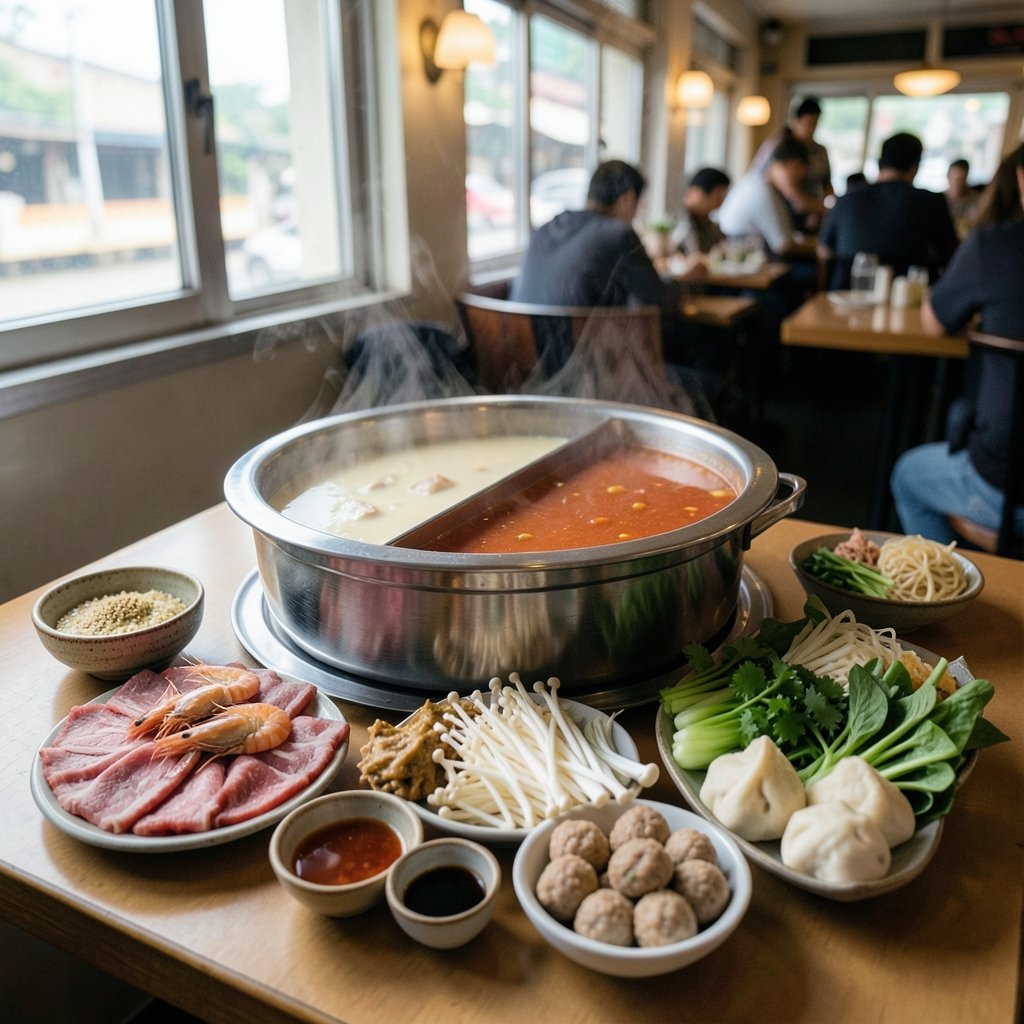
Singaporeans will queue for 45 minutes to boil raw food at their own table. That habit explains much of JPOT’s draw and why the brand is one of the island’s best-known names in Singapore’s crowded hot pot market. If you are planning a visit, comparing hot pot options, or trying to understand the appeal, this article explains how the format works, what the food is like, where the brand sits in Singapore’s dining scene, and the practical mistakes first-timers make.
What JPOT Actually Is
JPOT is a steamboat (hot pot) restaurant brand operating in Singapore, part of the Jumbo Group family of dining concepts. The name plays on “Jumbo Pot,” a nod to its parent company, which built its reputation on chilli crab and seafood before expanding into casual and mid-range formats.
The core concept is straightforward. Guests sit at a table with a built-in induction hob, choose a broth, order raw ingredients from a menu, and cook everything themselves at the table. It is a social meal rather than a fast one. The cooking happens in front of you, the pace is set by your own appetite, and the meal tends to stretch well past the hour mark.
For anyone who has never tried this style of dining, the appeal can seem puzzling from the outside. Once you are seated with a bubbling pot and a plate of sliced pork and fish paste, it clicks quickly.
How the Hot Pot Format Works
Understanding the mechanics makes the first visit far smoother. The format follows a predictable rhythm.
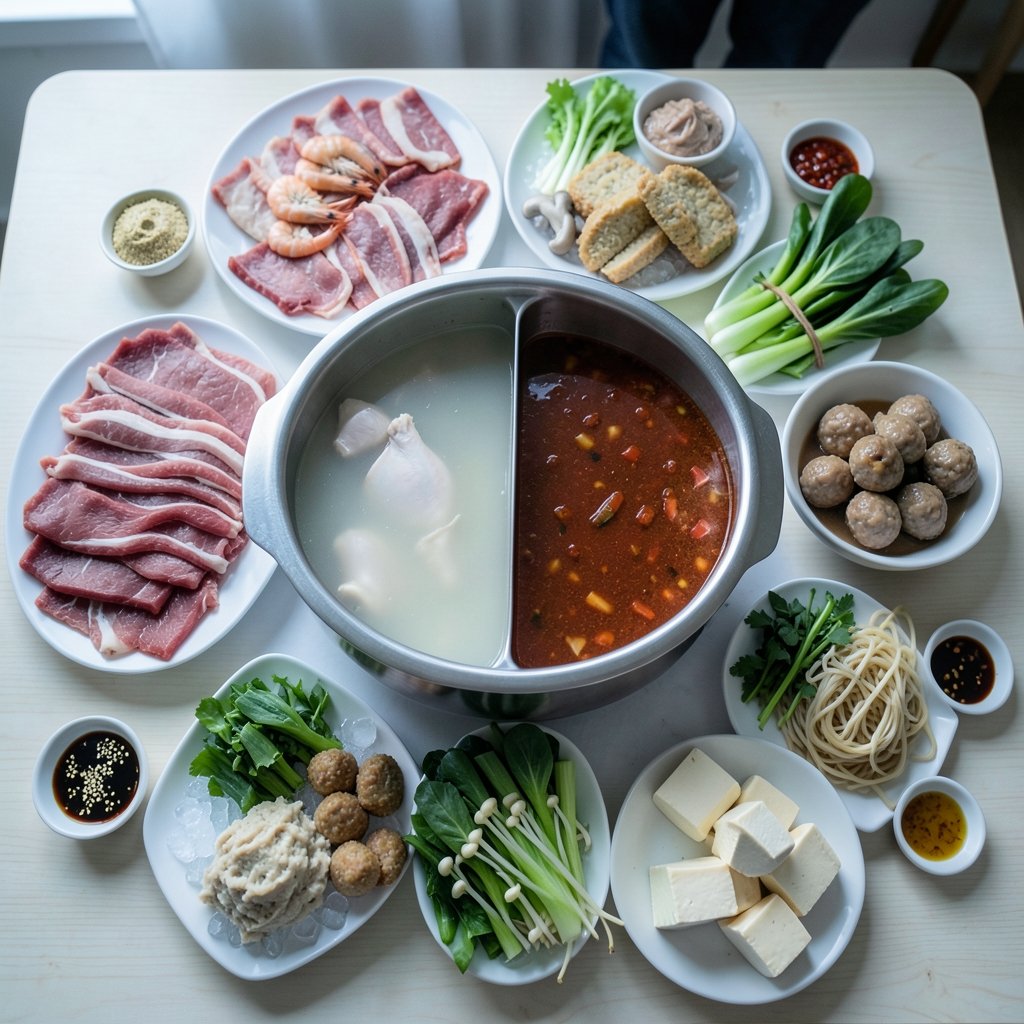
- Choose your broth. Most steamboat restaurants offer a split pot, letting a table order two broths at once. Common picks include a mild chicken or pork bone base, a tomato broth, and a spicier Sichuan-style option. Splitting is the sensible move for mixed groups.
- Order your ingredients. Menus are usually organized by category: sliced meats, seafood, fish paste and meatballs, vegetables, mushrooms, tofu products, noodles, and rice.
- Build a dipping sauce. A sauce station is standard, with options like sesame paste, soy, garlic, chilli oil, coriander, and spring onion. This is where regulars show off.
- Cook in stages. Quick-cooking items go in first, dense vegetables and root items early so they soften, and delicate seafood last so it does not overcook.
- Finish with noodles or rice. The broth has absorbed everything by this point, which is exactly why the final noodle course tastes so good.
The cooking itself is not complicated, but timing is everything. Thin slices of pork or beef need only a few seconds of swishing in the hot broth. Leave them too long and they turn grey and tough. Fish paste is usually squeezed directly into the pot from a piping bag and floats to the surface when done.
What the Food Is Like
The menu leans on freshness and variety rather than elaborate technique. The kitchen’s job is prep: slicing, portioning, and keeping ingredients cold and clean. The guest’s job is the cooking.
Expect a solid spread of the classics. Sliced pork belly and beef are staples. Seafood typically includes prawns, fish slices, and sometimes crab or shellfish depending on the outlet and set. Fish paste, meatballs, and dumplings round out the protein side. Vegetables cover napa cabbage, spinach, corn, and a range of mushrooms. Tofu comes in several forms, including the fried skin that soaks up broth beautifully.
Broth quality matters more than most first-timers expect. A good base should taste clean and savory on its own rather than merely salty. A split pot lets a table hedge: a mild broth for seafood and vegetables, a spicy one for meats.
Portion control is a common trap. Groups tend to over-order on the first round, then struggle to finish. Ordering in two or three waves is the practical approach, since you can always add more.
The Dining Experience and Atmosphere
JPOT outlets are built for groups. Tables are large, the lighting is bright, and the noise level is high, which is part of the charm. This is not a quiet dinner spot. It is a place for birthdays, family gatherings, and team meals where conversation competes with bubbling pots.
Service tends to be efficient rather than lingering. Staff refill broth, clear empty plates, and explain the setup for newcomers. Because the cooking is self-service, the interaction with the kitchen is limited, which keeps the meal moving at the table’s own pace.
One practical note: the smell. Hot pot leaves a scent on clothing and hair. Many regulars dress accordingly or plan to head home afterward rather than on to another engagement. Some outlets are better ventilated than others, but the effect is universal.
JPOT in Singapore’s Hot Pot Market
Singapore has no shortage of steamboat options, from budget buffet chains to premium wagyu specialists. JPOT sits in the mid-range, family-friendly bracket, competing on brand trust and consistency rather than novelty.
| Consideration | What to Expect |
|---|---|
| Price bracket | Mid-range, per-person spend varies by outlet and set |
| Best for | Groups, families, casual celebrations |
| Style | Self-cook steamboat with split broth options |
| Ambience | Bright, lively, built for conversation |
| Booking | Reservations recommended for weekend dinners |
The brand’s advantage is its association with a well-known local restaurant group. Diners who trust the parent company’s seafood standards often extend that trust to the hot pot format. The trade-off is that it rarely feels like a discovery. It is reliable rather than adventurous, which suits most groups perfectly well.
For anyone comparing formats, it helps to know that hot pot is a broad church. Some places emphasize all-you-can-eat buffets, others focus on premium cuts and table-side service. If you are also curious about the skills involved in hosting and performing at this kind of table, a look at how to sing with control over breath, pitch and tone is a fun parallel, since both demand timing, breath control, and a bit of confidence in front of an audience. It is a different kind of table craft, but the discipline overlaps more than you would think.
Common Mistakes First-Timers Make
Practical experience with steamboat dining surfaces a handful of recurring errors. Avoiding them makes the meal noticeably better.
Over-ordering at the start. The first round should be modest. Ingredients arrive fast, and the table fills up quickly. Add more once the first wave is eaten.
Dumping everything in at once. A crowded pot drops in temperature and cooks unevenly. Add in batches and keep the broth at a gentle simmer.
Ignoring the sauce station. A good dipping sauce transforms plain boiled ingredients. Mix sesame paste with a little soy, garlic, and chilli for a balanced base.
Forgetting the vegetables until the end. Cabbage and mushrooms need time to soften. Start them early.
Skipping the final noodle course. The broth at the end of the meal is the best thing on the table. Cooking noodles in it captures all of that flavor.
Wearing the wrong clothes. Hot pot aroma lingers. Dress casually or plan around it.
Practical Tips Before You Go
A few habits make the visit smoother. Book ahead for Friday and Saturday evenings, when walk-in waits stretch. Arrive hungry but not starving, since the first ingredients take time to arrive and cook. Ask staff which broth suits your group if you are unsure, and mention any allergies clearly, especially shellfish, which features prominently.
If you are dining with children, hot pot works well because the food is mild and customizable, but keep young diners away from the pot itself. The broth and the metal rim get very hot.
For large groups, splitting into two pots at adjacent tables often beats cramming everyone around one. It also makes ordering easier to manage.
Budget-wise, the final bill depends heavily on how much seafood and premium meat the table orders. A vegetable-and-noodle-heavy meal costs far less than one built around prawns and sliced beef. Deciding the split before ordering avoids awkwardness at the end.
Conclusion
JPOT represents a specific and popular slice of Singapore’s dining culture: a group-friendly, self-cook steamboat format backed by a well-known local restaurant group. It is not the cheapest option in the city, nor the most experimental. What it offers is consistency, a lively table, and the particular pleasure of cooking your own meal at exactly the pace you want.
The first visit is always a learning curve. Broth choice, cooking times, and ordering discipline all matter more than newcomers expect. Get those right, and the meal becomes a genuinely enjoyable social ritual rather than a stressful scramble. Whether you are a seasoned steamboat regular or someone who has never held a pair of table tongs, the format rewards a little preparation and a lot of appetite.
Frequently Asked Questions
What does JPOT stand for?
The name is a play on “Jumbo Pot,” referencing the Jumbo Group restaurant family that operates the brand. It signals the connection to a well-known Singapore seafood dining company rather than describing a specific cooking technique.
Is JPOT a buffet or à la carte?
The format centers on ordering ingredients from a menu rather than a self-serve buffet. Guests choose broths and dishes, which are brought to the table raw for cooking. Some outlets and promotions may offer set menus, so it is worth checking the specific location before booking.
How much does a meal at JPOT cost?
Costs vary by outlet, set selection, and how much premium seafood or meat a table orders. A vegetable-forward meal is significantly cheaper than one built around prawns and sliced beef. Groups should agree on a rough budget before ordering to avoid surprises at the end.
Do I need to make a reservation?
Reservations are strongly recommended for weekend dinners and public holiday periods, when waits for walk-ins can be long. Weekday lunches are generally easier to secure without booking ahead.
Is hot pot at JPOT suitable for children?
The format works well for families because broths can be kept mild and ingredients are customizable. However, the pot and broth reach very high temperatures, so young children need close supervision and should not handle the cooking themselves.
What should I order on a first visit?
Start with a split pot pairing a mild chicken or pork bone broth with a spicier option. Order sliced pork, fish paste, a mix of mushrooms and leafy vegetables, tofu skin, and noodles for the finish. Add seafood in a second round once you know how much the table can eat.
The sauce station deserves its own strategy. Rather than one crowded bowl, many regulars build two: a savory sesame-soy base for meats and a lighter chilli-lime mix for seafood and vegetables. A spoonful of the cooking broth stirred into the sauce at the end ties everything together. Beverages matter too, since hot pot is a long, warm meal; iced tea, barley, or plain water keeps the palate reset between bites. Finally, pace the meal like a conversation rather than a race. Start with vegetables and tofu skin to build flavor in the broth, move through the meats, and save the noodles for the last ten minutes. Done that way, the final bowl of broth-soaked noodles becomes the natural ending to the evening, and the table leaves satisfied rather than overstuffed. For anyone weighing whether JPOT fits a particular occasion, the answer usually comes down to the group. A table of friends who enjoy cooking together will get more from the format than a pair looking for a quiet, served dinner. It rewards participation, and that is precisely the point.



