
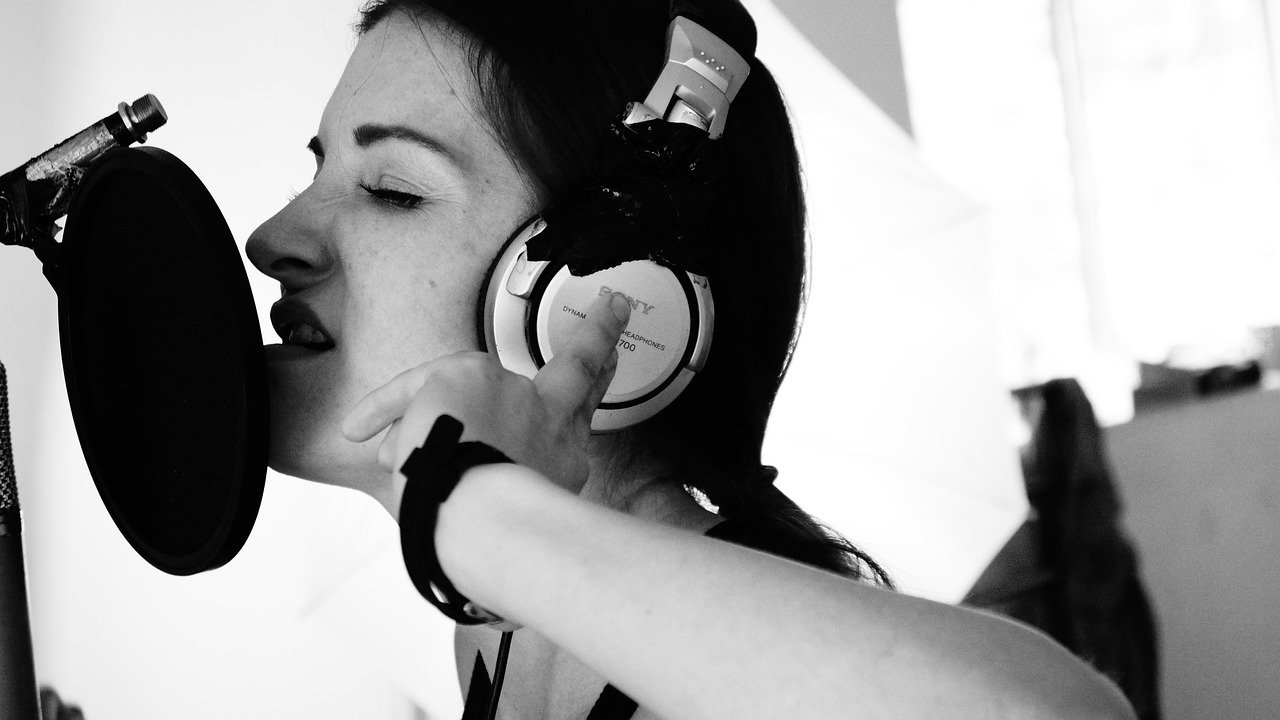
Can anyone learn to sing, or is it a gift you either have or you don’t? Spend ten minutes in any community choir and the answer becomes obvious: singing is a trainable skill, not a lottery ticket. Some people start with better ears or a more natural tone, but the mechanics of good singing (breath, pitch, resonance, and vocal care) can be learned by almost anyone willing to practice smart. (Singing)
This guide walks through what actually works, what beginners get wrong, and how to build a voice that stays healthy for years.
What Singing Really Is, Physically
Before technique, it helps to understand what’s happening inside. Singing is a three-part system:
- The power source: the breath. Air leaves the lungs and passes through the trachea.
- The sound source: the vocal folds, two bands of tissue in the larynx that vibrate as air passes over them.
- The filter: the vocal tract, meaning the throat, mouth, and nasal cavity, which shapes that buzz into vowels and consonants.
This is called the source-filter model, and it’s standard in speech science. The practical takeaway is huge: most beginners try to control the sound directly by pushing or squeezing the throat. Instead, you control the airflow and the shape of the resonating space, and the sound largely takes care of itself.
Start With Breath Support, Not Volume

Ask a beginner to sing louder and watch the shoulders rise. That’s the first habit to break. Chest breathing gives you a shallow, quickly exhausted supply of air, and it creates tension in the neck that strangles the sound.
Breath support means managing the exhale so the vocal folds get a steady, reliable stream of air. In the Italian classical tradition this is called appoggio, and contemporary teachers use the same principle under different names. The diaphragm, a dome-shaped muscle that contracts downward during inhalation, does most of the work, but you can’t feel it directly. So teachers use indirect cues instead:
- Place one hand on your lower ribs and one on your belly. Inhale and aim to feel the ribs expand sideways, not the shoulders lift.
- Keep the upper chest and shoulders quiet.
- On the exhale, imagine slowly leaking air through a tiny straw rather than dumping it all at once.
- Practice a hiss for eight counts, then twelve, keeping the tone of the hiss even.
For a deeper look at the muscle itself, the anatomy of the diaphragm explains how it separates the chest from the abdomen and why rib expansion is the cue singers use. Common mistake: taking enormous breaths. Over-filling creates pressure that the throat then has to fight. A comfortable breath, well managed, beats a huge breath every time.
Find Your Natural Posture First
Posture is unglamorous and easy to skip, and it quietly determines how much breath and resonance you have access to. An upright, aligned spine gives the ribs room to move and keeps the throat open.
Try this: stand with feet hip-width apart, let the arms hang, and imagine a string lifting the crown of your head. The chin stays level, not jutting forward or tucked down. The knees stay soft. Now sing a simple five-note scale. Most people immediately notice the sound is freer than when they slouch. (Forward gmail another email address without losing messages)
One caveat worth stating plainly: posture advice is near-universal among voice teachers, but the controlled studies behind it are thin. It’s sound pedagogy rather than proven experimental fact. Treat it as a strong default, not a law of physics.
Learn the Registers and the Passaggio
Register terminology confuses nearly everyone because it varies by genre and school. A working map looks like this:
| Register | What it feels like | Where it’s used |
|---|---|---|
| Chest (modal) | Full, speaking-like, vibration in the chest | Low and middle notes, belting |
| Head | Lighter, higher placement, less weight | Upper range, classical and choral singing |
| Falsetto | Airy, flute-like, little fold closure | Stylistic effect, mostly male voices |
| Mixed | A blend that carries weight upward | Smoothing the transition zone |
The transition zone between chest and head is the passaggio, and it’s where most singers hit a wall. The fix is not to push harder through it. It’s to lighten slightly as you approach it and let the resonance shift upward. Singers who muscle through develop the classic “yell” around their break.
A useful exercise: sing a five-note scale starting on a comfortable low note, then move the whole pattern up a half step at a time. When you feel the flip, slow down and repeat that specific transition softly until it stops feeling like a cliff edge. For a broader survey of how vocal registers and technique have been described across traditions, the encyclopedic overview of singing covers the terminology in more depth than a single lesson can.
Train Your Ear as Well as Your Throat
Singing in tune is an ear skill before it’s a throat skill. Research on pitch-matching shows that “poor-pitch singing” is common and often improves substantially with training, which is encouraging news for anyone who has been told they’re tone-deaf. True amusia exists, but it’s far rarer than the number of people who claim it.
Practical ear training that works:
- Match a drone. Play a single sustained note and hum along until the beats (the wobble you hear when two pitches are slightly off) disappear.
- Sing back short phrases. Play four notes on a piano or app, then reproduce them. Start with three. Accuracy matters more than range.
- Record yourself. Phones are unforgiving and useful. You’ll hear pitch drift you cannot hear while singing.
- Slow down. Singing a melody at half speed exposes tuning errors that fast singing hides.
Common mistake: practicing only songs you love. Songs are tests, not exercises. If you spend all your time on material at the edge of your ability, you rehearse your mistakes.
Warm Up, Then Practice Deliberately
Voice professionals generally recommend warming up before demanding singing and avoiding shouting or straining. A warm-up doesn’t need to be elaborate:
- Gentle lip trills or humming for two minutes to get the folds vibrating easily.
- Sirens (gliding up and down on a single vowel) to connect the registers.
- Five-note scales on “ng,” “me,” and “ah” to balance resonance.
- A short song phrase at moderate volume before anything loud.
Then practice with structure. Short, frequent sessions beat long, punishing ones. Twenty focused minutes five days a week will move you faster than a two-hour marathon on Sunday followed by a sore throat. Overuse is a recognized cause of vocal fatigue, and fatigue is where bad habits creep in.
What actually works in practice: end every session while your voice still feels good. Beginners almost always overshoot.
Vocal Health: The Non-Negotiables
You cannot technique your way out of a damaged instrument. The basics are unglamorous and well supported:
- Hydrate. General vocal-health advice includes drinking water and avoiding smoke. The evidence for exact intake figures is weaker than the internet suggests, so aim for pale urine and consistent sipping rather than a magic number.
- Don’t shout over noise. Bars, concerts, and gym classes are where voices get hurt.
- Rest when sick. Singing through laryngitis is how small problems become big ones.
- Watch the clock on hoarseness. Persistent hoarseness lasting roughly two to three weeks is the common threshold for seeing a doctor. The exact wording varies between health bodies, but the principle is consistent: don’t ignore a voice that doesn’t come back. Public guidance on hoarseness and when to seek help is worth reading before you decide it’s just allergies.
If you also handle the technical side of a home studio or practice setup, small infrastructure habits matter too. Backing up your recordings before formatting a drive, for example, is the same discipline as protecting your voice: boring, and it saves you later. A guide to formatting a USB drive on Windows 11 without losing data covers the safe sequence if you keep practice recordings on removable media. (Does dns security work layers that keep your browsing safe)
Build a Practice Routine That Fits Real Life
Most people quit not because they lack talent but because their practice plan is unrealistic. A workable weekly structure looks like this:
| Day | Focus | Time |
|---|---|---|
| Monday | Breath and lip trills | 15 min |
| Tuesday | Pitch matching and scales | 20 min |
| Wednesday | Song work, easy repertoire | 20 min |
| Thursday | Rest or light humming | 5 min |
| Friday | Passaggio exercises | 20 min |
| Saturday | Full songs, recording | 25 min |
| Sunday | Rest | 0 min |
Two things make this stick. First, keep a log of what you practiced and how your voice felt. Patterns emerge fast, and you’ll spot the exercises that cause fatigue. Second, get feedback. A teacher, a choir director, or even a careful listen to your own recordings will catch things self-assessment misses.
Should You Take Lessons?
Yes, if you can. A good teacher hears what you cannot and corrects tension before it becomes habit. If lessons aren’t feasible, structured online courses and choir membership are solid substitutes. What doesn’t work is passively watching tutorials without singing along. Learning to sing is a physical skill, closer to swimming than to reading. (Format usb drive windows 11 without losing data)
Managing Nerves Before You Perform
Performance anxiety is normal and physiological: faster heart rate, shallower breath, dry mouth. The countermeasures are practical. Arrive early and warm up properly. Breathe low and slow for a few minutes before going on. Pick repertoire you could sing while distracted, because on stage you will be distracted. And remember that audiences are far more forgiving of small errors than singers are of themselves.
Conclusion
Learning to sing comes down to a handful of unglamorous habits: supported breathing instead of throat squeezing, upright posture, patient work through the register break, honest ear training, and genuine vocal rest. None of it requires a rare gift. It requires consistency, a willingness to sound bad while you improve, and enough self-awareness to stop before your voice tells you to.
Start with five minutes of lip trills today. That’s the whole first step.
Frequently Asked Questions
Can anyone learn to sing?
Almost anyone can improve significantly. Pitch-matching is a trainable skill, and research on poor-pitch singing shows most people who struggle can improve with practice. Genuine amusia (a neurological inability to perceive pitch) is rare. Natural talent affects how fast you progress, not whether you can.
How long does it take to get good at singing?
With consistent practice of about twenty minutes, five days a week, most beginners notice clearer pitch and easier high notes within two to three months. Real control over registers and tone typically takes a year or more. Progress is uneven, and plateaus are normal.
Is it bad to sing from your chest?
No. Chest register (also called modal voice) is a normal, healthy part of the voice and the foundation of most contemporary styles. The problem isn’t chest voice itself; it’s pushing chest voice too high without adjusting, which creates strain. The goal is a smooth transition into head and mixed voice.
Why does my voice crack when I sing high notes?
Cracks usually happen at the passaggio, where the voice shifts between registers. Common causes are too much air pressure, a raised larynx, or simply never having practiced that transition slowly. Lighten the volume as you approach the break and practice the shift on a soft, easy vowel.
How do I know if my voice is damaged?
Persistent hoarseness lasting roughly two to three weeks, pain when speaking, or a voice that tires quickly with minimal use are signals to see a doctor, ideally an ENT or a speech-language pathologist. Occasional raspiness after a loud event is usually temporary, but symptoms that don’t resolve deserve a professional look.
Do I need to warm up every time I sing?
For casual humming, no. For any real singing, yes, and it only takes a few minutes. Lip trills, sirens, and gentle scales get the vocal folds vibrating efficiently and reduce the risk of straining cold. Warming up also gives you a quick read on how your voice feels that day, which is useful information.



