
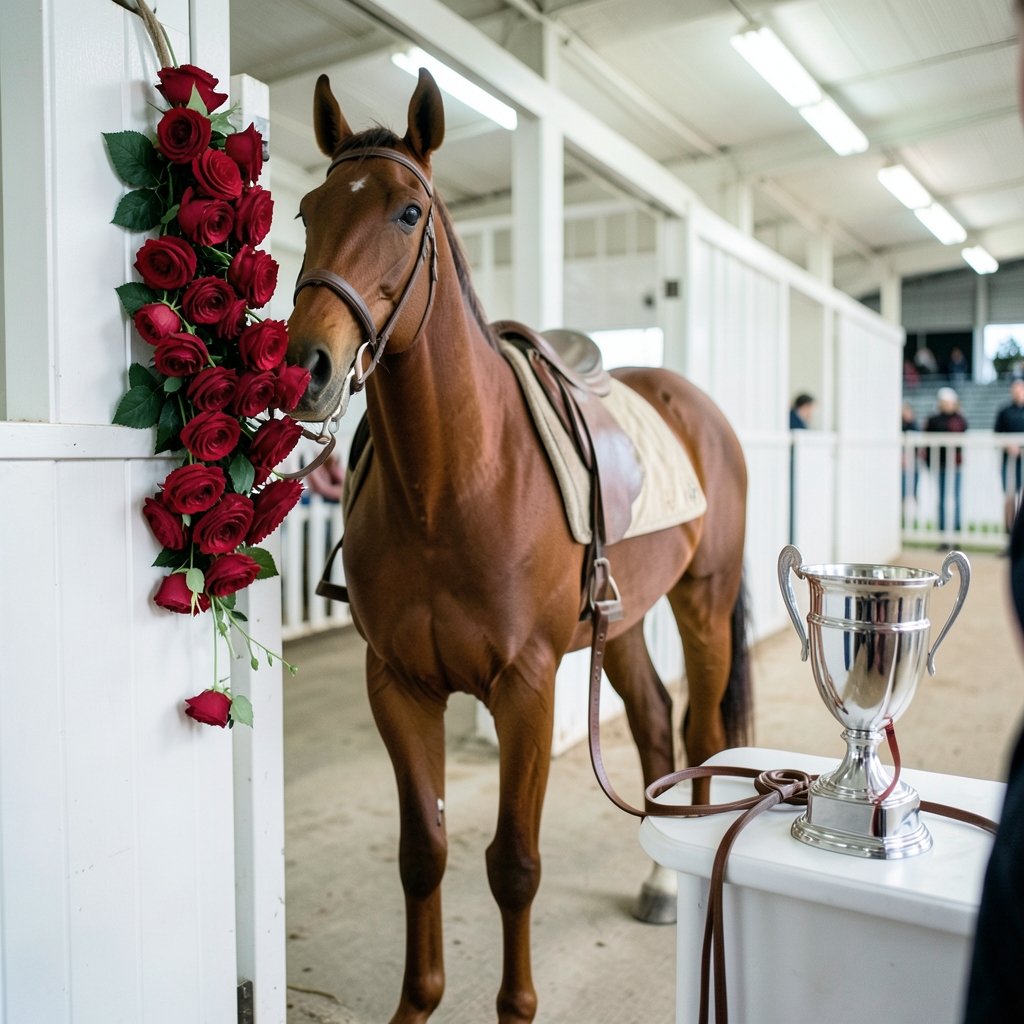
What makes the 153rd running of the Kentucky Derby worth circling on your calendar more than a year in advance? For horse racing fans, the first Saturday in May is less a date than a ritual. The 2027 edition carries that same weight, and it arrives with a fresh crop of three-year-olds, a points system that decides who gets in, and a venue that has spent recent years reinventing itself. This guide breaks down the date, the road to the starting gate, the betting angles, and the practical details that matter whether you are planning a trip to Louisville or just want to sound sharp at a Derby party.
When Is the Kentucky Derby in 2027?
The 2027 Kentucky Derby is scheduled for Saturday, May 1, 2027, at Churchill Downs in Louisville, Kentucky. That date follows the race’s long-standing rule of running on the first Saturday in May, a tradition that has held for decades. (10 best ai chatbots gpt 5 claude under hood 2027)
One honest caveat: Churchill Downs has not, as of this writing, published a formal 2027 date announcement that can be pointed to directly. The May 1 date is the expected one, derived from the standing rule rather than confirmed by a primary source. Anyone booking flights or hotel rooms should treat it as highly likely but not yet official, and check the track’s own schedule before committing money.
The date math is simple. May 1, 2027 falls on a Saturday, so the first-Saturday rule lands there without any adjustment. Compare that to recent years: the 2026 Derby was run on Saturday, May 2, 2026, and the 2025 edition went off on Saturday, May 3, 2025. The race drifts across the first week of May depending on how the calendar falls, which is why the date is never simply “May 1 every year.”
The 153rd Running: A Quick Numbers Check

The Kentucky Derby has been run continuously since 1875. Count forward from that first running and the 2027 edition is the 153rd. The 150th running came in 2024, a milestone Churchill Downs marked with special events and commemorative programming.
That arithmetic is worth flagging because anniversary numbering in racing has occasionally been presented in different ways. The 153rd figure is derived from the 1875 starting point, so if you see a different number floating around, the discrepancy is almost always about how a particular anniversary is counted rather than a factual error about the race’s age.
Why the 2027 Race Matters Beyond the Date
The Derby is the first leg of the American Triple Crown. The Preakness Stakes follows, traditionally two weeks later at Pimlico in Baltimore, then the Belmont Stakes, traditionally three weeks after the Preakness. A horse that wins all three enters rare company. That sequence gives the Derby its outsized importance: it is a rich race and the opening gate of a narrative that can run for five weeks.
The race itself is a Grade I stakes race for three-year-olds, run over 1¼ miles on dirt. That distance is the longest most of these horses will have attempted, and the 20-horse field is the largest most will ever face. The combination of distance, crowd noise, and traffic is why the Derby produces so many hard-luck stories.
How Horses Qualify: The Road to the Kentucky Derby
Entry is not a matter of a trainer’s whim. Horses earn their way in through qualifying points collected in designated prep races, under a system introduced for the 2013 Derby. The points structure has been revised several times since, notably around 2022 through 2024, so anyone quoting point values from an older season is likely working from outdated rules.
The practical takeaway for 2027: confirm the current schedule and point values with Churchill Downs rather than relying on a description from a previous year. Prep races are spread across the country, from Florida and Arkansas to New York and California, and each carries a different point allotment. A single strong performance in a major prep can vault a horse into the field; a series of minor checks might not be enough.
The field is capped at 20 starters, with up to four also-eligible horses. If more than 20 enter, preference goes by qualifying points. That cap creates genuine drama in the final weeks, when bubble horses are scratched, points are recalculated, and a horse sitting 21st can suddenly find itself in the gate.
A Common Mistake With Prep Season
Fans tracking the 2027 field often fixate on one big prep winner and assume that horse is a lock. In practice, the points system rewards consistency and timing. A horse that peaks too early can arrive at Churchill Downs flat, while one that improves steadily through March and April often has more left in the tank. Watch the trend line as well as the headline result.
The Triple Crown Schedule at a Glance
| Race | Timing | Traditional Location | Distance |
|---|---|---|---|
| Kentucky Derby | First Saturday in May (expected May 1, 2027) | Churchill Downs, Louisville, KY | 1¼ miles |
| Preakness Stakes | Two weeks after the Derby | Pimlico, Baltimore, MD | 1 3/16 miles |
| Belmont Stakes | Three weeks after the Preakness | Belmont Park, NY | 1½ miles |
Those gaps are not arbitrary. Two weeks between the Derby and Preakness, then three weeks to the Belmont, is a compressed schedule that tests durability as much as speed. Plenty of Derby winners skip the Preakness entirely, which is one reason a Triple Crown sweep remains so rare.
Churchill Downs and the Derby Festival
Churchill Downs sits in Louisville, Kentucky, and the race is traditionally run as part of the two-week Kentucky Derby Festival, a citywide program of events that includes the Great Balloonfest, the Pegasus Parade, and a long list of parties and concerts. For visitors, the festival matters as much as the race itself: hotel prices spike, traffic snarls, and the infield becomes a scene unto itself.
If you are planning a first trip, the practical advice is straightforward. Book accommodations as early as possible, expect premium pricing anywhere near downtown, and decide in advance whether you want the infield experience or a seated ticket. These are very different days. The infield is a party with a race attached; the grandstand is a race with a party attached.
What Actually Works for First-Timers
- Arrive early. Gates open hours before the race, and the undercard races are genuinely worth watching.
- Dress for weather whiplash. Louisville in early May can swing from chilly mornings to hot afternoons, sometimes with rain.
- Learn the betting basics before you go. Knowing how to read a program and place a win, place, or show bet makes the day far more enjoyable than staring at a tote board in confusion.
- Do not plan a tight exit. Traffic after the Derby is legendary, and rideshare surge pricing is brutal.
The most common mistake is treating Derby day as a single event. It is a full day of racing, and the feature race is late in the afternoon. People who arrive at noon expecting to watch one race and leave are usually surprised by how much of the day the undercard fills.
Betting Angles and Handicapping Basics
Handicapping the 2027 Derby starts long before the field is drawn. The core questions are familiar: Does the horse have the stamina for 1¼ miles? Has it handled a large field? Does it have tactical speed, or does it need to close from far back? And critically, has it shipped and run well away from its home base?
Some practical angles that experienced players lean on:
Post position matters, but less than people think. The extreme outside draws have historically been difficult, but a good horse can overcome a wide gate. The inside can be tricky too, since traffic can trap a horse along the rail.
Speed figures are a starting point, not an answer. A fast number earned in a small field against weak company does not automatically translate to Derby day.
Trainer and jockey records in the race are worth a look, though sample sizes are small and past results do not guarantee future ones. Treat reputation as context, not a betting system.
Watch the workouts. Final breezes in the week before the race sometimes reveal a horse that has gone off form, and that information moves the odds.
Handicapping rewards discipline above all else: the winning approach is rarely the flashiest one, but the one that holds up under pressure.
The Field Is a Blank Slate, and That Is the Point
One thing to understand about the 2027 Derby right now: there is no field. The three-year-olds who will contest it are, at this stage, unraced or lightly raced. The 2026 result is not something that can be stated with confidence here, and any article claiming to know the 2027 contenders more than a year out is guessing. (Best ai translation tools 2027 deepl vs chatgpt vs google)
That uncertainty is not a flaw in the coverage. It is the nature of a race restricted to a single age group. Each year brings an entirely new cast, which is why the Derby retains its freshness. The horses that dominate headlines in January are often not the ones in the winner’s circle in May.
What can be tracked with confidence is the structure: the qualifying series, the points thresholds that have historically been needed to make the field, and the prep-race calendar. Those are the fixed stars. Everything else is form, and form changes.
What to Watch as the 2027 Race Approaches
The build-up follows a predictable rhythm, and knowing it helps you follow along without drowning in noise.
Late 2026: Juvenile form from the previous season gets overinterpreted. Two-year-old champions frequently fail to train on, so treat early favorites with skepticism.
January to March 2027: Prep season begins in earnest. This is when the points picture starts to take shape and when future-book odds begin to shift meaningfully.
April 2027: The final major preps decide the field. Bubble horses, also-eligibles, and late defections dominate the conversation.
Race week: Post positions are drawn, final workouts are reported, and the morning-line odds are set. This is when casual fans start paying attention and when sharp players finalize their opinions.
Early numbers circulate widely and are often wrong. Derby future odds work the same way, so treat any figure reported before it is confirmed with caution.
Conclusion
The 2027 Kentucky Derby is expected on Saturday, May 1, 2027, at Churchill Downs, and it will be the 153rd running of a race that has never missed a year since 1875. The date follows the first-Saturday rule; the field will be decided by qualifying points earned in designated prep races; and the winner will immediately become the first leg of a Triple Crown story that unfolds over the following five weeks.
For now, the smart approach is to treat the date as highly likely rather than official, to confirm current qualifying rules with the track as the season approaches, and to resist the urge to anoint a favorite before the prep races have even been run. The Derby rewards patience in handicapping just as it rewards stamina on the track. Mark the calendar, watch the prep season unfold, and let the field reveal itself.
Frequently Asked Questions
When exactly is the Kentucky Derby in 2027?
The race is scheduled for Saturday, May 1, 2027, at Churchill Downs in Louisville, Kentucky. That date follows the standing rule of running on the first Saturday in May. Churchill Downs has not published a formal 2027 announcement that can be directly confirmed, so treat the date as expected rather than official and verify it with the track before booking travel. (10 best ai chatbots e commerce 2027 that rescue abandoned)
Is the 2027 race the 153rd Kentucky Derby?
Yes, based on the arithmetic. The race has been run continuously since 1875, which makes the 2027 edition the 153rd. The 150th running came in 2024 and was marked with special events. Because anniversary numbering has occasionally been presented differently in racing coverage, it is worth confirming the official numbering closer to race day.
How do horses qualify for the Kentucky Derby?
Horses earn entry through qualifying points collected in designated prep races, under a system introduced for the 2013 Derby. The points structure has been revised several times since, so older descriptions may be outdated. The field is capped at 20 starters with up to four also-eligible horses, and preference goes by points if more than 20 enter.
How many horses run in the Kentucky Derby?
The field is limited to 20 starters, with up to four also-eligible horses listed as alternates. If more than 20 horses qualify, the ones with the most points get in. This cap is a big part of the late-season drama, since a horse sitting just outside the top 20 can move into the field after a single defection.
What is the Triple Crown, and how does the Derby fit in?
The Triple Crown is the series of three races for three-year-olds: the Kentucky Derby, the Preakness Stakes, and the Belmont Stakes. The Derby is the first leg. The Preakness traditionally comes two weeks later at Pimlico, and the Belmont traditionally comes three weeks after the Preakness. Winning all three is rare.
What should first-time visitors know before attending?
Book accommodations early, since Louisville fills up during the two-week Kentucky Derby Festival and prices climb sharply. Decide between the infield and a seated ticket, because they are very different experiences. Arrive well before the feature race to enjoy the undercard, dress for variable spring weather, and plan a slow exit since post-race traffic is famously heavy.



