
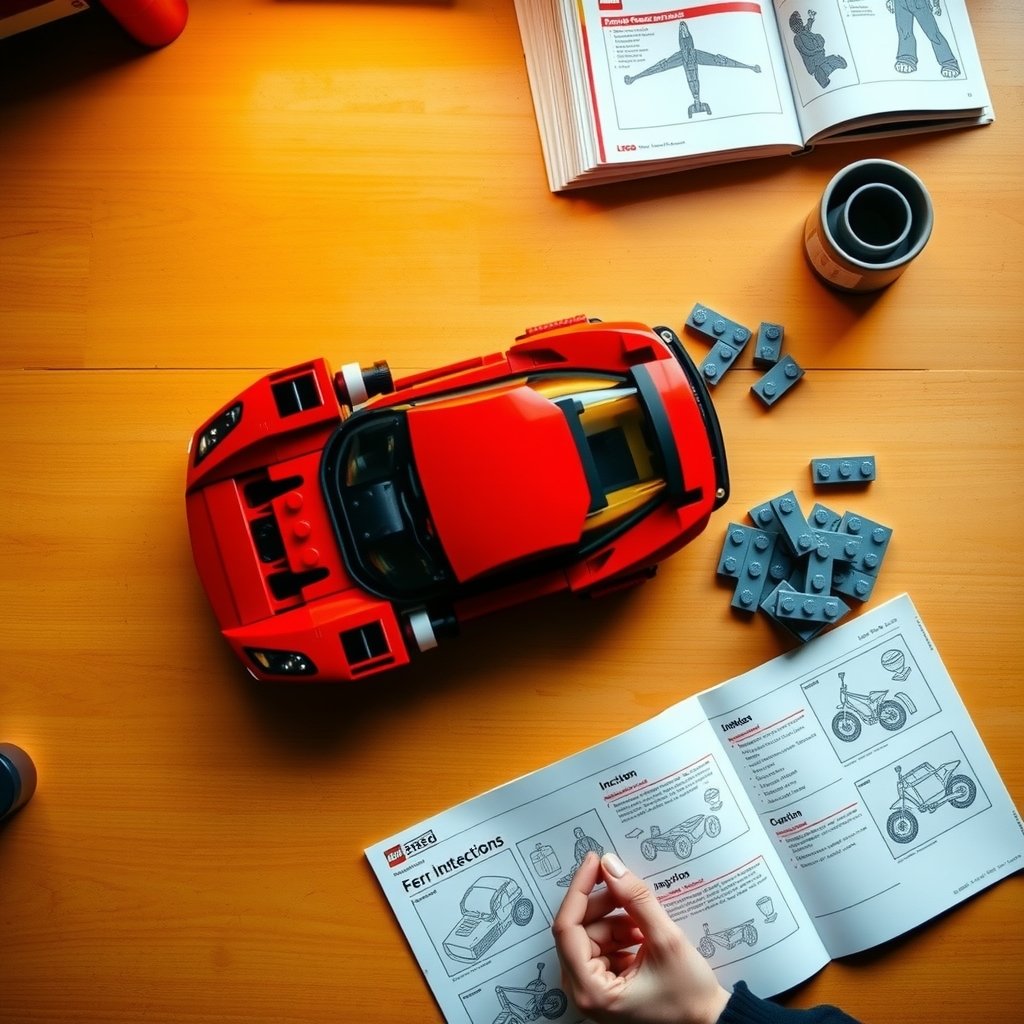
What makes a small pile of plastic bricks feel like a 1,000-horsepower hybrid supercar? For a lot of builders, the answer sits on a shelf in the form of the LEGO Speed Champions Ferrari SF90 XX Stradale. It is a licensed model of one of Ferrari’s most extreme road-legal machines, shrunk down to a size that fits in two hands and a price that fits most budgets. But is it worth your money and your afternoon? That depends on what you want from a set: a quick build, a display piece, or a starting point for a bigger collection.
This guide walks through what the set is, how it compares to its rivals on the shelf, where beginners trip up, and how to get the most out of it. No hype, no sales pitch, just the practical picture.
What the LEGO Speed Champions Ferrari SF90 XX Stradale actually is
The Speed Champions line is LEGO’s home for officially licensed car models. Sets in this theme are built at a small scale, usually somewhere around 1:20 to 1:24 depending on the year and the car, and they typically include a minifigure driver. The idea is simple: recognizable real-world cars, brick-built, at a price and size that make collecting realistic. (Black friday car deals)
The Ferrari SF90 XX Stradale is the real car this set recreates. It is a track-focused, road-legal limited-series version of the SF90 Stradale hybrid supercar. The “XX” badge comes from Ferrari’s long-running XX program, which historically built cars for the track only. The Stradale version broke that rule by being street legal, which is part of why the car generated so much attention when it was unveiled in 2023.
That backstory matters for the LEGO set because it explains the design cues. The real car is loud about its purpose: a fixed rear wing, a more aggressive front end, and aerodynamic tweaks that go well beyond the standard SF90. A good Speed Champions model has to translate those cues into a handful of curved slopes and printed elements, and that translation is where the set either wins you over or doesn’t.
One honest caveat before going further: exact details like piece count, set number, price, and release date vary by region and by year, and they change. Treat any specific number you read online, including in this article, as something to confirm on the box or the retailer’s listing before you buy. What doesn’t change is the design philosophy of the line.
Why small-scale car models are harder to design than they look
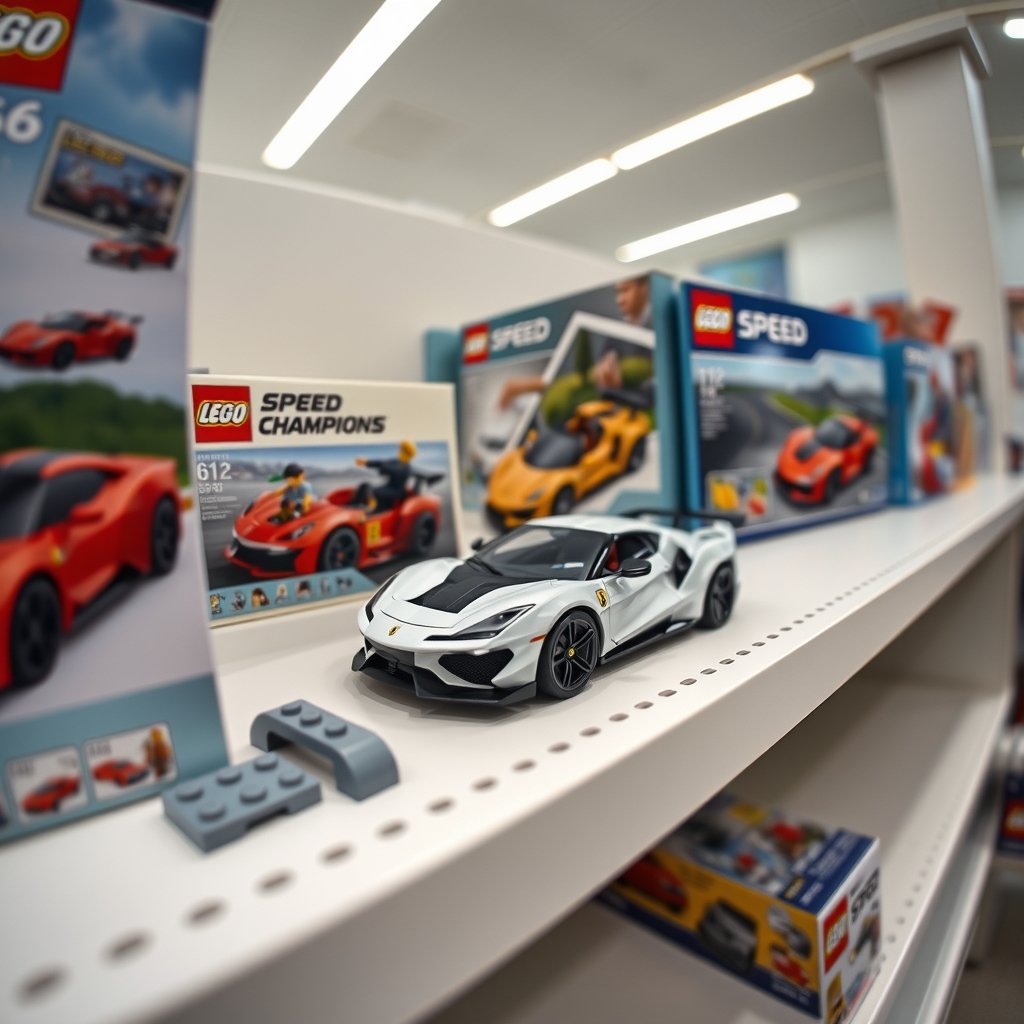
Here is something most buyers never think about. Building a car at roughly 1:20 scale is a design problem in compression. At larger scales, a designer can model a grille with twenty bricks. At Speed Champions scale, the same grille might be two elements and a printed tile. Every detail has to earn its place.
That constraint is exactly why the theme has a devoted following. Designers lean on printed elements instead of stickers where they can, because prints survive handling and look sharper up close. They use angled plates and curved slopes to fake bodywork curves that would be impossible to brick-build literally. And they have to keep the whole thing structurally sound enough that a kid can actually play with it, rather than only look at it.
The practical result for you as a buyer: judge a Speed Champions set by its silhouette first. Does the car read correctly from three feet away? Then check the details that matter to you, like the wheel design, the cockpit, and whether the rear wing looks proportional. Those are the things that separate a satisfying model from a forgettable one.
The hybrid supercar context
The real SF90 XX Stradale pairs a twin-turbo V8 with electric motors, a layout that reflects how modern performance cars have gone hybrid. Ferrari has published production figures and powertrain details for the car through its own channels, and those numbers are worth checking directly if you care about accuracy. The broader point for a LEGO fan is simpler: this is a car from the hybrid era, and the set is a snapshot of that moment in automotive design.
How the set fits into a collection
Speed Champions sets are designed to be collected together. They share a consistent scale, so a Ferrari parked next to a Porsche or a McLaren on the same shelf looks intentional rather than mismatched. That consistency is the quiet genius of the line.
| Buying scenario | What matters most | Practical advice |
|---|---|---|
| First Speed Champions set | Build difficulty and display appeal | Pick a car you actually like; the build techniques transfer to every other set |
| Gift for a younger builder | Age guidance and sturdiness | Check the age range on the box and expect some fiddly small pieces |
| Display-focused collector | Silhouette and printed details | Compare photos of the finished model instead of only the box art |
| Parts donor | Useful elements and colors | Small-scale sets are a good source of curved slopes and printed tiles |
If you are building out a shelf, it helps to think about how you will display the cars. A simple acrylic riser or a shallow shelf with good lighting does more for a small model than any upgrade to the set itself. Dust is the real enemy of a displayed LEGO car, so a covered shelf or a quick weekly pass with a soft brush keeps the plastic looking sharp for years.
Common mistakes people make with this set
Beginners make a handful of predictable errors with small-scale car sets. None of them are fatal, but avoiding them makes the hobby more enjoyable.
- Rushing the stickers. If the set uses stickers, apply them with tweezers and line them up before pressing down. A crooked sticker is the one flaw you will notice every single time you look at the model.
- Skipping the sort. Small sets still have a lot of tiny elements. Sorting by color or shape before you start saves more time than it costs.
- Building on a soft surface. A carpet swallows pieces and makes pressing elements together harder. Use a hard, well-lit table.
- Ignoring the spare parts. LEGO includes small spare pieces for a reason. Keep them in a bag rather than losing them in a drawer.
- Judging the model from the box photo. Box images are often rendered or lit to flatter. Look for photos of the actual built model before you decide.
There is also a storage mistake worth flagging. If you plan to take the car apart later, keep the instructions. Rebuilding a small set from a loose pile is a genuinely harder puzzle than the original build, and the manual is the only reliable map.
Where the value really sits
A Speed Champions set is not a precision scale model, and it is not trying to be. It is a licensed toy that doubles as a display piece, and it is priced accordingly. The value question comes down to what you compare it against.
Compared to a die-cast model of the same car, the LEGO version wins on interactivity and loses on fine detail. Compared to a larger, more expensive LEGO car set, it wins on price and shelf space and loses on presence. The sweet spot for most buyers is the middle: a set that is fun to build in an afternoon, looks good on a desk, and does not require a display case budget.
One more practical angle: if you enjoy the build as much as the result, small-scale sets are excellent practice. The techniques you learn here, like building a convincing curve from angled plates, transfer directly to bigger builds. That makes a set like this a low-cost way to sharpen skills before committing to a large, expensive model.
Care, display, and long-term enjoyment
Plastic bricks are durable, but they are not indestructible. Direct sunlight fades colors over time, especially white and light gray elements, so keep the model out of a south-facing window. Heat warps parts, so a shelf above a radiator is a bad home. And if you live somewhere humid, a sealed display case protects both the bricks and any stickers.
If you want to go further, the hobby has a deep aftermarket for display stands and lighting. A simple LED strip aimed at the car from above brings out the shape of the bodywork in a way that overhead room lighting never will. It is a small upgrade with an outsized effect.
For readers who like to think about performance numbers in general, the same instinct that makes people compare horsepower figures applies to tech gear. If you enjoy benchmarking and spec comparisons, a guide to the download vs upload speed difference and what it actually means for you scratches a similar itch. And if your shelf includes a computer nearby, it is worth knowing how to monitor a USB hub’s slow transfer speeds and fix ports that crawl so your devices keep pace with your patience.
Is it the right set for you?
The honest answer depends on three questions. Do you like the car? Do you enjoy small-scale builds? And do you have a place to put it?
If the answer to all three is yes, this set delivers exactly what the line promises: a recognizable, well-designed model of a genuinely special car, at a price that does not require justification. If you want a long, complex build, look at larger LEGO car sets instead. If you want maximum realism, die-cast is the better fit. And if you are buying for a child, check the age range and be ready to help with the smallest pieces.
Conclusion
The LEGO Speed Champions Ferrari SF90 XX Stradale sits at a genuinely useful point in the hobby. It is small enough to be affordable and quick to build, detailed enough to look right on a shelf, and tied to a real car with a story worth knowing. The set will not satisfy someone chasing museum-grade accuracy, and it is not meant to. What it does well is capture the shape and attitude of an extreme hybrid Ferrari in a form you can build in an afternoon and keep for years.
Buy it because you like the car, build it slowly, display it out of the sun, and it will earn its shelf space. That is a fair deal for a box of plastic bricks.
Frequently Asked Questions
What scale is the LEGO Speed Champions Ferrari SF90 XX Stradale?
Speed Champions models are built at a small scale, generally in the region of 1:20 to 1:24, though the exact ratio varies by set and year. The line is designed for consistent size across cars rather than strict scale accuracy, which is why models from different years display well together.
Does the set include a minifigure driver?
Most Speed Champions sets include a minifigure driver, often with a racing suit and helmet. Check the specific product listing for your region to confirm what is in the box, since contents can vary between releases and editions.
Is this set good for kids or adults?
It suits both, but for different reasons. Kids get a sturdy toy car they can play with, while adults get a display piece and a satisfying short build. Check the age guidance on the box, and expect some small elements that younger builders may need help with.
How long does the build take?
Most small-scale car sets in this theme take roughly an hour or two for an experienced builder, and a bit longer for a first-timer. Sorting pieces first and working on a hard, well-lit surface keeps the pace steady.
Are the details printed or stickers?
It varies by set. Speed Champions has increasingly used printed elements for key details, but stickers still appear on some models. Printed parts age better and look sharper, so check photos of the built model if this matters to you.
Should I keep the instructions and box?
Yes, if you might rebuild or resell the set later. Instructions are the only reliable guide for a rebuild, and a complete box with the manual makes a set easier to store and pass on. Flatten the box to save space rather than discarding it.



