

What is the first thing you notice in a graduation photo from Hawaiʻi? Chances are it isn’t the cap or the gown. It’s the mountain of flowers around the graduate’s neck. A lei is a garland of flowers, leaves, shells, nuts, or ribbon, and on graduation day it has become far more than decoration. It is a public sign of love, family pride, and belonging.
This guide covers what a graduation lei actually means, which types people give, how much they cost, how to wear one without wrecking your gown, and the etiquette mistakes that trip up first-time givers. Whether you are graduating in Honolulu, attending a ceremony on the mainland, or ordering a lei online from another state, the practical details matter more than most people expect.
What a lei means at a graduation ceremony
In Hawaiian tradition, a lei is given to mark a significant moment: a welcome, a farewell, a celebration, a show of affection. Graduation fits all four at once. The garland is placed over the head and settles on the shoulders, and the act of giving it is as important as the object itself.
For many families in Hawaiʻi and across Pacific Islander communities, lei-giving at commencement is not optional. It is the emotional center of the day. Graduates walk into the ceremony wearing one strand and walk out buried in dozens, because every aunt, uncle, cousin, coach, and family friend arrived with one.
The tradition has spread well beyond the islands. Mainland universities with large Native Hawaiian, Samoan, Tongan, and Filipino student populations often see lei at commencement. So do schools with strong Hawaiian studies programs. Even graduates with no island connection now wear them, sometimes made of candy, ribbon, or crocheted yarn rather than flowers.
One practical consequence: at many ceremonies, graduates are asked to keep their lei to a manageable number during the procession. A graduate carrying twenty heavy strands can overheat, and a bulky lei can hide the honor cords and stoles that identify a degree or organization. Many families now drape a few lei during the ceremony and add the rest at photos afterward.
The main types of graduation lei
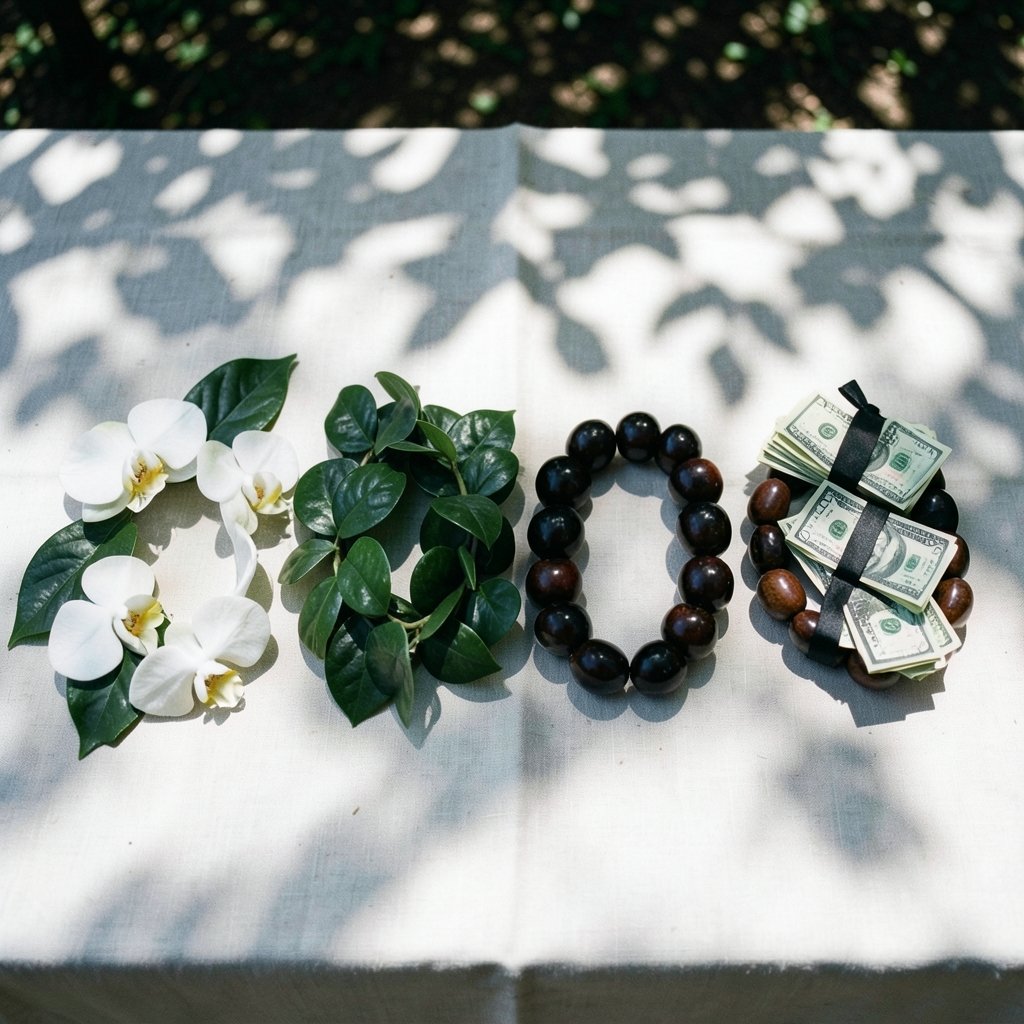
Not all lei are equal, and the differences matter for cost, longevity, and whether they survive a long ceremony in the sun.
| Type | Material | Typical feel | Best for |
|---|---|---|---|
| Flower lei | Orchids, tuberose, carnations, roses | Fragrant, delicate, wilts in heat | Photos, short ceremonies, immediate gifting |
| Leaf and fern lei | Maile, ti leaf, ferns | Green, sturdy, mild scent | Graduates who want something long-lasting |
| Shell or kukui nut lei | Shells, polished nuts | Heavy, permanent, unisex | Keepsake gifts, male graduates, open-collar gowns |
| Ribbon and yarn lei | Satin ribbon, crochet | Light, colorful, no wilting | Budget gifting, large groups, mainland shipping |
| Candy and money lei | Wrapped candy, folded bills | Fun, bulky, edible or spendable | Close friends and siblings, playful photos |
Orchid lei are the workhorse of graduation season. They are relatively affordable, hold up for several hours, and come in purple, white, and green. Maile is a vine lei with a distinct scent, traditionally associated with respect and honor; it is more expensive and harder to source outside Hawaiʻi. Kukui nut lei are the ones graduates keep for decades, hanging them on a wall or in a car rather than composting them.
The money lei deserves its own note. Instead of flowers, givers fold bills into rosettes or fan shapes and string them into a wearable garland. It solves the “what do you give a graduate who has everything” problem in one move, and it photographs well. If you want a full walkthrough of folding and assembly, this guide to a money lei graduation gift that doubles as cash covers the practical steps.
How much a graduation lei costs
Prices swing widely by season, location, and material. In Hawaiʻi during peak graduation weeks in May and June, demand spikes and florists sell out early. A simple orchid strand might run in the range of a modest floral bouquet, while a dense maile lei or a custom double-wrapped orchid lei can cost several times that. Shell and kukui nut lei sit in the middle and last forever, which many buyers consider the better value.
On the mainland, expect to pay more for fresh flower lei because of shipping and cold-chain handling. Many florists import orchid lei in bulk and assemble locally. Ordering a week ahead is standard advice; ordering the morning of graduation is how people end up empty-handed.
A few cost-saving moves that actually work:
- Buy from a local florist or a school fundraiser rather than a resort gift shop, where markup is highest.
- Choose ribbon or yarn lei for classmates and acquaintances, and save fresh flowers for immediate family.
- Split a bulk order with other families; many florists discount at volume.
- Skip the refrigerated shipping premium by picking up in person if you are local.
How to wear a lei correctly
The mechanics are simple, but small choices affect comfort and appearance.
Wear the lei over the head so it rests on the shoulders, not around the neck like a necklace. A lei sits high and close to the collarbone. If you are wearing a gown with a hood or a heavy stole, put the lei on last so it isn’t crushed underneath.
For graduates with long hair, a lei can tangle badly. Loose hair pulled back or braided reduces the problem. Graduates wearing a cap and tassel should also check that the tassel doesn’t catch on the lei when they turn it.
Heat is the real enemy. Fresh flower lei wilt fastest against warm skin and in direct sun. If the ceremony is outdoors in the afternoon, consider a leaf or shell lei for the procession and save the orchid strand for indoor photos. Keeping a flower lei in a cooler or refrigerator until just before the ceremony can add hours of life.
One more thing: some graduates wear multiple lei stacked at different lengths. This looks striking but adds weight and heat. Two or three strands at varying lengths is usually the sweet spot.
Lei etiquette: the mistakes first-time givers make
Most etiquette problems come from good intentions and no local knowledge. Here is what to avoid.
Don’t hand a lei to someone and walk away. The presentation matters. In Hawaiian practice, you place the lei over the recipient’s head, often with a hug or a kiss on the cheek. Handing it over like a shopping bag drains the moment of its meaning.
Don’t assume every graduate wants one. Some graduates have sensory issues with strong fragrance. Some have flower allergies. Some are observing a cultural practice that discourages certain materials. Ask a family member first if you are unsure.
Don’t give a lei that competes with the graduate’s regalia. If a graduate is wearing an honor stole, cultural sash, or specific cords, a bulky lei can bury them. A single elegant strand reads better than a wall of flowers in those photos.
Don’t forget the graduate’s own family. At many ceremonies, parents and grandparents receive lei too. Arriving with one extra strand for a parent is a small gesture that lands well.
Don’t toss a lei in the trash afterward. Many people feel strongly about this. Returning a lei to the earth, hanging it to dry, or keeping a shell or nut lei as a keepsake are all considered respectful. If you are unsure what to do with a gifted lei, ask the person who gave it.
Buying and caring for lei from a distance
Graduates and families who live far from Hawaiʻi face a real logistics problem. Fresh flower lei shipped overnight can arrive looking tired, especially in warm weather. If you are ordering from the mainland, ask the florist how the lei is packed and whether it ships with a cold pack. Confirm the delivery date in writing; “ships in time” is not the same as “arrives in time.”
For long-distance gifting, non-perishable lei are the safer bet. Ribbon lei, crocheted yarn lei, shell lei, and kukui nut lei all ship flat and survive a week in a mailbox. They also work for graduates whose ceremony falls in winter, when fresh tropical flowers are hardest to source.
If you are the graduate and expect a lot of lei, plan the exit. Bring a large bag or box to the ceremony, designate someone to hold the overflow, and decide in advance which strands you will keep and which you will give away to younger relatives. Graduates who don’t plan for this end up juggling armfuls of flowers in a parking lot.
What lei add to the ceremony itself
There is a practical reason lei show up in so many commencement photos: they are visually unifying. A sea of graduates in identical gowns becomes a sea of individual stories once each person is wearing a different garland. Photographers love them because they add color and texture to an otherwise monochrome scene.
They also change the emotional temperature. A graduation is formal and a little stiff. A lei is soft, fragrant, and personal. When a graduate walks across the stage wearing something a grandmother made by hand, the ceremony stops being an institutional ritual and becomes a family event.
That is why the tradition keeps spreading. It doesn’t require anyone to abandon local customs. It layers on top of them.
Common questions about lei and graduation
Is it okay to wear a lei if you are not Hawaiian?
Yes, with care. Wearing a lei as a guest in someone else’s tradition is generally welcomed, especially if you understand what it signifies and treat it with respect. The bigger issue is not wearing one but wearing one thoughtlessly, such as treating it as a costume accessory or discarding it carelessly afterward. If you are unsure, ask a classmate or family friend from the culture for guidance.
How many lei should a graduate wear?
There is no rule, but three to five strands is a comfortable range for most graduates. More than that gets heavy, hot, and hard to manage during a long ceremony. Many graduates wear one or two during the procession and add the rest for photos afterward.
How long does a fresh flower lei last?
A typical orchid lei holds up for a day or so if kept cool and out of direct sun. Tuberose and carnation lei are similarly short-lived. Leaf lei and maile last longer, often several days, and dry gracefully. Shell and kukui nut lei last indefinitely.
Can you give a lei to a male graduate?
Absolutely. Kukui nut, shell, maile, and ti leaf lei are all common for male graduates and are often considered more masculine than dense flower strands. Candy and money lei are popular for brothers and close friends regardless of gender.
What should you do with a lei after graduation?
Common practices include hanging it to dry, keeping a shell or nut lei as a keepsake, returning fresh flowers to the earth, or passing a ribbon lei to a younger relative graduating later. Avoid throwing a lei in the trash, which many people consider disrespectful to the giver and the tradition.
Do you have to buy a lei from a florist?
No. School fundraisers, church groups, and family members who crochet or fold money lei are all common sources, and often cheaper. The main thing is to order or make it early, because graduation week demand outstrips supply almost everywhere.
Conclusion
A lei on graduation day is a small object carrying a lot of weight. It marks achievement, but it also marks connection: the people who showed up, the family that pooled money for flowers, the aunt who spent a week crocheting ribbon. Understanding the types, the costs, and the etiquette lets you participate in that tradition well rather than awkwardly. Whether you are the graduate buried in orchids or the cousin arriving with a single maile strand, the gesture lands when it is given with intention. Plan ahead, respect the custom, and let the photos show what the day actually meant.



