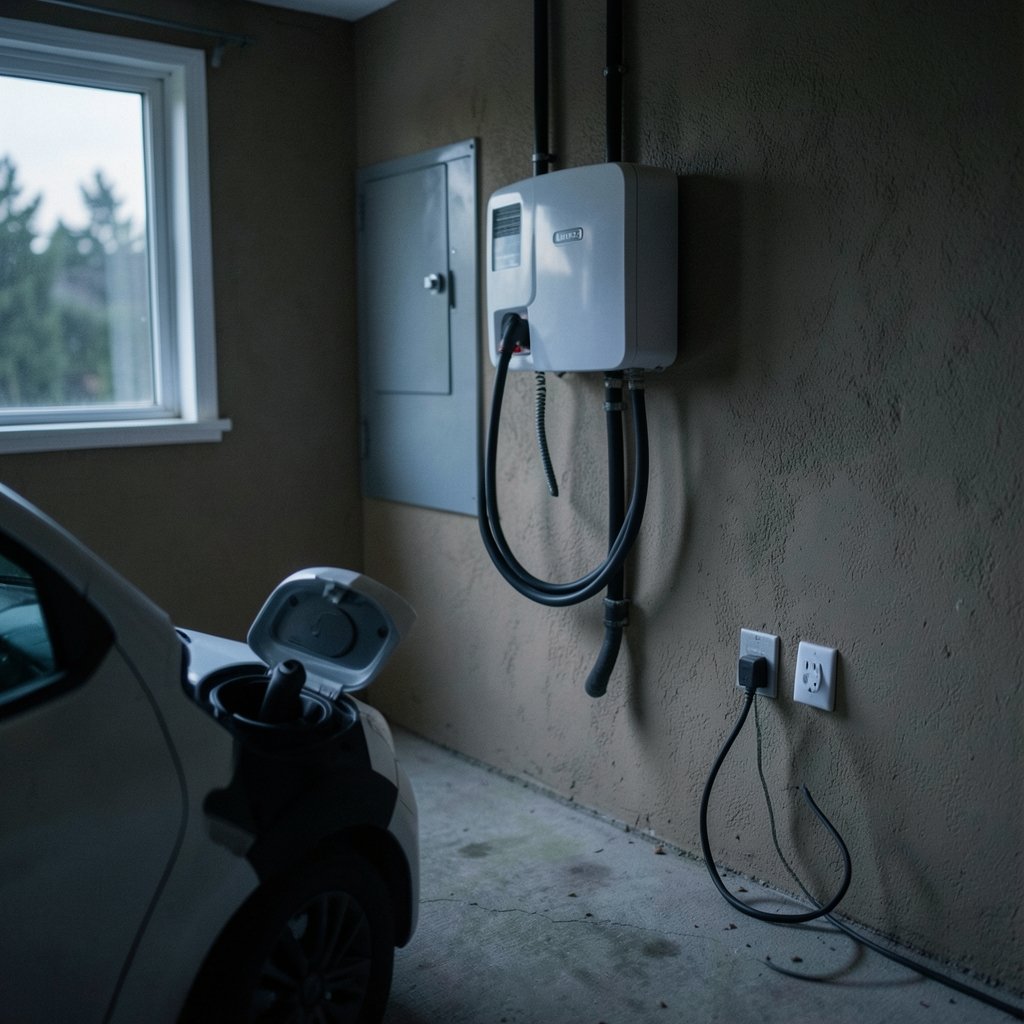
Roughly 80% of electric vehicle charging happens at home, often while the driver is asleep. That single fact explains why the choice between Level 1 and Level 2 charging matters more than almost any other decision a new EV owner makes. One option plugs into the wall outlet you already have. The other requires an electrician, a permit in some areas, and a few hundred to a few thousand dollars. Both will fill your battery. Only one will do it on your schedule.
This guide breaks down the real differences between the two, from power output and charge times to installation costs and the mistakes people make when setting up a home charger.
What Level 1 and Level 2 Charging Actually Mean
The “Level” labels come from standards used across North America to describe how fast a charger delivers energy. Level 1 charging uses a standard 120-volt AC household outlet, the same kind a lamp or a phone charger uses. Level 2 charging uses 208 to 240 volts AC, which is the voltage behind an electric dryer or oven circuit.
There is also a third category, DC fast charging, sometimes still called Level 3. That is a different beast entirely and not part of this comparison, since almost nobody installs DC fast chargers at home.
The key insight is that both Level 1 and Level 2 deliver alternating current to the car. The vehicle’s built-in charger converts that AC power to DC before it reaches the battery. That onboard charger has a maximum acceptance rate, and it caps how fast your car can take power no matter how capable the wall equipment is. A 48-amp Level 2 station will not charge a car whose onboard charger tops out at 32 amps any faster than a 32-amp station would. The lower limit always wins.
Power Output: The Numbers That Drive Everything
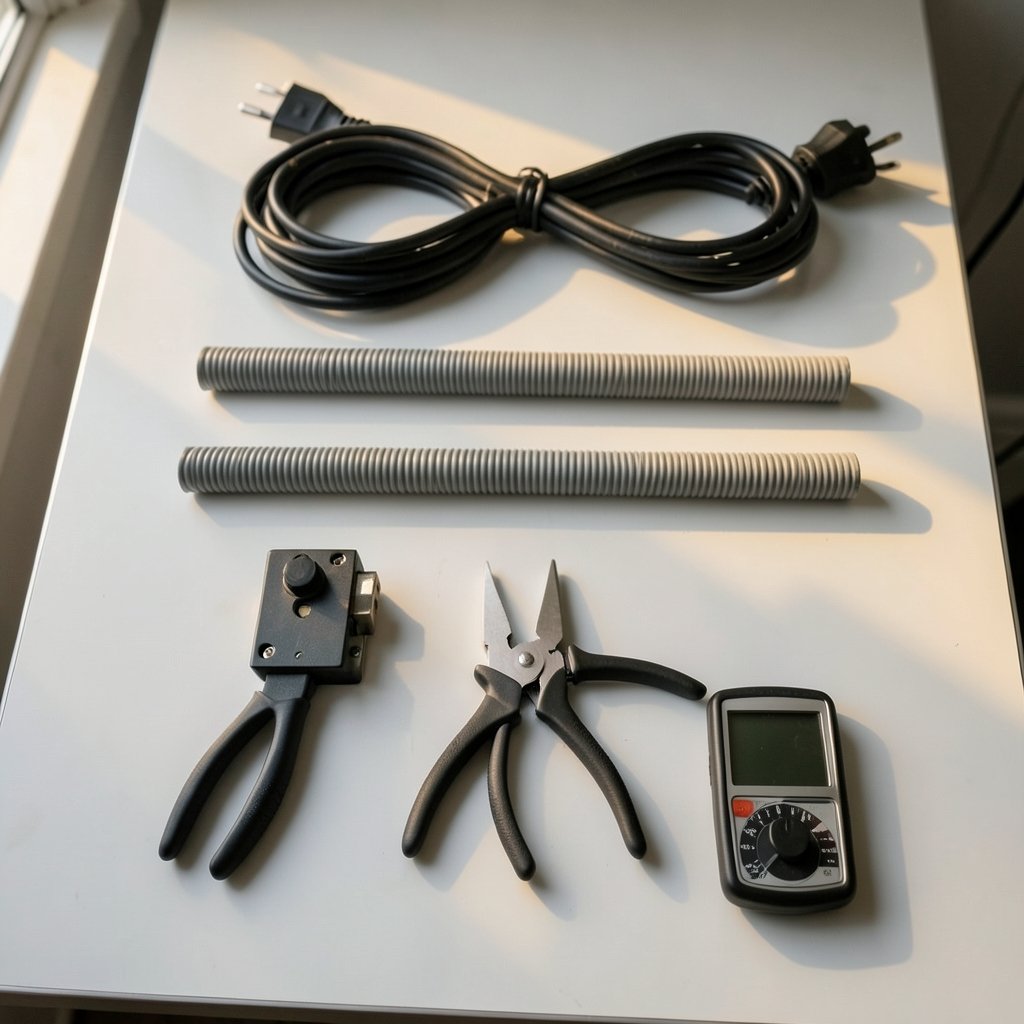
Level 1 charging typically delivers around 1.2 to 1.4 kilowatts, which works out to roughly 12 amps at 120 volts on a standard 15-amp circuit. Level 2 charging commonly ranges from about 3.3 kW to 19.2 kW, depending on the circuit size and the vehicle’s onboard charger. (EV Charging Speeds)
| Feature | Level 1 | Level 2 |
|---|---|---|
| Voltage | 120 V AC | 208–240 V AC |
| Typical power | 1.2–1.4 kW | 3.3–19.2 kW |
| Range added per hour | About 2–5 miles | About 10–20+ miles |
| Connector (North America) | SAE J1772 | SAE J1772 |
| Dedicated circuit needed | No | Yes |
| Typical hardware cost | None (cordset included) | Several hundred dollars and up |
| Installation required | No | Usually yes |
| Best for | Low-mileage drivers, renters, top-ups | Daily commuters, overnight full charges |
Those range figures are approximations. A highly efficient sedan will add more miles per hour than a large electric pickup, because efficiency, measured in miles per kilowatt-hour, varies widely between vehicles. Treat any “miles per hour” number as a rough guide, not a promise.
How Long Does Each One Take to Charge?
Charge time depends on two things: how big the battery is and how much power the car can accept.
With Level 1, a car with a 60 kWh battery starting near empty could need well over a day to reach full. Smaller batteries and shorter top-ups are far more forgiving. Plugging in overnight after a 20-mile commute might recover that day’s use in six to eight hours.
With Level 2, most EVs go from a low state of charge to full overnight, typically in six to ten hours on a mid-range circuit. That is the practical sweet spot: you arrive home, plug in, and wake up to a full battery without thinking about it.
A useful way to frame it: Level 1 is a maintenance charger. Level 2 is a refueling station.
What You Need for Each Setup
Level 1 setup
Most EVs ship with a portable cordset that plugs into a standard outlet. No electrician, no permit, no wall unit. The catch is that the outlet itself matters. An older, worn receptacle, a circuit shared with other appliances, or a long extension cord can create real safety problems. Charging continuously at 12 amps for eight hours is a sustained load, and household wiring was not always installed with that in mind.
Level 2 setup
Level 2 generally requires a dedicated 240-volt circuit and, for permanent installations, a wall-mounted EV supply equipment unit, often called an EVSE. In the United States, the National Electrical Code, maintained by NFPA, addresses EV supply equipment in Article 625, and continuous-load rules typically require circuit sizing at 125% of the charger’s rated current. That is why a 40-amp charger usually sits on a 50-amp circuit.
In practice, this means hiring a licensed electrician, checking whether your electrical panel has spare capacity, and possibly pulling a permit. Older homes with 100-amp service sometimes need a panel upgrade, which is where costs can climb quickly.
The Connector Question
In North America, both Level 1 and Level 2 charging most often use the SAE J1772 connector, a standard maintained by SAE International. Tesla vehicles use a proprietary connector but ship with adapters, and the broader industry has been moving toward the NACS connector for new vehicles. In Europe, the Type 2 connector dominates; in China, GB/T. Anyone reading advice written for a different region should double-check which standard applies locally.
Real-World Experience: What Actually Works
Here is where theory meets the driveway. A few patterns show up again and again among EV owners.
Level 1 works better than skeptics claim, for the right driver. Someone commuting 25 miles a day in an efficient car can often recover that in a single overnight session. The people who struggle with Level 1 are usually driving 60-plus miles daily, live in cold climates where efficiency drops, or own a vehicle with a large battery and modest efficiency.
The most common mistake is skipping the circuit check. Homeowners buy a Level 2 charger online, then discover their panel is full or their service is undersized. Getting an electrician’s assessment before buying hardware saves money and frustration.
Extension cords are a genuine hazard. A standard household extension cord is not rated for hours of continuous 12-amp draw. If a Level 1 setup requires an extension cord, that is a signal to reconsider the whole arrangement.
The onboard charger limit surprises people. Buyers compare wall chargers by amperage without checking what their car can actually accept. A 48-amp unit paired with a 32-amp onboard charger is money spent on capability the car cannot use.
Cold weather changes the math. In freezing temperatures, both charging speed and range efficiency drop. Level 2’s extra headroom matters more in winter, because some of that power goes to keeping the battery warm rather than adding range.
Level 2 is somewhat more efficient. Spreading the vehicle’s fixed overhead, such as electronics and thermal management, across a higher power level means a slightly larger share of the electricity reaches the battery. The difference is modest but real over years of charging.
Cost Considerations
Level 1 costs essentially nothing beyond the cordset that comes with the car. Level 2 involves the EVSE unit plus installation, and installation cost swings wildly based on distance from the electrical panel, panel capacity, and local labor rates. A short run from a panel with spare capacity is a very different project from a detached garage requiring trenching.
There is also the question of whether utility rebates or tax incentives apply. Programs change frequently, so checking current federal and local offerings is worth an hour of research before committing.
The U.S. Department of Energy’s Alternative Fuels Data Center at afdc.energy.gov maintains reference material on charging levels and infrastructure that is a reasonable starting point for anyone weighing the options.
Which One Should You Choose?
The decision comes down to three questions.
- How far do you drive on a typical day? Under about 40 miles, Level 1 often suffices. Above that, Level 2 becomes increasingly attractive.
- How long is your car parked overnight? Eight or more hours of downtime makes Level 1 far more viable.
- What does your electrical panel allow? If a 240-volt circuit is easy to add, Level 2 is a low-friction upgrade. If it requires a service upgrade, the math changes.
A practical hybrid approach also exists: many drivers rely on Level 1 at home and use public Level 2 or DC fast charging for longer trips. That combination keeps installation costs at zero while covering the occasional high-mileage day.
For anyone comparing home charging setups alongside other property and equipment decisions, resources like OCCCY can help frame the broader cost and planning picture.
Common Mistakes to Avoid
- Assuming all 240-volt outlets are equal. A dryer outlet is not automatically suitable for EV charging; the circuit, breaker, and receptacle type all matter.
- Ignoring the vehicle’s onboard charger rating. Match the EVSE to what the car can accept.
- Using a standard extension cord for Level 1. Continuous high-current draw on an undersized cord is a fire risk.
- Skipping the permit. Unpermitted electrical work can complicate home sales and insurance claims.
- Buying a charger before the site assessment. Panel capacity is the usual bottleneck, and it is cheaper to learn that first.
- Forgetting that charging speed tapers. The last portion of a charge is slower on many vehicles as the battery balances, so “full” takes longer than the early percentage gains suggest.
Conclusion
Level 1 and Level 2 charging are not rivals so much as tools for different jobs. Level 1 is the zero-cost default that quietly covers modest daily driving, and it deserves more respect than it gets. Level 2 is the upgrade that turns charging into a background task, reliably delivering a full battery every morning for drivers who cover real distance. The right answer depends on miles driven, hours parked, and what the electrical panel can support. Get the panel assessed, check the vehicle’s onboard charger limit, and the decision usually makes itself.
Frequently Asked Questions
Is Level 1 charging bad for an EV battery?
No. Level 1 is the gentlest form of charging and produces less heat than faster methods. Battery degradation is driven mainly by high temperatures, very high states of charge over long periods, and frequent DC fast charging, not by slow home charging. (Charging station)
Can I use a regular extension cord for Level 1 charging?
It is strongly discouraged. A standard household extension cord is typically not rated for many hours of continuous 12-amp draw, and undersized or damaged cords can overheat. If an extension cord seems necessary, that usually signals the outlet location is wrong for the job.
How much does Level 2 installation cost?
Costs vary widely by region and site conditions. A simple install near a panel with spare capacity is far cheaper than one requiring a long wire run, trenching, or a service upgrade. Getting two or three electrician quotes is standard practice.
Do I need a permit to install a Level 2 charger?
In many jurisdictions, yes. Permitting rules are set locally, and requirements differ between cities and counties. A licensed electrician will typically know the local rules and can handle the paperwork.
Will Level 2 charging damage my car if it exceeds the onboard charger limit?
No. The vehicle simply draws what it can accept. A higher-capacity EVSE will not force extra power into the car, though buying more capacity than the vehicle can use is wasted money.
Can I get by with Level 1 only?
Many drivers can, especially those covering under about 40 miles a day with long overnight parking windows. Drivers with long commutes, large-battery vehicles, cold winters, or frequent multi-trip days usually find Level 2 worth the investment.