
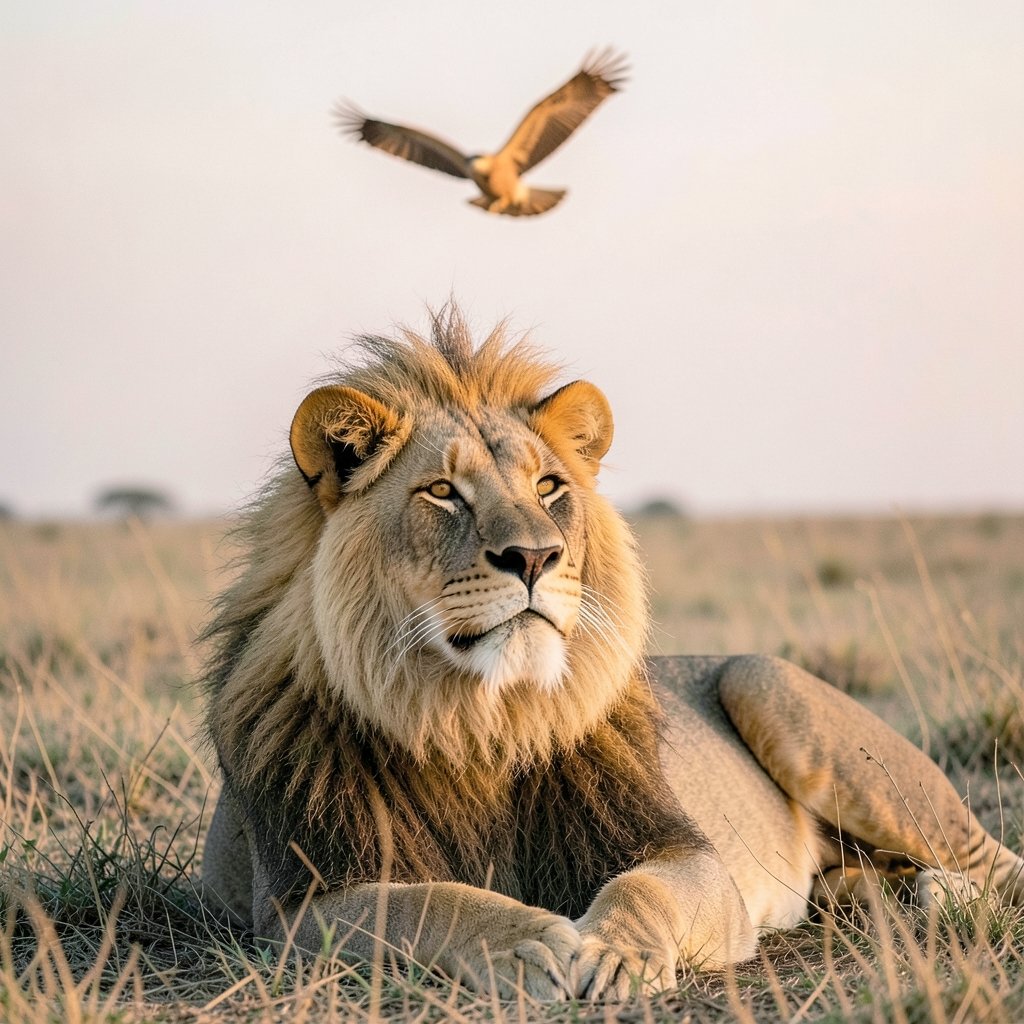
What happens when the king of the savanna meets the ruler of the sky? The honest answer is: not much. Lions and eagles almost never meet, and when they do, neither animal treats the other as a serious threat. That hasn’t stopped the internet from turning “lions vs eagles” into a fantasy showdown, complete with dramatic thumbnails and questionable physics.
This article takes the matchup seriously anyway. It compares the two predators on the things that actually decide survival: size, weaponry, hunting style, eyesight, and conservation status. Along the way, it covers the one place where “lions vs eagles” means something completely different, a football rivalry between Detroit and Philadelphia, so nobody ends up reading a wildlife essay when they wanted a box score. (National Football League official site)
Why the Matchup Is Mostly a Myth
A full-grown African lion weighs roughly 150 to 225 kilograms. The largest eagles on Earth, such as the martial eagle or the golden eagle, weigh somewhere between 3 and 6.5 kilograms. That is a body-weight gap of more than thirty to one. A lion outweighs a martial eagle the way a family car outweighs a bicycle.
That gap matters because eagles are not built to attack large mammals. They hunt hares, guineafowl, small antelope, monitor lizards, and snakes. A lion, by contrast, is a dedicated large-mammal specialist that takes down zebra and wildebeest. The two animals occupy different weight classes, different habitats in the same area, and different parts of the food web.
The realistic encounters are brief and undramatic. An eagle nesting near a waterhole might alarm-call when a lion walks past. A lion might swipe at a bird that flies too low, usually without success. Eagles are fast enough, and lions are uninterested enough, that nothing resembling a duel takes place.
Lions vs Eagles: A Side-by-Side Comparison
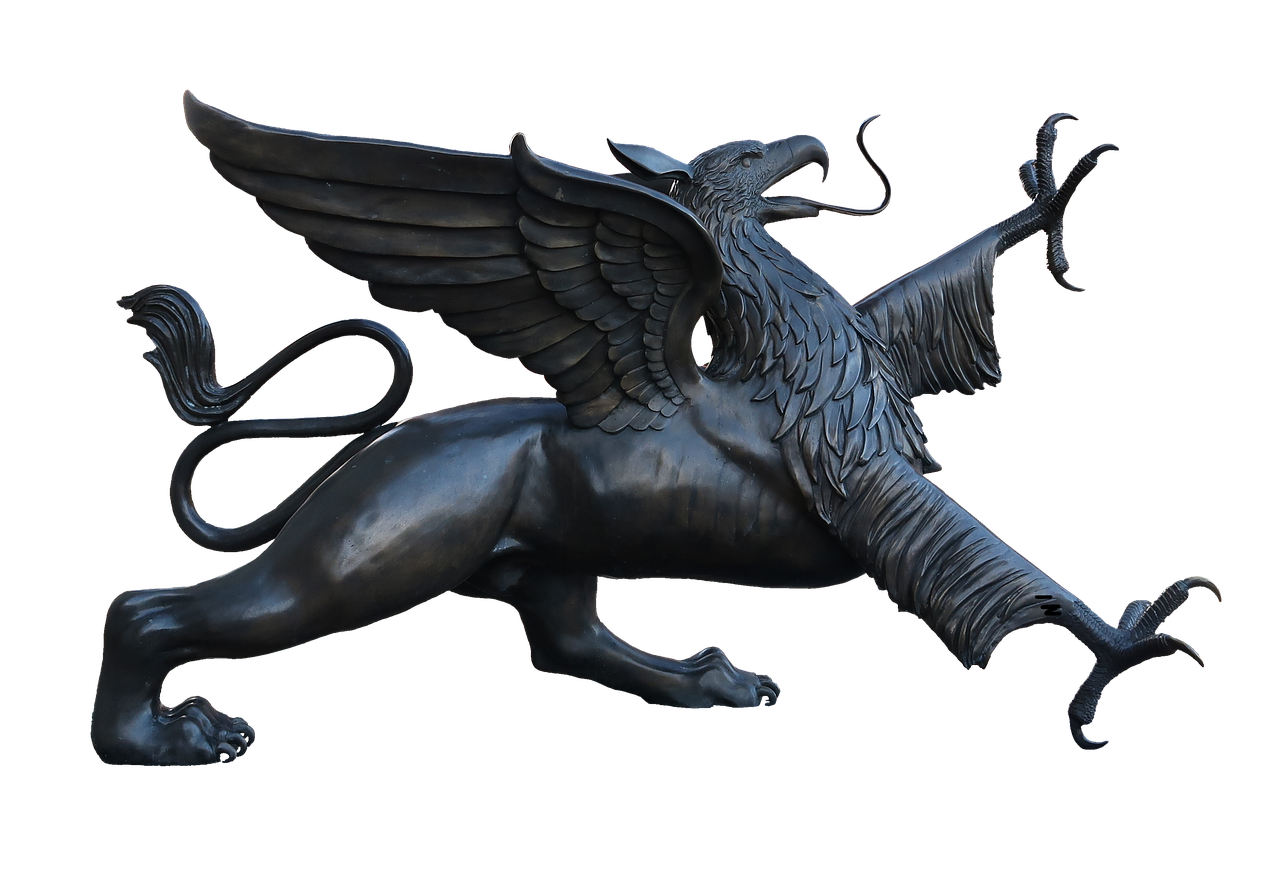
Here is how the two predators stack up on the measures that actually matter in the wild.
| Trait | African Lion | Large Eagle (e.g., Martial Eagle) |
|---|---|---|
| Typical adult weight | 150–225 kg (males) | 3–6.5 kg |
| Top speed | About 80 km/h in short bursts | 120–160 km/h in a hunting stoop |
| Primary weapon | Jaws, forelimbs, coordinated pride attack | Talons, grip strength, aerial surprise |
| Eyesight | Excellent night vision | Sharper resolution, wider color range |
| Hunting style | Ambush and group pursuit | Soaring search, then a high-speed dive |
| Social structure | Prides with cooperative females | Mostly solitary pairs on a territory |
| IUCN Red List status | Vulnerable | Endangered (martial eagle) |
| Main threat | Habitat loss, prey depletion, conflict with people | Persecution, power-line collisions, habitat loss |
The table tells a story that a cage-match framing hides. Each animal is superbly adapted to its own niche. The lion wins on raw power and social coordination. The eagle wins on speed, vision, and the ability to strike from a direction the prey never checks.
What Each Animal Does Better
The lion’s edge: power and teamwork
Lions are the only truly social cats. Females do most of the hunting and often work in coordinated groups, one cutting off escape routes while others close in. That teamwork lets a pride bring down animals several times the weight of a single lioness. A solitary eagle could never do anything comparable.
Lions also control territory in a way birds cannot. A pride holds ground, patrols, and defends kills against hyenas and rival males. In a head-to-head physical contest, no eagle on Earth is a threat to a healthy adult lion.
The eagle’s edge: vision and velocity
An eagle’s eyesight is the stuff of legend, and for good reason. The fovea, the part of the retina that produces the sharpest image, is packed far more densely with light-detecting cells than a human’s. Eagles also see ultraviolet light, which helps them spot the urine trails of small rodents. In practice, this means an eagle can identify a hare from hundreds of meters up while moving at speed.
Then there is the dive. A hunting eagle folds its wings and drops in a near-vertical stoop, striking with talons that can close with crushing force. The prey usually never sees it coming. Lions, by contrast, must get within a few dozen meters before their sprint begins, and they tire quickly.
Where the Two Animals Overlap
Lions and eagles do share habitat across much of sub-Saharan Africa, and they interact in small ways that matter to ecologists.
Eagles sometimes nest in tall trees near lion territories and benefit indirectly from lion kills. A pride leaves behind carcass remains that attract vultures, and vultures attract eagles looking for an easy meal. In that sense, lions function as a food source for scavengers without ever being prey.
The relationship runs the other way too. Lions occasionally climb trees, especially in regions where they have learned to rest in branches to escape heat and insects. A lion in a tree is closer to eagle nests than anyone expects, but recorded conflicts are rare.
The real overlap is in conservation. Both animals need large, connected landscapes with healthy prey populations. Protect the savanna and you protect both. Fragment it and both decline.
Conservation Status: The Numbers That Matter
Here the comparison stops being a fun thought experiment and becomes sobering.
The African lion is listed as Vulnerable on the IUCN Red List, with the most recent full assessment dating to 2014. Populations have fallen sharply over the past century as savanna has been converted to farmland and livestock, and as lions come into conflict with herders.
The martial eagle is listed as Endangered, assessed in 2017. It is a slow breeder that raises a single chick in most years, which makes recovery from any added mortality painfully slow. Persecution by farmers, collisions with power lines, and loss of large nesting trees all take a toll.
The bald eagle offers a hopeful contrast. It was removed from the U.S. list of threatened and endangered species in 2007 after decades of protection and the 1972 ban on DDT, which had thinned eggshells across the country. It is a reminder that eagle declines can be reversed when the cause is identified and addressed.
Practical Tips for Watching Both Species
Wildlife guides and photographers who work in lion country learn a few habits that make eagle sightings more likely. These are the practical tips that actually work in the field.
- Scan the sky at dawn. Eagles use morning thermals to gain height before hunting. Look up while the light is still low.
- Watch the vultures. A circling flock of vultures often means a carcass, and carcasses draw eagles. Follow the birds, not the cats.
- Check tall dead trees. Martial eagles and other large raptors favor emergent branches with a clear view. These are the most reliable perches.
- Keep your distance from nests. Disturbance at a nest site can cause a breeding pair to abandon a chick. Use a long lens, not a closer approach.
- Track lions at dawn and dusk. These are their active hours. Midday lions are usually flat on their backs, which is a great photo and a poor behavioral study.
The most common mistake is expecting a confrontation. Guides report that visitors often ask when the lion will “fight” the eagle. It won’t. The behavior to watch is subtler: how a raptor reads the terrain from above, how a pride reads it from the ground.
Reading Lions vs Eagles Stats Correctly
When people look up head-to-head numbers, they usually want a simple verdict. Real ecological data does not give one. Two animals that never compete for the same prey and never fight over the same resource cannot be ranked on a single scale.
The better approach is to compare them on separate axes: hunting efficiency in their own domain, resilience to habitat change, and reproductive rate. On those measures, the lion is the more adaptable generalist and the eagle is the more fragile specialist. That is a more useful conclusion than “the lion wins.”
The same caution applies to sports statistics. A single game’s numbers can mislead if you ignore sample size, opponent quality, and game situation. Reading player stats well means asking what the numbers were measured against rather than only which column is bigger.
The Other Lions vs Eagles: Detroit and Philadelphia
Search the phrase and you will also find a long-running NFL rivalry between the Detroit Lions and the Philadelphia Eagles. The two franchises have met in the regular season since the 1930s, and their playoff history includes a wild 1995 Wild Card game that Philadelphia won 58–37, still one of the highest-scoring postseason games on record.
Detroit’s 2024 season was the best in franchise history, a 15–2 regular season that ended with a divisional-round loss in Philadelphia. The Eagles went on to win Super Bowl LIX in February 2025. For readers who want to dig into the numbers behind those matchups, a detailed breakdown of Packers vs Lions player stats shows how to read divisional rivalry data without overreacting to one game, and a closer look at Detroit Lions vs Minnesota Vikings match player stats covers the same division from another angle.
The same statistical discipline applies across the NFC East, where Cowboys vs Eagles player stats explain which numbers actually decide tight games, and a companion piece on Philadelphia Eagles vs Dallas Cowboys match player stats walks through the same rivalry from the other sideline. (Philadelphia Eagles)
Conclusion
Lions vs eagles is two stories wearing one name. In the wild, it is a mismatch that never happens: a 200-kilogram cat and a 5-kilogram bird living in the same area without ever treating each other as rivals. The real contest is between both animals and a shrinking habitat, not between the two species. The lion is Vulnerable, the martial eagle is Endangered, and the bald eagle’s recovery shows what sustained effort can achieve.
On the football field, the phrase means a genuine rivalry with real history, real playoff drama, and real statistics worth reading carefully. Either way, the lesson is the same. Look past the dramatic framing, check what the numbers actually measure, and the picture gets clearer and more interesting.
FAQ
Can a lion kill an eagle?
A lion is physically capable of killing any eagle, but it almost never happens. Eagles stay high, fly fast, and rarely come within reach. A lion has no reason to expend energy on a bird that provides almost no food.
Can an eagle kill a lion?
No. No eagle species is large or strong enough to kill an adult lion. Even the largest eagles hunt prey weighing a few kilograms, not animals weighing more than a hundred.
Which animal is faster, a lion or an eagle?
An eagle is far faster in a dive, reaching speeds well over 100 km/h when stooping. A lion tops out around 80 km/h and can only hold that pace for a few hundred meters.
Who would win in a fight between a lion and an eagle?
In any direct physical contest, the lion wins easily because of the enormous size difference. The more accurate answer is that the fight does not occur in nature, since the two animals avoid each other.
Are lions and eagles endangered?
The African lion is listed as Vulnerable, and the martial eagle is listed as Endangered. Both face habitat loss and human conflict, though the eagle’s slow breeding rate makes it especially vulnerable.
Why do people search for lions vs eagles?
The phrase is ambiguous. Some people want a wildlife comparison, and others want NFL coverage of the Detroit Lions and Philadelphia Eagles. The two topics share a name but nothing else.



