
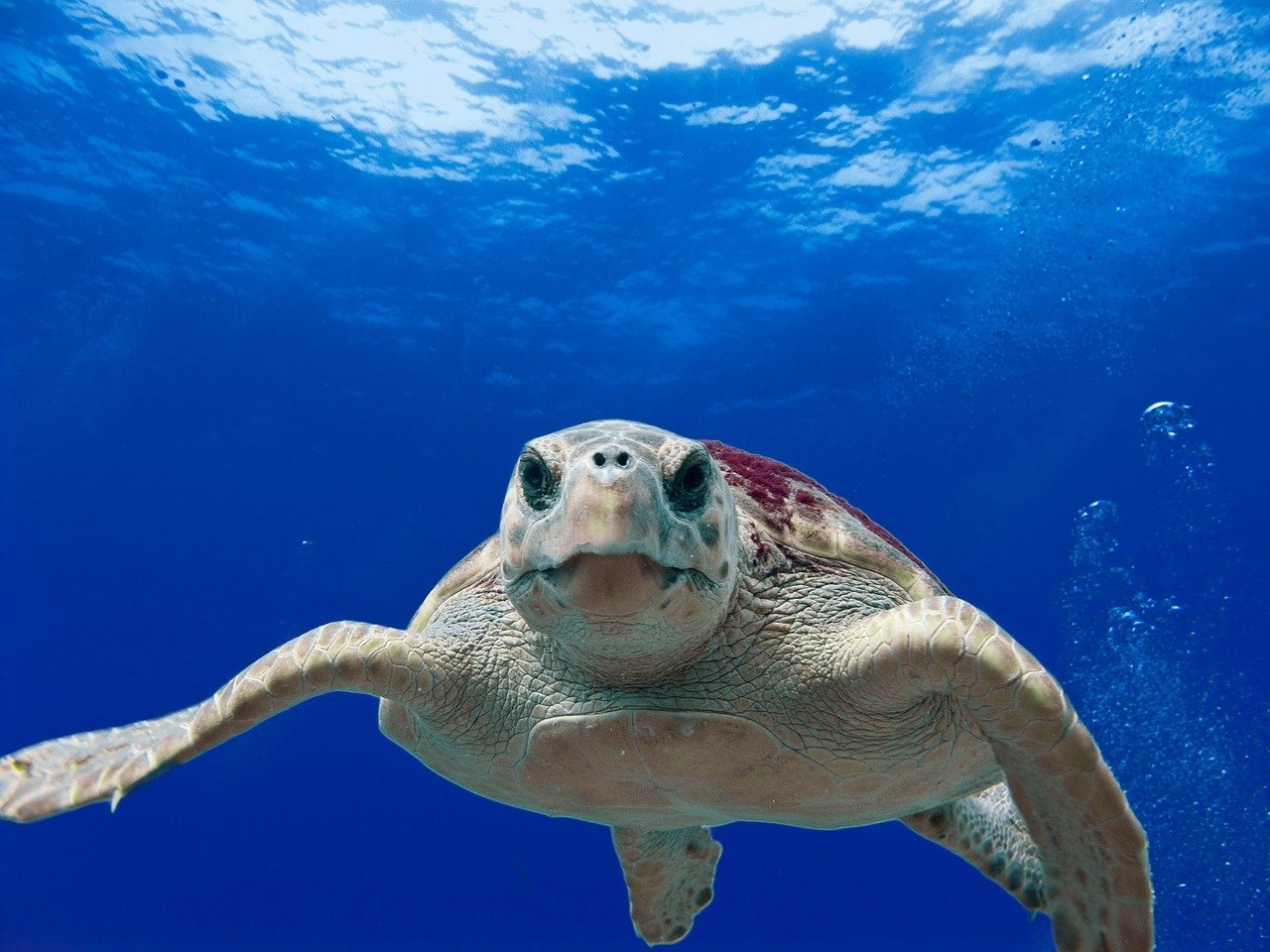
What animal can crack open a crab like a nutcracker, navigate across an entire ocean using Earth’s magnetic field, and still needs humans to turn off a few beach lights so its babies can find the water? That is the loggerhead sea turtle, and it is one of the most fascinating and widely traveled reptiles on the planet. Whether you have seen one haul itself onto a Florida beach at midnight or spotted a small head bobbing between waves, these animals have a way of making people stop and stare. This article walks through what makes loggerheads so remarkable, where they live, how they breed, what threatens them, and what actually helps them survive.
What Is a Loggerhead Sea Turtle?
The loggerhead is a marine reptile with the scientific name Caretta caretta. It is the only living species in its genus, which makes it a bit of an evolutionary loner. The name comes from its oversized head, which supports strong jaw muscles built for crushing hard-shelled prey.
Adults typically weigh between 80 and 200 kilograms and measure roughly 0.9 to 1.1 meters in straight carapace length, the standard way researchers measure shell size. That is a big animal, but loggerheads are not the largest sea turtle; the leatherback holds that title. What loggerheads lack in size they make up for in toughness. Their reddish-brown carapace and thick, blocky head give them a rugged look that is hard to mistake for anything else.
One easy way to tell males from females: adult males have noticeably longer tails that extend well past the rear of the shell. Females have short tails, which makes sense given that they need to dig nest chambers in sand.
Where Do Loggerheads Live?
Here is a fact that surprises a lot of people: the loggerhead is the most widely distributed hard-shelled sea turtle in the world. You can find them in the Atlantic, Pacific, and Indian Oceans, plus the Mediterranean Sea. They favor temperate to subtropical waters, though they wander far beyond those zones during their long migrations.
A few places stand out as major nesting hotspots:
| Region | Why It Matters |
|---|---|
| Southeastern United States, especially Florida | One of the largest nesting aggregations on Earth |
| Oman, on the Arabian Peninsula | A globally significant nesting site in the Indian Ocean |
| Greece and Cyprus | The Mediterranean’s most important nesting beaches |
In the United States, the species has been listed as Threatened under the Endangered Species Act since 1978. In 2011, the population was split into nine distinct population segments, five of them endangered and four threatened. Globally, the species has been assessed as Vulnerable on the IUCN Red List, a step down from its earlier Endangered status in 1996.
A Life Story That Starts at a Sprint
A loggerhead’s life reads like an adventure novel with several distinct chapters.
The Hatchling Dash
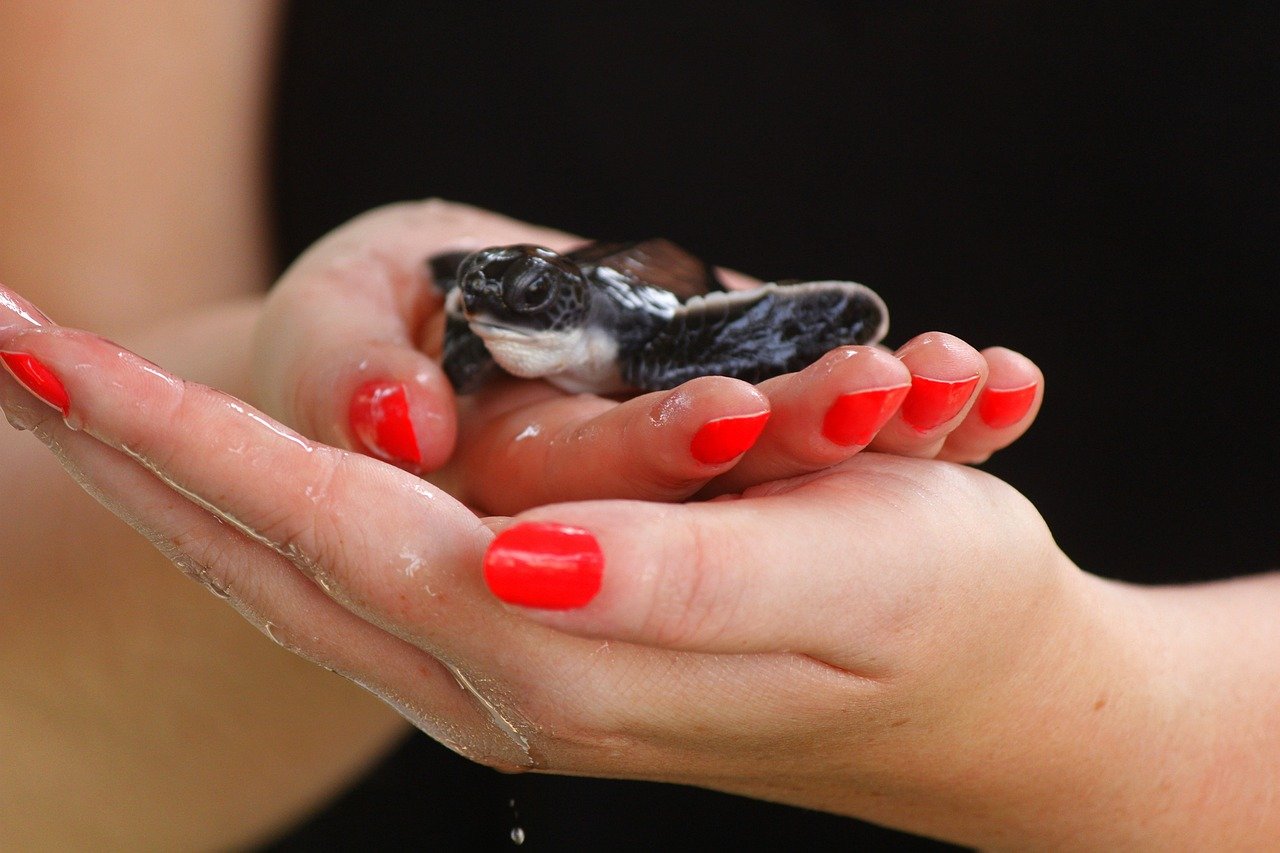
Females nest at night, usually laying about 100 to 130 eggs per clutch. They may lay several clutches in a single season, then take a break of two to three years before nesting again. After roughly 45 to 60 days of incubation, the eggs hatch, and the tiny turtles dig their way out and sprint for the sea.
That sprint is where things get brutal. Hatchlings orient toward the brightest horizon, which for millions of years meant moonlight and starlight reflecting off the ocean. Artificial beach lighting scrambles that instinct, and hatchlings can end up crawling toward parking lots and roads instead of the surf. It is one of the clearest examples of how small human choices shape wildlife outcomes.
The Lost Years
Once in the water, hatchlings head offshore into the open ocean. They spend their early years in pelagic habitats, often drifting with floating Sargassum seaweed, which offers camouflage and a steady supply of small prey. Researchers call this stretch the “lost years” because the young turtles are so hard to observe.
Coming Home to the Coast
As juveniles, loggerheads move into coastal feeding areas, and this is where they settle into the diet that defines them. They are omnivores, and their crushing jaws let them tackle crabs, molluscs, sea urchins, and other bottom-dwelling invertebrates. Jellyfish and other open-water prey round out the menu depending on life stage and habitat.
Age at maturity is estimated at roughly 20 to 30-plus years, though these figures come from models and vary widely between populations. That slow timeline is a big part of why loggerheads are so vulnerable: a turtle that takes decades to reproduce cannot bounce back quickly from losses.
Why Temperature Decides Whether a Hatchling Is Male or Female
Loggerheads do not have sex chromosomes the way humans do. Instead, they rely on temperature-dependent sex determination. The temperature inside the nest during a critical window of incubation decides the sex of the hatchlings. Warmer nests produce more females; cooler nests produce more males.
This system worked fine for millions of years. It becomes a problem when beaches get hotter. Climate-driven temperature skew is now recognized as a real threat, because heavily female-biased nests can distort the breeding population over time. It is a subtle risk, easy to overlook next to something as dramatic as a fishing net, but it matters just as much.
What Threats Do Loggerheads Face?
The pressures on loggerheads are a mix of old problems and new ones. The main threats include:
- Bycatch in fisheries, especially longlines and gillnets, where turtles get hooked or entangled
- Loss and light pollution of nesting beaches, which reduces nesting habitat and disorients hatchlings
- Vessel strikes, since turtles surface to breathe and can be hit by boats
- Plastic ingestion and entanglement, a growing concern across all sea turtle species
- Climate-driven temperature skew, as described above
The relative ranking of these threats varies by population, so a single global list can be misleading. A Mediterranean loggerhead faces a different risk profile than one nesting in Florida.
What Conservation Measures Actually Work?
Conservation for loggerheads is not a feel-good slogan. It is a set of specific, measurable interventions, and some of them have a strong track record.
Turtle excluder devices (TEDs) are the best-known example. These are metal grids fitted into shrimp trawls that let turtles escape while keeping the catch. They are required in many fisheries, and they are widely credited with reducing turtle deaths in trawling gear.
Beach lighting ordinances address the hatchling disorientation problem. Shielding lights, using warmer wavelengths, and keeping beaches dark during nesting season all help hatchlings find the ocean.
Nest relocation and predator control protect clutches from raccoons, foxes, and other predators, and can move nests away from eroding shorelines or bright roads.
Satellite telemetry has transformed the science side. Tagging turtles lets researchers map migrations, identify high-use areas, and target protections where they matter most.
There is a practical lesson here for anyone who lives near or visits a nesting beach. The things that genuinely help are unglamorous: turn off unnecessary outdoor lights at night, keep beaches clear of chairs and debris, fill in holes dug in the sand, and never interfere with a nesting female. The most common mistakes are well-intentioned ones, like using white flashlights on a nesting beach or letting dogs run loose at night during nesting season. What works is boring and consistent: dark beaches, clean sand, and hands off.
The Technology Angle
Sea turtles and cutting-edge technology do not seem like natural companions, but the intersection is growing. Satellite tags, drone surveys, and even AI-assisted photo identification are changing how researchers track populations. The same enthusiasm that drives interest in fast-moving vehicles and futuristic transport shows up in wildlife tech too; even the flying car race has its own headlines, as with Alefs 11 year flying car head start meets teslas roadster. For turtles, the payoff is concrete: better data means better protection.
How Long Do Loggerheads Live?
Nobody knows the maximum lifespan with certainty, but estimates suggest loggerheads can live for several decades, possibly 50 years or more. Combined with late maturity, that means a single adult female represents a huge investment of time and energy. Protecting adults is therefore one of the highest-value conservation moves available, because every mature female removed from the population is a loss that takes decades to replace.
What Should You Do If You See a Loggerhead?
If you encounter a loggerhead on a beach, the right response depends on the situation. A nesting female should be left alone, observed from a distance, and never illuminated with white light. A hatchling heading the wrong way should be allowed to continue toward the ocean without being handled, unless it is in immediate danger. An injured or stranded turtle should be reported to local wildlife authorities rather than moved.
In the water, the guidance is simple: keep your distance, do not chase or touch, and give the animal room to surface and breathe.
Conclusion
The loggerhead sea turtle is a survivor built for distance and durability. Its crushing jaws, ocean-spanning migrations, and decades-long life make it one of the most impressive animals in the sea. Yet its slow reproduction and the gauntlet it runs from nest to adulthood leave it exposed to human pressures, from fishing gear to beach lights to a warming climate. The encouraging part is that the solutions are known and proven: TEDs, dark beaches, protected nesting sites, and careful monitoring all make a measurable difference. Loggerheads have been navigating the world’s oceans for millions of years. With steady, practical effort, they can keep doing it.
How big do loggerhead sea turtles get?
Adults typically weigh about 80 to 200 kilograms and measure roughly 0.9 to 1.1 meters in straight carapace length. Size varies by population and region, but these are the standard ranges cited for the species.
How many eggs does a loggerhead lay?
A female usually lays about 100 to 130 eggs per clutch. She may lay several clutches in one nesting season, then skip two to three years before nesting again. Incubation takes roughly 45 to 60 days.
Why do hatchling loggerheads crawl toward the wrong lights?
Hatchlings instinctively move toward the brightest horizon, which historically was moonlight and starlight over the ocean. Artificial beach lighting confuses that instinct, drawing them inland toward roads and buildings instead of the surf. Shielded, low-level lighting during nesting season reduces the problem.
Are loggerhead sea turtles endangered?
Globally, the species is assessed as Vulnerable on the IUCN Red List. In the United States, it has been listed as Threatened under the Endangered Species Act since 1978, with nine distinct population segments designated in 2011, five endangered and four threatened. Status varies by region.
What do loggerheads eat?
They are omnivores with strong jaws built for crushing. Their diet includes crabs, molluscs, sea urchins, and other bottom-dwelling invertebrates, along with jellyfish and other open-water prey depending on life stage and habitat.
How long does it take a loggerhead to reach maturity?
Estimates put age at maturity at roughly 20 to 30-plus years. These figures come from models and vary widely between populations. The slow timeline is a key reason the species recovers slowly from population losses.
That slow recovery is also why protecting a single stretch of nesting beach can matter far beyond its own shoreline. Loggerhead populations are shaped by the beaches where they hatch, and females often return to nest near their natal region, so safeguarding one site helps sustain the wider population over generations. For readers who want to help, the most effective step is supporting local turtle patrols, wildlife agencies, and beachfront lighting reform, and reporting strandings promptly to trained responders. Small, consistent actions onshore keep the odds stacked in the turtles’ favor offshore.



