Quick Answer: How long do ev batteries last?
Most EV batteries last between 12 and 20 years in real-world use, and the majority of modern packs comfortably outlast the car’s 8-year, 100,000-mile warranty. Capacity fades gradually rather than failing suddenly, so owners usually notice a shorter range long before a pack stops working.
Federal rules require automakers to warranty the traction battery for at least 8 years or 100,000 miles, and several states extend that to 10 years or 150,000 miles. Most manufacturers also promise the pack will retain roughly 70% of its original capacity during that window.
What separates a pack that lasts 20 years from one that fades early comes down to climate, charging habits, daily mileage, battery chemistry, and how the manufacturer manages thermal and charge limits, so compare those factors before assuming any single number applies to your car.
The headline number hides a much bigger range
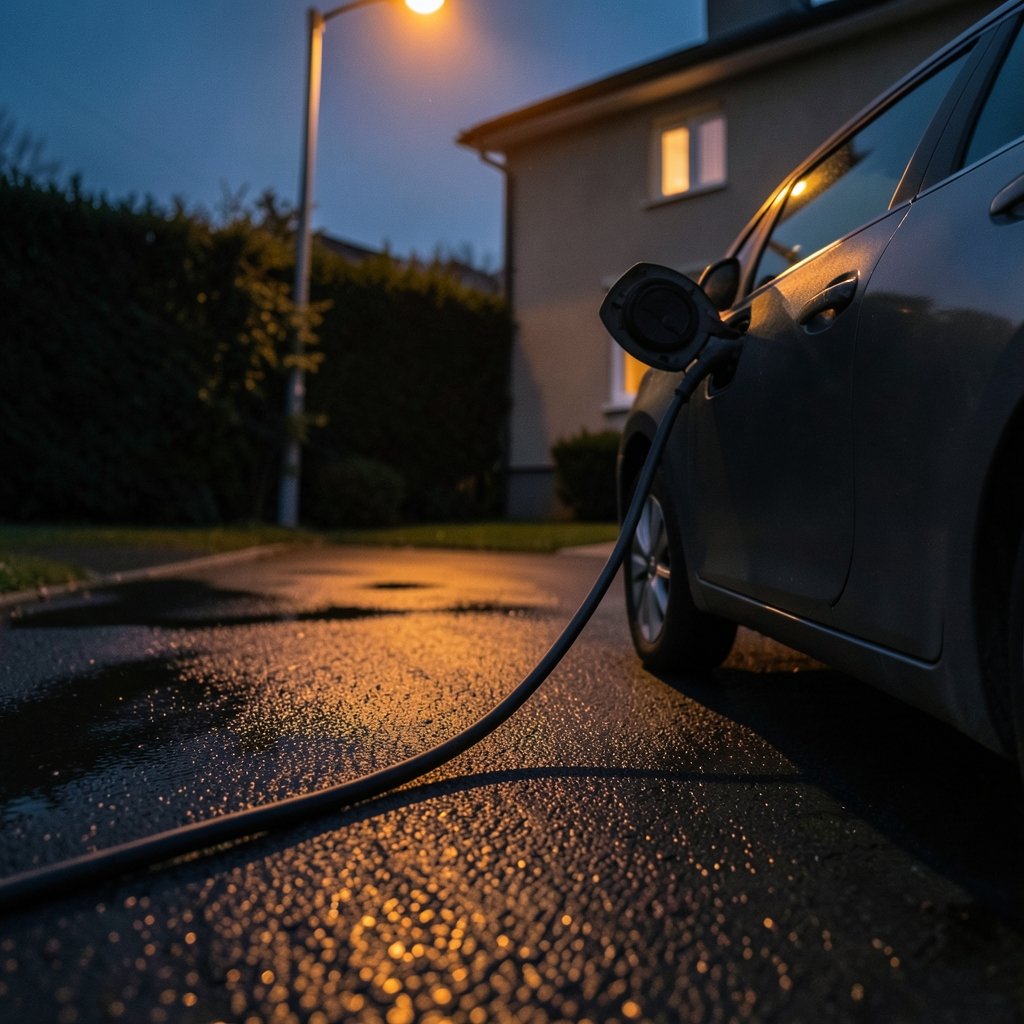
Here’s a fact that surprises most shoppers: the battery in a typical electric car is expected to outlive the vehicle itself. A widely cited telematics study of thousands of connected EVs found average capacity loss of roughly 2.3% per year, which suggests many packs would still hold around 70–80% of their original range after a decade or more on the road.
But averages are slippery things. Two identical cars driven in different climates by different owners can age very differently. A Nissan Leaf in mild Seattle and the same Leaf in Phoenix, Arizona, are living two separate battery lives. That gap matters far more than the marketing brochure.
So when someone asks how long EV batteries last, the honest answer has three layers. There’s the warranty floor (the guaranteed minimum), the typical outcome (what most owners actually experience), and the worst case (what happens to packs abused by heat or constant fast charging). Understanding all three is how you avoid both panic and false comfort. (Ai video summarizer turn long videos into notes)
What the warranty actually promises
Every automaker selling EVs in the United States must meet a federal minimum of 8 years or 100,000 miles of battery coverage. California and the states that follow its zero-emission vehicle rules push that to 10 years or 150,000 miles. These aren’t marketing promises; they’re regulatory requirements.
Here’s how the major players stack up, based on commonly published terms:
| Automaker | Typical warranty | Capacity guarantee |
|---|---|---|
| Tesla | 8 years / 100,000–150,000 miles | ~70% retention |
| Ford | 8 years / 100,000 miles | ~70% retention |
| GM (Chevrolet, Cadillac) | 8 years / 100,000 miles | ~70% retention |
| Hyundai / Kia | 10 years / 100,000 miles | ~70% retention |
| Nissan | 8 years / 100,000 miles | ~66–75% retention |
| Volkswagen | 8 years / 100,000 miles | ~70% retention |
The important detail is the capacity threshold. Warranties almost never cover a battery that merely loses range; they cover a battery that drops below a specific percentage, usually around 70%. If your car started with 300 miles of range and now shows 215, you’re right at the line. Document your range with photos and service records before making a claim, because dealers will ask.
What actually ages a battery
Battery engineers talk about two kinds of aging, and understanding the difference explains almost everything owners observe.
Calendar aging happens whether you drive or not. It’s driven by time, temperature, and the state of charge the pack is stored at. A battery sitting at 100% charge in a hot garage ages faster than one sitting at 50% in a cool one. This is why lightly used EVs still lose a little capacity each year.
Cycle aging comes from charging and discharging. Each full cycle adds a small amount of wear. High-mileage drivers rack up cycles quickly, but they also tend to charge more gently at home, which partly offsets the wear.
The practical takeaways that genuinely work:
- Keep the pack out of the 0–20% and 90–100% zones for daily driving. Most cars let you set a charge limit; 80% is a sensible default.
- Avoid leaving the car at very low or very full charge for long periods, especially in summer heat.
- Fast charging is fine occasionally but shouldn’t be your daily routine if you can avoid it.
- Park in shade or a garage in hot climates. Heat is the single biggest external factor in pack longevity.
Common mistakes owners make: charging to 100% every night “just in case,” leaving a car plugged in at full charge for weeks while traveling, and assuming a fast-charge habit is harmless because the car doesn’t complain. The pack rarely complains until it does.
How long do EV batteries last in miles, not years?
Mileage tells a different story than the calendar. Most modern packs are engineered for well over 150,000 miles of normal use, and many taxi and rideshare fleets have pushed packs past 200,000 miles with meaningful capacity remaining.
The pattern most fleet data shows is steep early loss followed by a long plateau. A pack might shed 5–8% of its capacity in the first couple of years, then settle into a much slower decline. This is normal and not a sign of a failing battery. Owners who panic at a 6% drop in year two are usually worrying about nothing.
For high-mileage drivers, the practical planning number is this: expect to reach the warranty threshold (roughly 70% capacity) somewhere between 150,000 and 250,000 miles, depending on climate and charging habits. That’s a wide range, but it’s honest.
If you’re the type who tracks details closely, the same discipline that helps you monitor a car’s health applies to other long-form content: a good AI video summarizer that turns long videos into notes can help you digest hours of owner reports and technical reviews without watching every minute. The point is to gather real-world evidence rather than rely on a single anecdote. (Best storytelling podcasts for long drives)
Heat, cold, and why geography matters
Temperature is the variable owners underestimate most. Lithium-ion chemistry simply ages faster at high temperatures, and a pack that lives in sustained 100°F heat will degrade noticeably faster than one in a mild coastal climate. This is why early Nissan Leafs in Arizona became a cautionary tale and eventually the subject of a class-action settlement over accelerated capacity loss.
Cold works differently. It temporarily reduces usable range and slows charging, but it doesn’t permanently damage the pack the way sustained heat does. A car that loses 30% of its range in a Minnesota January hasn’t degraded; it’s protecting its cells. Range returns when temperatures rise.
The practical fix for hot-climate owners is simple and underused: charge to a lower limit, park in shade, and avoid leaving the car at a high state of charge during heat waves. These habits cost nothing and meaningfully slow calendar aging.
What replacement costs, and when it makes sense
A full pack replacement is expensive, typically running from roughly $5,000 to $20,000 depending on the vehicle, pack size, and whether you’re buying new, refurbished, or used. On older EVs, that can exceed the car’s resale value, which is why most out-of-warranty owners choose a refurbished module or a used pack instead of a new one.
The good news is that full replacement is rare. Packs fail outright far less often than people fear, and when individual modules fail, some shops can replace just the affected section. Before assuming the worst, get a proper battery health diagnostic; many “dead battery” reports turn out to be a failing 12-volt accessory battery or a software issue. (Electric vehicle battery)
For anyone comparing the total cost of ownership against other big purchases, the same careful math applies to smaller decisions too, whether that’s picking the best primer for oily skin to make a product last through a long day or weighing which logging and security stack fits a budget in a Wazuh vs Elastic vs Graylog 2026 comparison. Durability claims deserve scrutiny everywhere. (Recurrent)
Second life and the recycling question
Retired EV packs don’t disappear. A pack that’s no longer suitable for driving often still holds 60–70% of its capacity, which is plenty for stationary storage. Utilities and startups increasingly repurpose these packs to store solar power or buffer grid demand before they’re finally recycled.
Recycling is improving fast. Newer facilities recover lithium, nickel, cobalt, and copper at high rates, and regulators in Europe have set phased targets for recycled content in new batteries. The direction of travel is clear: a used pack is a resource, not waste.
Conclusion
The short version: EV batteries last longer than most people expect. A typical pack will serve 12 to 20 years, usually outlasting the car around it, and federal rules guarantee at least 8 years or 100,000 miles of coverage with roughly 70% capacity retention.
What determines where your car lands in that range isn’t luck. It’s climate, charging habits, daily mileage, and how well you treat the pack. Keep it out of extreme states of charge, avoid baking it in the sun, fast-charge sparingly, and your battery will likely reward you with a decade or more of dependable service. The technology has matured; the ownership habits just need to catch up.
Frequently asked questions
How much range loss is normal after five years?
Most EVs lose somewhere between 8% and 15% of their original capacity in the first five years, with the steepest drop happening early. A car showing 90% of its original range at year five is squarely in the normal band. Anything beyond 20% in that window is worth investigating with a dealer diagnostic.
Can an EV battery be repaired instead of replaced?
Often, yes. Packs are built from modules, and a skilled technician can sometimes replace a single failing module rather than the whole pack. This is far cheaper than a full replacement. The catch is that module-level repair isn’t available everywhere, so check whether a local specialist offers it before assuming replacement is your only option.
Does fast charging ruin the battery?
Not in the way many people fear. Occasional DC fast charging has a modest effect on longevity. The problem is habitual, daily fast charging combined with high states of charge and hot weather. If you fast-charge a few times a month and charge gently at home the rest of the time, the impact is small.
Do EV batteries fail suddenly?
Rarely. Degradation is gradual, and owners typically notice shrinking range long before anything fails. Sudden pack failure is uncommon and usually tied to a manufacturing defect covered under warranty. If your range drops sharply overnight, get it checked promptly rather than waiting.
Is buying a used EV with high mileage risky?
It can be a smart buy if you verify battery health first. Ask for a state-of-health report, check the remaining warranty coverage, and test the real-world range on a full charge. A high-mileage car with a healthy pack and transferable warranty can be excellent value; one with an unknown battery history is a gamble.
What happens to EV batteries at end of life?
They’re usually repurposed for stationary energy storage before being recycled. Recycling recovers valuable metals like lithium, nickel, and cobalt, and recovery rates continue to improve as facilities scale up. Very little of a modern EV pack ends up in landfill.
One more practical note on verification: many automakers now expose state-of-health data through the car’s app or service menu, and third-party tools can read it directly from the diagnostic port. Learn where your model hides that number before you need it, and check it once a year so you spot slow decline as a trend rather than a sudden shock. A simple log of date, mileage, and reported range takes a minute to maintain and makes any future warranty conversation far easier. Treat the pack like the long-lived component it is, and the data will back you up.