Managed AI Security vs In-House AI Security in 2027
Security tools changed quietly over the last two years. The software that watches a company network no longer just matches traffic against a list of known threats. It learns what normal looks like for your business, flags the odd login at 3 a.m., spots a phishing email that passed the old filters, and in some cases shuts a compromised account down before anyone in the office has finished their coffee. That is AI security, and in 2027 nearly every serious security product has some of it built in.
The question for a small or mid-size business is not whether to use AI security. It is who runs it. A managed service hands the monitoring, tuning, and incident response to an outside team that watches your systems around the clock. An in-house setup keeps the tools and the decisions inside your own company, run by your own staff. Both use the same kind of technology, and both can work well, but they fail in very different ways.
This comparison explains what each approach actually involves, what each costs, where each is strongest, and how to choose between them. If you are new to the basics, our guide to what cybersecurity is covers the foundations first. The rest of this guide assumes you already know you need protection and are deciding who should run it.
Key takeaways
- Managed AI security buys you a team that watches your systems 24 hours a day, with costs that are predictable and no hiring needed.
- In-house AI security gives you full control over your data and your tools, but only works if you have skilled staff to run it.
- Managed services usually respond to an incident in minutes, while in-house teams depend on who is on shift when the alert arrives.
- In-house setups suit companies with strict privacy rules, sensitive data, or an existing security team.
- Most small and mid-size businesses are better served by a managed service, with in-house control kept for the most sensitive systems.
| Factor | Managed AI security | In-house AI security |
|---|---|---|
| Monitoring | 24 hours a day, 7 days a week | Only when your staff are working |
| Cost shape | Predictable monthly fee | Salaries plus tool licences |
| Control over data | Shared with the provider | Fully in your hands |
| Incident response | Minutes, by a dedicated team | Depends on who is available |
| Expertise | A whole team, shared across clients | Limited to the people you employ |
| Best for | Small and mid-size businesses | Larger firms with strict privacy needs |
Managed AI security: a team that never sleeps
Managed AI security means a specialist provider runs your security monitoring for you. Their systems collect logs from your computers, email, cloud apps, and network, and their AI models look for patterns that suggest an attack: an unusual login, a file behaving strangely, or a device talking to a server it has never contacted before. When something looks wrong, an analyst at the provider checks it and, if it is real, acts on it — isolating a machine, blocking an account, or calling your team.
The biggest advantage is coverage. Attacks do not keep office hours, and the most common time for an intrusion to start is late at night or over a holiday weekend, exactly when a small in-house team is asleep. A managed service watches around the clock, and its analysts see attacks across many clients, so they often recognise a new threat on your network because they saw the same pattern at another company hours earlier. That shared view is something no single business can buy on its own.
The cost is a monthly fee, usually based on the number of users or devices, which makes budgeting simple. There is no hiring, no training, and no night shift to staff. The trade-offs are trust and control. The provider sees your security logs, and sometimes your data, so you need a solid contract covering how that data is handled and stored. You also give up some control over exactly how alerts are handled, though good providers let you set the rules for what they can do without asking first. For most businesses, managed cover is also the fastest way to get proper protection against ransomware — our guide to the best ransomware protection in 2027 explains what that protection should include.
Pros: Round-the-clock monitoring; fast incident response; predictable monthly cost; no hiring needed.
Cons: Your security data is shared with a provider; less direct control; monthly fees continue indefinitely.
In-house AI security: full control, full responsibility
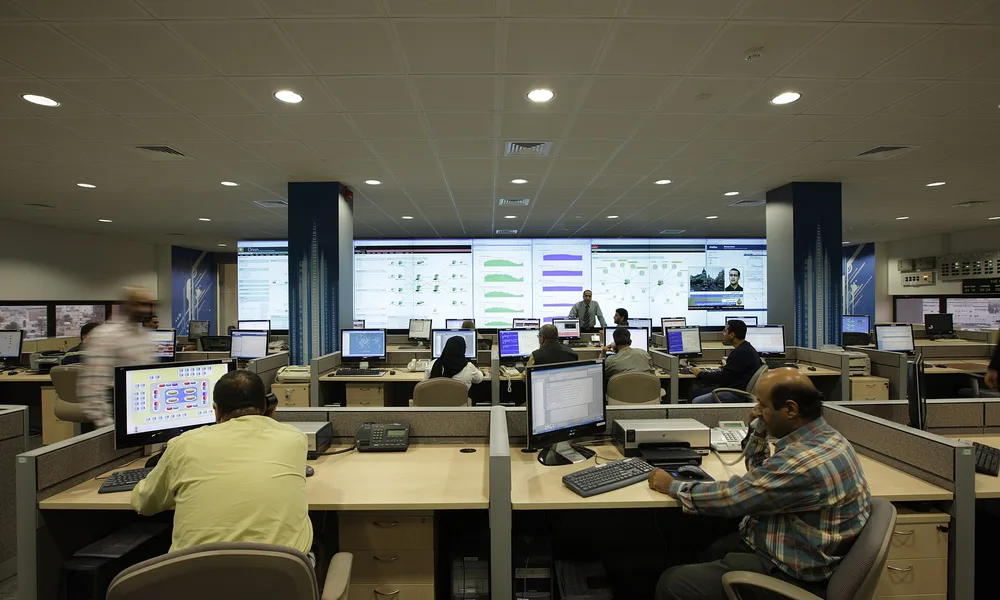
In-house AI security means your own staff run the tools that protect your company. You buy the security software, install it on your systems, and your team configures the AI models, reviews the alerts, and responds to incidents. The data stays inside your company, the rules are yours to set, and nobody outside the business sees your logs unless you choose to share them.
That control is the main reason companies choose this route. Businesses handling health records, financial data, or government contracts often face rules that limit what can leave their network, and in-house security is sometimes the only option that fits. It also suits companies that already employ security staff and want their tools tuned to the exact shape of their business, rather than to a provider’s standard template.
The catch is that the system is only as good as the people running it. AI security tools produce alerts constantly, and most of them are false alarms — a new device, a travelling employee, a software update. Tuning the models and triaging the alerts takes skilled, focused work, and a single analyst on holiday can leave a gap. The cost is also lumpy: licences, training, and salaries add up, and a good security analyst is expensive to hire and hard to replace. If you go this route, start with the tools themselves — our guide to the best security software for small business covers the products worth building an in-house setup around.
Pros: Full control over data and rules; fits strict privacy requirements; tools tuned to your business.
Cons: Needs skilled staff to run well; no cover when staff are off; hiring and licence costs are high.
The verdict: managed wins for most businesses
For most small and mid-size businesses in 2027, managed AI security is the better choice. The round-the-clock cover, the shared threat intelligence, and the predictable cost solve the three problems that sink most in-house efforts: nobody watching at night, nobody who has seen the attack before, and nobody to respond when the one security person is on leave. A managed service is not perfect, but it fails far less often than a thinly staffed in-house team.
In-house security wins in a narrower set of cases. If your industry or your clients require data to stay inside your network, if you already have a security team of three or more, or if your systems are unusual enough that a standard managed service cannot cover them, then keeping it in-house is the right call. The strongest setups are often a hybrid: a managed service watches the everyday systems, while an in-house team owns the most sensitive data and the final say on major decisions.
How to choose between managed and in-house
Start by counting your people, not your tools. If you have no dedicated security staff, or only one person who does security alongside other IT work, managed is the honest answer. In-house security run by a generalist who is also fixing printers and resetting passwords is worse than no AI security at all, because it creates a false sense of safety.
Next, check your privacy obligations. Read what your contracts and your industry rules say about where security data can go and who can see it. If a client contract forbids sharing logs with a third party, that settles the question for those systems, even if the rest of the business goes managed. Then compare total cost over two years: the managed monthly fee against licences, salaries, training, and the cost of covering nights and holidays in-house.
Finally, test the response, not the sales pitch. Ask a managed provider how fast they respond to a confirmed intrusion at 2 a.m., and ask for the contract clause that guarantees it. For an in-house plan, run a tabletop exercise: pretend a laptop is compromised on a Friday night and walk through who does what. The approach that gives a clear, fast answer is the one to choose.
Checklist: choosing your AI security model
- Count your dedicated security staff honestly — zero or one points to managed.
- List any contracts or rules that limit sharing security data with a third party.
- Compare two-year total cost: managed fees against licences, salaries, and night cover.
- Ask a managed provider for their guaranteed response time, in the contract, not the brochure.
- Run a Friday-night incident exercise before you commit to an in-house plan.
- Decide what the provider may do without asking — isolate a machine, block an account — and write it down.
Frequently asked questions
What is managed AI security?
Managed AI security is a service where a specialist provider monitors your systems around the clock using AI tools that spot unusual behaviour, and their analysts investigate alerts and respond to incidents on your behalf, usually for a fixed monthly fee.
What is in-house AI security?
In-house AI security means your own staff buy, configure, and run the AI security tools on your own systems. Your data stays inside the company, and your team decides how alerts are handled and how incidents are answered.
How much does managed AI security cost in 2027?
Most small businesses pay a monthly fee based on users or devices, often in the range of $50 to $150 per user per month for full monitoring and response. Larger firms pay more, but the fee is predictable and covers the team, the tools, and the night shifts.
Is in-house AI security more private than managed security?
Yes. With in-house security, your logs and security data never leave your network unless you choose to share them. With a managed service, the provider sees your security data by design, so the contract covering how it is stored and used matters a great deal.
Can I mix managed and in-house security?
Yes, and many companies do. A common hybrid is a managed service watching everyday systems and email, while an in-house team owns the most sensitive systems and makes the final call on serious incidents. This gives you round-the-clock cover without giving up control where it matters most.
Do AI security tools replace antivirus and firewalls?
No. AI security sits on top of the basics — antivirus, firewalls, updates, and strong logins — and makes them work better by spotting the threats they miss. A company that skips the basics and buys AI monitoring is building on sand.
The bottom line
Managed AI security and in-house AI security use the same kind of technology, but they are different promises. Managed promises that someone skilled is always watching, at a predictable price, in exchange for sharing your security data with a provider. In-house promises full control and privacy, in exchange for hiring and keeping the skilled people to run it.
For most businesses in 2027, the managed promise is the safer one, because the most common security failure is not a clever attack but an empty chair at 2 a.m. If your rules or your data demand in-house control, build it properly with enough staff to cover the night — and consider a hybrid, so the systems that can be watched by a provider are watched by one, while your team focuses on the systems that only you can protect.