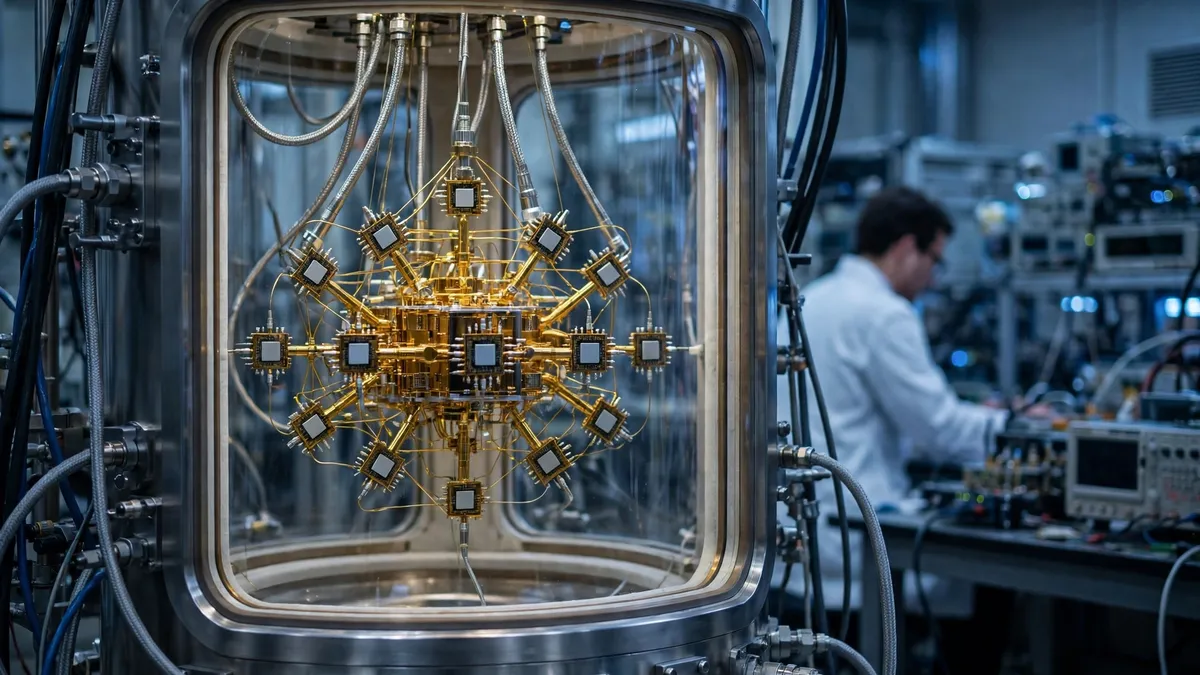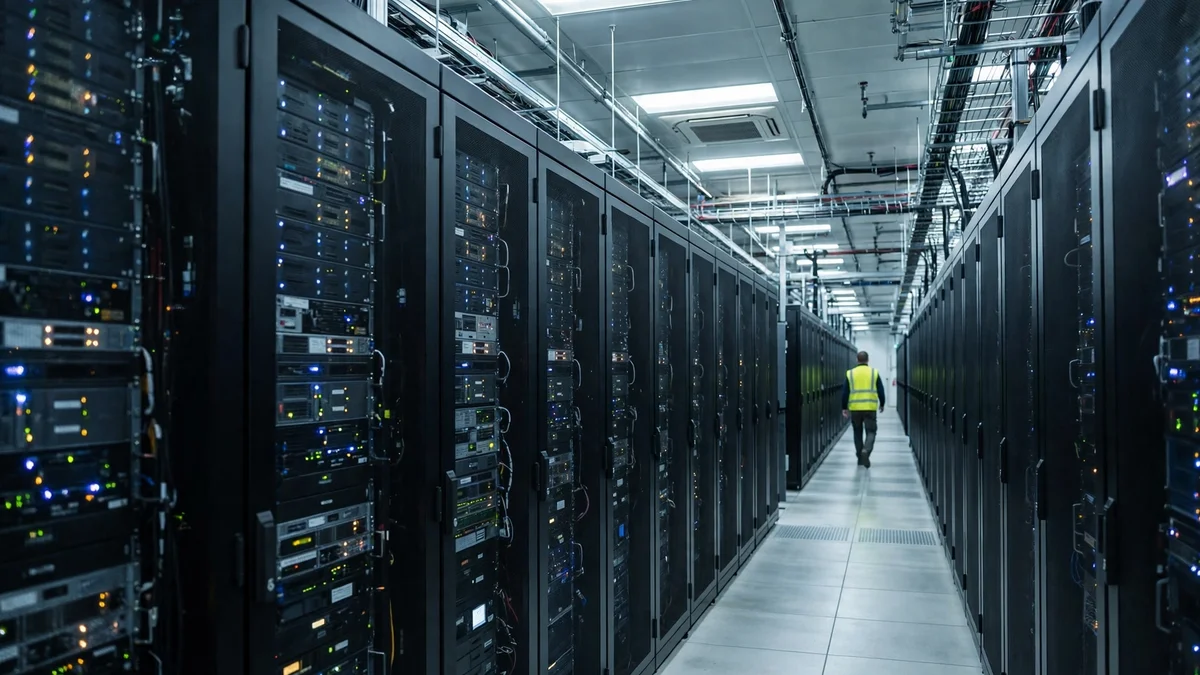
Meta’s AI chips are the most expensive assets the company has ever bought, and investors still cannot see them clearly. Meta plans to spend between $115 billion and $135 billion on capital expenditure this year, most of it on the data centres and accelerators that train and run its artificial intelligence models.
Instead, investors are asked to trust a single number: a useful life of five and a half years. In January 2025, Meta lengthened the assumed life of most of its servers and networking assets to 5.5 years. The change cut 2025 depreciation by $2.92 billion and raised net income by $2.59 billion, about $1.00 per diluted share.
Forbes argued this week that Meta should publish a fleet table for its AI chips, the same kind of table airlines publish for their aircraft, so investors can audit what the company actually owns. A fleet table would list chip generations, counts, ages, utilisation and retirements in one place.
Key takeaways
- Meta books most servers and networking assets over 5.5 years, a change from January 2025 that cut 2025 depreciation by $2.92 billion and lifted net income by $2.59 billion.
- Investor Michael Burry argues hyperscalers understate depreciation by about $176 billion, because Nvidia ships a new chip generation every one to two years while the books assume five to six.
- No hyperscaler breaks out AI chips separately from other servers and networking gear, so outsiders cannot calculate how much depreciation relates to AI hardware alone.
- The counter-evidence is real: older GPUs still rent for meaningful prices, and Nebius reported older-generation GPU prices up more than 30% in the second quarter of 2026.
- A fleet table would not settle the debate, but it would give investors the material to test it: counts, generations, ages, utilisation and retirements.
| Item | What investors know | What a fleet table would add |
|---|---|---|
| Useful life | 5.5 years for most servers and network assets, from January 2025 | Life by chip generation |
| 2025 effect | $2.92 billion lower depreciation; $2.59 billion higher net income | Effect split by AI accelerators and other hardware |
| Chip generations | Mix of Nvidia, AMD and custom MTIA chips | Counts and ages for each generation |
| Annual spending | $115 billion to $135 billion of capital expenditure planned this year | Replacement spending versus new capacity |
| Utilisation | Not disclosed in filings | How hard each generation works |
Why a single depreciation number now moves billions
Depreciation spreads the cost of an asset over the years it is expected to be useful. Under straight-line depreciation, a $1 billion fleet written off over four years costs $250 million a year; over six years it costs $167 million a year. The longer schedule adds about $83 million a year to pre-tax profit, and the cash balance does not move at all.
Meta is not alone in lengthening server lives. Microsoft, Alphabet, Oracle and CoreWeave book AI servers over six years, while Nebius, IREN and part of Amazon’s fleet use five. Amazon moved the other way in January 2025, shortening the assumed life of a subset of its servers from six years to five, citing the increased pace of technology development in artificial intelligence and machine learning. That change added roughly $1.4 billion of depreciation in 2025. The question now is whether that logic survived the handoff to AI accelerators. Readers who want the background can start with our explainer on what a GPU is and how it works.
The fleet inside Meta’s data centres
Meta’s chip fleet mixes suppliers and designs. Nvidia remains the largest source: Meta is expanding its use of Nvidia’s Vera Rubin platform and Vera CPUs, along with Spectrum-X networking and BlueField-4 data processing units, and the two companies are deepening their work on Meta’s Muse models and agents. AMD’s Helios racks have been installed and are being tested at Meta, its Epyc processors power Muse, and Meta has deployed millions of Epyc chips. Meta also builds its own custom AI silicon, the MTIA family, with Broadcom as a partner.

The money behind the fleet is just as mixed. In late October, Meta said it planned to raise about $97.5 billion through an equity offering to fund its AI build-out. Nvidia announced a $3 billion investment in Meta the same day, and AMD followed with $1 billion, with the suppliers together expressing interest in up to $5 billion of the offering. The scale of the build-out is covered in our report on why AI compute is becoming scarcer and more costly as data centre demand grows.
Burry’s argument, and why it will not go away
The debate became public on November 10, 2025, when investor Michael Burry posted on X that hyperscalers were understating depreciation by extending the useful life of assets to artificially boost earnings. Burry put the total at about $176 billion of understated depreciation across the big buyers. His logic is a product-cycle argument: Nvidia ships a new flagship generation every one to two years, and a chip that loses the training race is not worth what the balance sheet says it is. Nvidia chief executive Jensen Huang has said that when Blackwell ships in volume, customers could not give the previous Hopper generation away.
The sensitivities built from that premise are large. JPMorgan Asset Management, in an analysis published in November 2026, restated all GPU and networking capital expenditure since 2023 on a three-year life and found 2025 earnings per share falling about 7% at Amazon, Meta and Microsoft, 6% at Alphabet, and 17% at Oracle. On the 2026 server cohort alone, roughly $425 billion of hardware, a three-year life charges about $142 billion a year against about $71 billion at six years. Who ultimately pays for the build-out is examined in our piece on who pays for the AI data centre boom.
The case that the chips just keep working
The evidence against Burry comes from the market rather than from filings. An A100 chip launched in 2020 at a cloud price of $4.10 an hour still rented for between $1.02 and $1.58 an hour in 2026, and A100 hardware still sold for thousands of dollars per card in August 2026, when every depreciation schedule has it at zero. H100 rental prices fell from more than $8 an hour in 2023 to a $1.70 floor in October 2025, then recovered to $2.35 by March 2026 and $2.75 spot by September.
Physical retirement dates are long. Google Cloud only shut down its last P100 instances in 2026, nine years after the chip launched, and Azure retired V100 instances after eight years. Nebius reported in its second-quarter 2026 letter that pricing on older-generation GPUs was more than 30% higher than in the first quarter. None of this proves a six-year economic life, but it shows demand has outrun supply so far.
What a fleet table would actually show
A fleet table borrows its shape from aviation. Airlines publish the aircraft they operate by type, the number of each, their average age, and the orders they hold, so an investor can see whether the fleet is young or ageing. Applied to Meta, the equivalent table would list accelerator generations, the number of chips in each, the year each batch entered service, utilisation rates, and retirements. It would separate AI accelerators from general servers and networking gear, which no hyperscaler currently does in its filings.
That separation is the point. Today, nobody outside the companies can calculate how much depreciation relates to AI chips alone, because the chips sit inside a single servers-and-networking line. The four largest buyers guided roughly $670 billion of 2026 capital expenditure against about $380 billion in 2025, and when an installed base grows around 50% a year, about 61% of deployed cards are two years old or younger.
What it means for investors
For investors, the fleet table is a transparency proposal, not an accusation. It does not claim Meta’s 5.5-year life is wrong; it claims the number cannot be tested without the underlying data. The depreciation-to-capex ratio is the simplest check available today: it ran near 80% for most of the last decade and is now under 40%, a gap that looks like aggressive accounting but is mostly a young fleet.
Analysts who have studied the filings advise watching free cash flow per share rather than earnings per share, because depreciation is added back to cash flow and the entire fight happens inside a line investors can bypass.
Checklist: how to read Meta’s chip numbers like an auditor
- Find the useful-life table in the property and equipment note of the 10-K, and any change in accounting estimate with its dollar effect.
- Compare depreciation with revenue each quarter: a rising share means new capacity is not yet earning, while a falling share can mean longer lives.
- Ask what share of capital expenditure replaces old chips and what share adds new capacity, because replacement spending is the first sign of a fleet ageing.
- Track rental and resale prices for older GPUs in shareholder letters and earnings calls, since they are the earliest sign of the economic life changing.
- Match contract length to useful life: a two-year contract on a six-year asset leaves four years of re-leasing risk.
- Watch free cash flow per share alongside earnings per share, because depreciation is added back to cash flow and the debate lives inside earnings.
Frequently asked questions
What is a fleet table for AI chips?
It is a disclosure modelled on airline fleet tables: a regular list of accelerator generations, how many chips of each Meta owns, when each batch entered service, how hard it works, and when it retires.
How long does Meta assume its servers last?
Meta books most servers and network assets over 5.5 years, a life it adopted on January 1, 2025. Microsoft, Alphabet, Oracle and CoreWeave use six years, while Nebius, IREN and part of Amazon’s fleet use five.
How much did Meta’s 2025 change move its profit?
According to Meta’s 2025 annual report, the extension to 5.5 years cut 2025 depreciation by $2.92 billion and raised net income by $2.59 billion, about $1.00 per diluted share.
What is Michael Burry’s argument?
Burry argues that hyperscalers extended server lives while buying chips on a one-to-two-year product cycle, which in his view overstates earnings. He put the total at about $176 billion of understated depreciation across the big buyers.
Do older AI chips really keep earning?
So far, yes. An A100 from 2020 still rented for $1.02 to $1.58 an hour in 2026, H100 rental prices recovered through 2026 after falling in 2025, and Nebius reported older-generation GPU prices up more than 30% in the second quarter of 2026.
Would a fleet table change Meta’s earnings?
No. Disclosure does not change the accounting; it changes what investors can check. A fleet table would let the market test whether Meta’s 5.5-year life matches how its chips actually earn. Whether Meta adopts the idea is unconfirmed, and the company has not announced any such disclosure.
Bottom line
Meta’s AI chips are the largest bet in the company’s history, and its filings describe them with a single number: five and a half years. That number added $2.59 billion to reported profit in 2025, at the same time as Meta was raising about $97.5 billion to buy more hardware.
A fleet table would not end the argument, but it would move it from opinion to arithmetic. Investors could see the generations, the ages, the utilisation and the retirements, and judge for themselves whether the chips earn for five and a half years or fade sooner. Until Meta publishes that detail, the most honest reading of its AI earnings is also the simplest: the cash is real, the profit is an estimate, and the estimate deserves better evidence than a single line in a filing.