
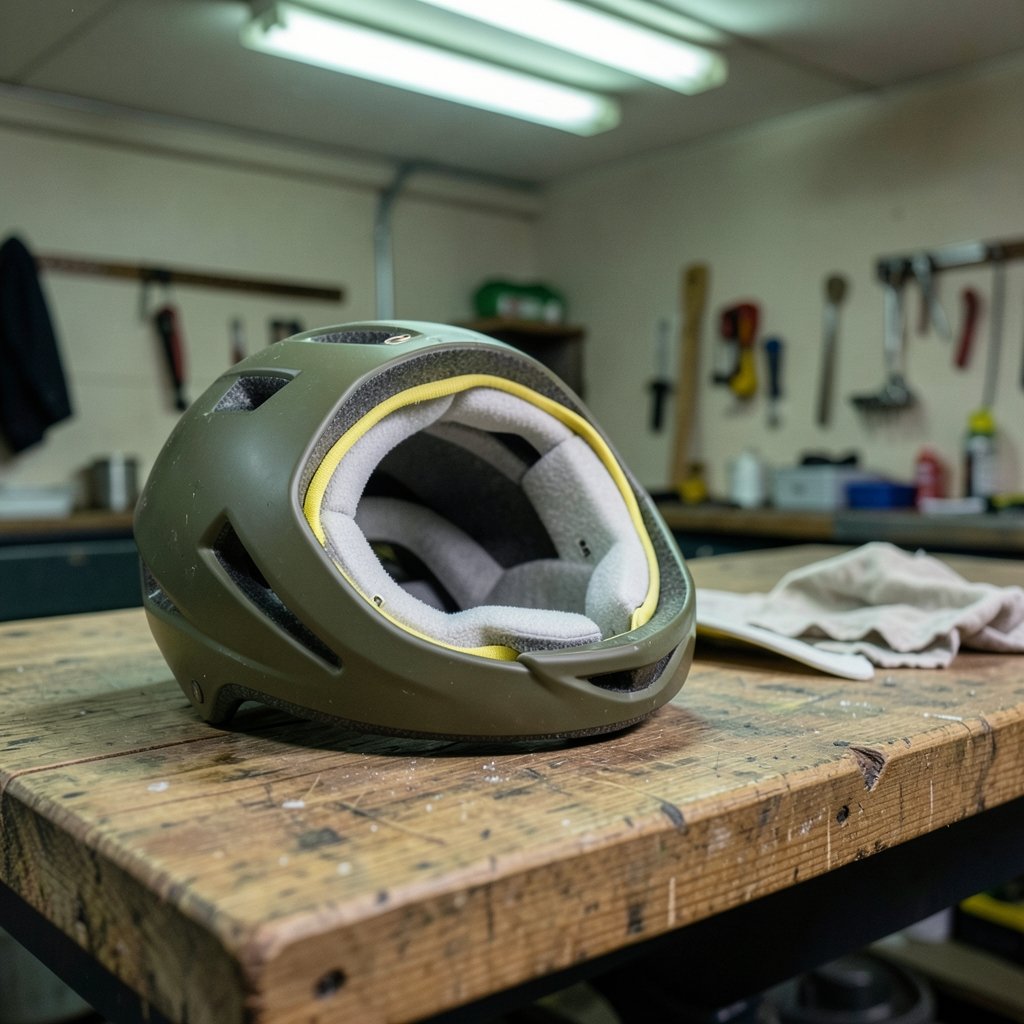
What if the most important part of a helmet is the part that lets it slip? That sounds backwards. Helmets are supposed to stay put, right? But inside many modern bike, ski, and equestrian helmets sits a thin yellow or gray liner that is designed to move a few millimeters during a crash. It is called MIPS, short for Multi-directional Impact Protection System, and it has become one of the most talked-about features in helmet shopping. It has also become one of the most misunderstood.
This article walks through what MIPS is, where it came from, what the lab tests actually show, and where the evidence gets thinner. It also covers the practical stuff: how to tell if a helmet really has it, what you give up in exchange, and why fit still matters more than any badge on the box.
What MIPS actually is, in plain terms
A MIPS helmet contains a low-friction layer between the helmet’s energy-absorbing liner and your head. In most designs it is a thin plastic film or a sliding insert held in place by small elastic anchors. In a crash, the shell can rotate slightly relative to your skull instead of grabbing it and twisting it along.
That is the whole idea. The layer does not absorb much energy on its own. Its job is to decouple two things that would otherwise move as one: the helmet and your head.
Why does that matter? Most real crashes are not straight-on. You fall at an angle, you clip a curb, you catch an edge. Those oblique impacts produce rotation, and rotation is what stretches and shears brain tissue. Traditional helmet testing has focused heavily on linear drops, where a head form falls straight down onto an anvil. A linear test can miss the rotational component almost entirely.
The technology was developed in Sweden by neurosurgeon Hans von Holst of the Karolinska Institute and engineer Peter Halldin of KTH Royal Institute of Technology. The research dates to the late 1990s, and the company behind the system was founded in 2001. Treat exact founding dates with a little caution; secondary sources vary, so check a primary source if the year matters to you.
How the sliding layer works inside the shell
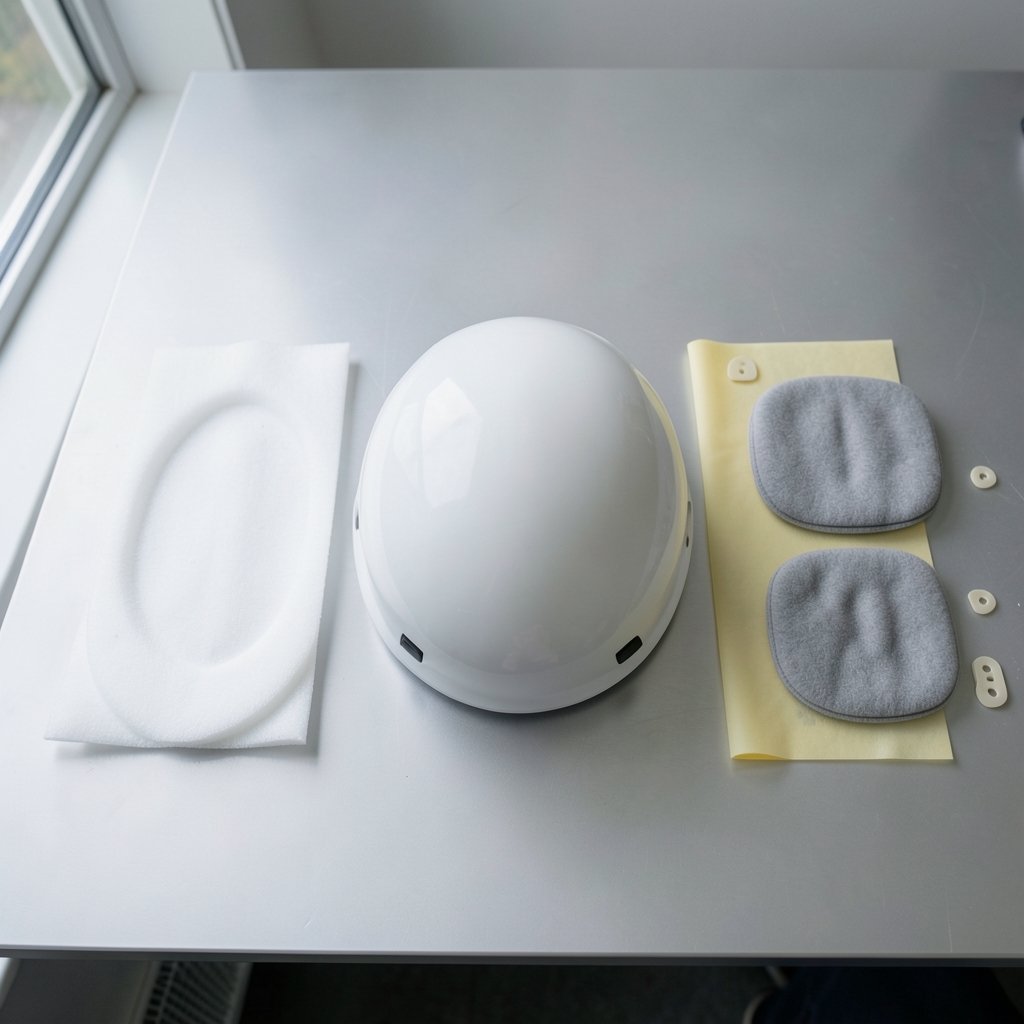
Picture the inside of a typical helmet. You have a hard outer shell, a foam liner (usually EPS), comfort padding, and your head. Normally the foam and your scalp are effectively locked together by friction.
MIPS inserts a slip plane into that stack. Depending on the model, the layer may allow somewhere in the range of 10 to 15 millimeters of relative motion. That figure is not universal, so do not treat it as a spec you can compare across brands. Different helmets use different implementations, and some use a low-friction liner rather than a floating cradle.
Two practical consequences follow from this design:
- The system adds parts, which means more to fit correctly and more to inspect over time.
- The anchors that hold the layer in place are intentionally weak. They are meant to release or stretch in a crash. If one looks torn or stretched before a crash, that is a problem.
A common mistake buyers make is assuming the yellow liner is the protective foam. It is not. The foam still does the heavy lifting on impact energy. The liner only handles rotation. A helmet with MIPS but poor foam or a bad fit is still a poor helmet.
What the lab tests show, and what they do not
Here is where the conversation needs honesty.
Peer-reviewed studies in journals such as Annals of Biomedical Engineering and Accident Analysis & Prevention have reported reduced rotational acceleration in laboratory tests of MIPS-equipped helmets compared with matched non-MIPS models. That is a real, measurable effect in controlled conditions. Independent testing programs that include rotational impact methods, such as the Virginia Tech Helmet Lab’s STAR ratings for bicycle helmets, have also seen many MIPS-equipped helmets score well.
But two caveats matter enormously.
First, those labs rate helmets, not brands or technologies. Plenty of non-MIPS helmets earn top scores too, because foam density, shell shape, coverage, and fit all contribute. Buying MIPS is not the same as buying the safest helmet in a category.
Second, and more important: there is no large prospective epidemiological study demonstrating that MIPS reduces concussion rates in real-world use. The gap between “lowers rotational acceleration in a lab rig” and “fewer concussions on real trails and roads” is wide. It is a reasonable, biomechanically grounded bet. It is not a proven population-level outcome.
Anyone who tells you MIPS “prevents concussions” is overstating the evidence. Anyone who tells you it is pure marketing is ignoring the lab data. The accurate position sits in the middle, and it is worth holding that position firmly when you are standing in a shop.
MIPS vs. other rotational technologies
MIPS is not the only approach to the rotation problem. Several brands have built their own answers, and the differences are worth knowing before you pay a premium.
| Technology | How it works | Typical use |
|---|---|---|
| MIPS | Low-friction slip layer between liner and head | Licensed across many brands and sports |
| Koroyd | Welded tubes that crush on impact, used in shell and liner zones | Often paired with other systems |
| 6D ODS | Array of elastomer dampers letting the liner move in multiple directions | Mostly mountain bike and moto |
| Leatt 360° Turbine | Small rotating turbines inside the liner | Mountain bike and moto |
None of these is a regulated standard. They are proprietary systems, and claims about them should be attributed to the manufacturer or to specific studies, not treated as official endorsement. What matters for your safety is that the helmet meets a recognized certification, fits your head properly, and covers the part of your head you are likely to hit.
That last point connects to a broader buying principle: the best helmet is the one that fits and that you will actually wear. If you are shopping, it helps to think in terms of best bike helmets that choose one which actually protects you rather than chasing a single feature name.
Does MIPS make a helmet less comfortable or heavier?
Slightly, sometimes. The slip layer adds a few grams and a bit of thickness. In most modern designs the penalty is small enough that you would not notice it on a ride. Early versions drew complaints about a plasticky feel against the hair and a slightly loose sensation when you shook your head. Current designs have largely solved that with better padding integration.
The bigger practical trade-off is fit tolerance. A MIPS cradle needs to sit correctly against your head to work as intended. If the helmet is too loose, the whole assembly shifts around anyway and the slip plane’s benefit becomes hard to separate from general slop. If it is too tight, you get pressure points and you will not wear it.
A useful field test: put the helmet on, fasten the strap, and try to roll it forward and back with moderate force. Your scalp should move with the helmet a little. If the helmet slides freely on your head with no resistance, it is too loose. If it will not budge at all and digs in, it is too tight.
How to tell a genuine MIPS helmet from a lookalike
Counterfeits and mislabeled listings exist, especially in online marketplaces. A few checks cut the risk sharply:
- Look for the small yellow circular MIPS logo, usually on the inside of the shell or on a hangtag.
- Check the model name against the manufacturer’s own product page, not the marketplace listing.
- Inspect the liner: a genuine low-friction layer is a distinct, separate piece, not printed graphics on foam.
- Buy from an authorized retailer when the price looks too good.
- Register the helmet with the brand if registration is offered; it helps with recalls.
Also check the certification label. In the United States, bicycle helmets must meet the CPSC standard under 16 CFR Part 1203. In Europe, look for EN 1078. These are the baseline. MIPS is a bonus layer on top of certification, never a substitute for it.
Matching the helmet to the crash you are likely to have
Different sports produce different impact patterns, and that should shape what you buy.
Road and commuter cycling. You are most likely to slide and hit at an angle after a loss of traction or a car interaction. Rotational protection is relevant, and ventilation and visibility matter just as much for avoiding the crash in the first place.
Mountain biking. Lower speeds, more frequent falls, more impacts with roots and rocks. Coverage at the back of the head and a secure fit matter enormously. Many riders here pair rotational tech with a helmet that extends lower at the occiput.
Snow sports. Hardpack and ice produce fast, angled falls. Goggle compatibility and warmth management often decide whether the helmet gets worn at all.
Equestrian. Falls are frequently rotational, and helmet standards for equestrian use have their own history. Fit and certification come first; rotational features are increasingly common but vary by brand.
The pattern across all four: the crash type tells you what to prioritize, and no single feature name replaces that judgment.
Common mistakes people make when buying MIPS
A few errors show up again and again.
Buying the label, not the helmet. People search for “MIPS helmet” and pick the cheapest result. Cheap is fine if the helmet fits and is certified, but the label alone tells you little about overall protection.
Skipping the fit check. Ordering online without measuring head circumference, then keeping a helmet that shifts when they shake their head. Send it back.
Reusing a crashed helmet. EPS foam crushes once. After a real impact, the helmet is done, MIPS or not. Some manufacturers offer crash replacement discounts; ask.
Ignoring the anchors. Those small elastic attachments are designed to give. If they are already stretched or torn, the layer may not function as intended.
Assuming MIPS covers everything. It addresses rotation. It does not address penetration, coverage, or strap retention. Read the whole spec.
Forgetting the five-year rule of thumb. Plastics and foams degrade. Many makers suggest replacing a helmet every three to five years of regular use, sooner with heavy sweat and sun exposure.
What the evidence means for your decision
The honest summary is this: MIPS addresses a real mechanism of injury that older test standards largely ignored. Laboratory data supports its effect on rotational acceleration. Real-world concussion reduction remains unproven at the population level. The technology is one of several credible approaches, and it is licensed widely enough that you can usually find a well-fitting, certified helmet with it at a reasonable price.
If the premium is small and the helmet fits well, it is a sensible add. If choosing MIPS means accepting a worse fit or skipping certification you would otherwise get, skip it. Fit and certification are not optional. Rotational tech is a worthwhile extra.
Conclusion
MIPS is a clever, well-reasoned piece of engineering: a low-friction layer that lets your helmet slide instead of dragging your brain into a twist. It came out of Swedish neurosurgery and biomechanics research, it shows measurable benefits in lab tests of rotational acceleration, and it has spread across cycling, snow sports, equestrian, and motorcycle helmets. What it has not yet shown is a clear reduction in real-world concussions, and that gap deserves to be stated plainly rather than papered over with marketing language.
So treat MIPS as one good feature among several. Get the fit right. Confirm the certification. Replace the helmet after a crash. Then, if the model you like happens to include a slip layer, take the extra margin and ride. Your helmet is not a force field, and no liner changes that. But a well-chosen one, worn correctly every single time, is still the best piece of safety gear you own.
Frequently Asked Questions
What does MIPS stand for and what does it do?
MIPS stands for Multi-directional Impact Protection System. It is a low-friction layer inside a helmet that lets the shell slide slightly relative to your head during an angled impact. The goal is to reduce the rotational motion transferred to the brain, which straight-drop testing does not capture well.
Is a MIPS helmet actually safer?
MIPS-equipped helmets can reduce rotational acceleration compared with matched non-MIPS models in laboratory tests. That result matters. However, no large real-world study has proven fewer concussions among people who wear MIPS. It is a reasonable added layer of protection, not a guarantee, and fit plus certification still matter most.
How can I tell if my helmet really has MIPS?
Look for the small yellow MIPS logo inside the shell or on the packaging, and confirm the exact model on the manufacturer’s own website. A genuine slip layer is a separate physical piece, not a printed graphic on the foam. Buying from an authorized retailer is the simplest way to avoid counterfeits.
Does MIPS cost extra and is it worth the price?
MIPS helmets usually cost somewhat more than comparable non-MIPS models, though the gap has narrowed as the technology has spread. It is worth the premium if the helmet fits you well and carries proper certification. If choosing MIPS forces you into a poor fit, spend the money on fit instead.
Do I need to replace a MIPS helmet after a crash?
Yes. The foam liner crushes on impact and does not recover, and the slip layer’s anchors may stretch or tear. Any helmet involved in a real impact should be retired, regardless of whether it shows visible damage. Many brands offer crash replacement discounts, so it is worth asking.
Can I wear a MIPS helmet for skiing, biking, and horseback riding?
No. Helmets are certified for specific activities and impact types. A bike helmet is not built for ski or equestrian use, and using one outside its intended sport can leave you unprotected. Buy a helmet certified for the activity you are doing, and check that the rotational system is present in that specific model.



