
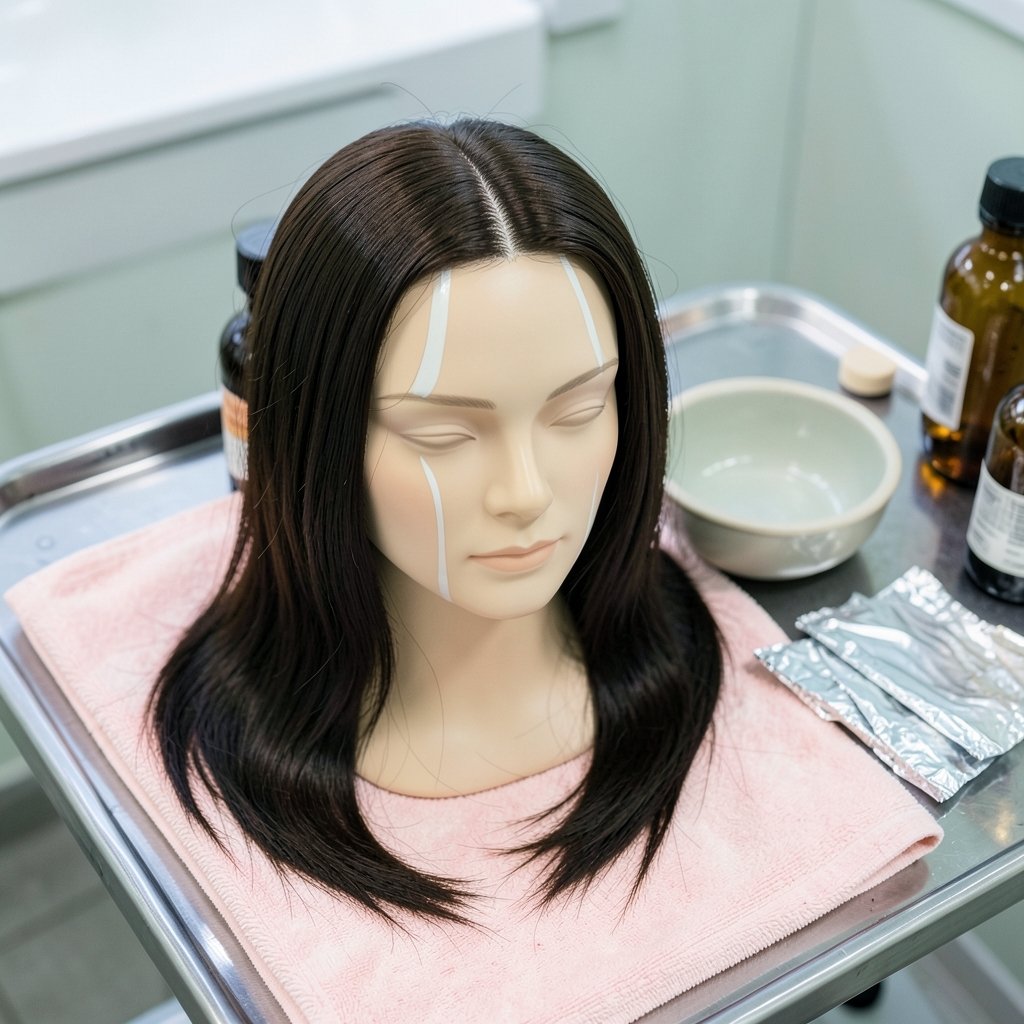
What happens when you want a visible change but you are not ready to bleach your whole head? That is the question money pieces answer. The look is simple on paper: a brighter, face-framing section of hair on each side of the part, set against a darker base. In practice, it is one of the most requested colour services in salons, and one of the most frequently botched at home. This guide covers what money pieces actually are, who they suit, what they cost in time and upkeep, and the mistakes that turn a good idea into a grow-out nightmare. (Hair Dyes)
What Are Money Pieces?
A money piece is a section of hair at the front of the head, usually one on each side of the part, lightened to a shade that contrasts with the rest of the hair. The placement is deliberate: it sits right next to the face, so it catches light and frames the cheekbones the way a highlight would, but with far more contrast. (Hair coloring)
The term is industry and social-media slang rather than a technical cosmetology standard. You will see it written as “money piece,” “money pieces,” and occasionally hyphenated as an adjective (“money-piece highlights”). There is no dictionary entry or trade standard that governs it, so the exact definition shifts a little from stylist to stylist. What stays consistent is the idea: face-framing brightness, applied to a small section, kept separate from the base colour.
Money pieces belong to the broader family of face-framing highlights, but they are not the same as balayage or babylights. Those terms describe how colour is applied (hand-painted, or very fine and densely woven). Money pieces describe where the colour goes. A stylist can create them with foil, with freehand painting, or with a cap, and the result will look different each time.
Money Pieces vs. Related Techniques
| Technique | What it describes | Typical result |
|---|---|---|
| Money piece | Placement: a front section on each side of the part | High-contrast face-framing brightness |
| Balayage | Application: colour painted freehand onto the surface | Soft, graduated, sun-kissed grow-out |
| Babylights | Application: very fine, densely woven sections | Subtle, blended overall lift |
| Traditional foil highlights | Application: woven sections enclosed in foil | Even, structured lift throughout |
The practical difference matters. A money piece is a statement. Balayage is a gradient. If you ask for “face-framing highlights” you may get something much softer than the bold, two-tone look you had in mind, so bring a photo.
Why the Look Became So Popular
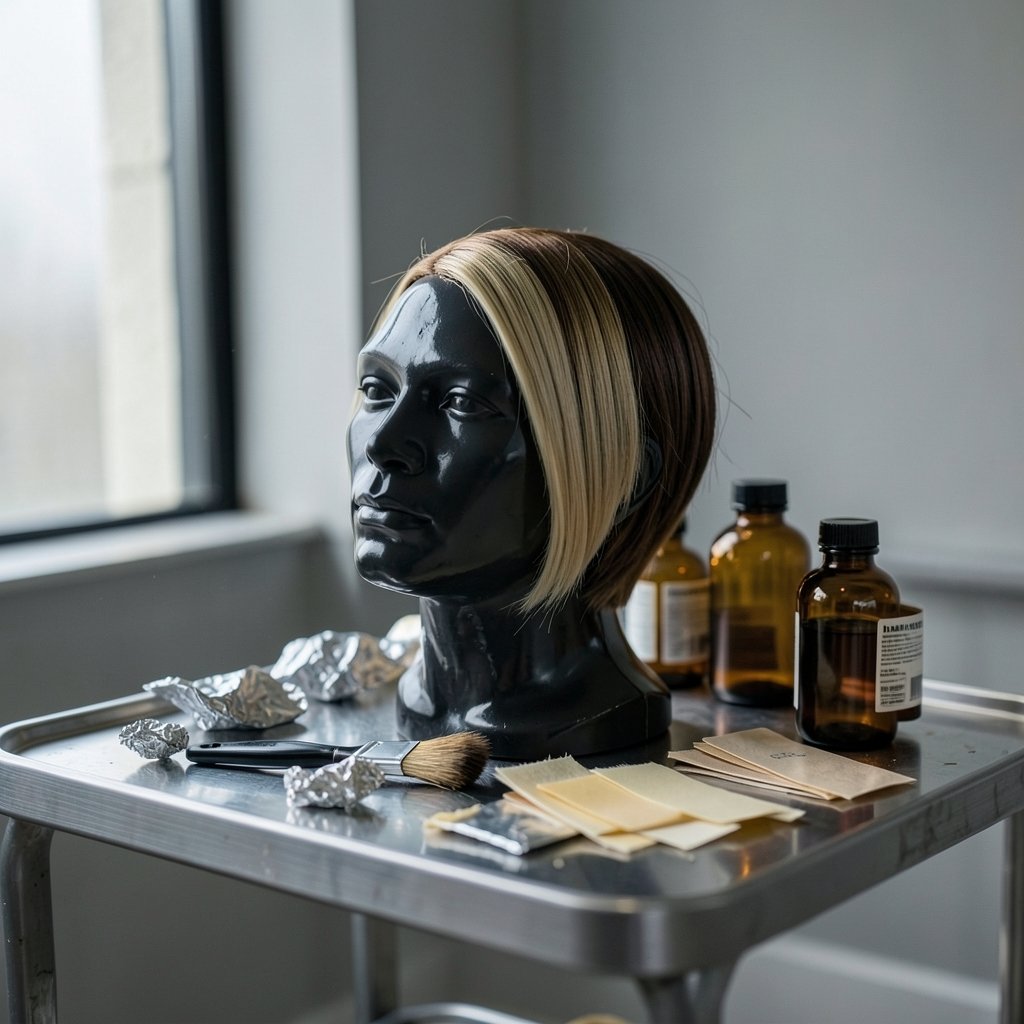
Money pieces solve a real problem. Full-head lightening is expensive, slow, and hard on the hair. A money piece delivers most of the visible payoff, brightening the face and breaking up a solid block of dark colour, while leaving the back of the head untouched. It is a lower-commitment way to test whether you like being blonde.
The look also photographs well. High contrast near the face reads clearly on camera, which is part of why it spread so fast on social platforms. That is worth knowing before you commit: a style optimised for photographs can look sharper and more graphic in real life than it does on a screen.
There is a practical lesson buried in the trend cycle, too. Trends that promise a big visual change for a small spend are exactly the kind that attract low-quality service providers. The same caution applies whether you are booking colour or evaluating any offer that seems too good to be true, as with the way a gift card scam works and why victims rarely get their money back. Ask for a consultation, get a written price, and be wary of anyone who quotes a firm figure without seeing your hair.
Who Money Pieces Suit, and Who Should Skip Them
Money pieces flatter most people, but the contrast level needs to match the person. A few general rules hold up in practice:
Good candidates:
- People with medium to dark hair who want visible brightness without a full transformation
- Anyone with a centre or slightly off-centre part, since the pieces are placed to follow it
- People willing to book maintenance appointments or use a root touch-up product at home
- Those with healthy hair who have not lightened it recently
Proceed with caution:
- Very fine or fragile hair, where bleach near the face can cause visible breakage
- Hair that has already been lightened or chemically straightened, because overlapping treatments compound damage
- Anyone who wants zero visible regrowth, since roots show fastest in this exact spot
- People with a very short crop or a fringe that covers the front section entirely
The Contrast Question
Colour choice is a contrast decision, not a rule. Blonde pieces against a dark brown or black base give the boldest effect. A lighter brown against black is subtler. Some stylists use a warm copper or a cool ash tone instead of blonde, which reads as a colour accent rather than a highlight. There is no standard here, only what suits your skin tone and how much attention you want.
What to Expect in the Chair
A money piece service is shorter than full highlights, but it is not a quick trim. Expect a consultation, a patch test if you are new to the colour line, the lightening process, toning, and a cut or finish. Here is a realistic sequence:
- Consultation. Bring two or three photos. Point to the exact width you want. Ask what the stylist will use: lightener, high-lift colour, or a toner over pre-lightened hair.
- Patch test. Many colour lines and most reputable salons require one, usually 48 hours ahead, especially for first-time clients.
- Sectioning. The stylist isolates the front sections and decides how far back they should extend. This is the single biggest variable in how the result looks.
- Lightening. Foils or freehand application, with processing time that depends on your starting colour.
- Toning. A toner adjusts the final shade and neutralises unwanted warmth. Skipping this step is why some money pieces come out yellow or brassy.
- Finish. A trim, a gloss, and styling so you can see how it sits with your normal part.
Ask the stylist to show you the section width before they start. A piece that is too wide becomes a stripe. Too narrow and it disappears the moment you move your part.
The Maintenance Reality
This is where money pieces earn their reputation. Because the lightened section sits right at the hairline and along the part, root regrowth becomes visible faster than anywhere else on the head. You will see a dark line at the root within a few weeks. How often you need a refresh depends on your natural colour, how fast your hair grows, and how much contrast you chose. Sources vary widely on intervals, so treat any single number you read online as a rough guide rather than a rule.
In practice, most people fall into one of three routines:
- Salon refresh every few weeks. The most polished result, the highest cost.
- A root touch-up product at home between visits. Cheaper, but harder to blend in a high-contrast section.
- A deliberate grow-out. Some people lean into the root and let the money piece fade into a softer balayage effect.
Toning matters as much as lightening. Blonde pieces pick up warmth from the environment and from styling tools, and a purple or blue toning shampoo used occasionally helps keep the shade cool between appointments. Overuse, though, can leave hair dry and slightly ashy, so follow the product directions rather than using it every wash.
Hair Health and Safety
Lightening requires bleach or high-lift colour, and both can damage hair if misapplied. The safety basics are not optional:
- Patch test before any new colour. Allergic reactions to hair dye are real and can be severe, and a reaction can develop even if you have used a product before.
- Do not layer lightener over previously lightened hair without a professional assessment. Overlapping is the most common cause of breakage in the front sections.
- Respect processing time. Leaving lightener on longer to chase a lighter result damages the hair rather than improving the colour.
- Be honest about your history. Box dye, henna, and chemical straightening all change how your hair will respond.
If you have a known sensitivity, or you are pregnant or breastfeeding, talk to a doctor before booking. A stylist can advise on products, but they cannot give medical clearance.
Common Mistakes and How to Avoid Them
Most money piece disappointments trace back to a handful of avoidable errors.
Going too wide. The most common mistake. A piece wider than roughly an inch on each side starts to look like a block of colour rather than an accent. Ask for a narrower section than you think you want; you can always add.
Skipping the toner. Lightener alone rarely lands on the shade you pictured. Toner is what makes the difference between “buttery blonde” and “brass.”
Choosing maximum contrast on damaged hair. High contrast demands healthy hair to carry it. If your hair is fragile, a softer lift in a warm brown will look better and last longer than a bleach blonde that breaks.
Forgetting the part. Money pieces are placed relative to your part. If you flip your part regularly, tell the stylist so the sections can be cut and coloured to work from more than one angle.
Booking on price alone. A cheap quote often means a rushed consultation, no toner, or a stylist who has not assessed your hair history. Get a written estimate after a consultation, not over the phone.
Budgeting for beauty services is its own skill, and it helps to think in annual terms rather than per appointment. The same discipline that makes any recurring expense manageable applies here, whether you are tracking colour appointments or working out how to make money with AI tools to fund a bigger grooming budget. Know the true annual cost before you commit.
Money Pieces at Home: What Actually Works
Home lightening kits exist, and some people get decent results with them. Most do not, for a structural reason: the front sections are the hardest part of the head to apply colour to evenly, because you are working blind on the side you cannot see well, and overlapping is almost guaranteed on a second attempt.
If you are determined to try it at home, a few things improve the odds:
- Do a patch test and a strand test first, every time, even with a product you have used before.
- Section carefully and use a mirror setup that lets you see both sides.
- Stay one shade lighter than your goal. You can always tone darker; you cannot undo over-lightening.
- Never apply lightener to hair that has been coloured in the last few months without professional advice.
For most people, the honest answer is that a salon visit for the initial application, followed by at-home toning and root maintenance, gives the best balance of cost and result.
How Money Pieces Fit Into a Wider Colour Plan
Think of money pieces as one move in a longer game. If you like the effect, the natural next step is to soften the contrast over time, letting the pieces blend into balayage or a full set of face-framing highlights. If you dislike the upkeep, you can grow them out by gradually reducing the contrast at each appointment rather than lightening again.
It also pays to understand what you are buying into at a structural level. Colour services, like most personal-care spending, sit inside a wider economy of small recurring costs that add up quietly. The same way a central bank digital currency debate is really about how everyday money works, a colour plan is really about how a small monthly expense compounds over a year. Reading up on how CBDC digital currency is changing central bank money is a useful reminder that the small, boring, recurring line items deserve more attention than the dramatic one-off purchases.
Conclusion
Money pieces are a genuinely useful colour technique: high impact, relatively low commitment, and adaptable to almost any base shade. They work best when the section stays narrow, the toner is not skipped, and the person wearing them has thought honestly about maintenance. They work worst when they are booked on price alone, applied over already-damaged hair, or expected to grow out invisibly.
The practical summary is simple. Book a consultation, bring photos, ask for a narrower section than feels intuitive, budget for regular toning and root refresh, and patch test every new product. Get those basics right and the result is exactly what the name promises: a small, bright, deliberate detail that makes the whole look feel finished. Get them wrong and you will spend months growing out a stripe. The gap between those two outcomes is mostly preparation, not luck.



