
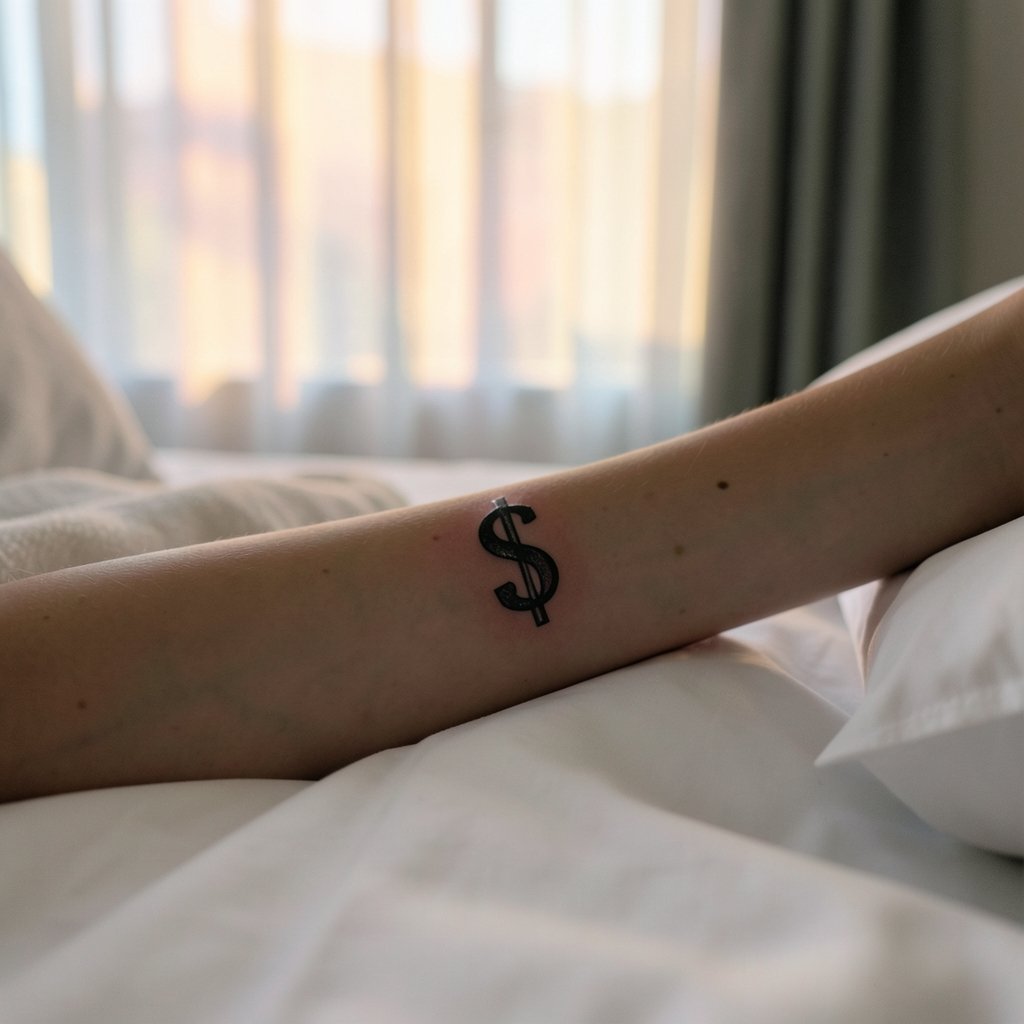
What makes a simple dollar sign tattoo so magnetic? Walk into any tattoo shop and flip through the flash sheets, and you’ll spot it: a bold $, sometimes wrapped in flames, sometimes flanked by wings, sometimes stacked in a neat column down a forearm. It’s one of the most requested small designs in the world, and also one of the most misunderstood. Some people read it as pure ambition. Others see a warning about greed. A few see a piece of cultural history stretching back centuries.
This guide breaks down what the money sign tattoo actually represents, where the symbol comes from, how to design one that won’t look dated in five years, and the practical safety and aftercare details that matter more than the artwork itself.
Where the Dollar Sign Symbol Comes From
The $ symbol has a messy, contested history, and that ambiguity is part of what makes it interesting as body art. The most widely told story traces it to the Spanish-American peso, also called the “piece of eight,” which circulated heavily in the Americas. Accountants reportedly wrote “ps” for pesos, and over time the letters merged into a single mark with the S crossed by a vertical line.
Other historians point to the Pillars of Hercules, the two columns that appeared on Spanish colonial coins, wrapped in a banner that resembled an S. Nobody has settled the argument, and reputable references present several competing theories rather than one clean answer. That matters for tattoo design: if someone wants a “historically accurate” dollar sign, there’s no single correct version. The symbol evolved through handwriting, printing, and coin design, so variations in line count, slant, and style are all defensible.
Currency-symbol tattoos more broadly (the euro sign, the pound sign, the yen sign, and now the Bitcoin symbol) follow the same logic. Each one carries a story about value, trade, and the culture that produced it.
What a Money Sign Tattoo Usually Means to the Person Wearing It
Meaning is personal, but certain themes come up again and again. Here’s how the most common interpretations break down.
| Interpretation | What it signals | Common placement |
|---|---|---|
| Ambition and hustle | Drive, work ethic, financial goals | Forearm, hand, wrist |
| Wealth and status | Success, aspiration, luxury | Chest, neck, shoulder |
| Gratitude for what money bought | Survival, a fresh start, family security | Ribs, back, thigh |
| Street and hip-hop culture | Belonging, style, musical identity | Hands, knuckles, forearms |
| Irony or critique | A joke about greed, capitalism, or luck | Anywhere visible |
| Memorial or tribute | A nod to someone who valued money or hustle | Chest, inner arm |
The design is small enough to be an inside joke and bold enough to be a statement. That range is exactly why it keeps getting tattooed.
The Cultural Baggage You Should Know About
Money sign tattoos carry associations that not everyone reads the same way. In hip-hop and streetwear culture, the dollar sign has been a badge of success for decades, worn by rappers, athletes, and designers as a visual shorthand for having made it. In prison tattoo traditions, currency symbols sometimes function as markers of status or affiliation, and the meanings there are specific and often not meant for outsiders.
That dual life is worth thinking about before committing. A design that reads as “hardworking entrepreneur” in one room can read as something else entirely in another. This isn’t a reason to avoid the tattoo, but it is a reason to be honest with yourself about context: where you work, who you spend time with, and how much you care about being asked “what does that mean?” every week.
If the appeal is more about personal branding than symbolism, it’s worth understanding how people actually build income streams today, since a tattoo won’t do the work for you. Guides on how to make money with AI cover the practical side of that ambition far better than ink ever could.
Designing a Money Sign Tattoo That Ages Well
A dollar sign is deceptively tricky. It’s a thin, angular shape with a lot of empty space, and those are the designs that blur fastest as skin changes. Here’s what experienced artists tend to recommend.
Go bigger than you think
Tiny tattoos look sharp for about two years. Fine lines spread, and a $ smaller than a thumbnail turns into a smudge. A design at least two inches tall holds its shape far longer.
Choose your line style deliberately
Bold traditional outlines with heavy black lines age best. Fine-line and single-needle versions look elegant on day one but demand more touch-ups. If the plan is a minimalist sign, ask the artist to show you healed photos of similar work, not fresh photos.
Decide on the extra elements early
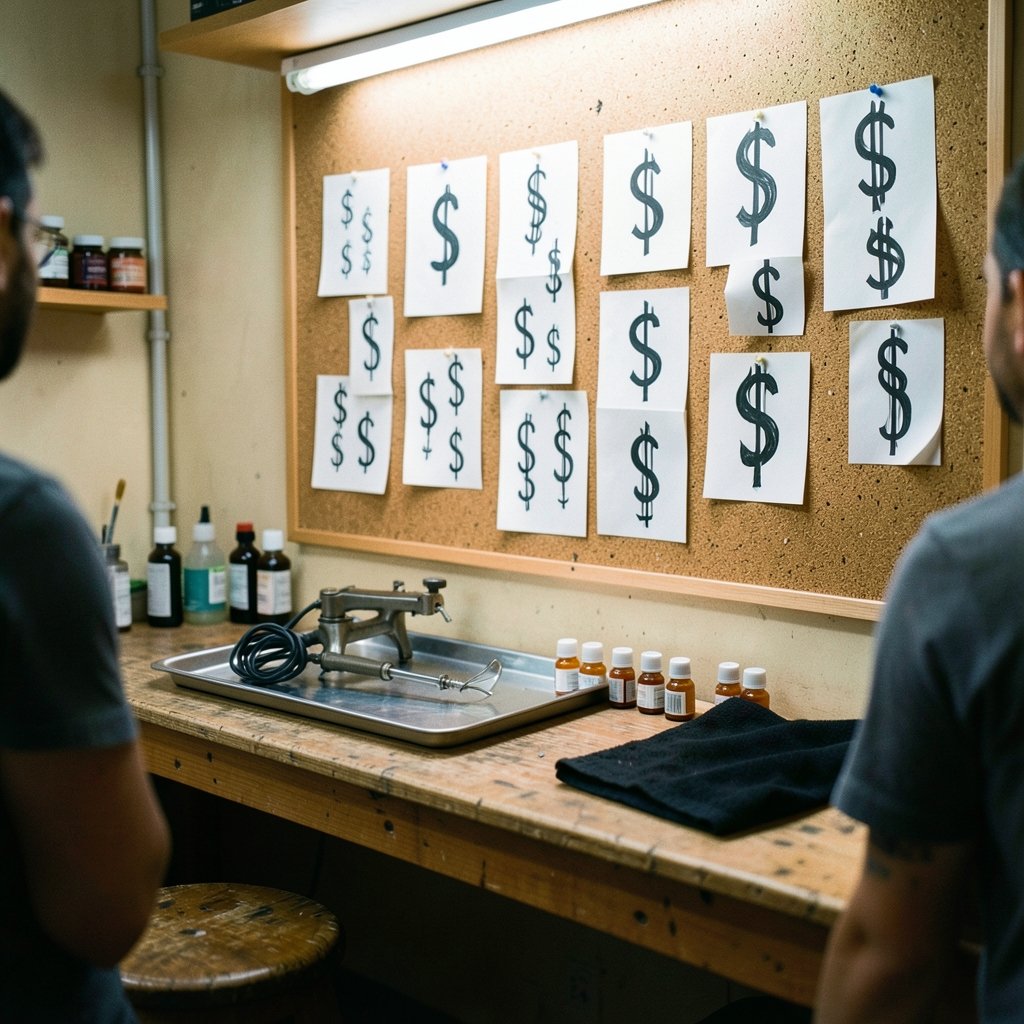
Wings, flames, dollar stacks, snakes, roses, and script banners all change the composition. Adding them later usually means a redesign rather than an addition. Sketch the full concept first, even if you only get part of it done now.
Consider the currency
A euro sign, pound sign, or Bitcoin symbol says something different from a dollar sign. So does a stack of bills versus a single clean glyph. If the goal is to reference a specific place or phase of life, the currency choice carries the message.
For anyone who wants to explore concepts before sitting in the chair, an AI tattoo generator for custom tattoo designs can help visualize variations quickly, which makes the conversation with an artist much more productive. (Tattoo)
Placement: What Actually Works in Practice
Placement drives both pain and longevity. A few practical notes from how these tattoos tend to heal:
- Forearm and outer bicep: the sweet spot for visibility, healing, and detail retention.
- Hands and fingers: high visibility, high fading. Expect touch-ups, and know that many workplaces still react to hand tattoos.
- Wrists: popular but prone to rubbing against sleeves and watch bands, which slows healing.
- Chest and back: good for larger compositions with wings or banners, less visible day to day.
- Neck and face: still a barrier in many professions. Think hard before going visible above the collar.
One common mistake: choosing placement based on a photo of someone else’s tattoo. Body shape, skin tone, and muscle movement all change how a design reads. Bring reference photos to the artist, but let them adapt the layout to your body.
Pain, Cost, and What to Expect at the Shop
Most people describe a small money sign tattoo as a 3 to 5 out of 10 on the pain scale. Fleshy areas like the outer arm are mild; bony spots like the wrist, ribs, and collarbone sting more. Sessions for a simple design run 20 to 45 minutes.
Pricing varies enormously by city and artist reputation. Shop minimums are common, so a tiny tattoo often costs the same as a medium one. Custom work is usually priced hourly or by the piece. The cheapest quote is rarely the best value, because a cover-up or removal costs far more than doing it right the first time.
Before booking, ask three questions: Can I see healed photos of your work? What’s your policy on touch-ups? And what ink brands do you use? A studio that answers all three clearly is usually a studio that runs a clean shop.
Safety and Regulation: The Part Most People Skip
Tattoo regulation is fragmented. In the United States, oversight is split between federal and local authorities, and licensing rules vary widely by state and city. That means the burden falls on the customer to check.
In the US, tattoo inks fall under the FDA’s oversight of cosmetics, and the agency tracks reports of adverse reactions and infections linked to inks. That’s a useful starting point for understanding what’s actually in the bottle. Local health departments typically handle studio inspections and licensing, so a quick call or website check tells you whether a shop is registered.
Practical steps that actually reduce risk:
- Visit the shop in person before booking. Look for a clean, organized space.
- Confirm the artist uses single-use needles and fresh ink caps.
- Ask about aftercare instructions in writing.
- Avoid swimming pools, hot tubs, and long baths for two weeks after.
- Watch for spreading redness, fever, or pus, and see a doctor rather than waiting it out.
The same instincts that protect your skin protect your wallet. Scams that target people chasing quick money follow predictable patterns, and understanding how a gift card scam works and why victims rarely get their money back is a good reminder that anything promising easy cash deserves suspicion.
Aftercare That Preserves the Design
A crisp dollar sign depends on clean healing. Keep the bandage on as instructed, wash gently with fragrance-free soap, pat dry, and apply a thin layer of recommended ointment. Skip heavy lotions, alcohol, and petroleum jelly in thick layers, which trap bacteria.
Expect flaking and itching around week one. Do not pick or scratch. Sun exposure is the biggest long-term enemy of black line work, so sunscreen after healing is non-negotiable if the tattoo sits in daylight. Touch-ups are normal, especially on hands and wrists, and most artists offer them free or discounted within a few months.
Removal and Regret: The Honest Numbers
Tattoo regret is real, and currency symbols are not immune. Removal is typically done with lasers that break ink particles into fragments the body clears over time. It takes multiple sessions spaced weeks apart, costs more than the original tattoo, and works best on dark ink on lighter skin. Black line work responds better than color, but a small bold $ can still take several appointments.
Laser removal carries small risks including scarring and pigment changes, and results vary. Anyone considering a money sign tattoo should picture themselves at 60 and ask whether the design still fits. If the answer is uncertain, start smaller and somewhere coverable.
There’s a financial angle worth sitting with too. Identity theft and fraud cost victims far more than most people expect, and understanding where the money actually goes in identity threat detection makes it clear that real financial security comes from systems, not symbols. A tattoo can celebrate ambition. It can’t protect a bank account.
Conclusion
A money sign tattoo is a small design with a large footprint. It draws on centuries of contested symbolism, carries real cultural weight in some communities, and reads differently depending on who’s looking. Done well, it’s a sharp, confident piece of body art that holds up for decades. Done cheaply, in a spot that fades fast, it becomes a smudge and a regret.
The formula that works: go bigger than feels necessary, choose bold lines over fine ones, pick placement with your actual life in mind, verify the studio’s licensing, and follow aftercare like it matters. Whether the symbol means hustle, gratitude, irony, or a nod to where you came from is entirely up to the person wearing it. That’s the whole point.
Frequently Asked Questions
What does a money sign tattoo symbolize?
It most often represents ambition, financial goals, or gratitude for financial survival. In hip-hop and street culture it signals success and belonging. Some people choose it ironically as a comment on greed, and others use it as a memorial tribute. Meaning is entirely personal.
How much does a dollar sign tattoo cost?
Most shops have a minimum charge, so a small money sign tattoo typically costs the shop minimum regardless of size. Custom or larger compositions are priced hourly or by the piece. Prices vary widely by city and artist reputation, and the cheapest option often leads to expensive fixes later.
Does a money sign tattoo hurt?
Most people rate a small dollar sign tattoo around 3 to 5 out of 10. Fleshy areas like the outer forearm and bicep are mild. Bony spots such as the wrist, ribs, and collarbone hurt more. The session is usually short, often under an hour.
Will a small dollar sign tattoo blur over time?
It can. Fine lines spread as skin ages, and designs smaller than a thumbnail often turn into smudges within a few years. Choosing a design at least two inches tall with bold outlines dramatically improves how it looks after a decade.
Is a money sign tattoo unprofessional?
It depends on the workplace and placement. Visible hand, neck, and face tattoos still draw reactions in many professions. A design on the forearm, upper arm, or torso is easy to cover and rarely causes issues. Consider your industry before choosing a visible spot.
How do I check if a tattoo studio is safe?
Verify that the shop is licensed by your local health department, visit in person to check cleanliness, and confirm the artist uses single-use needles and fresh ink caps. Ask to see healed photos of their work and get aftercare instructions in writing before you leave.



