

What makes a printable coloring page worth the printer ink and the ten minutes of hunting for crayons? For parents of pony-obsessed kids, the answer usually comes down to three things: recognizable characters, clean outlines that little hands can actually fill, and pages that don’t cost anything to try. My Little Pony: Friendship Is Magic coloring pages hit all three, which is why they remain one of the most requested printable activities in households with young children.
This guide covers where these pages come from, how to pick good ones, how to print them without wasting paper, and what the copyright rules actually mean for families. It is written for the parent or caregiver who just wants a calm afternoon activity, not a legal seminar.
Why Friendship Is Magic Translates So Well to Line Art
The show premiered in October 2010 and wrapped its run in October 2019, and its visual style was built for clarity. Characters have bold outlines, large areas of flat color, and simple, readable shapes. That design philosophy is exactly what makes a good coloring page. When you strip the color out of a Friendship Is Magic frame, you are left with clean shapes and clear character silhouettes that a four-year-old can recognize instantly.
Compare that to animation with heavy shading, gradients, or intricate background detail. Those styles produce muddy line art where the outlines compete with texture. Pony designs avoid that problem almost entirely. A child coloring Twilight Sparkle knows exactly which area is the mane, which is the body, and which is the cutie mark.
There is a practical lesson here for anyone assembling a printable activity folder: character recognition matters more than artistic ambition. A page that looks impressive to an adult but confuses a child will sit in the printer tray unfinished.
Where These Coloring Pages Actually Come From
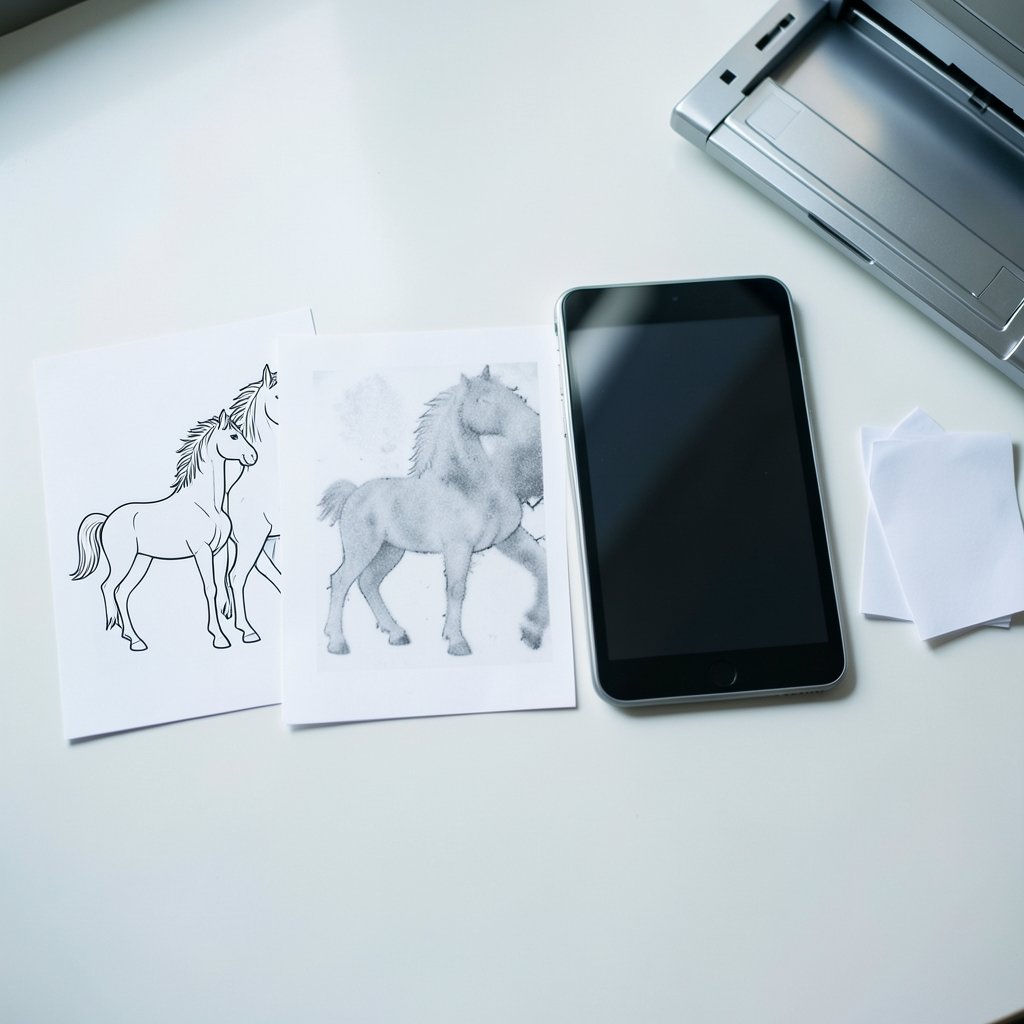
Broadly, printable pony pages fall into three buckets, and it helps to know which one you are looking at.
Officially Licensed Material
Hasbro owns the characters, and licensed activity books and printable packs exist through official brand channels and publishing imprints. These tend to have consistent art, correct character details, and clean resolution. They are usually the safest bet for quality, though the free selection is often smaller than what fan communities produce.
Fan-Made and Community Pages
Fan artists have created enormous libraries of line art over the years. Quality varies wildly. Some fan pages are beautifully drawn and print crisply. Others are low-resolution scans that turn into gray fuzz the moment they hit paper. The trick is to preview at full size before printing, not after.
Auto-Generated and Template Pages
Some sites generate coloring pages from images automatically. These often produce broken outlines, stray artifacts, or shapes that bleed together. They are worth a quick look but rarely worth a full print run.
How to Judge a Coloring Page Before You Print It
A few checks take thirty seconds and save a lot of frustration.
- Zoom to 100 percent. If the lines look jagged or blurry at actual size, they will look worse on paper.
- Check the line weight. Good pages have consistent outline thickness. Thin, broken lines frustrate younger children because crayon skips over them.
- Look for closed shapes. Every region a child might color should be enclosed. Open shapes invite crayon to wander off the character entirely.
- Check the margins. Pages with art running to the very edge often get clipped by home printers, which default to a small unprintable border.
- Confirm the page orientation matches the artwork. A horizontal page forced into portrait settings prints tiny and off-center.
The same discipline applies to any printable you build for a household or classroom. A printable that is designed around how it will actually be used tends to perform far better than one that just looks nice on a screen, which is the same principle behind a landing page practical guide pages built convert — the asset only works if it fits the moment of use.
Printing Tips That Save Ink, Paper, and Patience
Most home printing problems with coloring pages are settings problems, not file problems.
| Setting | What to choose | Why it matters |
|---|---|---|
| Paper type | Plain paper, standard weight | Glossy photo paper smears with crayon |
| Print quality | Draft or normal | Draft is fine for line art and uses far less ink |
| Color mode | Grayscale or black only | Coloring pages do not need color ink at all |
| Scaling | Fit to printable area | Prevents clipped edges |
| Duplex | Off | Bleed-through ruins the back side |
Printing line art in grayscale is the single biggest ink saver. There is no reason to spend color cartridge on a page that will be filled in with crayon anyway. If a page includes a small colored reference image in the corner, that is the only element worth printing in color, and most printers let you skip it.
For heavier use, such as a classroom or a birthday party, consider printing a small stack once and reusing a laminator. A laminated page plus dry-erase markers gives you a reusable activity that survives dozens of rounds. It costs more upfront and less over time, a tradeoff that shows up in plenty of household decisions, from craft supplies to the way people approach start investing little money build real wealth style planning: small upfront choices compound.
What Actually Works With Kids, and What Doesn’t
Practical experience from households and classrooms points to a few patterns.
Works well: offering two or three page choices rather than a folder of twenty. Too many options stalls the activity before it starts. Also effective: printing one “hard” page with detailed background and one “easy” page with a single character, so siblings of different ages can work side by side without competing.
Works poorly: pages with heavy black fill areas. Children burn through crayon trying to cover large dark regions, and the result usually looks muddy. Also frustrating: pages where the character is tiny in a sea of empty space. Kids want the pony to fill the page.
A common mistake is printing a whole themed pack at once. Most of it goes unused, and the paper curls in the tray. Print on demand, one or two at a time, and keep a small digital folder of favorites instead.
The Copyright Question, Answered Plainly
The characters and artwork are protected by copyright and trademark, and those rights belong to Hasbro. In practice, this breaks down into a few simple rules for families.
Printing a page at home for a child to color is generally fine and widely tolerated. That is personal, non-commercial use of material that was published for exactly that purpose.
What crosses the line: selling printed pages, bundling them into a paid activity pack, using them in marketing for a business, or uploading scanned official art to a site you run. Trademark protection also covers character names and logos, which means a business cannot use pony branding to promote unrelated products.
For a classroom or a library program, printing pages for a free activity session sits comfortably in normal practice. Charging admission to a “pony coloring event” using official art does not. When in doubt, use fan-made art with permission or draw original pony-inspired designs rather than reproducing official material.
Building a Reusable Pony Activity Folder
Families who go through a lot of coloring pages tend to end up with a simple system, and it is worth copying.
Keep a folder on a computer or tablet organized by character and difficulty. Name files clearly, something like “twilight-easy” or “rainbow-dash-detailed,” so you are not opening ten files to find the right one. Save the highest-resolution version you can find, since a good file can be reprinted at any size while a low-resolution one is stuck.
Add a few non-coloring pages to the same folder: a maze, a spot-the-difference, a simple word search using character names. Mixing activity types keeps the folder useful for longer, especially on rainy afternoons or long car trips where a single coloring page lasts about eight minutes.
If you maintain a family website, classroom page, or a small hobby blog where you share activity ideas, the same logic applies as with any content project. Organizing assets well and choosing the right hosting approach matters more than most people expect, and a comparison like Vercel vs netlify vs cloudflare pages architecture choices covers the tradeoffs for anyone sharing files publicly.
Picking Pages by Age
Age changes what a child gets out of a coloring page, and matching the page to the child prevents a lot of abandoned crayons.
Ages two to four do best with a single large character, very thick outlines, and no background. The goal is filling space, not staying inside lines.
Ages five to seven can handle two characters, a simple background, and thinner lines. This is the sweet spot for most Friendship Is Magic pages, since the show’s target audience sits right here.
Ages eight and up often want detail: full scenes, multiple characters, decorative borders. Some move on to drawing their own pony designs, which is worth encouraging. A blank sheet and a reference image can be more engaging than a pre-drawn page at this stage.
A useful trick for mixed-age groups is to print the same character at two difficulty levels. Nobody feels left out, and the older child is not bored by a page meant for a preschooler.
Common Mistakes Worth Avoiding
A short list of things that regularly go wrong, gathered from the practical side of printable activities.
Printing on both sides of the paper. Crayon and marker bleed through, and the back page is ruined before anyone touches it.
Using a fresh color cartridge for line art. It drains fast and produces no visible benefit.
Downloading from the first search result without checking resolution. The preview thumbnail always looks fine. The printed page often does not.
Ignoring printer margins. Art clipped at the edge means a character missing a hoof, which children notice immediately and adults somehow do not.
Forgetting that screens and paper are different. A page that looks balanced on a tablet can print with the character pushed into a corner. Always check the print preview as well as the on-screen image.
FAQ
Are My Little Pony Friendship Is Magic coloring pages free to print?
Many are. Officially licensed printable packs sometimes require a purchase or an email signup, while fan-made pages are usually free. Free does not automatically mean high quality, so check resolution before printing.
Can I print these pages for my classroom?
Printing pages for a free classroom activity is normal, widely accepted practice. Charging money for an event that uses official artwork is a different situation and falls outside personal use.
What paper works best for coloring pages?
Standard plain paper is the right choice. Glossy or photo paper resists crayon and smears with marker. If children use markers heavily, a slightly heavier plain paper reduces bleed-through.
What age are these coloring pages suitable for?
They work from about age two upward, but the right page changes with age. Toddlers do best with one large character and thick lines, while older children enjoy detailed scenes with multiple characters.
Can I sell printed coloring pages I found online?
No. The characters and artwork are protected by copyright and trademark owned by Hasbro. Selling printed copies, or bundling them into a paid product, is not permitted regardless of where the file was found.
How do I stop my printer from wasting ink on these pages?
Set the printer to grayscale or black-only mode and choose draft quality. Line art does not need color ink, and draft mode produces perfectly usable outlines at a fraction of the ink cost.
Conclusion
My Little Pony Friendship Is Magic coloring pages endure for a simple reason: the show’s art style was built on clean shapes and bold outlines, which is precisely what makes a printable page work. The best results come from a few habits rather than a big collection. Preview at full size before printing, print in grayscale on plain paper, keep a small organized folder of favorites, and match page difficulty to the child in front of you. Respect the copyright boundaries by keeping use personal and non-commercial, and the activity stays simple, cheap, and genuinely useful. A good coloring page is not the fanciest one on the internet. It is the one that prints cleanly, fits the child’s age, and keeps a quiet afternoon going for another twenty minutes.



