
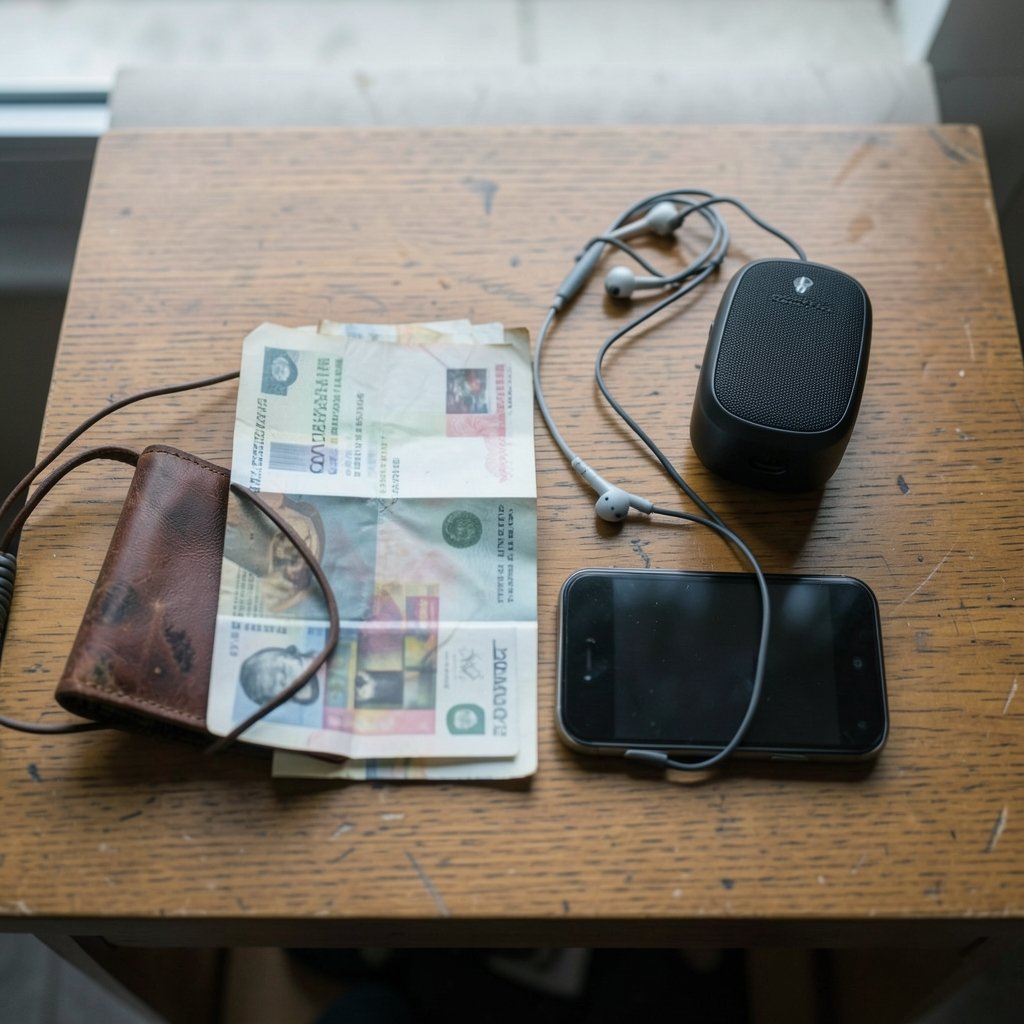
What makes a single silly line of rap stick in millions of heads more than two decades after it was recorded? For “my money don’t jiggle jiggle, it folds,” the answer is a strange mix of timing, personality, and the way short-video platforms reward the absurd. The line began as a joke inside a British documentary, sat mostly forgotten for years, and then exploded as a TikTok sound in 2022. This article traces where the phrase came from, why it spread, what it actually means, and how it fits into the broader culture of money talk online.
Where the Line Comes From
The phrase is a lyric from a rap written and performed by Louis Theroux, the British-American documentary filmmaker known for his deadpan interviewing style. Around 2000, while making his BBC series Louis Theroux’s Weird Weekends, Theroux recorded a short rap as part of a segment exploring his own ambitions as a novelty rapper. The series itself is a well-documented piece of television history, and Theroux’s career as a documentary maker is covered in detail in the Wikipedia entry on Louis Theroux.
The exact recording date is often given as 2000, though some accounts place it in the late 1990s. Because the clip originally aired inside a television programme rather than as a commercial music release, there is no clean “release date” in the usual sense. That ambiguity matters: it explains why the line’s origin story is retold slightly differently depending on who is telling it. The programme it came from, Louis Theroux’s Weird Weekends, is the primary source to check if you want the context of the segment rather than just the meme.
What the rap was never meant to be is a serious statement about wealth. It was a self-aware joke from a journalist who was, by his own admission, not a rapper. That gap between the swaggering delivery and the reality of the person delivering it is the engine of the whole thing.
How a Two-Decade-Old Clip Went Viral in 2022
The clip resurfaced on TikTok in 2022, helped along by a remix from Manchester-based producers Duke & Jones. The remix gave the verse a beat that suited short videos, and users began lip-syncing the line, often with exaggerated gestures to match the boastful tone. The sound spread quickly through the app’s audio-remix culture, where a catchy fragment can be lifted, reused, and reinterpreted thousands of times.
The timeline of the viral moment is widely reported as spring 2022, with Theroux himself performing the rap live at events later that year, including a Glastonbury appearance reported in June 2022. Specific chart positions and remix release dates vary across sources, so treat any precise figures you see with caution unless they come from a dated primary report.
What is clear is the pattern. A clip that was funny in its original context became funnier once detached from it. Short-video platforms reward exactly this kind of fragment: short, rhythmic, repeatable, and slightly ridiculous. The line had all four.
Why the Phrase Stuck
Several things had to line up for “my money don’t jiggle jiggle, it folds” to become a sound people wanted to use.
| Factor | Why it helped the meme spread |
|---|---|
| Rhythm | The line has a bouncy, chant-like cadence that fits short clips |
| Contrast | A soft-spoken documentarian delivering a boastful rap is inherently funny |
| Repeatability | The verse is short enough to lip-sync in a few seconds |
| Nostalgia | Viewers who remembered the original series got a surprise callback |
| Remixability | Producers could add a beat and change the mood without losing the hook |
The contrast factor deserves special attention. Theroux built a career on asking careful, often naive-sounding questions that let subjects reveal themselves. Hearing that same voice adopt a rapper’s bravado creates a cognitive mismatch, and mismatch is a reliable source of humour. The line works because the listener knows the person saying it does not, in fact, have a lifestyle that folds. (Social media use fact sheet)
There is also a simpler explanation: it is just catchy. A line that is easy to remember and easy to repeat is halfway to becoming a meme before anyone even posts it.
What the Line Actually Means
Taken literally, the boast is about cash that does not move around loosely. Money that “jiggles” suggests coins rattling in a pocket or a loose stack of bills. Money that “folds” suggests neat, thick bundles, the kind you might see in a music video. In rap tradition, the image signals status through money that is organised and substantial, not merely owned.
In the context of Theroux’s rap, though, the line is affectionate parody. It borrows the grammar of hip-hop bragging and applies it to a man whose actual fortune comes from television documentaries. The joke is not that the claim is true. The joke is that the claim is being made at all. (Lil Miquela)
That double layer is why the phrase survives quotation. It can be used sincerely as a flex, ironically as a joke about being broke, or simply as a nonsense sound. The meaning shifts depending on who is using it, which is exactly what makes a good meme.
The Money-Bragging Tradition Behind It
Rap has always been a genre where wealth is a central theme, and the “my money” construction is a familiar move. Songs about stacks, bundles, and the sound of cash are a long-standing part of hip-hop’s storytelling. Theroux’s line works because it plugs into that tradition while gently poking fun at it.
That tradition also has a practical side. People who talk about money in public are often making a claim about status, and status claims are exactly what scammers and fraudsters imitate. Understanding how money bragging works as a social signal is useful beyond the meme. The same instincts that make a flashy cash claim persuasive are the ones that fraudsters exploit, which is why it pays to understand how the gift card scam works and why victims rarely get their money back before trusting anyone who leads with a show of wealth.
The meme is harmless. The instinct it plays on is not always so harmless.
Why the Meme Resonated With a Generation Talking About Money
The 2022 revival landed during a period when young people were unusually open about money online. Side hustles, salary transparency, and “how much do you make” videos were all rising. In that climate, a line about money that folds became a kind of shorthand: a way to joke about wealth without actually claiming it.
There is a practical angle here too. Many people who shared the sound were also trying to build income streams, and the overlap between meme culture and money culture is real. If you are curious about that overlap, there is a growing body of writing on how to make money with AI that reflects the same blend of optimism and scepticism the meme captures.
The line also fits a broader shift in how people talk about cash. Digital payments have made physical money less visible, which arguably makes the image of a folded wad of bills more nostalgic and more potent. As currencies move further from paper, the fantasy of a thick bundle becomes a costume rather than a daily reality. That shift is part of the story behind central bank digital currencies and the move toward digital money, and it makes the meme’s old-school cash imagery feel almost like a period piece.
None of this was planned. The line became a vessel for whatever money conversation the viewer wanted to have.
How to Use the Sound Without Looking Like You Missed It
If you want to use the sound yourself, a few practical tips help. These come from watching how the format actually performed, not from any official guide.
- Keep it short. The hook works best in a clip of a few seconds. Long setups kill the rhythm.
- Commit to the bit. Half-hearted lip-syncs undercut the joke. The line needs the swagger.
- Use contrast. The format lands hardest when the person delivering it is visibly not a rapper, or when the setting is mundane.
- Avoid over-explaining. The joke does not need a caption spelling it out.
- Check the audio version. Several remixes exist, and the beat changes the mood. Pick the one that fits your clip.
The most common mistake is treating the line as a sincere flex. It works as parody. Played straight, it just looks odd.
The Business Side of a Viral Sound
Viral sounds are cultural events and commercial ones. When a clip becomes a widely used audio, the people who made the remix, the platform hosting it, and the original creator all sit inside a value chain. Theroux, to his credit, seemed to enjoy it rather than fight it, appearing at events and leaning into the joke.
That pattern is worth noting because the economics of virality are uneven. A sound can generate enormous attention while the original creator sees little direct revenue. The remixer may see more. The platform captures the engagement. Understanding that distribution matters. The same logic applies to any online money-making scheme, which is why it helps to read about how AI companies actually make money before assuming that attention automatically converts into income.
For most people, the meme is just fun. For a few, it was a business opportunity. That gap is the normal state of internet culture.
What the Meme Says About Fame and Reinvention
The strangest part of the story is that Theroux did not need the meme. He was already famous, with decades of documentaries behind him. The viral moment did not create his career; it added a strange footnote to it. That is unusual. Most viral sounds come from people who are trying to be famous. This one came from someone who had already succeeded at something else entirely.
That inversion is why the clip feels charming rather than calculated. There is no marketing strategy behind a rap recorded for a documentary segment two decades earlier. The internet simply found it, liked it, and passed it around. In a media landscape full of engineered virality, an accidental one stands out.
It also shows how durable a good joke can be. A line recorded for a television programme in roughly 2000 was still funny in 2022, and it will probably still be funny in 2032. The technology changes. The joke does not.
Conclusion
“My money don’t jiggle jiggle, it folds” is a rare thing: a viral moment with a clean origin story. It came from a joke rap in a British documentary series, sat dormant for years, and then found a second life on TikTok in 2022 thanks to a remix and a format that rewards short, repeatable, slightly ridiculous lines. Its meaning is flexible, its appeal is broad, and its commercial footprint is smaller than its cultural one.
The line endures because it captures something true about how people talk about money: the boast is rarely the point. The performance is. Whether you use the sound sincerely, ironically, or not at all, the phrase has already earned its place in the strange archive of internet culture. And unlike most money claims online, this one folds neatly.
Frequently Asked Questions
Who originally said “my money don’t jiggle jiggle”?
The line comes from a rap written and performed by the British documentary filmmaker Louis Theroux, recorded around 2000 for a segment connected to his BBC series Louis Theroux’s Weird Weekends. It was never a commercial single, which is why its exact recording date is sometimes given as the late 1990s rather than 2000.
Why did the phrase go viral in 2022?
The clip resurfaced on TikTok in 2022, helped by a remix from producers Duke & Jones. The remix gave the verse a beat suited to short videos, and users began lip-syncing it. The contrast between Theroux’s deadpan public image and the boastful lyric made it funny in a way that travelled well.
What does “my money don’t jiggle jiggle, it folds” actually mean?
Literally, it is a boast about having cash in neat, thick bundles rather than loose coins that rattle. In context, it is parody. Theroux is borrowing the grammar of hip-hop bragging and applying it to a documentary maker, which is the source of the joke.
Is the line from a real song?
Not in the usual sense. It was recorded as a novelty rap for a television segment, not released as a single. The version most people know is a TikTok remix rather than an official release, so chart data and release dates are unreliable and vary between sources.
Did Louis Theroux perform the rap live?
Yes. Theroux performed the rap at events in 2022 as the meme spread, including a Glastonbury appearance reported that June. He has spoken in interviews about his surprise at how far the clip travelled.
Can anyone use the sound in their own videos?
The sound has been widely used in short-video formats, and there is no special permission needed to lip-sync or parody a line in the way most users do. If you plan to use the original audio commercially, though, check the platform’s licensing rules first, since remixes and original recordings can carry different terms.



