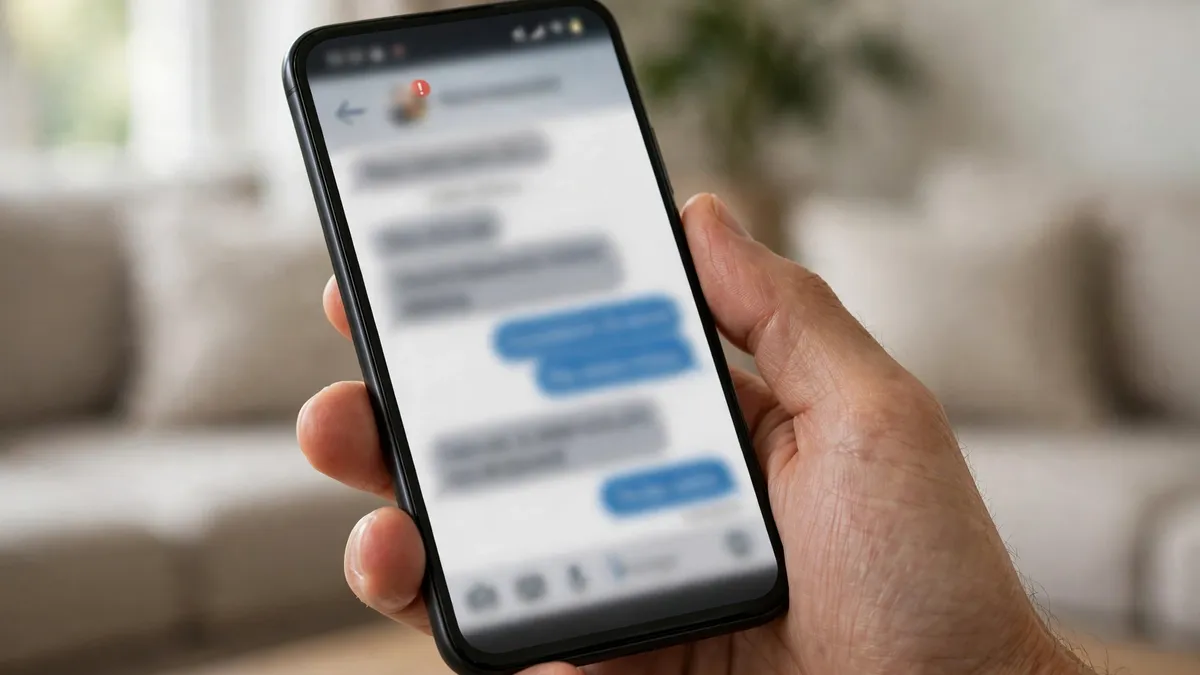
Replying STOP to a spam text feels like the obvious move. The message itself invites it, the instruction looks official, and tapping out four letters seems faster than blocking, reporting, and deleting. Yet security experts and the wireless industry now agree that answering spam texts is one of the worst things you can do with them, because a reply tells the sender something valuable: your number belongs to a real person who reads their messages.
That single confirmation is the whole business model behind mass text spam. Sending thousands of messages costs a scammer almost nothing, but most of the numbers on a purchased or scraped list are dead, disconnected, or never checked. A reply, even one that says STOP, separates the live numbers from the dead ones, and live numbers are worth far more. Engadget reported the advice this week, and the CTIA, the wireless industry association, gives the same guidance: do not respond to texts you do not recognize, even to say STOP.
The rule has one important exception. When a message comes from a business or service you actually signed up for, replying STOP is a legitimate way to opt out, and the law gives that sender ten business days to stop. The skill is telling the two apart, and this guide covers how the STOP trap works, what to do instead on iPhone and Android, and how to cut the flow of spam texts.
Key takeaways
- Replying STOP to a spam text confirms your number is active, which usually brings more spam, not less.
- STOP is safe only for messages from a business or service you deliberately signed up for.
- Report the message to 7726 (SPAM), block the sender, and delete the thread instead of replying.
- Never tap links, call numbers, or share personal details from an unexpected text.
- Built-in iPhone and Android tools can filter unknown senders and report spam in a few taps.
What happened: the STOP advice went mainstream
The warning that you should never reply STOP to spam texts circulated widely this week after Engadget explained why the instinct to opt out backfires. The piece drew a sharp line between two kinds of messages that look almost identical on your lock screen. The first kind comes from a legitimate sender you opted into, such as a restaurant loyalty program, a delivery notification service, or a survey panel you joined. The second kind comes from a stranger pushing a fake job offer, a phony package delivery, an unpaid toll, or a lonely-hearts lure. Both may end with the words text STOP to opt out, but they are not the same thing, and treating them the same way is the mistake.
Legitimate marketing texts operate under the Telephone Consumer Protection Act, the US law that governs automated calls and texts. A business that texts you must have your consent, must identify itself, and must honor an opt-out request. When you reply STOP to such a sender, it is legally required to stop messaging you, and it has ten business days to do so. That is the system working as designed, and it is why the STOP instruction exists in the first place.
Spam texts do not operate under that system at all. The people sending fake toll notices and bogus job offers are not running a compliant marketing program. They are running a numbers game, and they do not care about opt-out law. When you reply STOP to them, nothing in their operation is obliged to remove you. What actually happens is quieter and worse: your number gets flagged as live, responsive, and worth targeting again. Engadget also noted that replying can signal you may not recognize a text scam, marking you for more tailored attempts.
The advice is not new, but it keeps needing to be repeated because the STOP instruction feels so authoritative. Fast Company made the same point earlier, explaining that replying to an unsolicited text in any way informs the sender that a real person is on the other end. Kaspersky gives the same instruction in its guide to stopping spam texts: never reply, because doing so confirms to spammers that you are a real person and a potential target. The CTIA, the trade group for the wireless carriers themselves, lists do not respond, even to say STOP, as its first rule for dealing with suspicious texts.
How the STOP trap works and why it matters
To understand why four letters can cause so much trouble, it helps to see how a spam text campaign is built. A scammer starts with a list of phone numbers, often millions long, bought from a data broker, scraped from the web, or harvested from a data breach. Most of those numbers will never produce a reply. Some are disconnected, some belong to people who never look at unknown texts, and some are filtered by carriers before they arrive. The scammer cannot tell which numbers are live until someone responds.

Your reply is the signal that sorts you into the valuable pile. Once a number is confirmed live, it can be sold onward to other spammers, added to more aggressive lists, or used as the starting point for a targeted scam. A reply also tells the scammer something about you beyond the fact that the number works. It tells them you read unsolicited texts and that you engage with them, which is exactly the profile that a follow-up message, perhaps a fake bank alert or a too-good-to-be-true job offer, is designed to exploit.
The human context: how spam texts reach your phone
Spam texts feel personal because they arrive on a device you carry everywhere, but the sender usually knows almost nothing about you. Your number may have come from a data breach at a company you once used, a form you filled in years ago, a public directory, or a data broker that legally sells contact lists. In many cases the scammer does not even know your name. The message is written to sound as if it does, using a generic hook that fits millions of people: a package you did not order, a toll you did not drive through, a prize you did not enter.
The caveats that matter
The rule is simple, but it has edges worth knowing. The most important is the legitimate sender exception. If you signed up for alerts from your bank, your doctor, your airline, or a shop you use, replying STOP is the correct way to leave that list, and the sender must comply within ten business days. If messages continue after that window, you can report the sender to the Federal Communications Commission. The same exception covers political messages and school alerts you opted into. The test is always the same: did you ask for these messages? If you cannot remember signing up, treat the sender as unknown.
| Detail | What is known |
|---|---|
| Replying STOP to a spammer | Confirms your number is live and usually brings more spam |
| Replying STOP to a legitimate sender | A legal opt-out; sender must stop within 10 business days |
| Reporting to 7726 (SPAM) | Forwards the message to your carrier for filtering |
| iPhone unknown-sender tools | Delete and Report Spam, or Block Contact from the thread |
| Android Google Messages tools | Report spam and block from a long press on the thread |
| Messages to never engage with | Toll, package, prize, job, and romance texts you did not expect |
| If you already replied | Block the sender, report the message, and watch for follow-ups |
| If you clicked a link | Do not enter details, update passwords, and scan your phone |
A third caveat concerns verification. If a message claims to be from your bank, a delivery company, or a government agency, and you are worried it might be real, do not verify it by replying or by tapping its link. Open the company’s official app yourself, or type its web address yourself, or call a number you already trust. A genuine organization will never ask you to move money, share a password, or pay with a gift card or cryptocurrency because of a text message. If the message pressures you to act quickly, that urgency is itself the warning sign.
Checklist: judging a text honestly
Use this quick checklist before you touch any unexpected text, and you will rarely go wrong.
- Did you expect this message? If not, do not reply, tap, or call.
- Does it demand urgency, threaten a penalty, or promise a prize? All three are classic scam hooks.
- Does it ask you to click a link, call a number, or share personal details? A real organization will not do this by text.
- Can you verify it another way? Open the official app or type the address yourself.
- Did you sign up for messages from this sender? If you cannot remember doing so, treat it as unknown.
- When in doubt, report it to 7726, block the sender, and delete the thread.
Frequently asked questions
Is it ever safe to reply STOP to a spam text?
Only when the sender is a business or service you signed up for. Then STOP is a legal opt-out, and the sender must stop within ten business days. For any unknown sender, do not reply at all: report it, block the number, and delete it.
What should I do instead of replying STOP?
Forward the message to 7726, then block the sender and delete the thread. On iPhone, use Report Spam or Delete and Report Spam. On Android, long press the conversation in Google Messages and choose Report spam, then Block.
What happens if I already replied STOP to a spam text?
Nothing irreversible has happened, but your number may now be flagged as live. Block the sender immediately, report the message, and be extra cautious about follow-ups. Do not click links or share details in any message that follows.
How do I report a spam text on iPhone?
Under a message from an unknown sender, tap Report Spam and choose Delete and Report Spam. Otherwise, tap the number at the top of the conversation and choose Block Contact. You can also filter unknown senders into a separate inbox with Screen Unknown Senders.
How do I report a spam text on Android?
In Google Messages, long press the conversation, tap Block, and confirm. You can also report it as spam from the same menu, and forwarding the message to 7726 works on Android too.
Can I stop spam texts completely?
Probably not entirely, because new numbers and lures appear constantly. But reporting, blocking, filtering unknown senders, and never replying will cut the volume sharply over time, and being careful about who you give your number to helps as well.
The bottom line
Replying STOP to a spam text is a habit that made sense when almost every text came from a legitimate business, and it is now a habit that works against you. The scammers sending fake toll notices, bogus job offers, and phony delivery alerts do not run opt-out lists. They run a sorting operation, and every reply, even a refusal, tells them your number is worth more attention.
The better habit takes the same few seconds and costs the sender nothing to learn from: report the message to 7726, block the number, and delete the thread. Save STOP for the senders you actually signed up for, and let silence do the work everywhere else. For a closer look at the tools that help, see our guide to the best mobile security apps of 2027, which covers spam filtering and call blocking in more depth, alongside our roundup of the best email security software of 2027 for the phishing messages that land in your inbox. If your home devices need the same treatment, our guide to the best antivirus software for home users is a useful place to start.