

What happens when you wear the wrong shoe on artificial turf? Your feet slide, your knees ache, and your game falls apart. That is the problem New Balance turf shoes are built to solve. They are made for short-pile artificial grass, the kind with rubber infill that turns up at baseball complexes, indoor soccer facilities, and multi-use sports parks.
This guide explains what actually makes a turf shoe different, which New Balance lines serve which sports, and how to avoid the mistakes that leave players with sore feet and wasted money. It stays balanced: turf shoes are excellent on the right surface and genuinely poor on the wrong one.
What actually counts as a turf shoe?
The word “turf” gets thrown around loosely in retail. A shoe sold as a turf shoe might be designed for a short-pile artificial grass field, an indoor futsal court, or a gym floor. Those are three different jobs, and confusing them is the first mistake buyers make.
Real turf shoes share a few defining traits:
- Many small rubber studs or nubs on the outsole rather than a handful of long cleats
- A flatter, more stable platform than a cleated shoe
- Shorter stud height to sit low against a firm artificial surface
The outsole pattern matters more than any marketing label. Dozens of short nubs spread the load across the foot and grip the turf fibers without digging in the way metal or long plastic cleats do. That design is an industry convention rather than a New Balance invention, but it explains why turf shoes feel so different from cleats the moment you put them on.
The surface itself is worth understanding. Artificial turf comes in several constructions, with different pile heights and infill materials, and each one rewards a slightly different shoe. A short-pile infilled field is the classic turf-shoe habitat. Longer, softer carpet-style turf behaves differently underfoot.
Why the surface matters more than the brand
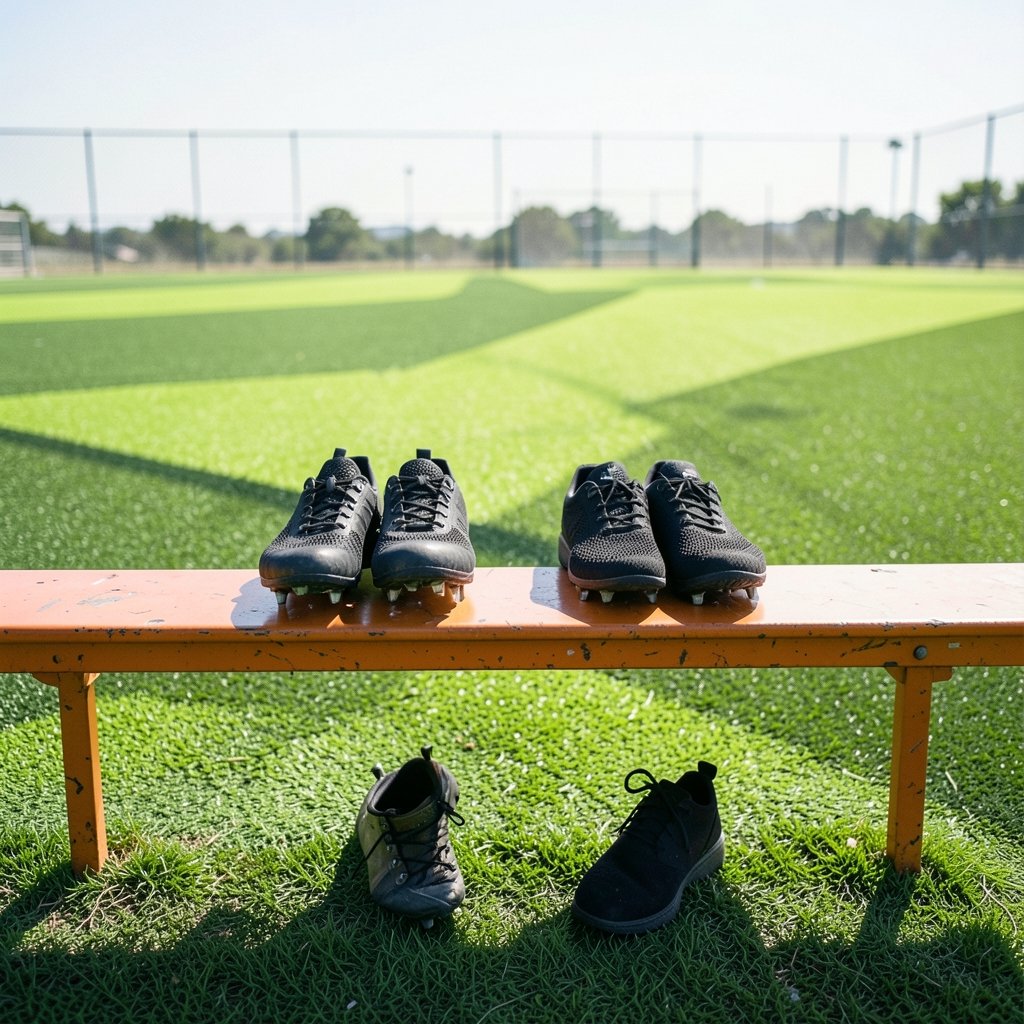
Footwear and surface have to match. That is the single most important idea in this entire category, and it applies whether the shoe says New Balance, Nike, or anything else. Sports bodies that certify artificial pitches treat the surface as a controlled, tested product, and the shoe is the other half of that system.
Wearing long cleats on short turf is the classic error. The studs cannot sink into the shallow pile, so they sit on top and reduce the contact area. The result is a slippery, unstable ride and extra torque through the knee and ankle. Wearing turf shoes on natural grass is the opposite problem: not enough penetration, so you lose grip when you push off.
A quick comparison helps:
| Surface | Best shoe type | Why |
|---|---|---|
| Short-pile artificial turf with infill | Turf shoes (multi-nub outsole) | Short studs grip the pile without digging in |
| Natural grass, firm and dry | Molded cleats | Longer studs penetrate the soil |
| Natural grass, soft and wet | Longer or metal cleats | Need deeper penetration for traction |
| Indoor futsal or gym court | Flat court shoes | Non-marking, flat rubber sole |
| Long, soft carpet turf | Turf shoes or flat trainers | Avoids excessive stud pressure |
If there is one practical rule, it is this: read the surface, then pick the shoe. Players who buy a shoe because a teammate wears it, without checking the field type, are the ones who end up uncomfortable.
The New Balance turf lineup across sports
New Balance’s turf heritage runs deepest in baseball and softball, where the company has long built molded-cleat and turf-trainer models for diamond sports. Its baseball category expanded notably through the 2000s and 2010s, and turf trainers became a standard part of the catalog for players who practice on artificial surfaces or play in complexes with turf infields.
In baseball and softball catalogs, these shoes are often labeled turf trainers rather than turf shoes. Same idea, different naming convention. Exact model numbers and release years shift constantly, so treat any specific model claim with caution and check a retailer-neutral shoe database rather than a sales page.
New Balance also entered soccer around the mid-2010s, and turf (often marked TF) outsoles are a standard category in soccer footwear for artificial-grass pitches. That gives the brand coverage across the two sports where turf surfaces are most common.
The lesson for buyers is that “New Balance turf shoes” is not one product. It is a family of shoes serving different sports, and the right pick depends on which sport you play. A baseball turf trainer and a soccer turf shoe share an outsole philosophy but differ in fit, support, and upper construction.
How to choose the right pair in practice
Buying turf shoes is mostly about matching three things: your sport, your surface, and your foot. Here is a practical sequence that works.
- Confirm the surface. Ask the facility or check the field. Short-pile infilled turf, long carpet turf, and indoor courts each call for a different shoe.
- Match the sport. Baseball and softball turf trainers have different support needs than soccer turf shoes. Do not cross-shop blindly.
- Check the outsole pattern. Count the nubs and look at their height. Many short nubs suit firm artificial turf; fewer, longer studs suit softer ground.
- Try them on late in the day. Feet swell, and turf shoes should feel snug but not tight across the forefoot.
- Test the break-in. Walk on a hard floor first. A good turf shoe should feel stable immediately, not require a week of suffering.
Common mistakes people make:
- Buying cleats for turf. The most frequent and most costly error. Long studs on short pile reduce grip and increase joint stress.
- Buying turf shoes for natural grass. They will feel slippery the moment the grass is damp.
- Ignoring the sport. A soccer turf shoe is not a substitute for a baseball turf trainer, even if the outsole looks similar.
- Chasing discounts on the wrong model. A cheap shoe for the wrong surface is expensive in the long run.
- Skipping the fit check. Turf shoes run across a range of widths, and New Balance is known for offering multiple widths, so use that.
One more practical tip: rotate your turf shoes if you play several times a week. The nubs wear down, and a worn outsole loses grip long before the upper looks tired. Replacing them on time is cheaper than a rolled ankle.
Turf shoes, balance, and the bigger picture
The word “balance” shows up a lot in gear advice, and for good reason. A shoe that matches the surface keeps the foot planted, which keeps the body balanced through cuts and sprints. A shoe that fights the surface does the opposite. The same principle of matching a tool to its job appears in plenty of unrelated gear decisions, from how a balanced versus unbalanced headphone output changes the listening experience to how password manager vault timeout settings trade convenience against security. The pattern is consistent: the right setting for the context beats a one-size-fits-all default.
That idea carries into how players think about performance overall. A shoe is one variable among many, and it works best when the rest of the setup is sensible. Players who obsess over the perfect turf shoe while ignoring training load, recovery, or even nutrition are solving the wrong problem. A balanced approach to ordering Thai food is a lighthearted example, but the underlying logic holds: small, well-matched choices compound, and mismatched ones create friction.
For anyone building a broader kit, the same matching instinct applies elsewhere. Just as a CPU and GPU bottleneck fix is about removing the weakest link rather than buying the fastest part, choosing turf shoes is about removing the mismatch between foot and field. And the way old money shoe styles signal understated quality is a reminder that the best gear choices are usually the ones that fit the occasion quietly, not the loudest option on the shelf.
Care and longevity: making turf shoes last
Turf shoes take a beating. Artificial surfaces are abrasive, infill grit works its way into seams, and the rubber nubs wear down with every session. A few habits extend their life considerably.
- Knock off the infill after every session. Rubber pellets trapped in the outsole and seams accelerate wear and smell.
- Air-dry, never machine-dry. Heat warps the outsole and breaks down adhesives.
- Rinse the outsole with plain water. Infill residue and dust build up and reduce grip.
- Store them dry and out of direct sun. UV exposure hardens rubber over time.
- Inspect the nubs monthly. Flattened or torn nubs mean it is time to replace the shoe.
The most common mistake here is leaving turf shoes in a hot car or a damp bag. Both shorten the life of the outsole and the upper. A simple habit of knocking off grit and air-drying will do more for longevity than any product on the market.
When turf shoes are the wrong choice
Balance means being honest about limits. Turf shoes are excellent on short-pile artificial turf and poor almost everywhere else. On natural grass, they lack the penetration to grip. On wet, soft ground, they are genuinely risky. On indoor courts, flat non-marking soles are the correct tool.
There is also a durability tradeoff. The many small nubs that make turf shoes grip so well also wear faster than a solid flat sole. Players who split time between turf and court surfaces often need two pairs rather than one compromise shoe.
And there is a fit caveat. Turf shoes tend to have a firmer, flatter feel than cushioned running shoes, which some players find uncomfortable at first. That firmness is deliberate, since stability matters more than plushness on a fast artificial surface.
Conclusion
New Balance turf shoes make sense when the shoe matches the surface and the sport. The brand’s turf lineage runs deepest in baseball and softball turf trainers, with soccer turf models rounding out the range for artificial-grass pitches. The outsole is the tell: many short rubber nubs for short-pile infilled turf, not long cleats.
The practical takeaway is simple. Confirm the surface before you buy, match the shoe to your sport, use the width options New Balance offers, and maintain the outsole with basic care. Do that, and a pair of turf shoes will keep your feet planted, your joints happier, and your game steadier. Skip those steps, and even a great shoe becomes the wrong tool for the job.
Frequently asked questions
What are New Balance turf shoes designed for?
They are designed for short-pile artificial turf, usually the infilled kind found at baseball complexes, indoor soccer facilities, and multi-use sports parks. The outsole uses many small rubber nubs instead of long cleats so the shoe grips the turf fibers without digging in. They are not designed for natural grass or indoor courts.
Can you wear turf shoes on natural grass?
You can, but you probably should not. On natural grass, turf shoes lack the stud length needed to penetrate the soil, so grip drops sharply, especially when the surface is damp. Molded or longer cleats are the correct choice for grass. Turf shoes work best where the surface is firm and artificial.
What is the difference between a turf shoe and a turf trainer?
In practice, very little. Baseball and softball catalogs often use “turf trainer” for the same basic design that soccer catalogs call a turf shoe. Both use a multi-nub outsole for artificial surfaces. The difference is usually sport-specific fit, support, and upper construction rather than the core outsole concept.
Are turf shoes better than cleats on artificial turf?
For short-pile artificial turf, yes. Long cleats cannot sink into shallow pile, so they sit on top, reduce contact area, and increase torque through the ankle and knee. Turf shoes spread the load across many small nubs, which improves stability and comfort. On soft natural grass, the reverse is true.
How long do turf shoes last?
It depends on how often you play and how well you care for them. The rubber nubs wear down faster than a solid flat sole, so regular players may need a new pair every season or two. Knocking off infill after each session, air-drying, and inspecting the nubs monthly will extend their useful life.
Do New Balance turf shoes come in different widths?
New Balance is known for offering multiple widths across many of its models, which is a real advantage for players with wide or narrow feet. Availability varies by model and sport category, so check the specific shoe rather than assuming. Trying them on late in the day gives the most accurate fit.



