

Have you ever walked into a movie theater after the show has started and had to stand still while everyone else seemed to find their seats without trouble? Or stepped outside at dusk and realized you could not read the street signs you knew by heart? If that moment of near-blindness in low light feels sharper for you than for the people around you, you may be experiencing night blindness — and it is worth paying attention to.
Night blindness, known medically as nyctalopia, is not a disease on its own. It is a symptom, a signal that something in the eye — most often the retina’s rod cells — is not adjusting to darkness the way it should. The good news is that the causes range from simple and fixable to serious but manageable, and the path to answers is well established. (My internet so slow at night real causes fixes)
What Night Blindness Actually Is
To understand night blindness, it helps to know that the retina has two main types of light-sensing cells. Cone cells handle color and fine detail in bright light. Rod cells take over in dim light. Rods are packed with a pigment called rhodopsin, which breaks apart when light hits it and rebuilds in darkness — the chemical basis of “letting your eyes adjust.”
When rods are damaged, depleted, or blocked from working properly, that adjustment fails. The result is difficulty seeing in low light, poor contrast in shadows, and sometimes a slow, clumsy transition between bright and dark spaces. Some people also notice trouble judging depth or spotting objects at the edge of their vision after sundown.
One important distinction: night blindness is not the same as color blindness, and it is not simply “bad vision at night” caused by an outdated glasses prescription. Uncorrected nearsightedness can make night driving harder, but true nyctalopia points to a problem with the eye’s dim-light machinery.
The Most Common Causes
Vitamin A Deficiency
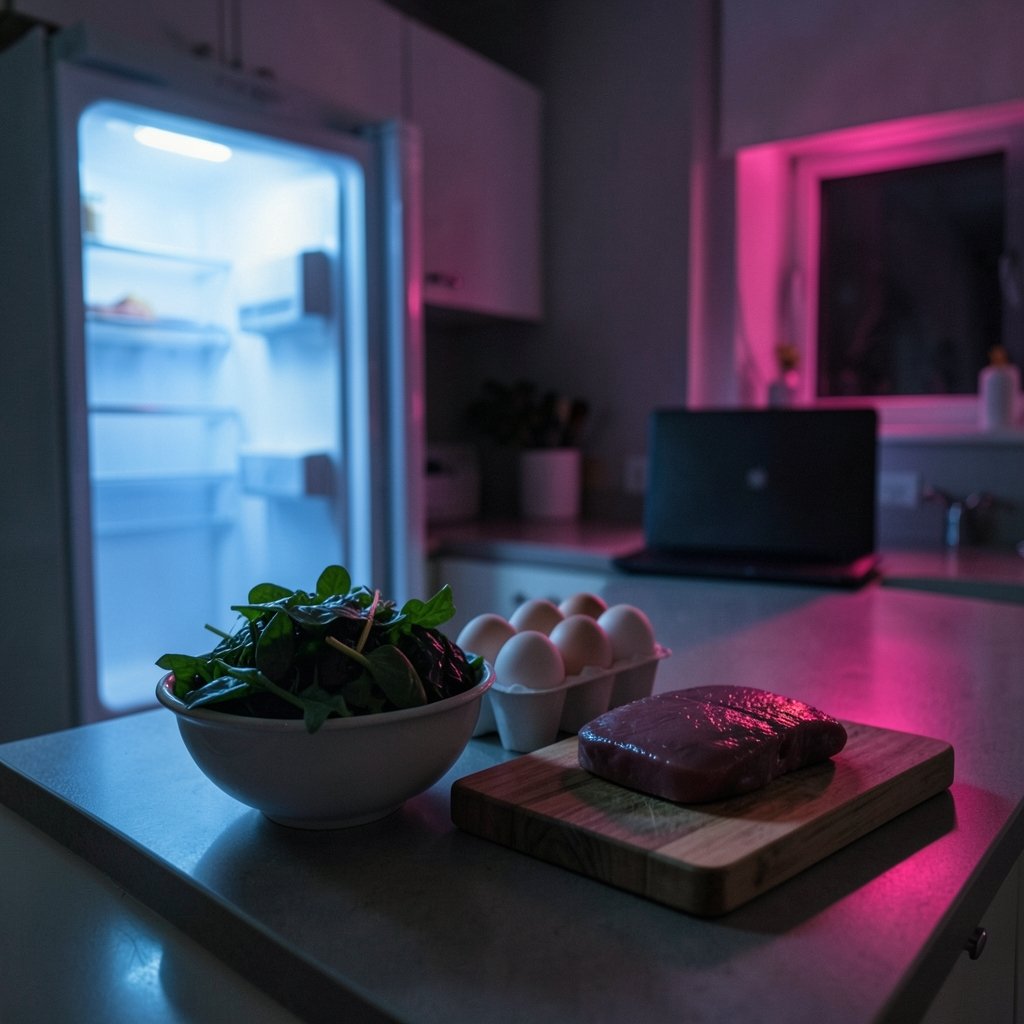
Vitamin A is the raw material the body uses to build rhodopsin. Without enough of it, the rods cannot regenerate their pigment fast enough, and dim-light vision suffers. Vitamin A deficiency remains a leading cause of night blindness worldwide, particularly in low-income regions where diets lack fortified foods, leafy greens, eggs, and liver. It is also preventable and treatable — supplementation and dietary improvement can reverse the symptom when deficiency is the cause.
This is one reason night blindness is sometimes called a “nutritional alarm bell.” In wealthier countries, true deficiency is uncommon, but it can appear in people with malabsorption conditions, restrictive diets, or certain liver and pancreatic diseases.
Retinitis Pigmentosa
Retinitis pigmentosa is a group of inherited disorders in which the retina gradually degenerates. It classically begins with night blindness and loss of peripheral vision, often showing up in adolescence or early adulthood, then progresses over years. Many people with retinitis pigmentosa describe the same early experience: bumping into things in dim rooms, struggling at dusk, and losing confidence driving after dark.
Because it is genetic, retinitis pigmentosa can run in families. Anyone with early, unexplained night blindness plus a family history of vision loss should mention it to an eye doctor — that detail can shorten the diagnostic path considerably.
Cataracts
A cataract is a clouding of the eye’s lens. Dense or centrally located cataracts scatter light and reduce the amount that reaches the retina cleanly, which hits low-light vision hard. People with cataracts often notice glare from headlights, halos around lights, and a sense that everything is dimmer than it used to be. Cataract surgery usually restores night vision substantially when the lens is the culprit.
Refractive Error and Pupil Problems
An uncorrected refractive error — especially myopia — can make night vision feel worse because the eye is already working hard to focus, and low light reduces the depth of field further. Separately, conditions that prevent the pupil from dilating properly limit how much light enters the eye. Some people have pupils that respond sluggishly in the dark, and certain medications or nerve problems can affect pupil function too.
Other Causes Worth Knowing
The list does not stop there. Glaucoma can damage the optic nerve and affect low-light performance. Diabetes-related retinal disease can impair rod function. Certain medications — including some retinoids and older antimalarial drugs — are associated with night vision changes. Rare inherited conditions such as congenital stationary night blindness cause the symptom from childhood without progressive degeneration. (Save money groceries without eating same meal every night)
| Cause | Typical Clue | Usually Reversible? |
|---|---|---|
| Vitamin A deficiency | Dietary gaps, other deficiency signs | Yes, with treatment |
| Retinitis pigmentosa | Family history, peripheral vision loss | No, but manageable |
| Cataracts | Glare, halos, overall dimming | Yes, with surgery |
| Uncorrected myopia | Blur at distance, strain | Yes, with correction |
| Pupil dysfunction | Poor dark adaptation | Depends on cause |
| Medication effect | Timing linked to a drug | Often, after review |
How Doctors Sort Out the Cause
Because night blindness is a symptom, the evaluation is essentially detective work. A typical workup includes:
- History. When did it start? Is it stable or worsening? Is there a family history of vision loss? What medications and diet are involved?
- Visual acuity and refraction. Checking whether a simple glasses prescription explains the difficulty.
- Pupil and slit-lamp exam. Looking for structural problems in the front of the eye, including cataracts.
- Dilated fundus exam. Examining the retina for signs of degeneration, pigment changes, or diabetic damage.
- Visual field testing. Mapping peripheral vision, which is often lost early in retinitis pigmentosa.
- Electroretinography (ERG). Measuring the retina’s electrical response to light when an inherited retinal dystrophy is suspected.
That last test matters. ERG can distinguish a retinal dystrophy from other explanations and gives families a clearer picture of what to expect. Genetic counseling often follows a diagnosis of an inherited condition, since it helps relatives understand their own risk.
What Treatment Looks Like
Treatment depends entirely on the cause, which is why self-diagnosis is a poor strategy here.
- Refractive error: Correct the prescription, and night vision often improves immediately.
- Cataracts: Surgery replaces the clouded lens and typically restores low-light vision.
- Vitamin A deficiency: Supplementation and dietary change, guided by a clinician, reverse the symptom when deficiency is confirmed.
- Inherited dystrophies: Most have no cure. Gene therapy exists for one specific rare form, RPE65-related retinal dystrophy, and eligibility rules change over time, so families should ask their specialist about current options rather than relying on old information.
- Underlying disease: Managing diabetes, glaucoma, or another systemic condition can slow further damage.
A practical point many people miss: do not start high-dose vitamin A supplements on your own because you read about night blindness online. Vitamin A is fat-soluble, and excess intake can be toxic. Dosing belongs to a doctor who has confirmed a deficiency.
Living Well With Reduced Night Vision
For anyone whose night vision is limited, safety habits matter as much as medical care.
Skip night driving. This is the single most important adjustment. If driving after dark is unavoidable, stick to well-lit routes, keep the windshield clean inside and out, and reduce speed. Glare from oncoming headlights is a common trigger for trouble.
Light your home deliberately. Use night lights along hallways and stairs, keep a lamp within reach of the bed, and add motion-sensor lighting near entryways. High-contrast markings — a strip of tape on stair edges, contrasting switch plates — help the eye find boundaries when detail fades.
Give your eyes time to adapt. Walking from a bright room into a dark one, pause for 30 to 60 seconds rather than pressing forward. Rod adaptation takes minutes, not seconds, and rushing it is how people trip.
Tell people around you. A simple heads-up to family, coworkers, and hosts helps them understand why you are moving carefully in dim spaces.
Common Mistakes People Make
A few patterns show up again and again in how people handle this symptom.
The first is blaming age. “I’m just getting older” is sometimes true, but it can delay a diagnosis of cataracts or retinal disease that would have been caught earlier. The second is assuming glasses will fix it. A new prescription helps refractive error and nothing else. The third is self-treating with supplements. The fourth is ignoring the family tree. Night blindness that appears young, worsens over time, or comes with peripheral vision loss deserves an eye exam, and so does a relative with the same story.
It is also worth noting that night vision complaints are not always about the eyes alone. Fatigue, poor sleep, and long stretches of screen use can make dim-light performance feel worse. If you are up late staring at a slow connection while waiting for a page to load, the fix may be sleep rather than ophthalmology — though persistent symptoms still deserve a professional look.
When to See a Doctor
Book an eye exam if night blindness is new, worsening, or paired with any of the following: loss of side vision, glare and halos around lights, a family history of retinal disease, recent dietary changes or malabsorption problems, or difficulty that affects driving and daily safety. Sudden vision changes, eye pain, or a curtain-like shadow across vision warrant urgent care rather than a routine appointment.
Conclusion
Night blindness is one of those symptoms that rewards curiosity. It can be as ordinary as an outdated prescription or as consequential as an inherited retinal condition, and the difference is found through a proper eye exam, not guesswork. The reassuring part is that the causes are well mapped: vitamin A deficiency, cataracts, and refractive error are all treatable, and even progressive conditions can be managed with informed support. If dim light has started to feel like a wall, treat that feeling as useful information — and get it checked.
Frequently Asked Questions
What is night blindness?
Night blindness, or nyctalopia, is difficulty seeing in dim light or darkness. It is a symptom rather than a disease, usually caused by problems with the retina’s rod cells, which handle low-light vision.
Can night blindness be cured?
It depends on the cause. Night blindness from vitamin A deficiency, cataracts, or an uncorrected prescription is usually reversible with treatment. Inherited retinal dystrophies such as retinitis pigmentosa generally have no cure, though one rare form has a gene therapy option.
Is night blindness a sign of vitamin A deficiency?
It can be. Vitamin A is needed to build rhodopsin, the pigment rods use in dim light, so deficiency is a leading cause of night blindness worldwide. A doctor can confirm whether deficiency is the cause before recommending supplements.
Does night blindness mean I need glasses?
Not necessarily. Uncorrected nearsightedness can make night vision harder, but true night blindness often points to the retina, the lens, or the pupil. An eye exam sorts out which explanation fits.
Is night blindness hereditary?
Some forms are. Retinitis pigmentosa and congenital stationary night blindness are inherited conditions, so a family history of night vision problems or progressive vision loss is important information to share with an eye doctor.
Is it safe to drive at night with night blindness?
Generally, no. Reduced low-light vision and glare sensitivity make night driving risky. People with night blindness are usually advised to avoid driving after dark and to use well-lit routes and extra caution when they must travel.



