

Can the lamp in the corner of your living room really change which handheld console looks better? More than most buyers expect, yes. Two people can sit on the same couch, hold the same device, and walk away with opposite opinions about the screen. One says the picture looks washed out. The other says it looks gorgeous. Neither is wrong. They are simply sitting in different light.
That gap matters more in 2027 than it did a few years ago, because the two most talked-about handhelds take very different approaches to the panel. The Nintendo Switch 2 leans on a bright LCD, while the Steam Deck OLED uses a self-lit organic display. The hardware specs get all the headlines. The room around the hardware quietly decides how much of those specs you actually see. (OLED display technology overview)
Why Room Lighting Decides What You See
A screen never shows you a pure image. It shows you an image plus everything the room bounces off the glass. That reflected light adds a constant brightness floor across the whole picture, and it does not care what the game is doing.
This is where contrast gets interesting. Contrast is the gap between the brightest white and the darkest black a display can produce at that moment. In a pitch-dark room, that gap can be enormous. Add a window behind you and a ceiling light overhead, and the reflected glare lifts the blacks until the gap shrinks. The panel has not changed at all. Your perception of it has. (WCAG contrast minimum accessibility guidance)
The physics behind this is well documented. Glare comes in several forms, and the type that matters most here is specular reflection, the mirror-like bounce that follows the angle of incidence. Sit with a lamp directly behind you and the reflection lands right in your field of view. Sit with the lamp to the side and it mostly misses. Same console, same game, very different experience. Anyone who wants the full picture can read a plain-language overview of how glare works and why it behaves this way.
There is a second layer too: your own eyes. Human vision adapts across a huge range of brightness, which is why a phone screen that looks blinding at midnight feels dim at noon. The eye is constantly recalibrating, so “bright enough” is never a fixed number. That single fact explains most of the arguments people have about handheld screens.
How Each Screen Handles a Bright Room
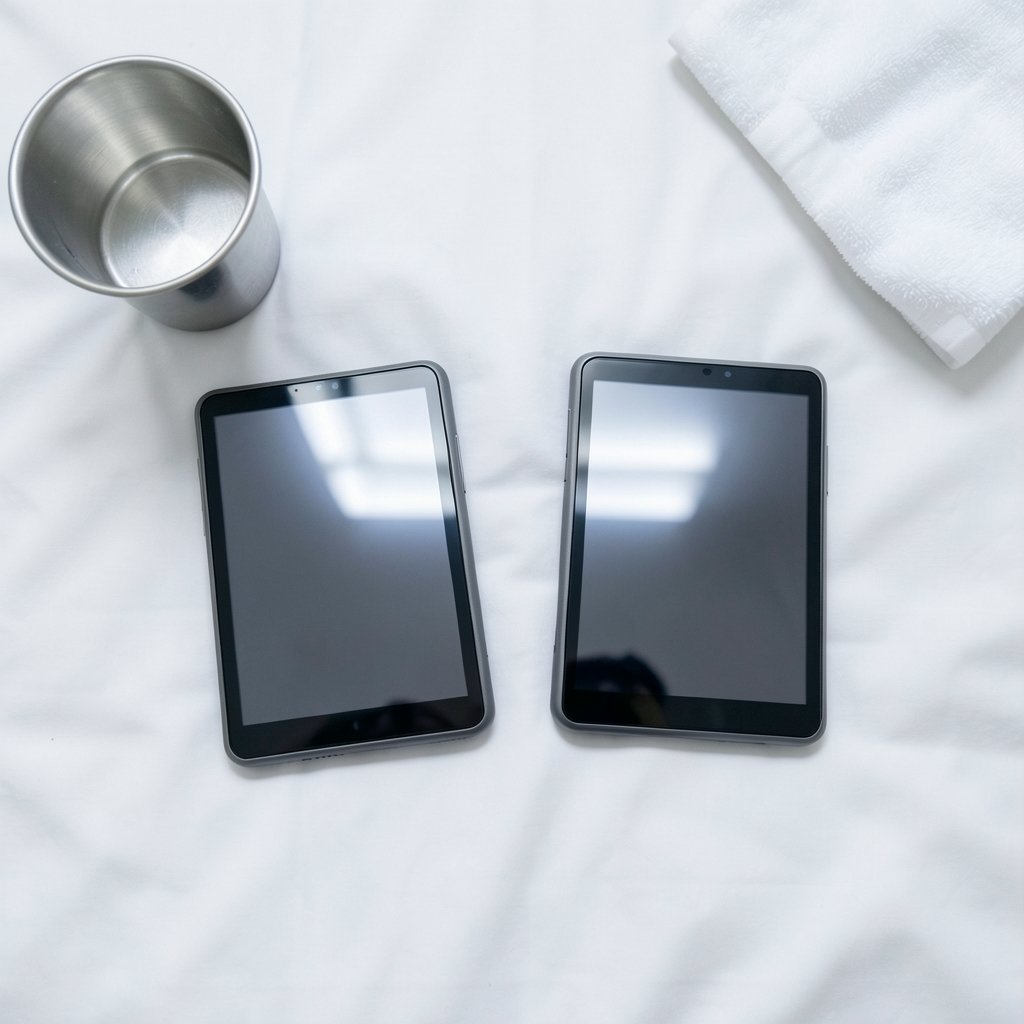
The two consoles solve the ambient-light problem in opposite ways, and each approach has a clear strength and a clear weakness.
| Factor | Nintendo Switch 2 (LCD) | Steam Deck OLED |
|---|---|---|
| How the image is lit | Backlight behind the panel | Each pixel emits its own light |
| Black level in a dark room | Lifted by backlight bleed | Near zero |
| Black level in a bright room | Rises with reflected light | Also rises with reflected light |
| Perceived contrast in dim rooms | Good | Excellent |
| Perceived contrast in sunny rooms | Modest | Modest, but often still ahead |
| Glare handling | Depends on surface finish | Depends on surface finish |
| HDR impact | Limited by backlight | Stronger, since dark areas can truly dim |
The key insight is in that third and fourth row. An OLED panel wins in dark rooms because black pixels simply switch off. There is no backlight leaking through, so the contrast gap stays wide. In a bright room, that advantage narrows. Reflected light from the room lifts the OLED’s blacks too, and the gap between the two technologies shrinks.
It rarely disappears entirely. The OLED usually keeps an edge because its bright areas can still push hard while its dark areas stay controlled. But the margin is much smaller than the spec sheet suggests. This is the single most common mistake buyers make: they compare screens in a store under harsh overhead lighting, decide the difference is small, and then go home to a dark bedroom where the gap is dramatic. Or the reverse.
The Glossy Screen Problem Nobody Warns You About
Here is the practical tip that saves the most frustration: the surface finish of the glass matters as much as the panel type. A glossy screen produces sharp, mirror-like reflections. An anti-reflective coating scatters that bounce and softens it. Two consoles with identical panels can feel completely different depending on this one detail.
What actually works in practice, based on how reflections behave:
- Never place a light source directly behind your head when gaming. That geometry aims the reflection straight at your eyes.
- Put lamps to the side and slightly behind the console, so the bounce angle misses your viewing position.
- Use dimmable bulbs and aim for warm, low-intensity light in the evening rather than a single bright ceiling fixture.
- Position yourself so windows are to your side, not in front of or behind you.
- If you game outdoors or near a window, accept that no panel fully defeats direct sunlight and plan around shade instead.
The mistake people make is chasing a brighter screen setting to fight glare. Cranking brightness helps a little, but it also drains battery and can wash out darker scenes. Fixing the light in the room is almost always the better move.
HDR, Tone Mapping, and the Limits of Brightness
Modern handhelds increasingly advertise HDR, or high dynamic range. The aim is straightforward: show very bright areas and very dark shadows at the same time, closer to how your eyes see the world. Standards bodies define how this is encoded and displayed, and the international recommendation for HDR parameters sets out the brightness and color targets that content is mastered against.
Here is the catch for handheld gaming. HDR is designed around controlled viewing conditions. When ambient light floods the screen, the darkest parts of an HDR image get lifted by reflection, and the careful shadow detail the creators intended gets flattened. The tone mapping built into the device tries to compensate, but it cannot subtract light that the room is adding.
This is why an OLED handheld tends to render HDR content more convincingly in a dim room, where its self-lit pixels can genuinely go dark between bright areas. In a bright room, both devices end up compressing the image toward the middle, and the difference becomes subtler.
What Changes by 2027
By 2027, the conversation will likely shift in a few predictable directions, though it is worth being honest that no controlled, published study comparing these two specific devices under measured room lighting exists yet. Any 2027 comparison should be framed as a test protocol rather than a settled result.
What is reasonable to expect:
- Brighter panels across the board. Peak brightness keeps climbing, which helps in daylight but does not solve reflections.
- Better anti-reflective coatings. This is the quiet hero of outdoor and bright-room usability, and improvements here often matter more than raw nits.
- Smarter ambient-light sensors. Automatic brightness and color adjustment will get less jarring, reducing the manual fiddling that annoys so many players.
- More OLED options in the handheld space, which pushes the contrast conversation into the mainstream rather than leaving it to enthusiasts.
For anyone weighing the broader hardware picture, the library, power, and portability trade-offs between these two machines are covered in this comparison of the Nintendo Switch 2 versus the Steam Deck on library, power, and portability. Pricing also keeps moving, and the shift in the Switch 2 price picture against the Steam Deck OLED and Legion Go S is worth tracking if budget is part of the decision.
If you are still deciding between the two platforms at a broader level, this head-to-head on the Switch 2 versus the Steam Deck covers the fundamentals. And if you are comparing Valve’s own models, the breakdown of the Steam Deck OLED versus LCD explains exactly what changed between revisions and why the panel swap mattered so much.
Matching the Console to Your Room
The most useful question is not “which screen is better” but “which screen suits the room where I actually play.” That reframing solves most of the debate.
A player who mostly games in bed at night, with the lights off or a single dim lamp, will see the OLED advantage at full strength. Deep blacks, strong bright areas, and no backlight bleed make dark scenes feel genuinely dark. That is where OLED works best, and it is a large part of why the panel gets so much praise.
A player who games on a commute, in a bright kitchen, or on a sunny balcony will find the gap much narrower. In those conditions, both screens fight the same enemy: reflected ambient light. The winner often comes down to surface treatment, screen brightness headroom, and how well the device handles automatic adjustment rather than panel technology.
There is also a middle case worth naming. Many people play in a living room in the evening with a lamp on and a TV glowing nearby. That is a moderately bright environment, and it is exactly where the two technologies converge most. If that describes you, do not overpay for a contrast advantage you will rarely see.
Practical Steps Before You Buy
A short routine beats any spec sheet:
- Look at the device under the lighting you actually use, not store lighting.
- Tilt the screen toward a light source and watch how the reflection behaves.
- Check the darkest scene you can find and see whether blacks stay black or turn gray.
- Test at your normal viewing distance, since reflections change with angle.
- Bring a friend and compare notes, because two people in the same room can genuinely see different things.
That last point is not a gimmick. Because glare depends on viewing angle and because each person’s eyes adapt differently, two players can honestly disagree about the same screen in the same room. Trust your own eyes in your own space.
Conclusion
The Nintendo Switch 2 and the Steam Deck OLED are both capable machines, and the lighting in your room will shape your experience with either one more than any single spec. OLED’s self-lit pixels give it a real edge in dim and dark settings, where true blacks keep contrast wide. In bright rooms, reflected light lifts those blacks and narrows the gap, sometimes to the point where the difference feels minor. The lesson is refreshingly simple: control the light before you blame the screen. Move the lamp, close the curtain, dim the bulb, and both handhelds suddenly look closer to how their designers intended. Choose the console that fits the room you actually play in, and you will spend far less time second-guessing your purchase and more time enjoying the games.
Frequently Asked Questions
Does OLED still look better than LCD in a bright room?
Usually yes, but by a smaller margin. Reflected ambient light lifts the OLED’s blacks, which shrinks its contrast advantage. The OLED often still leads because its bright areas can push hard while dark areas stay controlled, but in a sunny room the two technologies look much closer than they do at night.
Why does my handheld screen look washed out during the day?
Reflected light from windows and lamps adds a brightness floor across the whole image. That compresses the gap between the brightest and darkest parts of the picture, so colors and shadows look flat. It is a lighting problem, not a broken screen, and repositioning your light sources usually fixes most of it.
Is a glossy or anti-reflective screen better for gaming?
It depends on where you play. Anti-reflective coatings soften mirror-like reflections and generally work better in bright rooms. Glossy screens can look slightly crisper in controlled lighting but show sharp reflections that land right in your line of sight when a light sits behind you.
Should I turn brightness all the way up to fight glare?
Not usually. Raising brightness helps a little, but it drains battery faster and can wash out dark scenes. Dimming the room, moving lamps to the side, and adjusting your seating angle almost always works better than maxing out the backlight.
Does HDR help in a brightly lit room?
Less than you would hope. HDR depends on showing deep shadows alongside bright areas, and ambient light lifts those shadows until the effect flattens. HDR looks best in a dim room where the display can genuinely render dark areas.
Can two people see the same screen differently in the same room?
Yes, and it happens often. Glare depends on viewing angle, so a reflection may hit one person’s eyes and miss another’s. Human eyes also adapt to brightness individually, which means perceived contrast genuinely varies from person to person in identical conditions.



