
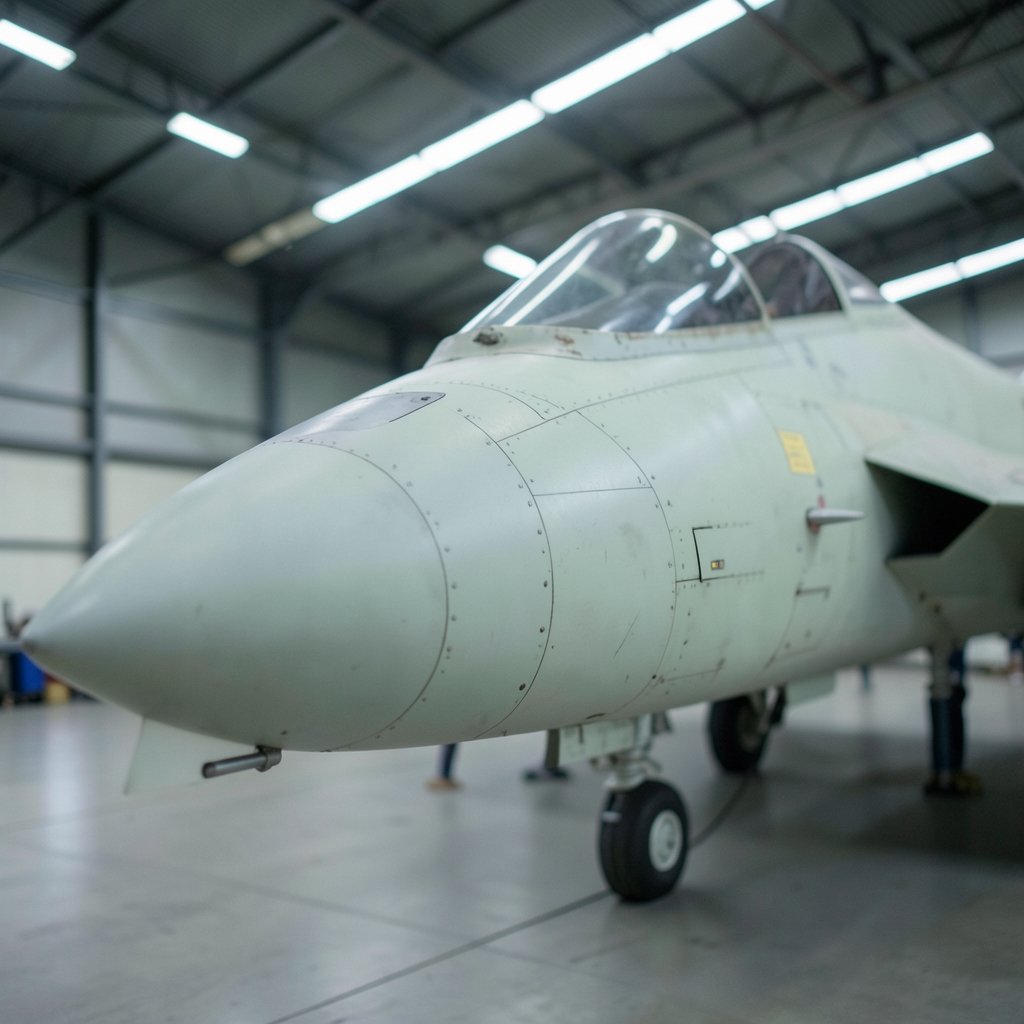
What makes a fighter jet a success? Speed? Stealth? Price tag? By most of those measures, the Northrop F-5 Freedom Fighter should have been a footnote. It was small, simple, and built for export rather than frontline glory. Yet the F-5 family became one of the most widely flown supersonic jets in history, serving air forces on nearly every continent and still patrolling skies today. Its story is a lesson in how “good enough, affordable, and reliable” can beat “fastest and fanciest” over the long run.
From Private Bet to Pentagon Contract
The F-5 didn’t start as a military requirement. It began as a private venture by Northrop, which designed a lightweight supersonic fighter called the N-156 on its own dime. The first F-5A took to the air in July 1959. The timing was lucky. The U.S. Air Force was looking for a low-cost fighter it could hand to allied nations under the Military Assistance Program, and the little Northrop fit the bill almost perfectly.
That export role shaped everything about the aircraft. It was never meant to be the most capable fighter in the sky. It was meant to be a fighter that a smaller air force could actually buy, fuel, and maintain. The U.S. Air Force adopted it in the early 1960s mainly as an export fighter rather than a frontline type, and the same basic airframe family also produced the T-38 Talon, the world’s first supersonic trainer. More than 1,100 T-38s were built, and the design’s clean lines made it a natural teaching machine.
The F-5E Tiger II Steps Up
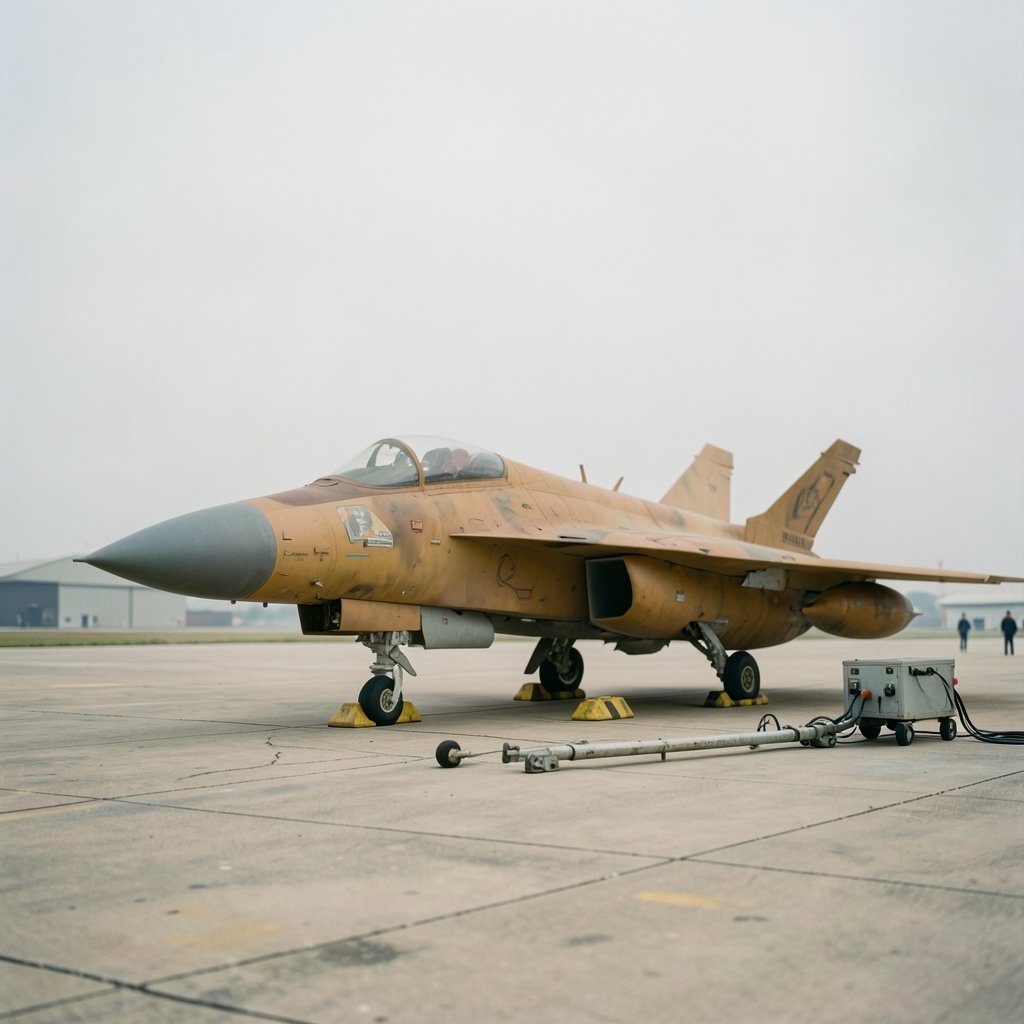
The original F-5A had limited engine thrust and avionics. Northrop responded with the F-5E Tiger II, which first flew in August 1972 and entered service in 1973. The E model added J85-GE-21 engines with greater thrust, a larger fuselage, and improved avionics. That version moved the Freedom Fighter from a low-cost export aircraft to a light fighter with real respect.
Production numbers tell the story of how widely the design spread. Roughly 2,600 aircraft were built across the F-5 and T-38 family, though counts vary depending on whether trainers are included; the F-5 alone is often cited at more than 1,400 airframes. Beyond Northrop’s own lines, the jet was built under license in Canada as the CF-5 and NF-5, in Spain by CASA, in Switzerland, in South Korea, and in Taiwan. That kind of licensed production is rare, and it happened because the aircraft was simple enough for other countries to manufacture and support.
Why So Many Countries Bought It
The appeal came down to a few practical traits:
- Low operating cost. Small engines and simple systems meant less fuel and fewer maintenance hours per flight hour.
- Easy maintenance. Ground crews could service it without exotic tooling or sprawling supply chains.
- Friendly handling. Pilots transitioning from trainers found it forgiving, which mattered for air forces with limited experience.
- Real capability. It could carry air-to-air missiles, bombs, and rockets, and it could hold its own in a turning fight.
For a nation that needed a credible air defense on a tight budget, the F-5 was often the only realistic option. That is a pattern worth remembering when comparing hardware in general; the same logic of matching tools to real-world needs shows up in everything from fight stick choices for everyday gaming to how people search public records before making a decision.
The F-5 in Combat
The Freedom Fighter saw real shooting wars. South Vietnam flew F-5s in combat during the 1960s and 1970s, and after the war ended, captured aircraft served with the unified Vietnamese air force. Iran used F-5s extensively during the Iran-Iraq War, and Ethiopia flew them in regional conflicts. The jet’s combat record was never spectacular in the way that bigger fighters’ records were, but it was steady. It did the job it was designed to do: show up, fight, and come home without demanding a fortune in upkeep.
One recurring lesson from combat use is that the F-5 rewarded pilots who fought to its strengths. It was small and hard to see, and it turned well at speeds where heavier fighters struggled. Pilots who tried to fight it like a bigger jet often got into trouble. That is a common theme in aviation, and it echoes the way hardware design shapes outcomes in other fields too, from keyboard switch orientation affecting how a board feels and performs to how a business registers its legal identity before it can operate.
The Aggressor Role: Playing the Bad Guy
Perhaps the F-5’s most famous second career was as an adversary aircraft. The U.S. Navy and Air Force both used F-5E and F-5F models as aggressors, painting them in Soviet-style schemes and flying them against their own frontline pilots in training. The reasons were practical. The F-5 was small, maneuverable, and cheap to fly, which made it ideal for simulating a nimble enemy fighter day after day without burning through expensive frontline jets.
The Navy’s F-5N program kept the type flying into the 2000s and 2010s, long after most frontline F-5s had retired. For many American fighter pilots, their first hard lesson in air combat came against a little F-5 flown by an instructor who knew exactly how to make it bite. That training value is hard to overstate. A cheap jet that teaches expensive jets how to survive is a bargain by any measure.
The F-20 That Never Was
Northrop sought to build a successor. The F-20 Tigershark, which first flew in 1982, was an F-5 derivative with a single engine of greater thrust and modern avionics. It was fast and capable, and Northrop marketed it aggressively. It failed to win a single order, and the program ended in 1986. The reasons were partly political and partly market-driven: by the mid-1980s, many air forces were choosing the F-16 instead, and U.S. export policy made the F-20 a hard sell.
The F-20 story is a cautionary tale. A better version of a proven design doesn’t automatically win. Buyers compare support networks, training pipelines, and political relationships as much as raw performance. The F-5 had decades of goodwill behind it; the F-20 had none.
Where the F-5 Still Flies
The F-5 has proven remarkably durable. As of the mid-2020s, variants remain in service with several air forces. Brazil flies upgraded F-5EM models. Iran operates F-5s alongside domestic derivatives such as the Saeqeh. Taiwan still fields the type. Switzerland flew the F-5 into the 2020s before retiring it. Exact operator lists shift year to year, so anyone tracking current inventories should check a recent reference rather than rely on older counts.
That longevity comes from the same traits that made the jet sell in the first place. When an airframe is simple and well understood, upgrades are cheaper and easier. New radars, new missiles, and new cockpit displays can extend a basic design’s life by decades. The F-5 is proof that a modest platform with good bones can outlast flashier rivals.
How It Compares
The F-5 is often measured against the fighters it flew alongside. The table below puts its key traits in context.
| Trait | Northrop F-5 | Typical Heavy Fighter |
|---|---|---|
| Size and cost | Small, low-cost | Large, expensive |
| Engines | Two small J85s | Larger, thirstier engines |
| Maintenance | Simple, few special tools | Complex, supply-heavy |
| Best role | Light fighter, trainer, aggressor | Frontline air superiority |
| Export appeal | Very high | Limited by price |
The comparison isn’t about which aircraft is “better.” It’s about fit. A country that needs to defend a long border with a small budget gets more value from several affordable F-5s than from one expensive heavyweight. That kind of thinking applies far beyond aviation. Before committing to any major purchase or registration, people often check the basics first, much like running a North Carolina business entity search to look up any company before signing a contract. Due diligence beats glamour every time.
Practical Lessons From the F-5 Program
For anyone interested in defense procurement or aviation history, the F-5 offers some grounded takeaways. These come from how the program actually worked, not from theory.
- Design for the buyer you have. Northrop built for export customers and won because it matched their budgets and skills, not because it built the best possible fighter.
- Simplicity pays compound interest. Easy maintenance kept the jet flying for decades and made upgrades affordable.
- A second career can be as valuable as the first. The aggressor role kept F-5s employed long after frontline service ended.
- Don’t assume a better design wins. The F-20’s failure shows that market position and politics matter as much as performance.
- Licensed production builds loyalty. Letting other nations build the jet created long-term support networks that outlasted the original sales.
A common mistake people make when studying programs like this is focusing only on top speed and weapons. The real story is in the boring details: cost per flight hour, spare parts, and how easily a young mechanic can fix a problem on a rainy flight line. Those details decide whether an aircraft serves for ten years or forty.
Conclusion
The Northrop F-5 Freedom Fighter was never the star of the airshow. It was the jet that showed up, did its job, and kept flying while flashier aircraft came and went. From its private-venture origins in 1959 to its long career as an aggressor and its continued service in several air forces, the F-5 proved that affordability, simplicity, and reliability are their own kind of brilliance. For anyone who thinks the best machine is always the fastest or most expensive, the little Northrop is a useful correction. Sometimes the smartest engineering decision is knowing exactly what a customer needs and delivering it without fuss.
FAQ
What was the Northrop F-5 Freedom Fighter designed for?
It was designed as a lightweight, low-cost supersonic fighter for export under the U.S. Military Assistance Program. Northrop built it as a private venture, and the U.S. Air Force adopted it mainly to supply allied nations rather than as a frontline type.
When did the F-5 first fly, and when did the F-5E arrive?
The F-5A first flew in July 1959. The upgraded F-5E Tiger II first flew in August 1972 and entered service in 1973 with engines of greater thrust, a larger fuselage, and improved avionics.
How many F-5s were built?
Roughly 2,600 aircraft were built across the F-5 and T-38 family, though counts vary depending on whether trainers are included. The F-5 alone is often cited at more than 1,400 airframes, with additional licensed production in Canada, Spain, Switzerland, South Korea, and Taiwan.
Why did the U.S. military use F-5s as aggressor aircraft?
The F-5 was small, maneuverable, and cheap to fly, which made it ideal for simulating enemy fighters in training. The Navy and Air Force painted them in adversary schemes and flew them against their own pilots, and the Navy’s F-5N program continued into the 2000s and 2010s.
What happened to the F-20 Tigershark?
The F-20 was an F-5 derivative that first flew in 1982. Despite modern avionics and strong marketing, it won no orders and the program ended in 1986, largely because buyers chose the F-16 and export policy made the F-20 hard to sell.
Do any F-5s still fly today?
Yes. As of the mid-2020s, variants remain in service with several air forces, including Brazil’s F-5EM, Iran’s F-5s and domestic derivatives, and Taiwan’s fleet. Switzerland flew the type into the 2020s before retiring it, and operator lists change over time.



