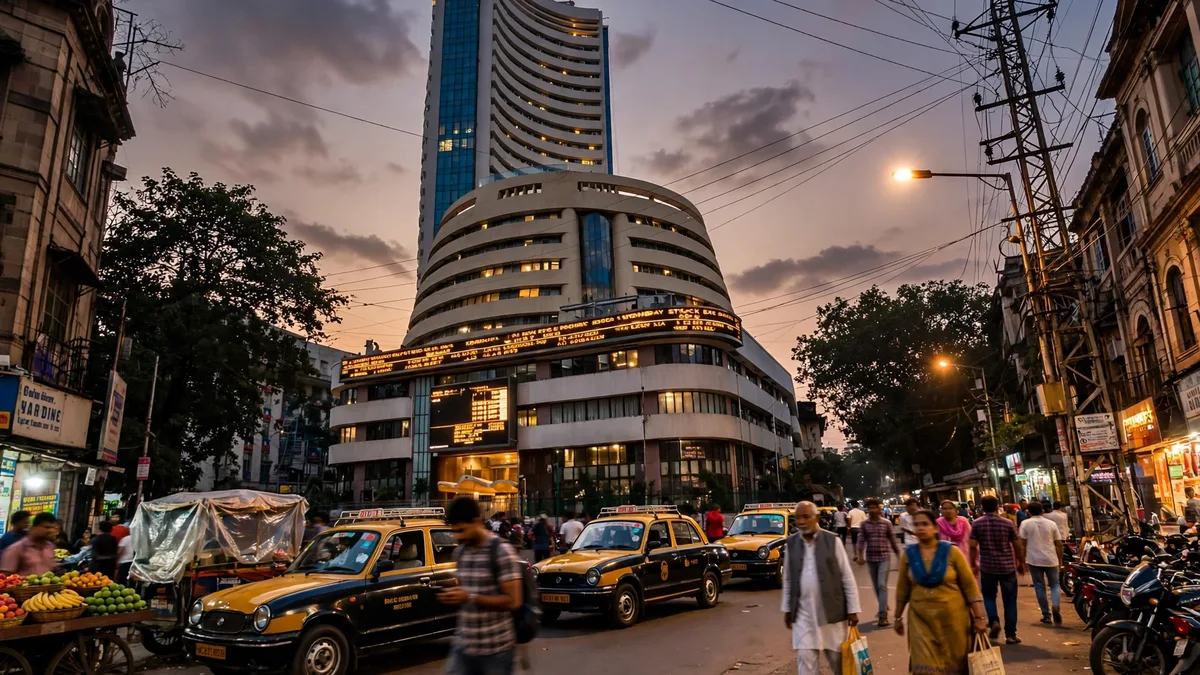
India’s stock market has just posted the strongest month of any major equity market, and the options market is not celebrating. Indian shares jumped more than 11% in November 2026, the biggest surge among major equity gauges, after months of underperformance, foreign selling and disruption from a new closing auction system. The rally has been fast and broad, fuelled by returning foreign money and retail buying — yet its traders are spending more than ever on protection.
The tension is visible in the derivatives data. Traders spent more on derivatives in November than in any month since March, and average daily NSE futures and options turnover reached Rs 280 lakh crore, about $3 trillion. At the same time, the Nifty 50 and the India VIX moved in tandem more than at any time since December 2023 — investors pushing option prices higher even as shares climb. Normally a rising market calms options. This month it did the opposite.
A near-parabolic rally plus rampant hedging is the puzzle here. The market is roaring back, but the people closest to it are buying insurance at a pace not seen in eight months. The explanation lies in what drove the rally, what options are pricing, and what changes on December 7.
Key takeaways
- Indian shares rose more than 11% in November 2026, the biggest major-market gain, after months of underperformance and foreign outflows.
- Derivatives spending hit its highest since March, with average daily NSE turnover of Rs 280 lakh crore, about $3 trillion.
- The Nifty 50 and India VIX moved together more than at any time since December 2023 — investors bidding up option prices even as shares rise.
- Foreign investors bought a net Rs 76,188.75 crore of Indian equities to mid-November, after Rs 70,704 crore of September–October outflows.
- Revised closing-auction rules take effect December 7, restoring a familiar settlement mechanism.
| Measure | What happened | Why it matters |
|---|---|---|
| Indian shares | Up more than 11% in November, the biggest surge among major equity gauges | Ends months of underperformance |
| NSE derivatives turnover | Daily turnover of Rs 280 lakh crore, about $3 trillion | Third straight monthly rise |
| Nifty 50 and India VIX | Moved in tandem more than since December 2023 | Unusual: rising shares normally cut volatility |
| Foreign flows | Net Rs 76,188.75 crore bought to mid-month, after Rs 70,704 crore of Sep–Oct outflows | The biggest driver of the rally |
| Closing-auction rules | Revised rules take effect on December 7 | Expiring contracts no longer depend only on auction prices |
The rally in numbers
A gain of more than 11% put Indian shares ahead of every other major equity gauge in November, reversing a long stretch of lagging. The Nifty 50 closed at 25,144.30 in the week ending November 14 and reached 25,884.50 by November 26, with the Sensex at 84,328.59.
The engine was a sudden reversal in foreign flows. Foreign investors had sold heavily in September and October, with net outflows of Rs 70,704 crore, then bought a net Rs 76,188.75 crore in November to mid-month. On November 26 alone, foreign investors bought Rs 5,843.3 crore and domestic institutions bought Rs 5,630.7 crore. Lower crude, decent second-quarter results and shifting global sentiment helped, but the flow reversal turned a recovery into a surge. Even so, the Nifty was still down 0.94% for the year as of November 26: November repaired a bad year rather than capping a great one. Asian markets have a recent habit of sharp reversals, as our report on Korean stocks’ 116% surge collapsing into a bust showed.
What the options market is actually saying
Options are contracts that pay off if prices move, used to speculate or to insure a portfolio against a fall. When a market and options activity rise together, the question is which use is driving it. Bloomberg’s reporting points at insurance: demand rose with the rally, hedging is described as rampant, and derivatives spending was the highest since March. Traders were not simply chasing the rally; they were paying to protect against it reversing.
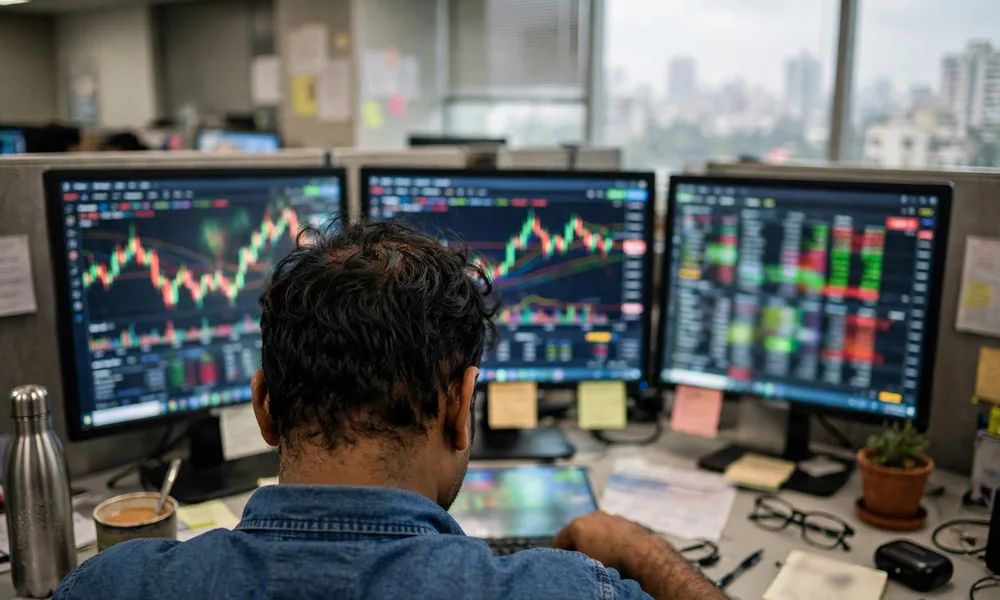
The clearest signal is the Nifty 50’s relationship with the India VIX, the volatility gauge. Usually they move in opposite directions: rising shares mean calmer markets and cheaper insurance. In November they moved in tandem more than at any time since December 2023, so the cost of protection rose alongside the thing being protected — something that happens only when many people want protection at once. In the week ending November 14, the put-call ratio was 1.17, puts carried implied volatility of 14.95% against 13.65% for calls, and the relative strength index of 75 showed an overbought market.
Foram Chheda, founder of Mumbai research house ChartAnalytics, put it precisely: “The sudden reversal in foreign institutional investor flows triggered a sharp short squeeze, while retail participation and FOMO amplified the near-parabolic rally in the Nifty. Investors were simultaneously chasing upside opportunities and buying downside protection to hedge against the risk of a sharp reversal.”
Why traders hedge a rally they are riding
Hedging a rally sounds contradictory, but it is standard practice, and November gave traders three reasons. The first is speed: a market up more than 11% in a month, with the Nifty gaining 2.40% on November 5 and 2.01% on November 6, is moving faster than earnings can justify. Buying put options — contracts that pay if the market falls — caps the damage from a reversal while leaving the upside open. The second is who is driving it: a short squeeze and retail enthusiasm, both quick to reverse — the same foreign investors who bought in November sold Rs 70,704 crore in the previous two months.
The third reason is the calendar. As the year ends, desks reduce risk, liquidity thins around holidays, and United States markets close for Thanksgiving — and thin liquidity can turn modest selling into a large move. Paying up for options is rational insurance, not pessimism. The options market is not saying the rally is fake; it is saying the rally is fast, flow-driven and fragile, and those closest to it would rather pay for protection than test it unprotected.
The closing auction mess and the December 7 fix
The derivatives numbers make more sense with the backstory. A new closing-auction methodology introduced in August produced wild swings, and volumes fell to a low that month. The change mattered enormously for derivatives, because expiring contracts were settled on prices established through the auction alone. Market makers and proprietary firms, who keep derivatives markets liquid, stayed away rather than accept settlement prices they could not predict.
Regulation compounded the damage: the industry was already battered by a clampdown on speculation at the end of 2024. In February 2026, the government raised securities transaction taxes on equity derivatives, and tighter bank-guarantee rules in July raised funding costs for proprietary firms. Together they drained activity. November was the third straight month of increases from the August low, and revised rules take effect on December 7, restoring a familiar settlement mechanism. Maurya Ghelani, a derivatives strategist at Kai Securities in Mumbai, said the worst of the volume shock is probably over: “Volatility has come back, traders have adjusted to the new funding environment and the changes to the closing auction remove another important drag. The setup for volumes going into 2027 is considerably better than it was three months ago.”
Who wins if derivatives volumes stay high
A busier derivatives market is good news for the businesses around it. Brokers including Angel One, Motilal Oswal Financial Services and Nuvama Wealth Management benefit directly, because more trades mean more fees, and November’s volatility is when their customers trade most. Exchanges benefit too: NSE shares, listed in September, have rallied more than 40% from an October low, making it the world’s fourth-largest exchange by market value.
The contrast between the exchanges is instructive: while NSE turnover hit its highest daily average in months, BSE options trading slipped 5.6% in November after a 51% jump in October. For context on what sustains a rally, our report on corporate profits hitting 13.5% of GDP explains why profit growth, rather than flow alone, is what matters.
What this means for 2027
November tells us more about the present than next year. The rally proves foreign money can return quickly when sentiment shifts, and retail demand can amplify a move. It also proves the market’s plumbing is fragile: one auction change drained derivatives volumes for months. For 2027, the question is not whether the rally continues — no options market can answer that — but whether the fragile conditions are repaired. Three things decide that: flows staying positive, earnings catching up, and the December 7 fix bringing market makers back.
None of this is a reason for an ordinary reader to buy or sell anything; this article is market news, not investment advice. The useful lesson is how to read a market: prices say investors are optimistic, and options say they are optimistic and nervous at the same time. As financial advisers recently explained, the lesson of volatile markets is discipline and preparation, not prediction.
A checklist for reading a rally like this
- Identify the driver: flows, earnings or a squeeze imply different durability.
- Watch options, not just the index: rising volatility with rising prices means traders are buying protection.
- Check breadth: a rally reaching mid- and small-caps beats one carried by a few stocks.
- Track foreign flows: the money that arrived in November sold heavily in September and October.
- Mind the calendar: thin holiday liquidity can turn small selling into large moves.
- Separate market from plumbing: rules like the December 7 auction fix can matter as much as economic news.
Frequently asked questions
Why is India’s stock market called the world’s best this month?
Indian shares rose more than 11% in November 2026, the biggest gain among major equity gauges, according to Bloomberg. The label describes one month, not the market’s quality or long-term returns.
What does it mean when options show skepticism?
Traders are buying more options to protect against a fall even as prices rise. In November, derivatives spending was the highest since March, and the Nifty 50 and India VIX moved together more than since December 2023 — heavy hedging, not bearishness.
What caused the November rally?
A sharp reversal in foreign flows: net buying of Rs 76,188.75 crore to mid-month after Rs 70,704 crore of selling in September and October. A short squeeze, retail buying, lower crude and decent results added to it.
What is the India VIX?
The NSE’s gauge of expected Nifty 50 volatility. It usually falls when shares rise, so its November rise was unusual and pointed to heavy demand for protection.
What changes on December 7?
Revised closing-auction rules take effect, so expiring contracts will no longer depend on prices set solely through the auction. Market makers and proprietary firms are expected to return.
Does heavy hedging mean the rally will end?
No. Hedging means traders are protecting against a reversal, not that one is certain. A hedged rally can keep rising, and hedging can support prices, since sellers of protection buy shares to offset risk.
The bottom line
November 2026 gave India the world’s best-performing major stock market and its most cautious options market together. Shares rose more than 11% on reversed flows, retail enthusiasm and a short squeeze, while traders spent more on derivatives than in any month since March and pushed protection costs up with prices. The rally is genuine, and so is the doubt.
What happens next depends less on sentiment than on plumbing and profits: the December 7 fix restoring depth, foreign money staying once the squeeze is over, and earnings catching up with an 11% month. Until then, the options market’s message stands: the traders closest to this rally ride it with insurance, and in a market moving this fast, that is information worth taking seriously.