What if the ring on your finger kept charging you long after you paid for it? That is the question at the heart of the Oura vs Samsung Galaxy Ring debate. Both smart rings track sleep, heart rate, and recovery. Both cost roughly the same on day one. But only one of them sends you a bill every month. In 2027, with a Galaxy Ring 2 expected and Oura pushing its newest hardware, the subscription question matters more than ever. Here is the side-by-side math, the fine print, and a clear verdict for each type of buyer.
The Short Answer: Two Pricing Models, One Big Gap
Oura sells you hardware and then rents you the software. Samsung sells you hardware and includes the software. That single difference drives almost every other comparison between the two rings.
The Oura Ring 5 launched at $399, which is $50 more than its predecessor, while the membership stayed at $5.99 per month. The Samsung Galaxy Ring costs $399 to $429 at launch and carries no subscription at all. You pay once and get the health features through Samsung Health indefinitely.
| Feature | Oura Ring 5 | Samsung Galaxy Ring |
|---|---|---|
| Hardware price | $399 | $399 to $429 |
| Required subscription | $5.99/month ($69.99/year) | None |
| Free trial | First month included | Not applicable |
| Three-year total (hardware + plan) | About $614.64 | About $399.99 |
| Works with iPhone | Yes | No |
| Best features require | Paid membership | A Samsung phone |
The three-year gap lands around $214.65 in favor of Samsung, according to a reference calculation that adds dated hardware prices to 36 monthly payments. That is not pocket change. It is roughly the price of a second budget wearable, or a year of several streaming services stacked together.
Why Oura Charges Monthly and Samsung Does Not
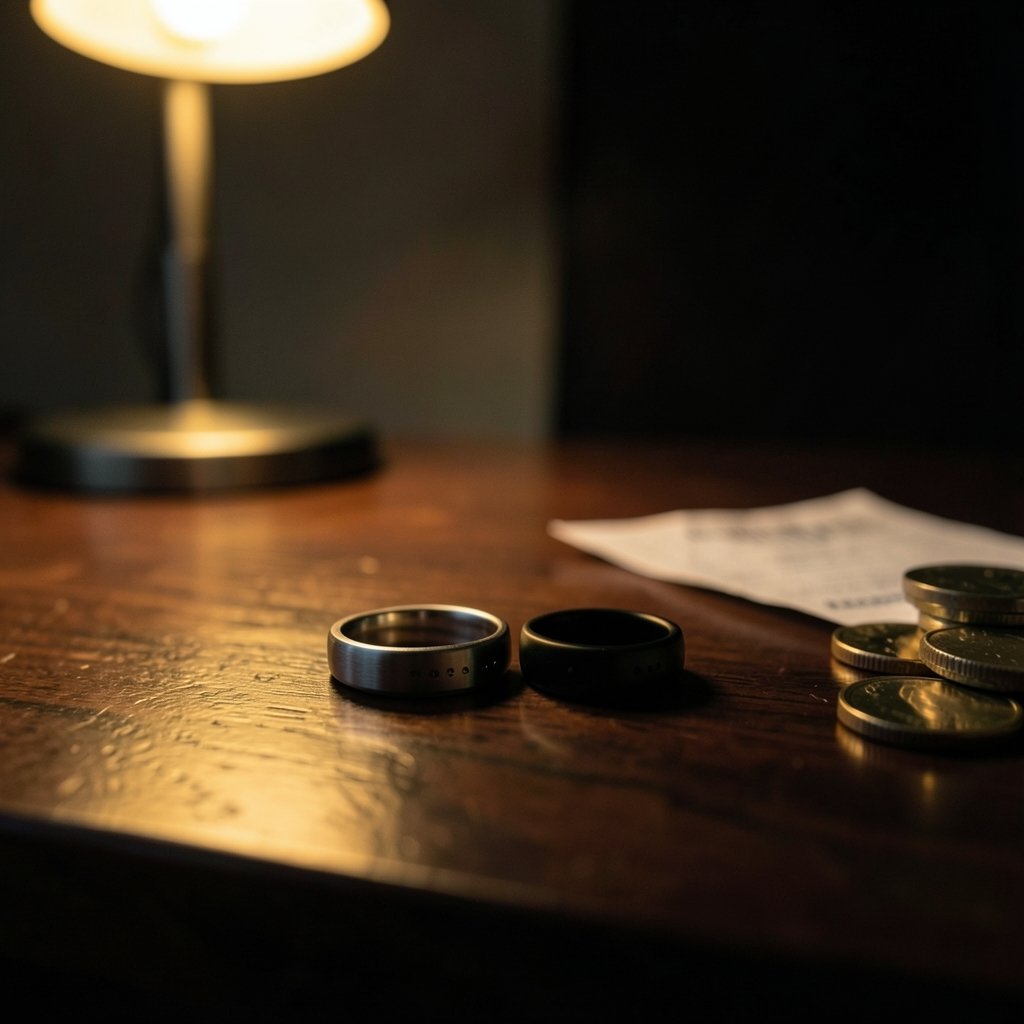
Oura’s argument is simple: the subscription funds ongoing algorithm development. The membership fee pays for continued refinement of the sleep and recovery insights, and a vocal minority of users defends it on exactly those grounds, saying the algorithms are genuinely better. The company has built its business around the idea that hardware is the vessel and the software is the product.
Samsung went the other direction. When the Galaxy Ring launched in July 2024, it differentiated itself immediately with one promise: no membership fees, ever. All features live inside Samsung Health at no extra cost.
Here is the wrinkle. Samsung’s no-fee advantage only bites while Samsung has a product worth buying on shelves. Oura launched the Ring 5 while Samsung’s original ring aged, and reports suggest there will be no Galaxy Ring 2 in 2026, with early 2027 the current expectation. A subscription-free promise is powerful, but it needs fresh hardware behind it.
That dynamic fits a broader pattern in consumer tech, where recurring fees are being scrutinized harder than ever. The same tension shows up in security software, where buyers increasingly ask whether a paid plan is genuinely worth it compared with a free tier, a question explored in this breakdown of free vs paid antivirus in 2027. Smart rings are simply the newest front in that fight.
The Real Cost Over One, Two, and Three Years
Monthly fees are sneaky because they are small. Here is what the totals actually look like when you stop thinking in months and start thinking in years.
| Timeframe | Oura Ring 5 | Galaxy Ring | Difference |
|---|---|---|---|
| Upfront | $399 | $399.99 | About even |
| Year 1 total | About $464.89 | $399.99 | $64.90 |
| Year 2 total | About $539.78 | $399.99 | $139.79 |
| Year 3 total | About $614.64 | $399.99 | $214.65 |
A common mistake is comparing sticker prices only. The ring boxes look identical in cost. The divergence happens after checkout, quietly, month by month. Another mistake is assuming the annual plan saves much. At $69.99 per year versus $5.99 per month, the annual option shaves a little off the total but does not change the direction of the gap.
One more trap: people budget for the ring and forget the membership when comparing against a fitness band. A band often has no plan at all, which is why price comparisons across ring and band categories get messy fast. If you are weighing form factors, the same first-year and three-year math applies, and the plan cost is the variable that flips the ranking.
What Happens If You Cancel Oura
This is where the emotional weight of the debate lives. Cancel the Oura membership and the ring still works, but with more limited insights. Your detailed health data and full feature set sit behind the paywall.
Community reaction to that structure has been sharp. Users describe a sense of betrayal at losing access to their own historical data if they stop paying, and health data feels personal in a way a streaming library never does. The counterargument from Oura loyalists is that the fee buys better analysis, not just access.
Samsung’s model sidesteps the issue entirely. There is nothing to cancel. The trade-off is ecosystem lock-in: the Galaxy Ring works only with Android, and its best features need a Samsung phone. With an iPhone, the Galaxy Ring is not even an option, which removes one side of the comparison before sensors enter the picture.
If you are already deep in Samsung’s world, getting the most out of the hardware is its own project. This guide on how to set up your Samsung Galaxy for best performance covers the settings that make health tracking and battery life behave. And if you are new to the ecosystem entirely, it helps to know whether a Samsung Galaxy is worth buying for beginners and everyday use before you anchor a $400 ring to it.
Hardware Reality Check: Battery, Stock, and Accuracy
Price is only half the decision. The other half is whether the hardware holds up.
On battery, Oura lasts longer between charges and offers deeper health software overall. On availability, Samsung has struggled: at full price, the Galaxy Ring has been out of stock on 25 of its 28 size-and-finish combinations. An AI-generated summary of reviews on Samsung’s own store reports owners citing battery failures within five to eighteen months, while the sealed battery carries only a twelve-month warranty.
Accuracy claims deserve skepticism on both sides. Oura’s 95% accuracy figure is disputed, and nobody has independently validated the current hardware from either company. A newer sensor setup is not automatically a better one.
The practical takeaway: buy the ring you can actually get in your size, from the company whose warranty you trust, and treat marketing accuracy numbers as claims rather than facts. Check the official product pages for current stock, sizing kits, and warranty terms before ordering, because both change without notice.
The Galaxy Ring 2 Factor in 2027
Timing complicates everything. A Galaxy Ring 2 is expected in early 2027, though nothing concrete has been confirmed. If Samsung ships a new ring with the same no-subscription promise, the value gap widens further and Oura’s monthly fee looks even steeper.
But waiting has a cost too. A ring bought today delivers sleep data tonight. A ring bought in six months delivers nothing until then. The reasonable middle path is to decide based on your phone first, since that eliminates options instantly, and then judge whether the subscription buys you insights you will actually read.
There is also a subscription-fatigue angle worth naming. Households are already juggling streaming, cloud storage, AI tools, and app plans. Adding another $5.99 forever fee is a smaller decision than it looks in isolation and a bigger one when stacked on the pile. The wider shift in how consumers push back on recurring charges is covered in this piece on subscription fatigue reshaping tech in 2027, and smart rings are a textbook case.
Choose Oura If…
- You use an iPhone. The Galaxy Ring does not support it at all, so the choice is made for you.
- You want the deepest sleep and recovery analysis and will actually read it.
- You value longer battery life between charges.
- You can buy the exact size and finish you want right now.
- You accept that canceling means losing full access to your own history.
Choose the Galaxy Ring If…
- You own a Galaxy phone and want the AI features to work fully.
- You refuse to pay a recurring fee for hardware you already bought.
- You want the lowest three-year total, roughly $215 less than Oura.
- You are comfortable buying into a first-generation product with a one-year battery warranty.
- You can find your size in stock.
Neither ring wins outright. The subscription model is Oura’s biggest weakness, and the stale hardware is Samsung’s. The buyer who picks well is the one who matches the pricing model to their phone and their patience for recurring charges, not the one who chases the better spec sheet.
FAQ
Is the Oura membership really required?
It is required for the full experience. After the included first month, the $5.99 monthly or $69.99 annual membership unlocks most of the app’s value. The ring still functions without it, but with more limited insights. Samsung includes its feature set in the purchase price with no recurring fees.
How much does each ring cost over three years?
Using reference prices, the Oura Ring 5 comes to about $614.64 over three years once monthly payments are added. The Galaxy Ring comes to about $399.99. The gap is roughly $214.65, which is the single clearest number in the whole comparison.
Does the Galaxy Ring work with an iPhone?
No. The Galaxy Ring works only with Android, and its best features need a Samsung phone. For iPhone owners, Oura is effectively the only option between these two, which makes the subscription question unavoidable rather than optional.
Will there be a Galaxy Ring 2 in 2027?
Reports suggest Samsung will launch the Galaxy Ring 2 in early 2027, but there is nothing concrete confirmed. Samsung has not announced a new model, and there was no Galaxy Ring 2 in 2026. Treat any launch date as unconfirmed until Samsung says otherwise.
Is Oura’s subscription worth the money?
It depends on how much you use the insights. Oura’s defenders argue the fee funds genuinely better algorithm refinement, and the annual plan trims the cost slightly. If you mostly want step counts and sleep duration, the fee is hard to justify. If you dig into recovery trends daily, the case is stronger.
Which ring is cheaper in the first year?
The Galaxy Ring, by about $65. The upfront prices are nearly identical, around $399 each, but Oura’s membership starts billing after the first free month. The gap grows every year you keep the ring, which is why the three-year view matters more than the sticker price.
Conclusion
The Oura vs Samsung Galaxy Ring decision in 2027 comes down to one uncomfortable truth: you are not really choosing between two rings. You are choosing between two business models. Oura asks for a smaller commitment up front and a steady drip afterward, in exchange for deeper software and iPhone support. Samsung asks for one payment and hands over the keys, but only if you carry a Galaxy phone and can find your size in stock.
Run the three-year math before you fall in love with either design. Check your phone compatibility first, confirm stock and warranty terms on the official pages, and be honest about whether you will actually read the recovery scores you are paying for. Do that, and the right ring for your wrist and your wallet becomes obvious. The worst outcome is not picking the wrong brand. It is picking a monthly fee you resent before the first year is out.