

What happens when a 30-year-old arcade game suddenly appears on the world’s most-visited homepage, playable with a single click? That question framed the Pac-Man 30th anniversary in 2010, and the answer turned out to be one of the most memorable moments in internet history. The celebration was not a big-budget marketing campaign or a glossy remaster. It was a small, clever browser game that reminded hundreds of millions of people why they loved a yellow circle with a big appetite in the first place.
This article walks through the real history behind the anniversary: when Pac-Man actually launched, how the celebration unfolded, what the famous Google Doodle did to offices and classrooms around the world, and why the moment still matters to anyone interested in games, culture, or digital marketing.
When Did Pac-Man Actually Come Out?
The anniversary math starts with a single date. Pac-Man was released in Japan by Namco on May 22, 1980, originally under the name Puck-Man. The U.S. release followed in October 1980, though that exact date is reported less consistently across sources. Because the Japanese launch is the firmest anchor, the 30th anniversary was marked on May 22, 2010.
That name change from Puck-Man to Pac-Man is one of the more practical decisions in arcade history. According to the widely told account, the game was renamed for North America to stop vandals from scratching out part of the “P” on cabinet art and turning it into an obscenity. It is a small detail, but it shows how much of Pac-Man’s identity was shaped by the realities of arcade cabinets sitting in public spaces. (Pac-Man)
The game itself came from designer Toru Iwatani. He has said the iconic shape was inspired by a pizza with one slice removed. That story is Iwatani’s own recollection, told years after the fact, so it is best treated as an origin anecdote rather than a documented design brief. Still, it captures something true about Pac-Man: the character is almost absurdly simple, which is exactly why it works.
The Google Doodle That Defined the Celebration
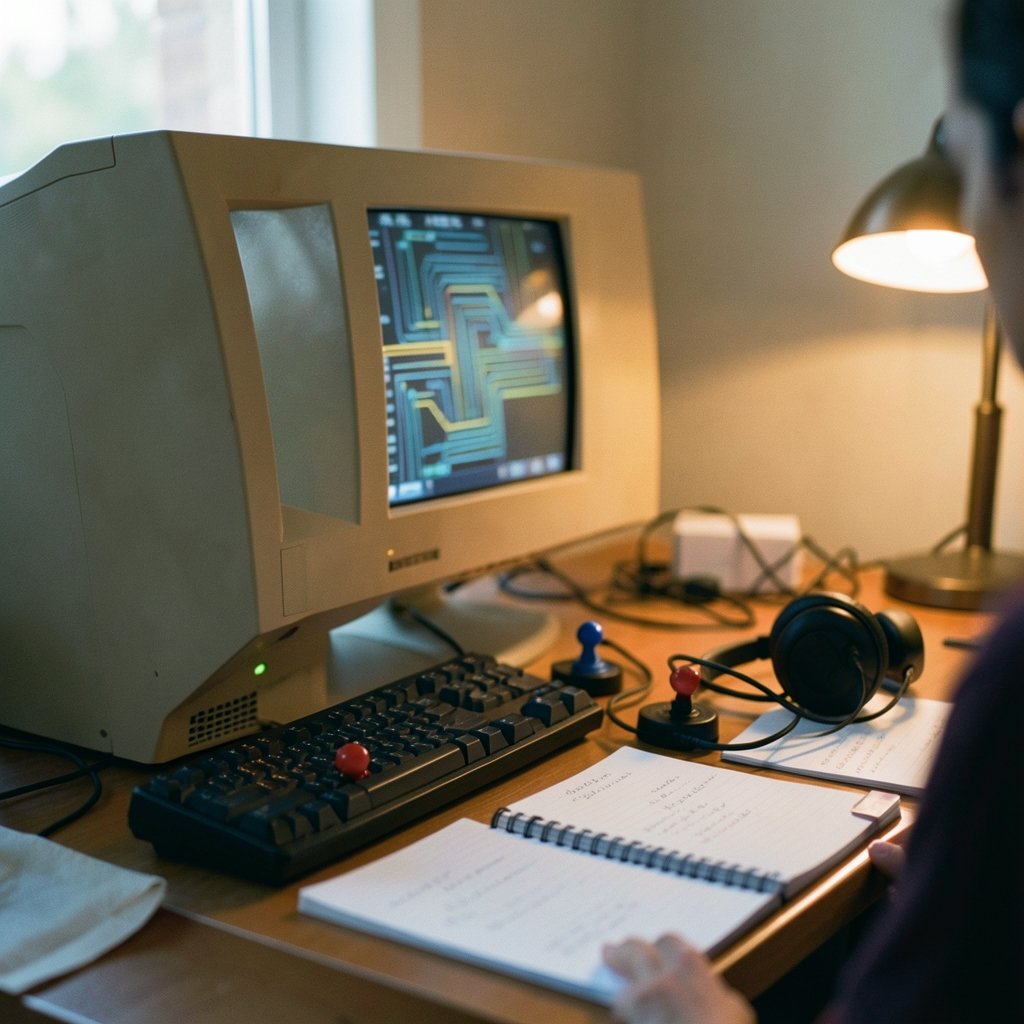
If the anniversary had passed quietly, it might be a footnote. Instead, Google published a playable Pac-Man Doodle on its homepage on May 21, 2010, timed to the anniversary. The Doodle was not a logo with a maze drawn behind it. It was the actual game, fully playable, with sound and a working maze.
The launch date is worth noting because sources do not always agree on it. Some describe the Doodle as arriving on May 21, others on May 22. The safest way to frame it is this: the anniversary itself is May 22, 2010, and the Doodle went live around that date, reportedly a day early. If you see conflicting dates online, that discrepancy is the reason.
What made the Doodle unusual was its scope. It was a complete version of the game rather than a short interactive gag. When users asked for more, a two-player mode featuring Ms. Pac-Man was added, and the Doodle stayed on the homepage for 48 hours. That decision to extend the run showed that Google had built a game people genuinely wanted to play rather than glance at once.
The Productivity Number Everyone Remembers
The most quoted figure from the whole episode is the estimate that the Doodle consumed about 4.8 million hours of productivity worldwide in its first day. That number is a Google estimate, not an independent measurement, and it should be presented that way. Even so, it became the story. News outlets picked it up because it turned a cute homepage feature into a global event with a measurable cost.
For anyone thinking about digital campaigns, the lesson is not the specific number. It is that a well-executed interactive idea can travel further than a large advertising budget. The Doodle worked because it was free, instant, and nostalgic. No download, no sign-up, no explanation needed.
Why Pac-Man Was Already a Legend by 2010
The anniversary worked because Pac-Man arrived at 30 already carrying enormous cultural weight. By 2010, the game was widely described as the highest-grossing arcade game of all time and a landmark in video game history. It had been recognized as the most successful coin-operated arcade machine, a status tied to its place in the record books. Exact revenue figures vary considerably between sources, so treat any single dollar amount with caution.
What is not in doubt is the game’s reach. Pac-Man crossed from arcades into cartoons, cereals, clothing, and pop songs. It became one of the rare games that people who never touched a joystick could still recognize instantly. That kind of recognition is what makes an anniversary meaningful. A 30th birthday for a niche title is a press release. A 30th birthday for Pac-Man is a cultural event.
There is also a design story worth appreciating. Pac-Man was not a shooter. It was a game about patterns, timing, and escape. Its ghosts had distinct behaviors, and learning those behaviors was the whole skill curve. That structure made it approachable to newcomers and deep enough for experts, a balance many modern games still struggle to achieve.
How Namco Bandai Marked the Milestone
The Google Doodle grabbed the headlines, but it was not the only anniversary activity. Namco Bandai used the period around 2010 to release tie-in products and re-releases. The most notable game release was Pac-Man Championship Edition DX, which arrived in November 2010 as a sequel to the 2007 Championship Edition.
Championship Edition DX matters because it showed the formula could be modernized without losing its identity. It kept the maze-chomping core but added speed, chains, and a visual style built for high-definition screens. For longtime fans, it was proof that Pac-Man was not purely a nostalgia object. The mechanics still had room to grow.
For collectors and casual fans, the anniversary year also brought a wave of merchandise and commemorative items. That is typical of milestone years, and it is worth approaching with realistic expectations. Anniversary merchandise often carries a premium, and quality varies widely. If you are buying, check whether an item is an official licensed product and whether it is a reissue or an original. The label “anniversary edition” is marketing language, not a guarantee of rarity or value.
Practical Tips for Exploring Pac-Man’s History Yourself
If the anniversary has you curious, a little structure helps. The internet is full of half-accurate retrospectives, so here is a practical approach that actually works.
- Anchor on the Japanese release date. Use May 22, 1980 as your reference point. It is the most consistently documented date and the basis for the 30th anniversary timing.
- Separate documented facts from recollections. The pizza inspiration story is Iwatani’s account, not a design document. Enjoy it, but label it correctly.
- Treat revenue claims carefully. “Highest-grossing arcade game” is a widely repeated description, but exact figures differ by source and by how revenue is counted.
- Check dates twice. The U.S. release and the exact Doodle launch date are both reported inconsistently. When in doubt, say “around” rather than stating a precise day.
- Play the original before the remakes. Understanding the ghost behaviors in the 1980 version makes the changes in later editions far more interesting.
A common mistake is assuming the anniversary was a single-day event. In reality, it stretched across 2010, with the Doodle in May and Championship Edition DX in November. Another mistake is treating the productivity figure as a scientific measurement. It is a memorable estimate, and it is most useful as a story about attention, not as data.
What the Anniversary Taught the Games Industry
The 2010 celebration is a case study in how to honor an old property without making it feel like a museum piece. The Doodle succeeded because it let people play, not because it told them to remember. That distinction is easy to state and hard to execute. (The Strong National Museum of Play)
It also demonstrated the power of low-friction access. A game that loads instantly in a browser tab reaches people who would never install software or visit an arcade. That principle now shapes how publishers think about demos, browser games, and anniversary events. The Pac-Man Doodle did not invent that idea, but it proved it at enormous scale.
The anniversary also showed that nostalgia has a shelf life and a rhythm. Milestones like 30 years give brands a natural reason to resurface, and audiences a natural reason to care. The trick is giving them something to do rather than something to look at.
For readers who want to dig deeper into the game’s development, release timeline, and legacy, the encyclopedia entry on the history and cultural impact of Pac-Man is a solid starting point. Those curious about the designer’s background and the pizza story can read more in the profile of Toru Iwatani and his account of the character’s origin. And for a closer look at the 2010-era revival, the page on Pac-Man Championship Edition DX covers how the series was modernized that same year.
Conclusion
The Pac-Man 30th anniversary is remembered for a homepage logo that turned out to be a fully playable game. Behind that moment sits a real timeline: a May 22, 1980 Japanese launch, a name change made for practical reasons, a designer’s pizza-slice recollection, and three decades of arcade dominance. The 2010 celebration worked because it combined a genuine cultural milestone with something people could immediately enjoy. Whether you remember losing an afternoon to that Doodle or you are learning about it now, the story is a reminder that the best tributes to old games are the ones that let people play them again.
Frequently Asked Questions
When was the Pac-Man 30th anniversary?
The 30th anniversary was marked on May 22, 2010, exactly 30 years after the game’s Japanese release on May 22, 1980. Celebrations stretched across the year, including the Google Doodle in May and Pac-Man Championship Edition DX in November 2010.
What was the Google Pac-Man Doodle?
It was a fully playable version of Pac-Man published on Google’s homepage around May 21, 2010, timed to the anniversary. It included sound and a working maze, and a two-player Ms. Pac-Man mode was added after user demand. It stayed up for 48 hours.
How many hours of productivity did the Doodle cost?
Google estimated the Doodle consumed about 4.8 million hours of productivity worldwide in its first day. That figure is a company estimate rather than an independent measurement, so it is best treated as a memorable illustration of the game’s reach.
Why was Pac-Man originally called Puck-Man?
The game launched in Japan as Puck-Man in 1980. It was renamed Pac-Man for North America, according to the widely told account, to prevent vandals from altering the “P” on arcade cabinet art into an obscenity.
Was the pizza story about Pac-Man’s design true?
Designer Toru Iwatani has said the character’s shape was inspired by a pizza with a slice removed. It is his own recollection, shared years later, so it should be presented as an origin anecdote rather than a documented fact.
What games were released for the anniversary?
The main anniversary-era release was Pac-Man Championship Edition DX in November 2010, a sequel to the 2007 Championship Edition. Namco Bandai also produced tie-in products and re-releases around the same period.
The anniversary also left a practical legacy: it normalized the idea that a brand could ship a small, free game as a form of celebration. In the years since, studios and platforms have repeatedly returned to that playbook for milestone dates, sometimes well and sometimes clumsily. What separated the Pac-Man effort was restraint. It did not demand an account, a purchase, or even a tutorial. It simply put the game in front of people and trusted the design to do the rest. Three decades on, that trust still looks like the right call.



