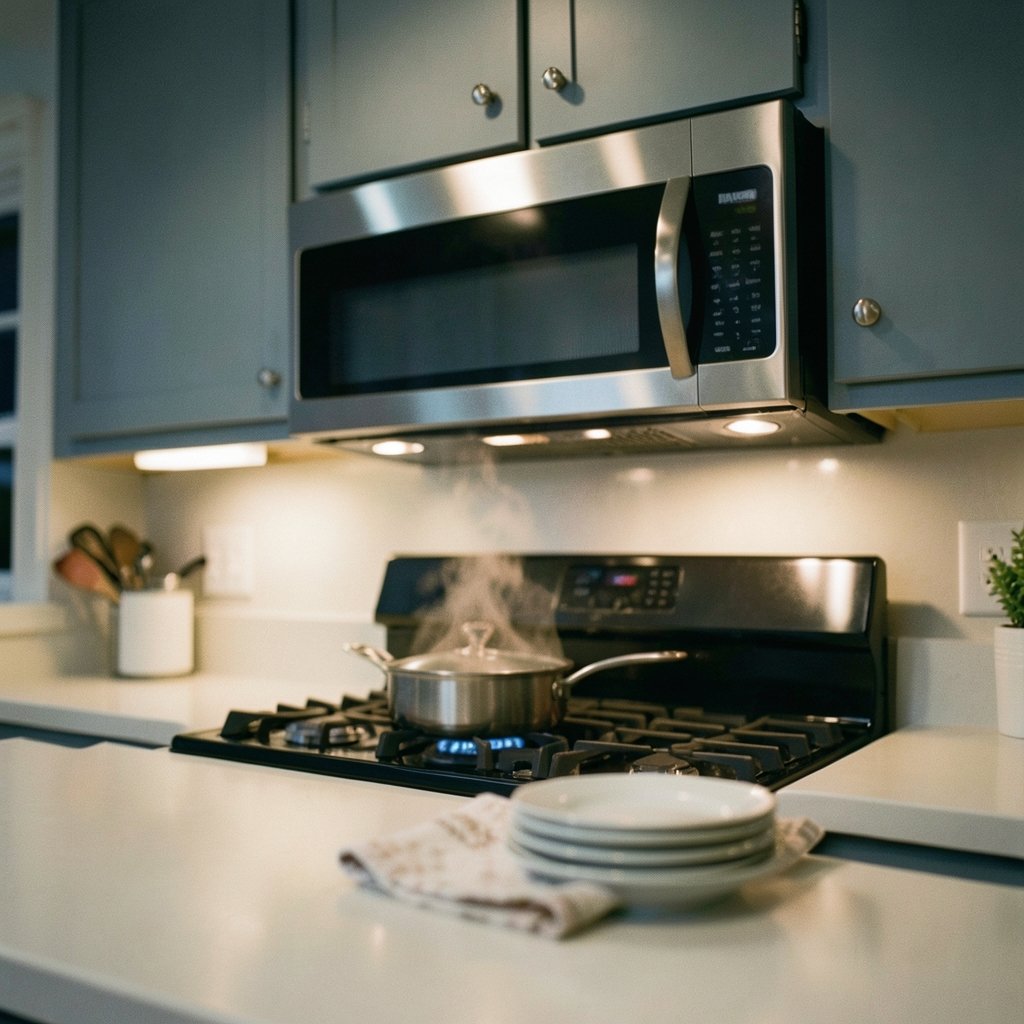
What if the most important appliance decision in your kitchen isn’t the range or the fridge, but the box hanging above the cooktop? An over-the-range (OTR) microwave does double duty. It heats leftovers and clears smoke, steam, and grease from the air. That second job is the one most shoppers ignore, and it’s the one that decides whether the thing actually works in a real kitchen. (Best external ssd 2026 pick real speed over marketing)
This guide walks through what separates a good OTR microwave from a frustrating one. It covers venting, sizing, noise, and cooking power, plus the mistakes that trip up buyers again and again.
Start With Venting, Not Cooking Power

Most people shop for an OTR microwave the way they shop for a countertop one: they compare wattage and preset buttons. That’s backwards. The vent system is the part that’s hard to change later, and it’s the part that affects your kitchen every single day.
OTR microwaves come in two venting setups:
- Recirculating (ductless): The fan pulls air through a grease filter and a charcoal filter, then blows it back into the room. No ductwork needed. It handles steam and light grease but does nothing for true smoke removal.
- Ducted (external vent): Air goes out through a duct to the outdoors. This is the only setup that genuinely clears smoke, odors, and moisture from the kitchen.
Here’s the practical trap: many OTR units ship configured for recirculation. Switching to ducted operation often requires rotating the blower motor, and sometimes buying a separate ducting kit. If you have a duct in the wall or ceiling above the range, confirm before you buy that the model supports ducted installation and check what parts are included.
A quick reality check on ductless units: if you sear steak often or your kitchen has no window, recirculating mode will disappoint you. The charcoal filter traps some odor, but it can’t remove heat, moisture, or smoke volume. Plan accordingly.
Match the Width Before Anything Else


In the U.S., the standard OTR width is about 30 inches, matching a standard range. Narrower units around 24 inches exist for small kitchens and apartment layouts, and wider options exist for pro-style ranges. Measure the range width and the cabinet opening above it, and measure the wall as well.
Three measurements matter:
- Width of the range (the microwave should typically match or slightly exceed it).
- Available cabinet depth (OTR units are shallower than they look in photos, but the door swing and front protrusion still matter).
- Clearance above the cooktop (the installation manual specifies a minimum, and going lower is a fire and safety issue).
The clearance number is where DIY installs go wrong. People want the microwave low enough to reach comfortably, so they ignore the manual. Don’t. The manufacturer’s stated minimum clearance exists because heat from the cooktop rises directly into the unit’s underside.
Fan Power: CFM Ratings and What They Actually Mean
Vent fan strength is measured in CFM (cubic feet per minute). Mainstream OTR models commonly land in the 300 to 400 CFM range, with higher-end units pushing beyond that.
More isn’t automatically better, for two reasons. First, a very powerful exhaust can pull against a house that’s too tight, which is why some jurisdictions require makeup air above certain exhaust rates. Local code varies by location and code edition, so check with your local building department rather than trusting a blog number. Second, a loud fan at high CFM is useless if nobody wants to turn it on.
That last point deserves its own section.
Noise Is the Most Underrated Spec
Fan noise on range hoods and OTR microwaves is often listed in sones or decibels. Lower is quieter. The catch is that brands don’t always measure the same way, so direct comparisons across manufacturers are shaky.
What actually works in practice: treat noise ratings as a rough guide and read owner reviews specifically for noise complaints. A unit rated at a low sone count that owners describe as “a jet engine on high” is telling you something the spec sheet isn’t. (Year did cash money take over three answers that actually)
Also think about how you’ll use it. Most cooking happens on medium fan speed. If the lowest speed is already loud, you’ll stop using the vent, and then the grease filter clogs and the kitchen stays smoky. A slightly weaker but quieter fan often beats a loud powerhouse for daily cooking.
Cooking Power and the Electrical Reality
Most U.S. OTR microwaves run on a standard 120-volt household circuit, with cooking power commonly around 900 to 1,100 watts. Higher wattage generally means faster, more even heating, but the difference between 1,000 and 1,100 watts is smaller than marketing suggests.
Two practical notes:
- Check the circuit. An OTR microwave usually needs a dedicated circuit. If you’re replacing an old unit, confirm the existing circuit’s rating matches the new model’s requirements in the manual.
- Sensor cooking is worth having. Humidity sensors that adjust cook time automatically reduce the guesswork on leftovers and vegetables far more than extra preset buttons do.
If your kitchen setup also involves charging laptops or running USB-C power delivery gear at a desk nearby, it’s worth understanding how USB PD wattage tiers work, since the same “bigger number must be better” logic fails there too. The same applies when you’re comparing storage upgrades: the lesson from how to pick the best external SSD in 2026 is that real-world speed beats marketing claims every time. Appliances follow the same rule.
Recirculating vs. Ducted: A Direct Comparison
| Factor | Recirculating | Ducted |
|---|---|---|
| Ductwork needed | None | Yes, to outdoors |
| Smoke removal | Minimal | Strong |
| Odor control | Partial (charcoal filter) | Strong |
| Filter upkeep | Grease plus charcoal replacement | Grease cleaning only |
| Install cost | Low | Higher, depends on duct path |
| Best for | Light cooking, rentals, no duct access | Serious cooking, open kitchens |
The charcoal filter detail matters more than people expect. Charcoal filters need periodic replacement, typically every few months with regular use, and they’re an ongoing cost. Ducted setups skip charcoal entirely, which is one reason ducted installs feel simpler to live with long-term.
Safety and Standards Worth Knowing
In the U.S., microwave ovens fall under federal radiation safety rules, and UL 923 is the relevant safety standard for microwave cooking appliances. That’s background reassurance rather than a shopping filter, since compliant units sold at retail meet these requirements.
The safety issues that actually bite homeowners are installation-related: insufficient clearance above the cooktop, venting into a cabinet or attic instead of outdoors, and blocked filters. Check for product recalls before buying any used or discontinued model, and register new appliances so you’re notified if a recall happens.
Common Mistakes That Ruin a Good Purchase
These come up constantly in real kitchens:
- Buying ductless and expecting ducted performance. If smoke removal matters, confirm ducting exists before purchase.
- Skipping the measurement of the old unit’s mounting bracket. Replacement units don’t always match the existing bracket hole pattern, which turns a swap into a full reinstall.
- Ignoring the door hinge side and handle. In tight layouts, a protruding handle can block a cabinet or catch a shoulder.
- Forgetting filter maintenance. Grease filters are often dishwasher-safe, but only if you actually run them through. A clogged filter cuts airflow dramatically.
- Assuming the vent fan replaces a real hood. OTR fans are decent, not great. If ventilation is your top priority, a dedicated hood plus a countertop microwave may serve you better.
That last point is the honest one. The best overhead microwave is the best compromise for your kitchen, not the best vent hood on the market.
Who Should Skip an OTR Microwave Entirely
An OTR microwave trades hood performance for counter space. If any of these describe you, consider a different layout:
- You cook with high heat and oil often and want serious ventilation.
- Your range sits against an exterior wall with an easy duct path, making a proper hood affordable.
- You want a microwave at eye level but have no upper cabinet space above the range.
- You need a very quiet kitchen, since OTR fans sit close to ear level.
For everyone else, the OTR format is a genuinely efficient use of space, especially in kitchens where counter real estate is precious.
A Practical Buying Checklist
Before clicking buy, run through this list:
- Measure range width, cabinet opening, and clearance above the cooktop.
- Confirm whether you have ducting and whether the model supports ducted mode out of the box.
- Compare CFM ratings within the same brand, and read owner reviews for noise.
- Check the electrical circuit requirement in the manual.
- Look for sensor cooking and an easy-clean interior.
- Verify filter types and replacement costs for recirculating setups.
- Check the mounting bracket compatibility if replacing an existing unit.
If you’re also sorting out smart-home gear alongside the kitchen project, the same sequencing discipline applies to things like Z-Wave inclusion vs. exclusion: order matters every device, and doing steps out of order creates hours of rework. Kitchen installs reward the same patience.
Conclusion
The best overhead microwave isn’t the one with the highest wattage or the longest feature list. It’s the one that fits your cabinet opening, vents the way your kitchen allows, and stays quiet enough that you’ll actually use the fan. Get venting and sizing right first, then choose cooking features. That order saves money, install headaches, and a lot of smoky evenings.
FAQ
What is the standard width of an over-the-range microwave?
About 30 inches in the U.S., matching a standard range. Narrower units around 24 inches exist for compact kitchens, and wider models exist for larger ranges. Always measure the range and the cabinet opening before buying.
Do over-the-range microwaves need to be vented outside?
No, but it makes a big difference. Recirculating models filter air and blow it back into the kitchen, which handles steam and light grease but not real smoke. Ducted models exhaust outdoors and are far more effective for serious cooking.
How many CFM do I need for an over-the-range microwave?
Mainstream models typically offer roughly 300 to 400 CFM. Higher ratings clear smoke faster but run louder and may trigger local makeup-air requirements. Check your local code, since thresholds vary by jurisdiction and code edition.
Can I install an over-the-range microwave myself?
Many homeowners do, but the clearance above the cooktop and the duct connection are where mistakes happen. Follow the manufacturer’s installation manual exactly, especially the minimum clearance figure, and confirm the electrical circuit meets the unit’s requirements.
How often should I clean or replace the filters?
Grease filters should be cleaned regularly, often monthly with frequent cooking, and many are dishwasher-safe. Charcoal filters, used only in recirculating setups, need replacement every few months depending on use. Ducted installations don’t use charcoal filters at all.
Is a dedicated range hood better than an over-the-range microwave?
For pure ventilation, yes. A dedicated hood typically moves more air more quietly. An OTR microwave wins on space efficiency by combining two appliances into one footprint. The right choice depends on whether counter space or air quality matters more in your kitchen.
One more consideration that rarely appears in spec sheets: serviceability and parts availability. Microwave magnetron tubes and control boards do fail, and a brand with a strong parts network and accessible service documentation is easier to live with than a slightly better-specced model nobody can repair. Before buying, check whether the manufacturer publishes a service manual and how long replacement filters and parts stay in stock. A unit that lasts a decade with cheap, available filters beats one that’s marginally quieter for two years and then becomes landfill. Factor that longevity into the price you’re willing to pay.