
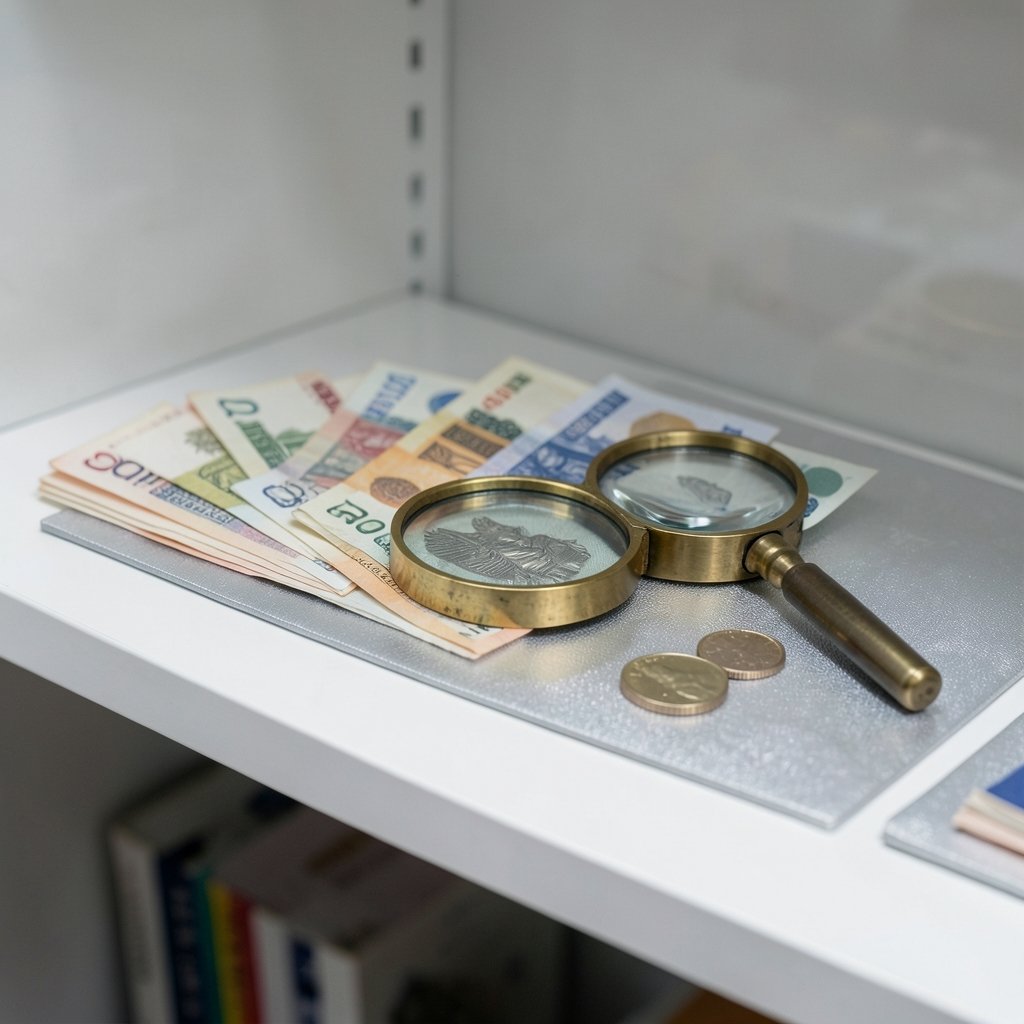
Have you ever looked closely at a banknote and wondered who decided whose face belongs on it? A picture of money seems simple at first glance. It is a portrait, a building, a number. But every element on a note or coin is a decision made by someone, often decades or centuries ago, and often for reasons that have nothing to do with art. Currency design sits at the crossroads of politics, security, law, and national identity. That makes the imagery on money far more interesting than most people expect. (Gift card scam works victims rarely get their money back) (Banknote)
This article looks at what actually appears on money, why certain faces and symbols get chosen, which rules govern who can appear, and what happens when you try to photograph or reproduce a note. It also covers the practical side: how to shoot clean images of currency, why some photos come out oddly distorted, and what mistakes people make when they try to copy a bill.
What Does “Picture of Money” Actually Mean?
The phrase is loose. It gets used for at least three different things, and mixing them up causes confusion.
First, it can mean the images printed on currency itself: the portraits, seals, buildings, and symbols that make a note recognizable. Second, it can mean photographs or illustrations of cash used in news, advertising, or stock imagery. Third, it can refer to the visual language of wealth in general, from piles of coins in a stock photo to a cartoon money bag.
There is no standard dictionary entry that pins the phrase down, so context does the work. If someone asks for “a picture of money,” they usually want an image of banknotes or coins. If a designer talks about “the picture on the money,” they mean the portrait or motif. Keeping those two senses separate makes the rest of this topic much easier to follow. (Projector screen white walls actually improves picture)
Why Portraits Dominate Banknote Design
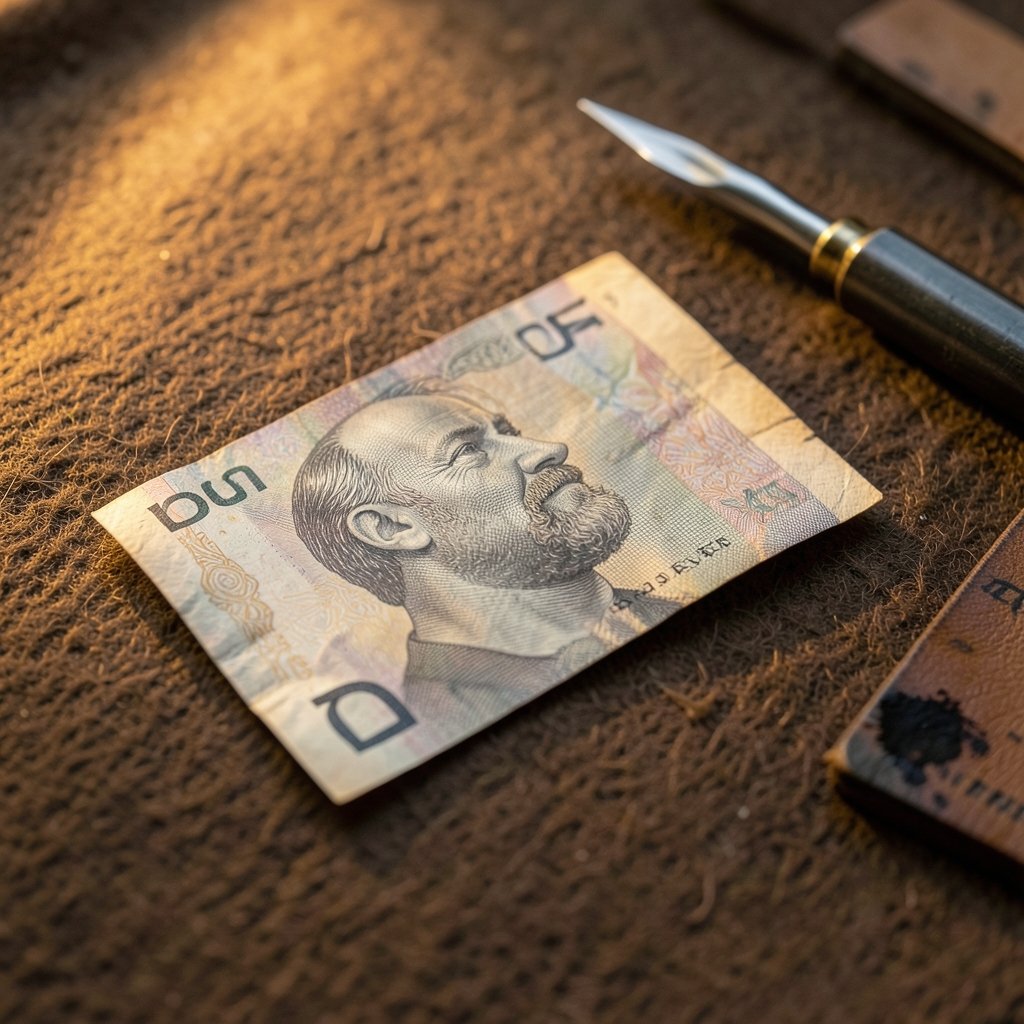
Portraits are the most recognizable feature of most currencies, and they are not accidental. A face is hard to counterfeit badly and easy to recognize instantly. Humans are extremely good at spotting a familiar face that looks slightly wrong, which makes portraiture a natural security feature as well as a national statement.
The American approach
US paper currency has carried portraits since the 1860s, when the first federally issued notes appeared during the Civil War. The Bureau of Engraving and Printing, the agency that produces US notes, was established in 1862, and the portrait tradition has continued ever since.
The current $1 note shows George Washington, based on Gilbert Stuart’s Athenaeum portrait from 1796. The design lineage runs through the small-size notes introduced in 1929, when US currency shrank to the dimensions still used today. That 1929 change is why older American notes look oversized in photographs: they genuinely were bigger.
The British approach
British banknotes take a different route. Bank of England notes have featured the reigning monarch since the 1960s, with the first £1 note bearing Elizabeth II issued in 1960. After Elizabeth II died in September 2022, notes carrying Charles III’s portrait were announced, and existing Elizabeth II notes remained legal tender. That continuity matters: a change of monarch does not invalidate the cash in your wallet.
The European approach
The euro deliberately avoids portraits of real people. Euro banknotes, which entered circulation as cash in 2002, use generic architectural styles instead: bridges, windows, and gateways. The design avoids identifiable individuals and real monuments so that no single member state feels favored. It is a quietly political choice dressed up as aesthetics.
| Currency | Dominant imagery | Design logic |
|---|---|---|
| US dollar | Historical portraits | National continuity, recognition |
| Pound sterling | Reigning monarch | Constitutional identity |
| Euro | Generic architecture | Neutrality between member states |
The Law Behind the Faces
Who may appear on money is not left to designers. In the United States, federal law prohibits portraits or likenesses of living persons on currency and securities, a restriction that traces back to an 1866 Act of Congress. That single rule explains a lot. It is why American notes honor the dead and why proposals to put a living president or celebrity on a bill go nowhere.
Coin portraits are older than paper ones. Ancient coins routinely carried rulers’ likenesses, with Hellenistic coins from the fourth century BCE onward showing Alexander the Great and his successors. Rulers worked out early that a face in every pocket is cheap propaganda.
The Hidden Marks You Cannot See
Look at a banknote under magnification and you may notice a ring of small circles arranged like a constellation. This is the EURion constellation, an anti-counterfeiting pattern embedded in the design of many notes, including the euro, to let scanners and image software detect currency and refuse to reproduce it. It was reportedly developed around 1996, though the exact origin is widely repeated rather than firmly documented.
This is why photographing money can produce strange results. Some printers and copiers simply refuse the job. Some image editors block the file. The pattern is doing its job, and it does not care that you only wanted a picture for a school project.
Rules for Reproducing US Currency
If you want to publish an image of a US note, there are official conditions. The Counterfeit Detection Act of 1992 set out when US currency may be reproduced. As commonly summarized, reproductions must be one-sided, and the image must be either less than three-quarters or more than one and a half times the linear dimensions of the original. Anyone planning to print currency images for a book, a classroom, or a design project should confirm the exact current ratios with the issuing authority before publishing, because getting this wrong is a legal problem rather than a design problem. (How Currency Gets into Circulation)
The practical takeaway is simple: photographing money for personal use is generally fine, but reproducing it at close to actual size, in color, on both sides, is exactly what the rules are designed to prevent.
How to Photograph Money So It Actually Looks Good
Shooting currency well is harder than it looks. Notes are reflective, detailed, and often low-contrast under ordinary indoor light. Here is what tends to work.
- Use soft, diffused light from an angle rather than straight above. Raking light picks up the engraving texture that makes a note look like a note.
- Avoid the camera flash. It creates a hot spot on the security thread and washes out fine line work.
- Put the note on a matte, neutral background. A dark gray card makes the portrait pop without competing with it.
- Shoot straight down with the camera parallel to the note, or use a copy stand, to avoid keystoning.
- Check your white balance. Mixed lighting turns a greenback yellow-green in a way that looks wrong immediately.
The most common mistake is trying to capture too much at once. A tight crop of a portrait or a serial number usually reads better than a full-frame shot of a whole bill, especially on a phone screen.
When Images Get Blocked or Distorted
People who photograph money for a living run into software interference regularly. A scanner may refuse the page. A photo editor may refuse to open the file. Sometimes the image opens but gets corrupted in odd ways. None of this is a bug in your equipment; it is currency protection working as intended.
There is a related trap in the broader world of image tools. People often assume that any image problem has a quick app fix, and that assumption leads them to download whatever tool appears first. The same instinct shows up with editing tasks like cutting out a subject from a photo, where knowing which built-in method to use saves a lot of time compared with hunting for a paid app. If you are working on a phone and want to know how to remove a background from a picture using built-in iPhone methods, it helps to understand the limits before you start.
Money Imagery in the Wild
Beyond banknotes, pictures of money shape how people think about value. Stock photography leans on stacks of cash, coins in jars, and upward graphs, because those images communicate instantly. The result is a visual vocabulary of wealth that is oddly narrow.
That narrowness has real-world consequences. Scams often borrow the imagery of money to look legitimate, and the visual cues people trust are exactly the ones scammers imitate. Understanding how gift card scams work and why victims rarely get their money back is a useful counterweight to the polished imagery that surrounds financial products. Likewise, as central bank money goes digital, the picture of money may shift from printed portraits to interface design, and the security questions shift with it. The cost side of that shift is easy to underestimate, which is why breakdowns of where identity threat detection money actually goes are worth reading alongside the hype.
Practical Tips and Common Mistakes
A few habits separate people who get good currency images from people who fight their camera.
- Do not flatten the note. A slightly curved note under raking light shows more detail than a pressed-flat one.
- Watch for the security thread. It will flare under direct light and can ruin an otherwise clean shot.
- Do not assume a photo is free to publish. Personal use and commercial reproduction are treated differently.
- Do not trust auto-enhance. Sharpening algorithms exaggerate the engraving lines until they look like noise.
- Do not photograph notes on a reflective surface. Glass tables and glossy desks create mirror images that confuse both viewers and software.
For anyone curious about the broader visual culture around currency, reference works on the history of banknotes offer useful background on how these designs evolved.
Conclusion
A picture of money is never just a picture. Every portrait on a note reflects a legal rule, a political choice, or a security calculation. The faces are there because someone decided they should be. The buildings are generic because a committee decided neutrality mattered more than recognition. The hidden constellation of dots is there because a scanner needs to know when to say no.
Understanding that layers of intent makes you a better reader of currency, whether you are photographing a bill for a project, checking whether an image is legal to publish, or simply looking at the cash in your hand. The next time you hold a note, look past the number. The design decisions are all there, waiting to be noticed.
Frequently Asked Questions
Why do US banknotes only show dead people?
Federal law prohibits portraits or likenesses of living persons on US currency and securities, a restriction that traces to an 1866 Act of Congress. The rule is old, and it has survived every proposal to put a living figure on a bill.
Can I photograph money and post the picture online?
In most everyday cases, yes. Photographing currency for personal or editorial use is generally acceptable. Problems arise when an image is reproduced at close to actual size, in color, on both sides, which is what the 1992 reproduction rules target. Check the current official conditions before any commercial publication.
Why does my scanner refuse to copy a banknote?
Many notes carry the EURion constellation, a pattern of small circles that tells scanners and image software the document is currency. The software then blocks the scan or copy. It is an anti-counterfeiting feature, not a malfunction.
Why do euro notes have no portraits?
The euro was designed with generic architecture, such as bridges and windows, instead of identifiable people or monuments. The aim was to avoid favoring any single member state, since the currency is shared across many countries with different national heroes.
Do British notes stop working when the monarch changes?
No. When Charles III’s portrait was announced after Elizabeth II died in 2022, existing Elizabeth II notes remained legal tender. Currency transitions are gradual, and old notes circulate alongside new ones for years.
Are coin portraits older than paper money portraits?
Yes, considerably. Ancient coins carried rulers’ likenesses, with Hellenistic coins from the fourth century BCE onward showing Alexander the Great and his successors. Paper currency portraits came much later, in the 1860s for US federal notes.



