
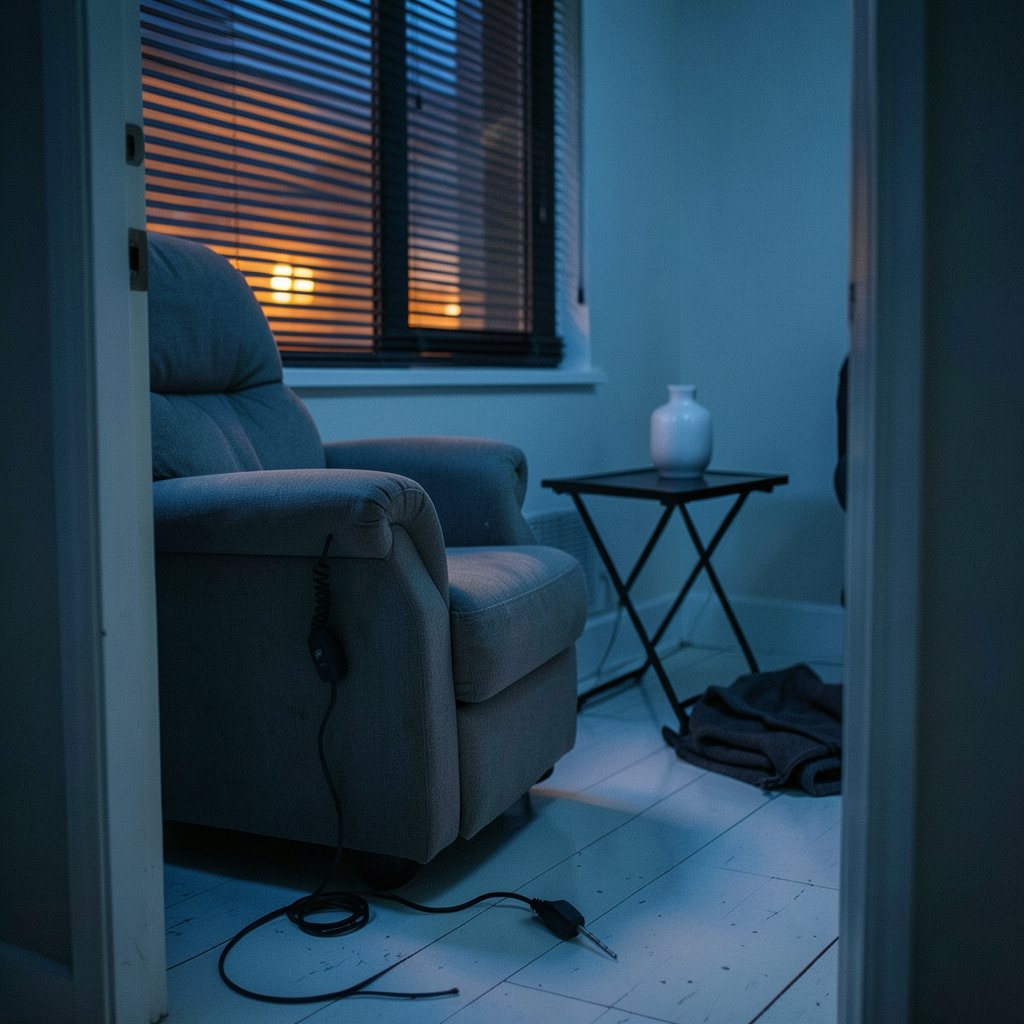
What happens when the power goes out and your recliner is the one chair in the house where you can actually get comfortable? That single question tells you most of what matters about power recliners — the motorized chairs that have quietly replaced the old lever-and-push recliner in living rooms, home theaters, and care settings. They are wonderfully convenient, and they add a layer of electrical and mechanical complexity that most buyers never think about until something stops working.
This guide walks through how these chairs actually work, what the safety standards are, who benefits most, and the practical mistakes that catch people out after delivery.
What a Power Recliner Actually Is
A power recliner is a reclining chair whose backrest and footrest are moved by an electric motor, usually a linear actuator, rather than by a manual lever or a push-back mechanism. You control it with a hand wand, buttons set into the arm, or in newer models a wireless remote or app.
That is the whole definition, but it hides the useful detail. The actuator is a small motorized screw that extends and retracts to change the chair’s geometry. Most power recliners run their actuators on low-voltage direct current, typically in the 24 to 29 volt range, stepped down from mains power by a transformer brick that sits under or behind the chair. The exact voltage varies by manufacturer, so treat any specific number as typical rather than universal.
The low-voltage design is not an accident. It keeps mains electricity away from the parts of the chair your hands and feet touch, and it makes battery backup practical: a small battery pack can run the actuator long enough to return the chair to an upright position during an outage.
Where the Recliner Came From

The reclining chair itself is an American invention with a surprisingly precise origin story. Two cousins, Edwin J. Shoemaker and Edward M. Knabusch, built a wood-slat porch chair that reclined in 1928. The following year the design was upholstered and marketed under a name that stuck: La-Z-Boy, a contraction of “lazy boy.”
That chair was entirely manual. The motorized version came much later. Power recliners became widely available in the United States during the 1980s and 1990s, as linear actuators and low-voltage control systems became cheap enough for mainstream furniture. The precise first-market date for a motorized recliner is not well documented, so be skeptical of any article that states one confidently.
How the Chair Moves: Actuators and Controls
Most of the reliability questions about power recliners come down to three components: the actuator, the hand control, and the power supply. These are also the parts most commonly replaced when something fails.
| Component | What it does | Typical failure pattern |
|---|---|---|
| Linear actuator | Drives recline and footrest | Slow movement, grinding, one direction stops working |
| Hand control or arm buttons | Sends the command | Sticky buttons, cracked cable, lost pairing on wireless models |
| Power supply or transformer | Steps mains down to low voltage | Dead chair with no sound or light at all |
| Battery backup pack | Moves chair upright in an outage | Dead batteries discovered only during an outage |
The diagnostic logic is simple and worth memorizing. If the chair is completely silent, suspect power: the outlet, the transformer, or the cable connection. If it moves one way but not the other, suspect the hand control or a limit switch. If it moves slowly and labors, suspect the actuator or a mechanical obstruction.
Actuators from major brands such as Okin, Limoss, and Dewert are widely used across many furniture labels, which is good news for repair: the same part often fits chairs sold under different names. Parts availability still varies by brand, and that variation is one of the strongest arguments for buying from a manufacturer with a real parts channel rather than a marketplace listing with no support behind it.
Electrical Safety: What the Standards Cover
Powered furniture with motors, heaters, or lighting falls under UL 962, the U.S. standard for household and commercial furnishings. It addresses the electrical and mechanical safety of the furniture itself, beyond the motor alone. The standard has been revised many times since the mid-twentieth century, so confirm the current edition number with the standards body rather than trusting a blog.
In Europe, motorized furniture is typically assessed under IEC 60335-1, the general requirements for household and similar electrical appliances, along with related parts. Furniture-specific requirements are less standardized there than in the U.S., so the practical advice is the same everywhere: buy from a brand that can tell you which standard its chair is certified to, and be wary of a seller who cannot answer the question.
Safety recalls for powered furniture do happen, and checking the Consumer Product Safety Commission’s recall database before and after purchase is a five-minute habit that pays off. A recalled chair is not a bargain at any price.
Who Actually Benefits From the Motor
The honest answer is: more people than the marketing suggests, but for reasons that are practical rather than medical.
Motorized recline reduces the physical effort of changing position. That matters for people with arthritis, back pain, or limited mobility, and lift-recliner variants go further by tipping the whole chair forward to help someone stand. This is a widely reported benefit in clinical and consumer guidance rather than something established by a single rigorous trial, so treat claims of therapeutic effect with appropriate caution. A power recliner is a comfort and accessibility aid, not a treatment.
Beyond accessibility, the everyday wins are real. If you have ever shoved a manual recliner back with your heels while holding a sleeping baby, a cup of coffee, or a laptop, you already understand the appeal. The motor does the work; you press a button.
The Practical Problems Nobody Warns You About
This is where first-hand buying experience separates useful advice from brochure copy. The recurring issues are consistent.
Clearance behind the chair. Most recliners need space behind them to recline. Power models are no different, and some need more because the mechanism travels further. Measure the wall distance the manufacturer specifies, then add a little. People routinely buy a chair that fits the room but not the wall.
Outlet placement. A power recliner needs a nearby outlet. Running an extension cord across a walkway to reach one is a trip hazard and defeats the purpose of a chair bought for safety and comfort. Plan the outlet before the delivery, not after.
Weight. Power recliners are heavier than manual ones because of the motors, wiring, and transformer. That matters for stairs, for upstairs rooms, and for anyone planning to move the chair regularly. Check the shipping weight in addition to the product weight.
Delivery access. A chair that will not fit through the door is a problem no amount of features can solve. Measure the doorway, the stair turn, and the elevator if there is one.
The outage scenario. If the household includes someone with limited mobility, battery backup is not a luxury feature. It is the difference between a chair that traps someone in a reclined position and one that returns them upright. Test the battery pack when you install the chair, and replace the batteries on a schedule rather than waiting for a failure.
Manual vs Power: An Honest Comparison
| Factor | Manual recliner | Power recliner |
|---|---|---|
| Effort to recline | Physical push or lever | Button press |
| Moving parts | Mechanical linkage | Actuator, control, power supply |
| Failure points | Fewer | More, but repairable |
| Needs an outlet | No | Yes, plus battery backup option |
| Weight | Lighter | Heavier |
| Best for | Occasional use, tight spaces | Daily use, limited mobility, home theater |
The trade is straightforward. Power adds convenience and accessibility, and it adds electrical components that can fail. Neither is automatically the right choice; the question is how often the chair gets used and by whom.
Power Management Details Worth Knowing
If the chair shares a room with a lot of other electronics, it is worth thinking about how everything draws power. A home theater setup with a recliner, a screen, and a console on one circuit is a common arrangement, and understanding how devices share a supply helps avoid nuisance trips. The same logic that applies to power bank capacity in mAh vs Wh applies here in spirit: the number on the label is not the whole story, and real-world behavior depends on how the load is used.
The transformer brick under a recliner also runs warm in continuous use. Give it airflow rather than burying it under a rug, and check it occasionally for heat or discoloration. If the chair lives in a basement or a room prone to damp, keeping the electronics dry matters as much as keeping the upholstery clean, and the same placement thinking that governs where to place a dehumidifier for maximum drying power applies to keeping the chair’s power supply out of humid corners.
For anyone charging phones and tablets in the same seating area, the newer high-wattage charging standards are worth a look, since USB-C EPR charging at 240W is changing what a single wall outlet can reasonably support.
Buying Checklist Before You Commit
- Measure the wall clearance the manufacturer specifies and confirm the room can spare it.
- Confirm an outlet within reach without an extension cord across a walkway.
- Check the shipping weight and the delivery path, including stair turns and door widths.
- Ask which safety standard the chair is certified to, and check the recall database.
- Confirm parts availability for actuators, hand controls, and power supplies.
- Decide whether battery backup is required or optional for the household.
- Sit in the exact model, not a similar one, and test every button.
Care and Repair Over Time
Power recliners are not maintenance-free, but they are not fragile either. Vacuum the mechanism area occasionally to keep dust and pet hair out of the actuator travel. Check the cable connections under the chair every few months; a loose connector causes more “dead chair” service calls than any failed motor. Keep liquids away from the hand control, which is the component most exposed to spills.
When something does fail, get the model number and the actuator part number before calling anyone. Many repairs are a single part swap, and knowing the part number prevents the most common upsell: being told the whole chair needs replacing when a forty-dollar component would fix it.
Conclusion
A power recliner is one of those purchases that rewards a little planning far more than a lot of feature comparison. The motor, the control, and the power supply are simple, repairable technology. The things that actually go wrong are the things buyers forget to check: wall clearance, outlet placement, delivery access, and what happens during an outage. Get those right, confirm the chair is certified and supported with real parts, and the chair will do exactly what it promises for years.
Frequently Asked Questions
Do power recliners work during a power outage?
Only if they have a battery backup pack, and only long enough to return the chair to an upright position. Without one, the chair stays where it was when the power failed. For households with limited mobility, battery backup is a safety feature rather than a convenience, and the batteries should be tested and replaced on a schedule.
How much space do I need behind a power recliner?
It depends on the model, because recline mechanisms travel different distances. The manufacturer specifies a minimum wall clearance for each chair, and the reliable approach is to use that number and add a small margin. Measuring the room without checking the specified clearance is the most common pre-purchase mistake.
Are power recliners safe to leave plugged in all the time?
Yes, provided the chair is certified to the relevant electrical standard and the transformer has airflow around it. The components are designed for continuous connection. The practical precautions are keeping the power supply dry, checking it occasionally for excessive heat, and not running extension cords across walkways to reach an outlet.
What usually breaks first on a power recliner?
The hand control, the power supply, and the actuator are the three most commonly replaced components, in roughly that order of exposure. A chair that is completely silent usually has a power or connection problem. A chair that moves one way but not the other usually has a control or limit switch issue.
Can a power recliner help with back pain or arthritis?
Motorized recline reduces the physical effort of changing position, which is why power and lift-recliner models are widely recommended for people with limited mobility or joint pain. That is a comfort and accessibility benefit. It is not a medical treatment, and anyone buying a chair for a health reason should treat it as an aid rather than a therapy.
Is a power recliner worth the extra cost over a manual one?
For daily use, for anyone with limited mobility, or for a home theater where the chair gets used constantly, the convenience usually justifies the price. For occasional use in a tight room without a nearby outlet, a manual recliner is simpler, lighter, and has fewer parts that can fail. The right answer depends on how often the chair is used and by whom.



