
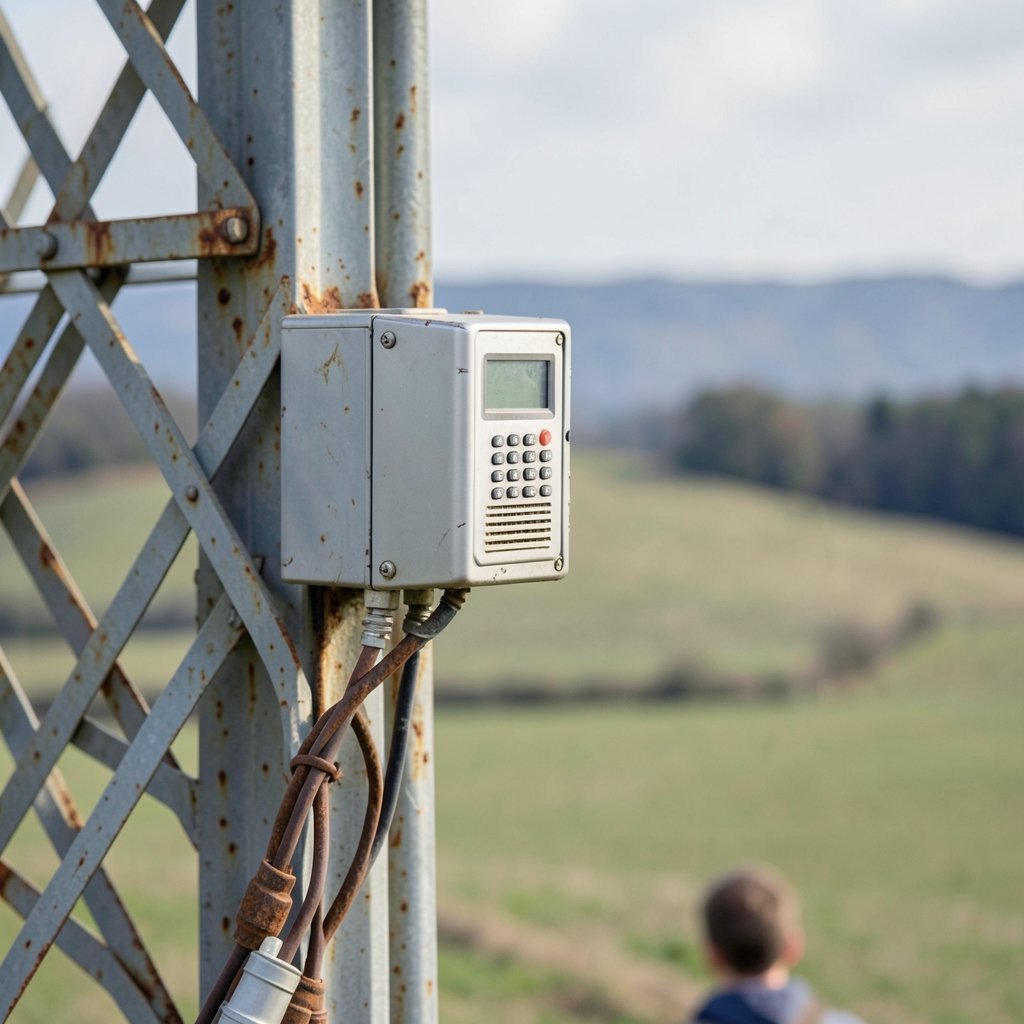
Quick Answer: What are some real world examples of edge computing in simple terms?
Edge computing means processing data close to where it is created instead of shipping everything to a distant data center. You already rely on it when a streaming video loads from a nearby cache, when a self-driving car brakes on its own, or when a factory sensor flags a failing motor before it breaks.
Some examples are obvious once you look: content delivery networks, smart traffic lights, checkout-free stores, and wearable health monitors all do at least some computing at the edge. Others, like telecom towers running apps for nearby phones, are invisible but increasingly common.
Before trusting any edge computing claim, compare where the processing actually happens, how much data stays local, what happens when the network drops, and who owns and secures the hardware.
Every time someone signs into a phone with their face, the phone decides whether the face matches in under a second. The image never travels to a server farm hundreds of miles away. That tiny act of local decision-making is edge computing, and it quietly powers far more of daily life than most people realize. The global edge computing market was valued in the tens of billions of dollars and is projected to keep climbing sharply through the late 2020s, according to industry trackers such as Statista. The concept itself is simple: move the thinking closer to the action.
What Edge Computing Actually Means, Minus the Jargon

Think of edge computing as the difference between a chef tasting soup in the kitchen and mailing a spoonful to a food critic across the country. The kitchen is the edge — the phone, the car, the factory floor, the cell tower. The critic’s office is the cloud: powerful, but far away.
Cloud computing still matters enormously. Edge computing does not replace it; it handles the jobs where a round trip to a remote data center takes too long, costs too much bandwidth, or risks privacy. A useful primer on the distinction between edge and cloud lives on Wikipedia’s edge computing page, which traces the idea back to content delivery networks in the late 1990s.
One caveat worth stating plainly: the industry defines “edge” inconsistently. Some vendors count anything outside a core data center. Others reserve the term for newer 5G and Internet-of-Things setups. When comparing products or claims, ask where the computing physically sits.
Content Delivery Networks: The Original Everyday Edge
Long before “edge computing” became a buzzword, content delivery networks (CDNs) were doing the work. Companies like Akamai and Cloudflare store copies of websites, images, and videos on servers scattered around the world. When a reader in Ohio opens a page, the files come from a nearby city, not from a server in another hemisphere.
The result is measurable: pages load faster and video streams stall less. This is the least glamorous edge example and arguably the most impactful, because it touches nearly every website people visit.
For anyone comparing services that depend on fast local delivery — say, shopping for a vehicle online — the same principle applies. A page comparing Ram truck lease deals loads quickly because its images and pricing tables are cached close to the shopper, not fetched fresh from a distant origin server each time.
Self-Driving Cars and Driver-Assistance Systems
A car traveling at highway speed covers roughly 30 meters per second. A sensor reading sent to a distant cloud and back could take longer than the distance needed to stop. So autonomous and advanced driver-assistance systems do their critical thinking onboard.
Cameras, radar, and lidar feed a local computer that identifies pedestrians, lane markings, and obstacles in milliseconds. Only non-urgent data — trip summaries, software updates, fleet diagnostics — gets uploaded later. This split is the defining pattern of edge computing: urgent decisions stay local, everything else can travel.
The same logic explains why electric vehicle shoppers researching Hyundai Ioniq 5 lease deals increasingly see software features, over-the-air update policies, and onboard computing power listed alongside monthly payments. The car is becoming a computer on wheels, and much of that computing happens at the edge.
Factories That Catch Failures Before They Happen
In manufacturing, predictive maintenance is one of the most mature edge use cases. Vibration, temperature, and acoustic sensors on motors and pumps stream data to a local industrial computer — a small machine on the factory floor — that runs analytics in real time. If a bearing starts to wobble, the system raises an alarm within seconds.
Why not send everything to the cloud? A large plant can generate terabytes of sensor data per day. Most of it is boring. Edge gateways filter the noise, send only anomalies and summaries upstream, and keep working even when the internet connection hiccups. Platforms such as AWS IoT Greengrass and Azure IoT Edge exist largely to run this kind of local software.
The practical lesson from factories that have done this well: start with one machine, not the whole plant. Teams that try to instrument everything at once usually drown in data and abandon the project.
Retail: Checkout-Free Stores and Smart Shelves
Walk out of an Amazon Go store without scanning anything, and a receipt appears on your phone. Behind that magic is a dense web of cameras and shelf sensors feeding local computers that identify which item left with whom. Doing that analysis in the cloud would add lag and burn enormous bandwidth.
Retailers also use edge devices for smart shelves that flag low stock, cameras that detect spills, and freezer sensors that warn of temperature drift before food spoils. The computing lives in a back-room cabinet, not a distant server farm.
Shoppers rarely think about this infrastructure, but it changes what they expect. When a store’s app shows real-time inventory, that accuracy usually depends on local processing. The same expectation of instant, accurate local data shows up in property searches — someone browsing commercial real estate listings for sale wants live availability and pricing, which depends on fast, well-cached delivery systems.
Telecom Towers Running Apps for Nearby Phones
Multi-access edge computing (MEC) puts small data centers at the base of cell towers. Carriers use them to run applications for nearby phones and devices — things like cloud gaming, augmented reality filters, and connected-vehicle alerts — with latency measured in single-digit milliseconds.
Standards bodies have spent years formalizing this. The specifications published by ETSI define how applications run at the network edge and how they are billed and secured. The appeal for carriers is obvious: they already own the towers and the fiber connecting them.
For users, the benefit is subtle but real. A cloud gaming session that feels laggy on a home connection may feel smooth when the game server sits a few blocks away. Latency, not raw bandwidth, is the bottleneck edge computing attacks.
Healthcare, Wearables, and Devices That Watch Quietly
A fitness band that detects an irregular heartbeat cannot wait for a round trip to the cloud. Many wearables now run lightweight models on the device to spot anomalies and only upload flagged events for a clinician to review. This keeps sensitive health data local and preserves battery life.
Hospitals use similar logic for bedside monitors that alert nurses instantly when a patient’s vitals drift. The pattern repeats: sense locally, decide locally when speed matters, escalate selectively.
Privacy is a genuine advantage here. Raw biometric data that never leaves a wristband cannot be breached in transit. That said, local processing is only as trustworthy as the device’s security, which is why regulators increasingly scrutinize firmware updates and encryption on consumer health gadgets.
Smart Cities, Agriculture, and Places With Bad Internet
Traffic cameras at intersections can adjust signal timing locally based on actual queue lengths, rather than waiting for a central system to respond. Farm sensors and drones process crop imagery in the field, where cellular coverage is often poor or nonexistent. Satellites increasingly analyze images onboard because downlinking every frame is too expensive.
These examples share a common thread: the network is unreliable or expensive, so the computing must travel to the data. This is edge computing’s quiet superpower — it works when the cloud cannot reach you.
Anyone planning infrastructure in remote areas runs into the same trade-offs. Connectivity decisions increasingly intersect with spectrum policy debates, such as the discussions around carriers, CTIA, and SpaceX over the 1695–1700 MHz band, because where the network reaches determines whether edge or cloud processing makes sense.
Common Mistakes People Make When Evaluating Edge Computing
The biggest error is assuming edge computing is automatically faster. It is faster for the right workload. A batch report that runs overnight gains nothing from local processing and may cost more to operate on scattered hardware.
A second mistake is underestimating the operational burden. Every edge site needs power, physical security, updates, and monitoring. A hundred small servers in a hundred locations can be harder to manage than one large data center.
A third is buying the marketing rather than the architecture. Ask specifically: where does the processing happen, what data leaves the site, what happens during an outage, and who patches the devices? Vague answers usually mean the “edge” is a slide in a pitch deck.
How to Spot Edge Computing in Your Own Life
Readers curious about their own exposure can look for three signals. First, instant response with no network lag — face sign-in, voice assistants waking on a keyword, a car beeping before a collision. Second, offline functionality — a device that keeps working when Wi-Fi drops. Third, privacy language — products that promise data “stays on your device” are usually running local models.
A quick comparison helps clarify where processing tends to live:
| Example | Where processing happens | Why it stays local |
|---|---|---|
| Face sign-in | On the phone | Speed and privacy |
| Video streaming | Nearby CDN server | Bandwidth and load time |
| Self-driving car | Onboard computer | Safety-critical latency |
| Factory sensors | Local industrial computer | Data volume and uptime |
| Cloud gaming | Cell tower edge | Latency for responsiveness |
Conclusion
Edge computing is less a futuristic concept than a description of how modern systems already work. The phone in a pocket, the car in a driveway, the camera above a store shelf, and the tower passing a signal all make small decisions locally because sending everything to a distant data center would be too slow, too costly, or too risky. The pattern is consistent: sense nearby, decide nearby, escalate selectively. Understanding that rhythm makes it much easier to evaluate the next product, service, or headline that claims to run “at the edge” — and to tell the difference between genuine local processing and clever marketing.
Frequently Asked Questions
Is edge computing the same thing as cloud computing?
No, though they work together. Cloud computing centralizes processing in large remote data centers. Edge computing pushes processing closer to devices and users. Most real systems blend both: urgent decisions happen locally, while storage, reporting, and long-term analytics stay in the cloud.
Does edge computing make cloud data centers obsolete?
Not at all. Data centers remain essential for heavy computation, long-term storage, and training large artificial intelligence models. Edge computing handles latency-sensitive, bandwidth-heavy, or privacy-critical tasks. The two tiers complement each other rather than compete.
Why is edge computing important for self-driving cars?
Because a vehicle moving at highway speed cannot wait for a round trip to a remote server. Braking, steering, and obstacle detection must happen in milliseconds, so the computing runs onboard. Only non-urgent data, such as trip logs and software updates, gets sent to the cloud later.
Is edge computing more secure than cloud computing?
It depends on implementation. Keeping sensitive data local can reduce exposure during transmission and limit what a breach reveals. However, edge devices are often physically accessible and harder to patch at scale, so weak firmware or poor update practices can make them less secure than a well-managed data center.
What kinds of businesses benefit most from edge computing?
Organizations where latency, bandwidth, or connectivity are real constraints tend to benefit most: manufacturers running predictive maintenance, retailers with in-store sensors, healthcare providers monitoring patients, telecom operators, and agriculture or logistics firms operating in remote areas. Businesses with simple batch workloads usually gain little.
How can someone tell if a product actually uses edge computing?
Look for three signals: instant responses with no noticeable network delay, continued functionality when the internet drops, and explicit claims that data stays on the device. Ask where the processing physically happens and what data leaves the site. Clear answers indicate genuine local computing; vague ones usually do not.



