
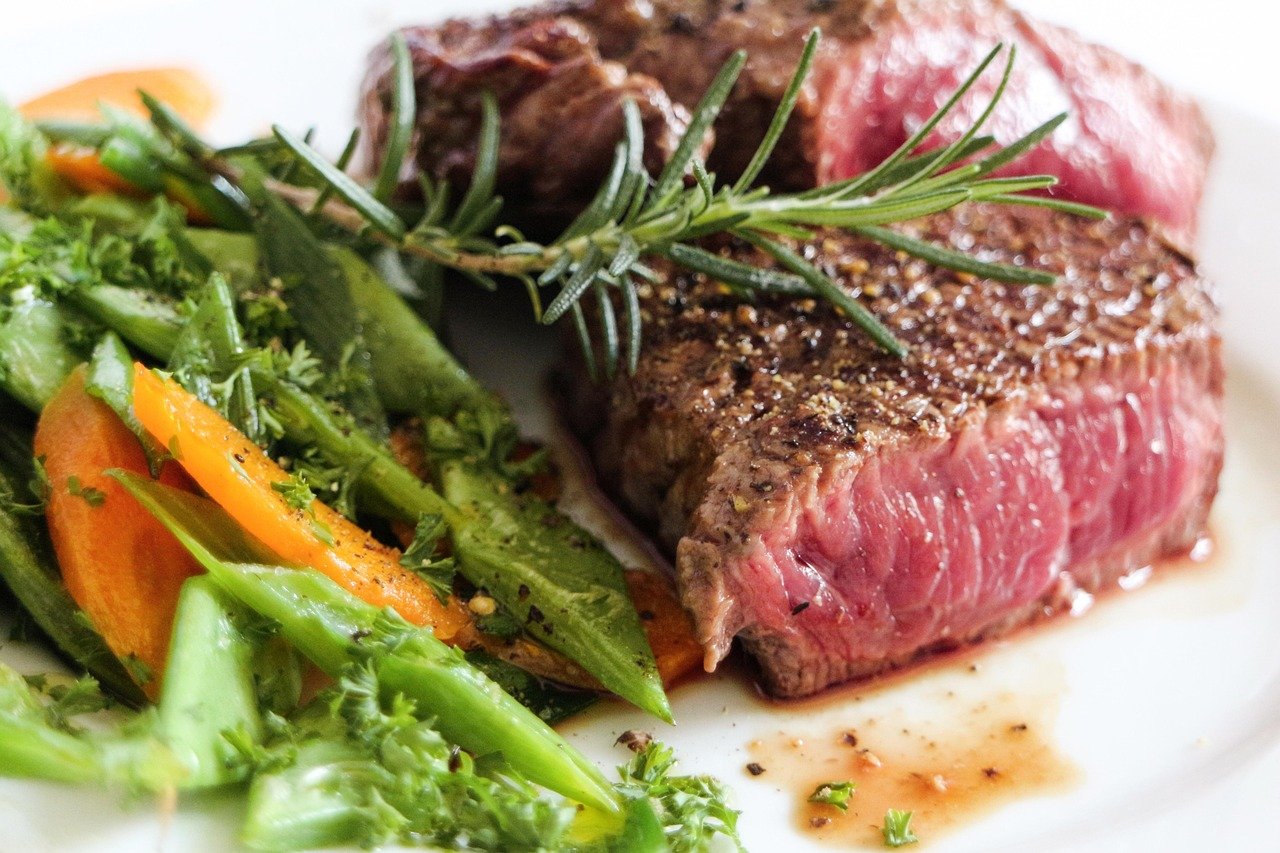
What if the two most popular steaks at the butcher counter come from the same muscle, sit inches apart on the same animal, and still eat completely differently? That is exactly the case with the ribeye and the New York strip. Both are cut from the longissimus dorsi, the long back muscle that runs along the spine. Yet one is buttery and forgiving, and the other is firm and beefy. Knowing why they differ is the fastest way to stop guessing at the meat case and start buying the steak that matches how you actually cook.
The Same Muscle, Two Very Different Neighborhoods
The ribeye comes from the rib section, roughly ribs 6 through 12. The New York strip comes from the short loin, the section just behind the rib. On the animal, these two areas touch. On the plate, they behave like distant cousins.
The key difference is a muscle called the spinalis dorsi, often called the cap or deckle. The ribeye includes it. The strip does not. The spinalis is heavily marbled and sits in a loose, wavy bundle around the eye of the steak. That single anatomical fact explains most of what follows: the ribeye’s richness, its tenderness, and its tendency to render fat into the pan.
The strip is essentially the longissimus alone. One muscle, tight and uniform, with a fat cap along one edge. There is less internal fat woven through the meat, so the texture is denser and the flavor leans cleaner and more mineral.
Side-by-Side Comparison
| Feature | Ribeye | New York Strip |
|---|---|---|
| Source section | Rib (ribs 6–12) | Short loin |
| Main muscles | Longissimus plus spinalis (cap) | Longissimus only |
| Marbling pattern | Heavy, spread through the cap and eye | Moderate, concentrated in the fat cap |
| Texture | Tender, softer bite | Firmer, slightly chewier |
| Fat rendering | High; fats melts into the meat | Lower; edge fat does most of the work |
| Forgiveness when overcooked | High | Lower |
| Typical bone | Boneless, or bone-in as a rib steak | Usually boneless |
| Best heat level | Medium to medium-high | Medium-rare to medium |
| Flavor profile | Rich, buttery, beefy | Clean, firm, classic steakhouse |
Neither column is better. They are simply different tools, and the right pick depends on your heat source, your guests, and how confident you are at the grill.
Why the Ribeye Is So Forgiving
The cap is the ribeye’s secret weapon. Because the spinalis is laced with fat, it bastes the steak from the inside as it cooks. That internal moisture buffer means a ribeye taken a few degrees past target still tastes juicy. A strip in the same situation dries out faster and turns noticeably firmer.
This is why steakhouse menus often push the ribeye toward guests who order medium or medium-well. It is also why beginners tend to have better luck with it. The fat does a lot of the work for you.
The trade-off is richness. A well-marbled ribeye is a heavy steak. Some people love that; others find the last few bites too much. If the meal includes a rich sauce, creamed spinach, or a buttery potato dish, the strip’s leaner profile can balance the plate better.
One practical note: the cap cooks faster than the eye because it is thinner and sits on the outer edge. Chefs often tie a ribeye with butcher’s twine to even out its shape, or they position the cap away from the hottest part of the fire. If the cap looks done before the center does, move the steak to a cooler zone rather than flipping it constantly.
Why the Strip Rewards Precision
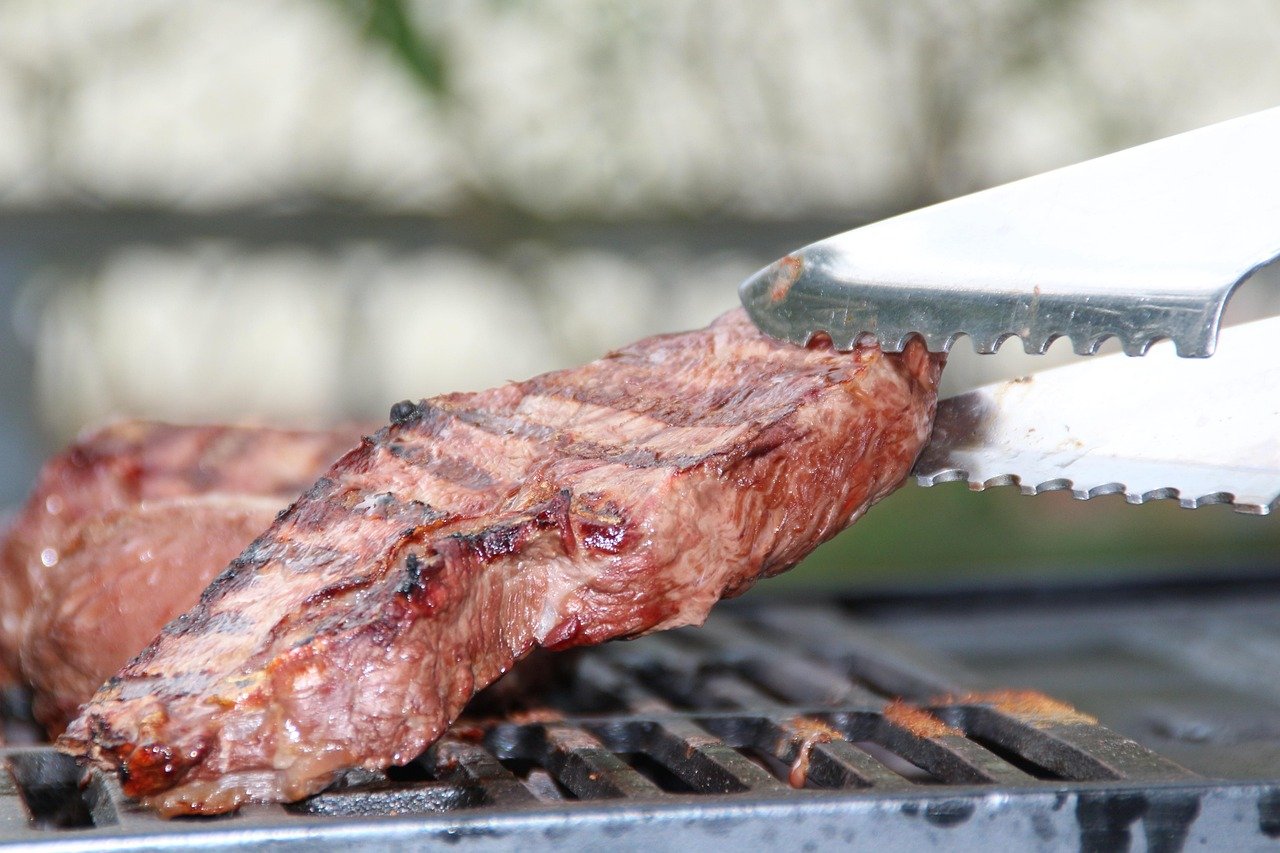
The New York strip is a steak for people who like control. Its uniform shape and single muscle mean it cooks evenly and slices predictably. There is no cap to manage and no wavy edge to work around. It sears beautifully in a hot cast-iron pan and holds a hard crust without the fat spitting and flaring the way a ribeye can.
The strip’s fat cap deserves attention. Rendered properly, it gives the steak a beefy, slightly nutty edge. Left unrendered, it turns rubbery and gets pushed to the side of the plate. The fix is simple: stand the steak on its fat edge for 30 to 60 seconds with tongs before or after the main sear. That renders the cap and crisps it.
Because the strip is leaner, it also takes well to marinades and dry rubs that a ribeye’s fat would largely drown out. Salt, coarse pepper, and a hard sear is the classic treatment, but coffee rubs, garlic-herb blends, and even a short soy-garlic marinade all read clearly on a strip.
The other advantage is portioning. Strips are typically cut to a consistent thickness and shape, which makes them easy to cook in batches for a crowd. If you are feeding eight people and want every steak to hit medium-rare at the same moment, uniformity helps. This is the same logic that makes a consistent setup matter in other projects, whether you are dialing in light output for a kitchen project or working out the details of a plan that runs smoothly from day one.
Naming Confusion: What You Are Actually Buying
The name “New York strip” is regional. The same or a very similar cut appears as strip steak, Kansas City strip, or club steak depending on the butcher and the region. In Australia and New Zealand, “porterhouse” often refers to a strip-style steak, though usage varies enough that it pays to ask. (Led strip diffuser kitchen cabinets fix dots glare hotspots)
The ribeye has its own naming tangle. A bone-in ribeye is often sold as a rib steak. Some butchers use the terms interchangeably; others reserve “ribeye” for the boneless version. If a recipe specifies one and you buy the other, the cooking time shifts because the bone changes heat transfer.
The porterhouse and T-bone add to the confusion. Both contain a strip on one side of the bone and a tenderloin on the other. So a porterhouse is partly a New York strip, but it is not the same product. If someone says they love strip steak and then orders a porterhouse, they are not contradicting themselves, they are just ordering a two-for-one.
Grading Changes Everything
Both cuts are graded on the same scale, and the grade matters more than the cut name. The official system rates carcasses on marbling and maturity, and the resulting labels (Prime, Choice, Select, and so on) tell you how much intramuscular fat to expect.
This is where a lot of steak buying goes wrong. A Select ribeye can be less marbled than a Choice strip. Shoppers who assume “ribeye equals rich” get burned by a lean, chewy specimen. The reliable move is to look at the meat itself: fine white flecks spread through the red, rather than only a thick fat rim on the edge. Those flecks are what melt and carry flavor.
For a strip, a thick, even fat cap plus visible marbling in the eye is the signal to buy. For a ribeye, look at the cap specifically. If the spinalis is well marbled, the steak will eat well even if the eye looks average.
Cooking Both Without Wrecking Either
Both steaks want dry heat: grilling, pan-searing, or broiling. The differences are in the details.
- Salt early. Salt both cuts at least 45 minutes ahead, or up to a day, uncovered in the fridge. This seasons the meat and dries the surface for a better crust.
- Dry the surface. Pat the steak thoroughly before it hits the heat. Moisture is the enemy of a good sear.
- Manage the fat. For a strip, render the fat cap on its edge with tongs. For a ribeye, watch the cap and move the steak if it races ahead of the center.
- Use a thermometer. Pull a strip at 125°F for medium-rare and a ribeye at 130°F, accounting for carryover heat as it rests.
- Rest it. Five to ten minutes on a board, loosely tented, lets the juices redistribute. Skip this and the first cut bleeds the steak dry.
- Slice against the grain. The longissimus has a clear grain direction. Cutting across it shortens the fibers and makes even a firmer strip feel tender.
The biggest mistake home cooks make with either cut is flipping too often and cooking cold meat. A steak straight from the fridge drops the pan temperature and steams instead of sears. Let it sit at room temperature for 20 to 30 minutes first. The second most common mistake is slicing immediately. Patience at the end matters as much as heat at the start.
If you are running a long cook and want to keep the setup consistent, the same principle of planning ahead applies to any project with moving parts, whether you are checking the details of a road trip itinerary or confirming something as mundane as an area code before you dial. Good outcomes usually come from small preparations, not luck.
Cost, Value, and What You Are Paying For
Ribeye usually costs more per pound than strip, largely because the cap is desirable and the cut yields less usable meat per rib section. Whether that premium is worth it depends on what you value. If you want maximum richness and forgiveness, the ribeye earns its price. If you want a clean, firm steakhouse bite and consistent portioning, the strip is often the better value.
There is also a yield argument. A well-trimmed strip has less waste than a ribeye with a large fat cap and a wavy shape. If you are cooking for a crowd and counting portions, that difference adds up.
Which One Should You Buy?
Buy the ribeye when you want a rich, forgiving steak, when guests order medium or above, or when the meal is simple and the steak is the star. Buy the strip when you want a firm, classic texture, when you are searing in cast iron and want an even cook, or when you are feeding a group and need consistency.
If you cannot decide, buy one of each and cook them side by side. It is the most honest comparison you can run, and it settles the argument at your own table faster than any chart.
Conclusion
The ribeye and the New York strip are not rivals so much as siblings with different temperaments. The ribeye brings the spinalis cap, heavy marbling, and a forgiving nature that tolerates a little overcooking. The strip brings a single muscle, a firm bite, and a clean beef flavor that rewards a hard sear and a steady hand. Grade matters more than either name, so read the marbling before you read the label. Match the cut to your heat source and your guests, and both will earn a place in the rotation.
Is ribeye better than New York strip?
Neither is objectively better. The ribeye is richer and more forgiving because of its well-marbled cap, while the strip is firmer and more uniform. The right choice depends on whether you want a buttery, forgiving steak or a clean, steakhouse-style bite.
Are ribeye and New York strip from the same muscle?
Yes, largely. Both come from the longissimus dorsi. The ribeye comes from the rib section and includes an extra muscle, the spinalis, while the strip comes from the short loin and is essentially the longissimus alone.
Why is ribeye usually more expensive than strip?
The ribeye includes the highly marbled cap, and the rib section yields less usable steak per animal. That combination of desirable fat and lower yield typically pushes the price per pound higher than strip.
Can I cook ribeye and New York strip the same way?
Mostly, yes. Both do best with dry heat such as grilling or pan-searing. The differences are in the details: render the strip’s fat cap on its edge, and watch the ribeye’s cap so it does not overcook before the center is ready.
What is the difference between a New York strip and a porterhouse?
A porterhouse contains a strip on one side of the bone and a tenderloin on the other. A New York strip is just the strip portion, usually sold boneless as a standalone steak.
Does USDA grade matter more than the cut?
For eating quality, often yes. A well-marbled Choice strip can beat a lean Select ribeye. Grade reflects marbling and maturity, so check the meat itself rather than assuming a cut name guarantees richness.



