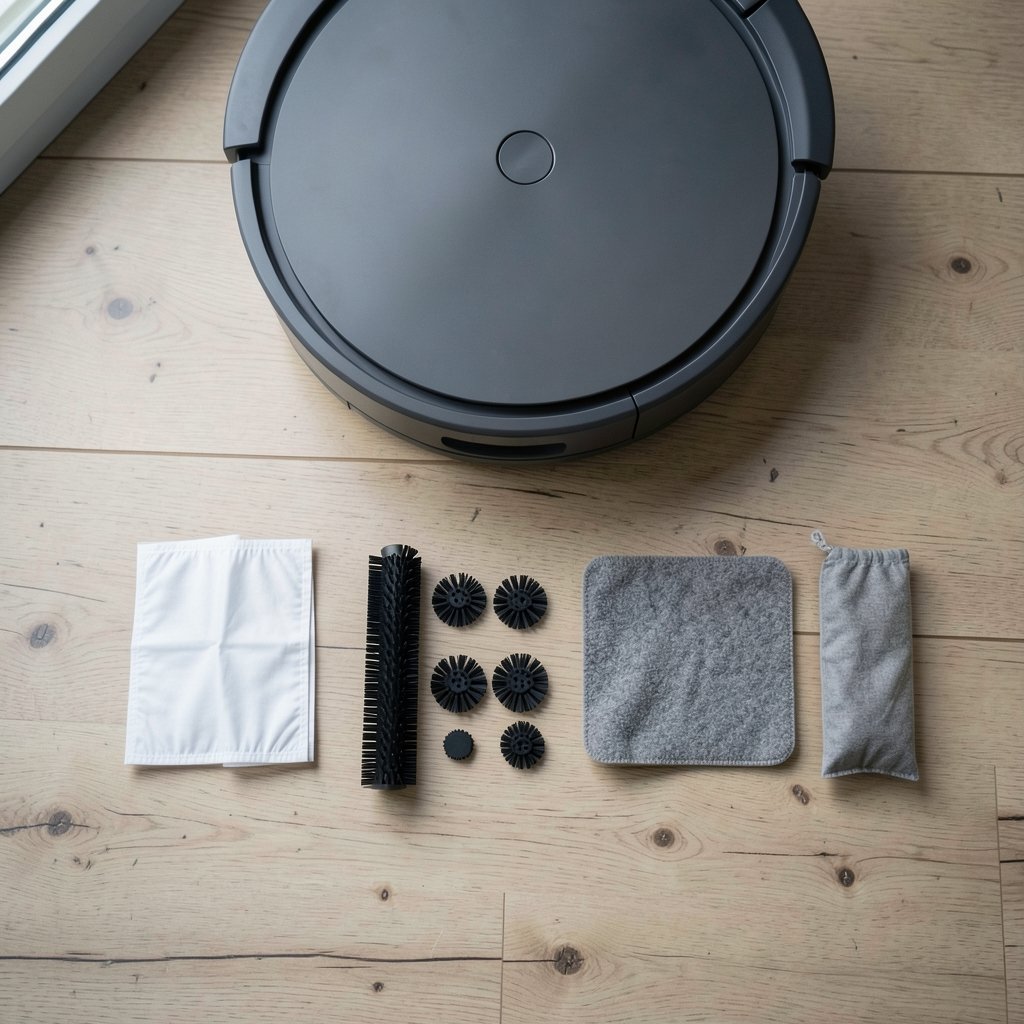
What if the biggest cost of a robot vacuum isn’t the machine at all, but the steady drip of filters, brushes, mop pads, and bags it chews through every year? Buyers comparing Roborock and Dreame usually fixate on suction power and dock features. Then year two arrives, the HEPA filter is clogged, the roller is frayed, and the real question appears: which brand bleeds you slower after the warranty ends?
The short answer is that Roborock generally wins on parts availability and predictable consumable pricing, while Dreame can be cheaper on certain hardware items but harder to source in some regions. The longer answer involves annual consumable budgets, out-of-warranty repairs, and a few traps that catch first-time owners.
The Side-by-Side Comparison at a Glance
Here is how the two brands stack up on the criteria that actually drive long-term cost.
| Cost Factor | Roborock | Dreame |
|---|---|---|
| Parts availability | Excellent, wide EU and global supply | Good, but some components only from China |
| Annual consumables (budget estimate) | Roughly €110–170/year for a basic model with compatible parts | Similar consumables, but fewer third-party options |
| Dust bags (dock models) | $22–30 per 6-pack | $24–32 per 6-pack |
| HEPA filters | $18–26 per 4-pack | $20–28 per 4-pack |
| Main roller | About $24 for a DuoRoller 2-piece set | $22 standard, $48 for TriCut |
| Battery replacement | Modular, standard lithium-ion cells | Modular, similar pricing |
| LiDAR module replacement | Widely available | Available, but pricier to source |
| Common failure points | Brushes, LiDAR, battery | Mopping system, battery, roller |
The pattern is subtle but consistent. On paper, the two brands are within a few dollars of each other on most consumables. In practice, the gap widens the moment you need a specific part rather than a generic one.
Why Parts Availability Matters More Than Sticker Price
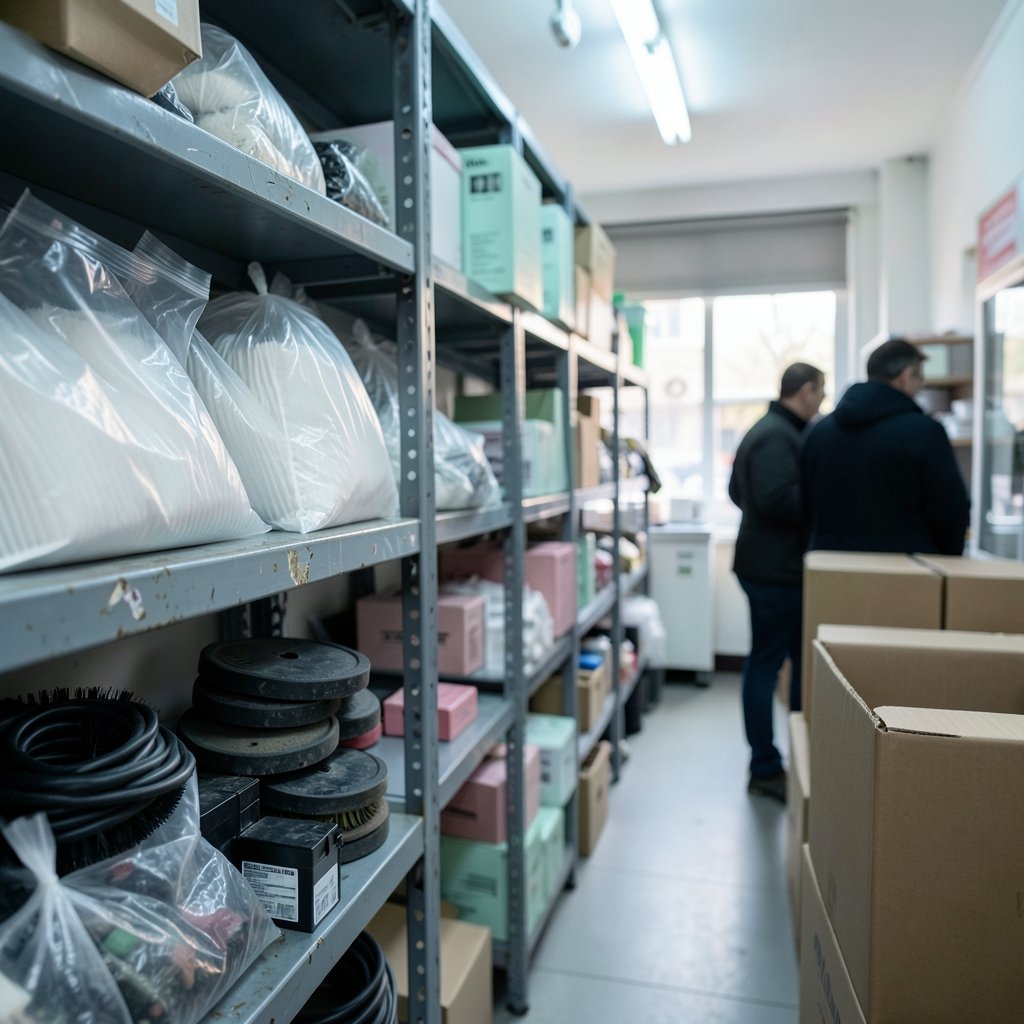
A replacement filter that costs €8 means nothing if it takes five weeks to arrive. This is where the brands genuinely diverge.
Roborock builds its machines on a modular layout. The battery, side brushes, main brush, dustbin, and LiDAR module are all removable and replaceable, and the spare parts market across Europe is broad. Dreame also uses a modern modular design, but basic consumables are the main thing readily available in the EU, while specific components often have to be ordered from China.
That difference shows up in two ways. First, downtime: a broken LiDAR on a Roborock can often be fixed within days. Second, price competition: when multiple sellers stock the same part, prices fall.
Third-party consumables make the gap even wider. A compatible filter set can cost a fraction of the original, and a full compatible kit for a Roborock Q7 (main brush, two side brushes, two filters, two mop pads) plus a mid-year filter and pad top-up lands around 110–170 lei per year. Original-only buyers pay noticeably more for the same coverage.
The Annual Consumables Budget, Broken Down
Most owners underestimate this line item. Here is what a realistic year looks like for each brand, based on published replacement schedules.
Dust bags
Dock-equipped models need a new bag roughly every six to eight weeks, so about six to eight bags per year. Roborock 6-packs run $22–30; Dreame 6-packs run $24–32. The difference is trivial.
HEPA filters
Filters should be swapped every three to six months, meaning three to four per year. Roborock 4-packs cost $18–26, Dreame 4-packs $20–28. Again, close enough that it should not decide your purchase.
Main rollers and brushes
The main roller assembly lasts six to twelve months. Roborock’s DuoRoller 2-piece set is around $24. Dreame’s standard roller is about $22, but its TriCut brush jumps to roughly $48. If your home has pets or long hair, that TriCut premium is worth factoring in.
Mop pads
Spinning microfiber pads need replacing every three to six months. Here Roborock’s stronger mopping pressure and higher mop lift mean pads wear about 15–20% faster in mopping-heavy households, adding an estimated $40–60 over five years compared with a Dreame flagship.
Add it up and a typical household spends somewhere between €100 and €200 per year on consumables, depending on floor type, pet hair, and whether they buy original or compatible parts. Over five years, that is a meaningful second purchase.
If you are already tracking subscription-style recurring costs elsewhere, the same discipline applies here: the review of what free tools actually cost you makes a useful mental model for spotting hidden recurring expenses before they pile up. (Manychat pricing 2027 instagram automation really costs you)
Out-of-Warranty Repairs: Where the Real Money Goes
Consumables are predictable. Repairs are not. Once a machine is out of warranty, the cost of core components dominates the conversation.
For Dreame’s S-series, out-of-warranty repairs run roughly 700 yuan or more for a mainboard, 500 yuan or more for a battery, and 600–900 yuan for the LiDAR. Ecovacs X-series mainboards sit around 600–900 yuan, and Roborock’s G-series mainboards run 600–800 yuan with LiDAR around 600 yuan, placing Roborock in the middle of the industry range on repair cost.
Across brands, a battery replacement typically costs 85–300 yuan depending on whether you choose a compatible or original cell, while motor faults run 500–1,000 yuan and sensor faults 300–800 yuan. Mainboard repairs on premium models can reach 1,000–2,800 yuan, which in extreme cases approaches the price of a new machine.
The practical lesson: never throw a broken robot vacuum away. Both brands are repairable, and labor costs are essentially identical between them. What differs is how easily and cheaply you can get the part.
The Xiaomi Factor Nobody Mentions
Roborock and Dreame both belong to the Xiaomi ecosystem, and Xiaomi’s Mijia line competes on the same shelf. Its parts sit in a similar price band: laser distance sensors around 460 yuan, drive wheels 85–110 yuan, fan assemblies 75–142 yuan, batteries 120–230 yuan, and radar modules around 219 yuan.
The catch is compatibility. Xiaomi parts are cheap but model-specific, and cross-model swapping is limited. Roborock, by contrast, deliberately shares components across models in the same generation: the filters for a Q Revo MaxV fit the Qrevo S, and side brushes are universal across most recent models. That design choice quietly lowers ownership cost because you can buy in bulk and stock one drawer of spares.
Original vs Compatible Parts: What Actually Works
This is where first-time owners make their most expensive mistake. They assume original parts are the only safe option, then overpay for years.
Compatible parts typically cost 30–70% of original prices. Mop pads can run as low as a couple of euros each in multi-packs, filters a few euros per unit, dust bags under two euros each, and brush sets 15–29 yuan. For high-wear items like mop pads and dust bags, compatible options are usually fine.
Where should you insist on original? Three places:
- LiDAR and sensor modules. Precision navigation components are the wrong place to save money. Cheap sensors cause mapping errors that make the whole robot feel broken.
- Batteries. A low-quality cell degrades fast and can swell. Buy from a reputable seller with a clear capacity rating.
- Mainboards. Never gamble on a no-name board.
A sensible split is compatible consumables, original electronics. That single rule can cut annual costs by a third without hurting performance.
Choose Roborock If… Choose Dreame If…
Verdicts are more useful than hedges, so here they are.
Choose Roborock if you want the lowest-friction ownership experience: the widest parts availability, cross-model compatibility, a deep resale and support network, and predictable repair pricing. It suits households that plan to keep a robot for five years or more, and anyone living somewhere spare parts arrive slowly.
Choose Dreame if you want the most hardware per dollar up front and do not mind sourcing the occasional component from China. Its standard roller is cheaper than Roborock’s, and its flagship hardware is aggressive on price. Just budget for the TriCut brush premium if you have pets.
Choose Xiaomi if budget is the dominant concern and you are comfortable with model-specific parts.
Whichever brand you pick, the same rule applies as with any recurring expense: know the true cost before you commit. The same logic behind the real cost of free AI tools applies to robot vacuums, where the purchase price is only the entry ticket.
Practical Tips That Save Real Money
These habits separate owners who spend €80 a year from those who spend €250.
- Buy consumables in multi-packs, not singles. A 4-pack of filters costs far less per unit than four individual purchases.
- Rinse and rotate mop pads. Alternating two sets doubles their usable life.
- Clean the filter instead of replacing it early. Tap it out weekly and wash it monthly where the manufacturer allows. Filters fail from saturation, not from age.
- Keep the brush free of hair. Tangled rollers burn out motors, and a motor replacement costs many times more than a brush.
- Register the warranty and keep the receipt. Dreame’s S-series carries a two-year whole-machine warranty, and non-human faults are fully covered during that window.
- Stock one spare of each high-wear item. A spare roller and filter set means you never wait weeks for a delivery.
One more mistake worth naming: buying a flagship with an auto-empty dock and then balking at bag prices. Bags are the single most predictable recurring cost on dock models. If six to eight bags a year at $22–32 per pack feels annoying, a dockless model may suit you better.
Conclusion
The Roborock versus Dreame replacement parts question does not have a dramatic winner. On consumables, the two brands are within a few dollars of each other on filters, bags, and rollers. On availability, Roborock pulls ahead with broader EU supply, cross-model compatibility, and easier sourcing. On hardware-per-dollar, Dreame holds its own, though the TriCut brush and China-only components can surprise owners later.
The smart move is to budget for roughly €100–200 per year in consumables regardless of brand, split your spending between compatible wear items and original electronics, and check parts availability in your own country before you buy. Do that, and the robot stays a convenience rather than a subscription.
Frequently Asked Questions
How much do Roborock replacement parts cost per year?
A typical household spends roughly €110–170 per year on compatible consumables for a basic Roborock model, covering a full kit plus a mid-year filter and mop pad top-up. Original-only buyers pay more. Dock models add dust bags at $22–30 per six-pack.
Are Dreame replacement parts more expensive than Roborock?
Mostly comparable, with a few exceptions. Dreame dust bags run $24–32 per six-pack versus $22–30 for Roborock, and filters are $20–28 versus $18–26. The bigger gap is the TriCut brush at about $48, roughly double Roborock’s $24 DuoRoller set.
Can I use third-party parts in a Roborock or Dreame vacuum?
Yes, and for wear items it usually makes sense. Compatible parts cost 30–70% of original prices. Avoid cheap third-party LiDAR modules, mainboards, and batteries, since precision electronics and cells are where quality matters most.
Which brand is cheaper to repair out of warranty?
Labor costs are essentially identical. Roborock’s G-series mainboards run 600–800 yuan and LiDAR around 600 yuan, while Dreame’s S-series mainboards start around 700 yuan with LiDAR at 600–900 yuan. Roborock’s advantage is faster, cheaper access to parts.
How often should I replace robot vacuum filters and brushes?
Filters every three to six months, main rollers every six to twelve months, mop pads every three to six months, and dust bags every six to eight weeks on dock models. Side brushes typically last six to twelve months depending on use.
Do Roborock and Dreame share parts between models?
Roborock deliberately shares components within a generation, so filters and side brushes often fit multiple models. Dreame’s compatibility is narrower, and some specific components are only available from China, which affects both cost and downtime.