

What would you be willing to do every day for twelve straight years?
That question frames Saint Bridget’s 12 Year Prayer, a Catholic devotion with a striking promise attached. On paper, the practice is simple: pray a set of prayers daily, without missing a day, for twelve years. The claim that follows is larger than the practice itself, and it has kept this devotion alive in prayer books and parish pamphlets for centuries.
This article walks through where the devotion comes from, how it is actually structured, what the promises say, and where honest caution is warranted. If you have ever picked up a worn prayer card with “12 Year Prayer” printed at the top and wondered what you were holding, this is for you.
What Is Saint Bridget’s 12 Year Prayer?
Saint Bridget’s 12 Year Prayer is a private devotional practice attributed to St. Bridget of Sweden (Birgitta Birgersdotter, c. 1303–1373). The core structure is a daily cycle of prayers honoring the Seven Sheddings of Christ’s Blood, typically consisting of seven Our Fathers and seven Hail Marys each day, sometimes with additional prayers appended.
The defining feature is the duration. The devotion asks for twelve unbroken years of daily recitation. That number is what gives the prayer its name and its reputation. It is not a novena, not a nine-day sprint, and not something you finish in a week. It is a long, quiet commitment.
One important distinction up front: the 12 Year Prayer is not part of the Church’s official liturgy. It belongs to the broad category of private revelation, which means it is a devotional tradition rather than a doctrine. Catholics are free to practice it, and equally free to ignore it.
Where the Devotion Comes From
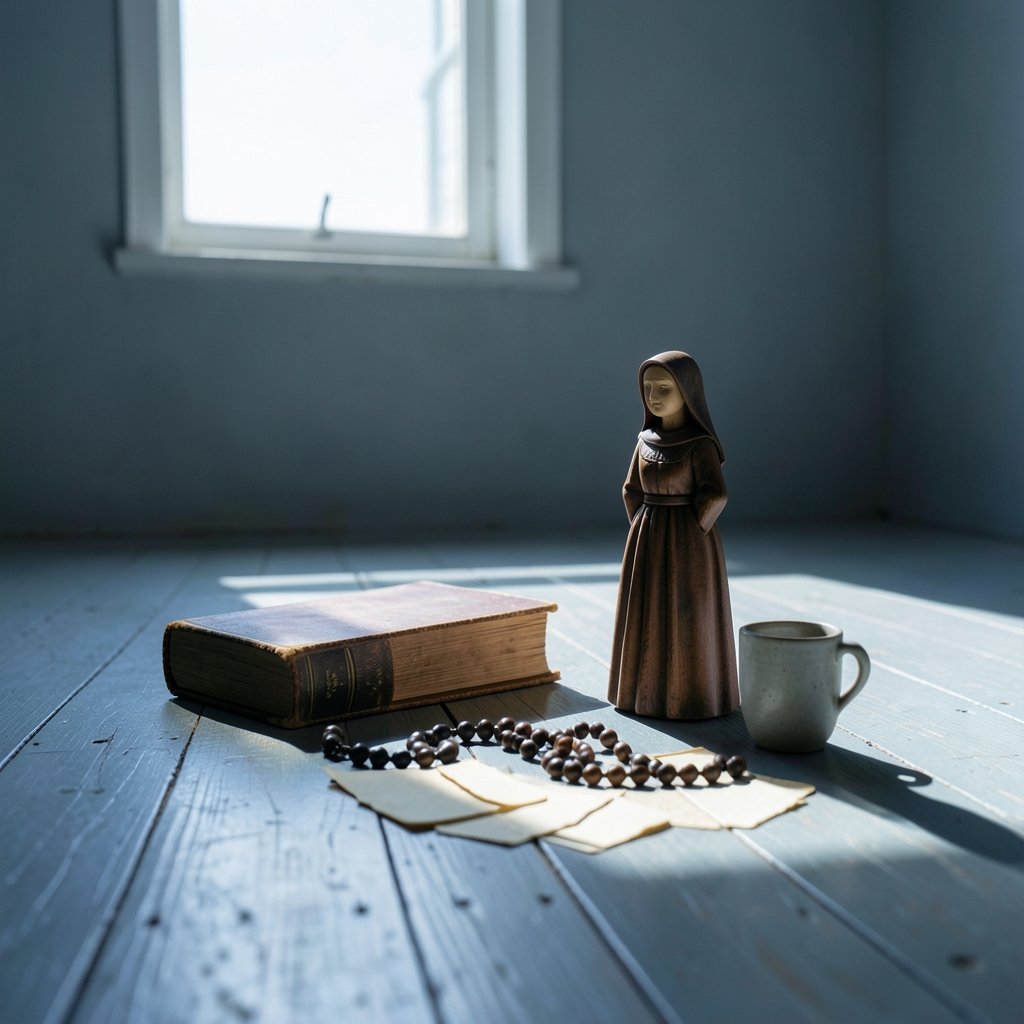
St. Bridget of Sweden was a mystic, a wife, a widow, a mother of eight, and the founder of the Bridgettine order. Her recorded visions were collected into a body of work known as the Revelationes, sometimes called the Liber Caelestis or “Heavenly Book.” She was canonized in 1391 and, centuries later, in 1999, was named a co-patroness of Europe. Her feast day is 23 July in the modern Roman calendar.
The 12 Year Prayer is traditionally framed as a revelation given to Bridget by Christ, with a promise attached to faithful recitation. Here is where readers should slow down.
The specific promise lists that circulate today, often printed as a numbered set of graces or assurances, are widely regarded by scholars as later pious additions rather than authentic Birgittine text. The promises are not straightforwardly located in the Revelationes, and the exact wording varies considerably from one pamphlet to the next. The number of promises cited in popular sources is also inconsistent, commonly appearing as either fifteen or twenty-one depending on which printing you happen to pick up.
None of this makes the devotion worthless. It does mean the promises should be read as devotional tradition, not as guaranteed spiritual contracts.
How the Prayer Is Actually Prayed
The practical structure of the devotion is refreshingly uncomplicated. Most versions follow a pattern like this:
- Begin with the Sign of the Cross and an opening prayer.
- Pray seven Our Fathers, meditating on the Seven Sheddings of Christ’s Blood.
- Pray seven Hail Marys alongside those meditations.
- Optionally add the Prayer to St. Bridget or a closing prayer.
- Repeat daily, without a break, for twelve years.
Some prayer books add a Creed and a Salve Regina at the start. Others include a short reflection before each Our Father, walking through the seven times Christ’s blood was shed, from the circumcision to the piercing of his side. The variations are real, and they matter less than people think. The devotion is not a legal formula where one wrong word voids the whole thing.
If you have ever tried to keep a daily practice for years rather than weeks, you already know the actual difficulty. The challenge is not the theology. It is Tuesday night in year four when you are tired and cannot remember whether you already prayed.
Practical Tips That Actually Help
Long-haul devotions fail for mundane reasons, not spiritual ones. A few habits make the difference between finishing twelve years and quietly stopping in month three.
Anchor it to something you already do. Pair the prayer with an existing daily routine, such as morning coffee or the last few minutes before bed. New habits that attach to old ones survive far better than habits that float free.
Keep a simple written record. A one-page calendar with a tick per day removes the guessing. This sounds fussy until the first time you genuinely cannot recall whether today’s prayer happened.
Use a physical prayer card. Screens invite distraction. A card in a missal or on a nightstand gets used.
Do not restart from zero after a missed day. This is the most common mistake people make. Missing a day does not erase the years already prayed. The devotion is not a high-score run in a video game. Pick it back up and continue.
Lower the bar on hard days. Seven short prayers take only a few minutes. On an exhausting day, pray them slowly and briefly rather than skipping entirely.
Tell one person. A friend who asks occasionally how it is going does more for consistency than any app.
What the Promises Say, and How to Read Them
The promises attached to the devotion are dramatic. Depending on the version, they include assurances about release from purgatory, special graces at the hour of death, protection from sudden death, and the presence of the saints at the deathbed.
Here is the balanced way to hold that.
The Church treats private revelation cautiously as a general principle. Such revelations are judged by whether they lead people toward Christ and the sacraments, not by whether every detail in a devotional pamphlet can be historically verified. The specific promise list attached to the 12 Year Prayer is best understood as pious devotional literature that grew up around Bridget’s name over centuries.
That is not a dismissal. It is a category correction. A Catholic who prays the 12 Year Prayer is doing something legitimate and traditional. A Catholic who treats the printed promises as a guaranteed transaction has misunderstood what the devotion is.
The same caution applies to how this devotion sits alongside other long-horizon commitments people make. Readers researching multi-year undertakings of any kind tend to run into the same problem: grand promises are easy to print and hard to verify. The same discipline of checking the source applies whether you are reading a devotional pamphlet or a cost projection. A useful parallel is the way careful buyers approach long-term technology spending, where the build vs buy AI three-year cost analysis depends entirely on whether the underlying claims hold up under scrutiny. Devotional promises deserve the same honest reading.
Where Bridget’s Story Fits in a Longer Tradition
St. Bridget is one of those figures whose influence outlasted her own century by a wide margin. She was a fourteenth-century European mystic whose order, writings, and reputation traveled across the continent and eventually around the world. Devotions attached to her name multiplied long after her death, which is exactly how a twelve-year prayer cycle ends up in a modern parish pamphlet.
That pattern is not unusual. Religious practices often outgrow their origins. A good comparison is how the clarinet, a woodwind with roots going back roughly three centuries, transformed from a modest orchestral instrument into a jazz and orchestra staple through adoption rather than design. The story of how a 300-year-old woodwind became a jazz and orchestra star is a reminder that traditions evolve through use. Devotions do the same thing. They live in the hands of the people who keep praying them.
Common Misconceptions Worth Clearing Up
Several ideas about this devotion circulate widely and deserve correction.
Misconception: It is a nine-day novena. No. Twelve years is the whole point. Confusing it with a novena leads to disappointment.
Misconception: The promises are official Church teaching. No. They are private devotional material, and the Church has never declared them binding on the faithful.
Misconception: You must start on a specific date. No. There is no required liturgical start date in the standard devotional form. People begin on ordinary days.
Misconception: A missed day cancels everything. No. This is the most discouraging myth of all, and it is not how devotional practice works.
Misconception: It replaces the sacraments. No. A private devotion is a supplement to ordinary Christian practice, not a substitute for it.
Who This Devotion Suits, and Who It Does Not
The 12 Year Prayer suits people who want structure and longevity in their spiritual life. It appeals to those who have tried short devotions and found them fleeting, and to people who like a concrete daily task. It also appeals to those praying for a specific long-term intention, such as the faith of a family member.
It does not suit people looking for a quick result, a guaranteed outcome, or a replacement for the sacramental life of the Church. Anyone prone to scrupulosity, meaning an unhealthy anxiety about getting religious practices exactly right, should be careful. A devotion built around an unbroken daily streak can feed that anxiety rather than calm it. If that sounds familiar, a shorter and gentler practice may serve better.
A Note on Time and Commitment
Twelve years is a long time in anyone’s life. It is roughly the span between starting secondary school and finishing university. It is long enough to contain job changes, moves, illnesses, and grief. Framing the commitment honestly at the start prevents the quiet abandonment that happens when reality arrives.
Some people find it helps to think of the twelve years not as a contract but as a direction. The point is the turning back, day after day, toward something larger than the day itself. That framing is more durable than a countdown.
If you are weighing a multi-year commitment of any kind, whether devotional or practical, it helps to know what you are signing up for before you begin. The same principle shows up in everyday decisions about money and time, like the way families think through realistic plans for young people earning their first income, as explored in these realistic ideas for making money as a 12 year old and the more serious real jobs that actually pay for a 14 year old. Long commitments reward clear expectations.
Conclusion
Saint Bridget’s 12 Year Prayer is a genuine, long-standing Catholic devotion with a simple daily structure and an outsized reputation. Its core is modest: seven Our Fathers and seven Hail Marys, prayed daily, honoring the Seven Sheddings of Christ’s Blood. Its duration is what makes it memorable, and its promise list is what makes it controversial.
The balanced view is this. The devotion is legitimate, the practice is worthwhile for those drawn to it, and the dramatic promises should be read as devotional tradition rather than guaranteed outcomes. St. Bridget herself remains a canonized saint and a co-patroness of Europe. The prayer attached to her name is a private devotion that has helped many people pray steadily for years.
If it appeals, start small and start today. If it does not, that is entirely fine. The Church has never required it, and twelve years is a long time to spend on anything you did not actually want to do.
Frequently Asked Questions
What is Saint Bridget’s 12 Year Prayer?
It is a private Catholic devotion attributed to St. Bridget of Sweden. It involves praying a set of prayers daily, usually seven Our Fathers and seven Hail Marys honoring the Seven Sheddings of Christ’s Blood, every day for twelve years.
Are the promises of the 12 Year Prayer officially approved by the Church?
No. The promises are private devotional material, and the specific list is widely regarded by scholars as a later addition rather than authentic Birgittine text. The devotion itself is permitted, but the promises are not binding Church teaching.
What happens if I miss a day during the twelve years?
Nothing catastrophic. The common advice is to continue rather than restart. Missing a day does not erase the years already prayed, and treating the devotion as an unbreakable streak tends to cause people to quit entirely.
How long does the prayer take each day?
Usually only a few minutes. Seven Our Fathers and seven Hail Marys prayed at a normal pace take roughly five to ten minutes, depending on whether additional prayers or reflections are included.
Can non-Catholics pray the 12 Year Prayer?
Anyone can pray it, since it is a devotional practice rather than a sacrament. Non-Catholics who find the structure meaningful are free to use it, though the promises are framed within Catholic devotional tradition.
Is the 12 Year Prayer the same as a novena?
No. A novena is traditionally nine days. The 12 Year Prayer is a multi-year daily commitment, which is a completely different scale of practice and is often confused with a novena in casual conversation.



