Sakana AI’s CEO says its homegrown models are about more than Japan’s national security, and the company’s new foundation model is designed to prove it. Sakana AI, a Tokyo-based startup, will begin work this month on Sawara, its own foundation model, with a smaller-scale version aimed for release in early 2027 and a larger version to follow. The project has drawn attention for its potential impact on Japan’s defence and cybersecurity sectors, but co-founder and chief executive David Ha says the longer story is about Japanese industry.
Ha told TechCrunch that Sawara is part of Sakana’s broader goal of supporting and strengthening Japan’s industrial and manufacturing sectors using AI. The company started planning the model with physical AI, manufacturing and industry in mind, and Ha says that remains the long-term vision. In the short term, though, he says Japan has a real need for security-related capabilities as well, and Sawara is meant to serve both purposes at once.
The announcement lands at a moment when governments around the world are asking how much of their AI capability they should build themselves. Sakana’s answer is that Japan should keep using American systems while also building domestic alternatives, particularly for sensitive applications where access to foreign models could one day be limited.
Key takeaways
- Sakana AI will begin building its own foundation model, Sawara, in November 2026, aiming for a smaller release in early 2027 and a larger version later.
- CEO David Ha says Sawara serves Japan’s industrial and manufacturing sectors first, with security capabilities as a near-term need.
- The small model is designed for on-premises deployment, which Japanese cybersecurity and government work often requires.
- Sakana already runs Fugu, an orchestration system, and Namazu, a Japanese-focused model built by fine-tuning open-weight models from Meta and DeepSeek.
- Ha says Japan will keep using US systems but wants domestic alternatives for defence and sensitive applications, and he has no near-term plans for an IPO.
| System | What it is | Status |
|---|---|---|
| Sawara | Homegrown foundation model, trained from scratch | Work begins November 2026; small model early 2027 |
| Fugu | Orchestration system that combines models into agents | Launched about five months before November 2026 |
| Namazu | Japanese-focused model fine-tuned from Meta and DeepSeek open-weight models | Already built and in use |
| Government work | Disinformation detection and multimodal data analysis | Contracts with the Ministry of Defense and the Ministry of Internal Affairs and Communications |
What Sawara is, and when it arrives
Sawara is Sakana AI’s first foundation model built from scratch, and it is the piece that turns the company into what Ha calls a full-stack AI company. Until now, Sakana has built its products on top of other companies’ models, fine-tuning and orchestrating them for Japanese users. Sawara changes that by adding the pre-training stage itself — the expensive, compute-heavy process of training a large model on vast amounts of data before it is adapted for specific jobs.
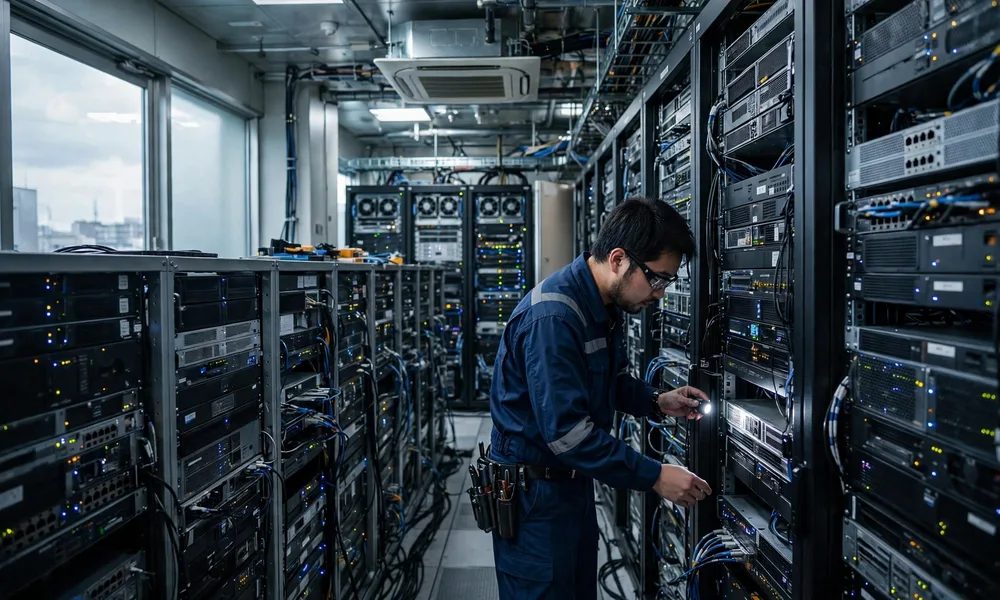
The plan, as Ha described it to TechCrunch, is to train two versions. A smaller model comes first, targeted for early 2027, followed by a larger version. The small model is particularly important because it is designed for on-premises deployment, running on a customer’s own computers rather than in a distant data centre. Ha was direct about why that matters: Japan needs on-premises deployment capabilities, and in cybersecurity, the country requires that customised models be deployed on-premises.
Why Japan’s industry comes first
The most quoted line from Ha’s interview is about security, but the company’s long-term vision points somewhere else. “When we started planning for this model, of course, we had physical AI, manufacturing, and industry in mind, and we still do. This is our long-term vision,” Ha said. “But short-term, I think Japan has a real need for security-related capabilities as well.” The order matters: industry first, security as the urgent near-term application.
Japan’s manufacturing sector is the reason. The country is home to some of the world’s most advanced factories, robotics companies and carmakers, and those industries run on precision, reliability and deep domain knowledge. A general-purpose model trained mostly on English-language internet text is not automatically good at the work of a Japanese factory floor. Sakana’s bet is that a model designed from the start with Japanese industry in mind — its language, its business practices, its engineering standards — will be more useful there than a borrowed model adapted after the fact.
The problem with borrowed models
Ha’s sharpest criticism is aimed at the models Japan currently relies on. “We cannot simply use open-weight models as-is in Japan for enterprises because they’re usually biased towards their creators,” he said. “They may refuse to answer questions about Japan or Japanese politics […] they may give Japanese people answers they don’t want to hear.” It is a practical complaint as much as a political one: a model that will not discuss Japanese politics, or that answers Japanese questions through a foreign lens, is a poor tool for a Japanese business or government agency.
The issue is not theoretical. Open-weight models are typically trained by American or Chinese labs, and their behaviour reflects the data and decisions of their creators. For everyday uses that hardly matters. For an enterprise in Tokyo, or a government ministry handling sensitive material, it matters a great deal — and it is compounded by the fact that the model runs on someone else’s infrastructure, under someone else’s rules. A domestic model trained in Japan, on data Japan can audit, removes both problems at once.
Fugu, Namazu and the road to a full stack
Sawara is the third layer of a stack Sakana has been assembling for years. At the top sits Fugu, an AI orchestration system launched about five months before the November 2026 announcement. Fugu ropes in other large language models, including those developed by US AI labs, to assemble AI agents according to the task at hand. It is the system that lets a customer combine the best available models for a particular job, rather than betting everything on a single one.
Below Fugu sits Namazu, the Japanese-focused model that adapts foreign open-weight models for local use. And below Namazu, once it is trained, will sit Sawara — the foundation model that replaces the borrowed base with a homegrown one. Ha described the logic plainly: “The only thing [left] for us to become a full-stack company is the pre-training, Sawara. We plan to apply the [Sawara] technology in industry and manufacturing. We’ll train both a small and a large model next year.”
Government contracts and the defence question
Sakana’s government work is where the national security story comes from, and it is already real. The company signed a research contract with Japan’s Ministry of Defense in July to explore how AI could help analyse and integrate information from multiple sources, and it has also worked with the Ministry of Internal Affairs and Communications on systems for detecting disinformation. Its government-related work currently focuses on two main areas: disinformation detection and analysis, and multimodal systems that integrate data from different government sources.
On defence specifically, Ha is measured rather than sweeping. “Japan will continue to use US systems, but it also wants domestic alternatives,” he said. “People often point to Palantir and other systems. I have a great deal of respect for companies such as Snowflake, Palantir, and Datadog. But for national defense, Japan will want its own systems.” It is a careful position: respect for the American companies that dominate the field, combined with a clear statement that some work can only be done by a Japanese system. He also acknowledged that developing a domestic foundation model alone will not fully eliminate reliance on foreign AI technology.
What it means for Japan’s AI independence
Sawara arrives as governments everywhere are weighing the same question Japan faces: how much of your AI should you own? The United States and China dominate foundation-model development, and most other countries buy access to their systems through APIs and cloud services. That arrangement is fast and cheap, but it leaves the buyer dependent on a foreign provider’s pricing, policies and continued willingness to serve them.
Japan’s answer, as Sakana presents it, is to build a domestic capability without pretending it can replace everything. The country will keep using American systems, and Sakana’s own Fugu will keep orchestrating foreign models alongside its own. What changes is that Japan gains an option: a model it can audit, customise and run on its own hardware, for the work that cannot be sent abroad.
What to watch as Sawara takes shape
- The small model: a smaller-scale Sawara is targeted for early 2027, and its performance on Japanese industrial tasks will be the first real test.
- On-premises deployments: watch for Japanese companies and agencies running Sawara on their own hardware, which is the model’s core selling point.
- The larger model: a bigger version follows the small one, and its scale will show how far Sakana intends to compete with US and Chinese labs.
- Government adoption: further contracts with the Ministry of Defense or other ministries would confirm that the security case is landing.
- Industrial partnerships: deals with Japanese manufacturers would show that the long-term vision, not just the security story, is gaining traction.
- The IPO question: Ha says there are no near-term plans to go public, but he expects Sakana to eventually list in Japan.
Frequently asked questions
What is Sawara?
Sawara is Sakana AI’s homegrown foundation model, trained from scratch in Japan. Work begins in November 2026, with a smaller-scale model aimed for early 2027 and a larger version to follow.
Why is Sakana AI building its own foundation model?
CEO David Ha says Japan needs domestic AI alternatives for sensitive applications, particularly if access to foreign models becomes limited. Foreign models can be biased toward their creators and may refuse questions about Japan, and cybersecurity work in Japan often requires on-premises deployment.
Is Sawara only about national security?
No. Ha says the long-term vision is Japan’s industrial and manufacturing sectors, including physical AI and factory work. Security capabilities are the short-term need, but industry is the larger goal.
What are Fugu and Namazu?
Fugu is Sakana’s orchestration system, launched about five months before November 2026, which combines models from different labs into AI agents. Namazu is a Japanese-focused model that fine-tunes open-weight models from Meta and DeepSeek for Japanese language, culture and business needs.
Will Japan stop using American AI systems?
No. Ha says Japan will continue to use US systems, and Sakana’s Fugu continues to incorporate models from American labs. Sawara is a domestic alternative for applications where a foreign model is not enough, such as national defence and on-premises cybersecurity work.
Is Sakana AI planning an IPO?
Ha says the company has no near-term plans to go public, and that reported timing and valuations were speculative. He expects Sakana to eventually list in Japan, saying the company has a gravitational pull to IPO there.
Bottom line
Sakana AI’s CEO says its homegrown models are about more than Japan’s national security, and the details of the Sawara project support him. The model is designed first for Japanese industry and manufacturing, with on-premises deployment that factories and government agencies actually need, and the security applications follow from that design rather than driving it. The company’s stack — Fugu on top, Namazu in the middle, Sawara at the base — shows a deliberate path from borrowing other labs’ models to training its own.
Whether Sawara succeeds will be decided by the small model due in early 2027, and by whether Japanese manufacturers and ministries actually run it on their own hardware. If they do, Sakana will have given Japan something it does not have today: a foundation model it can audit, customise and control.