
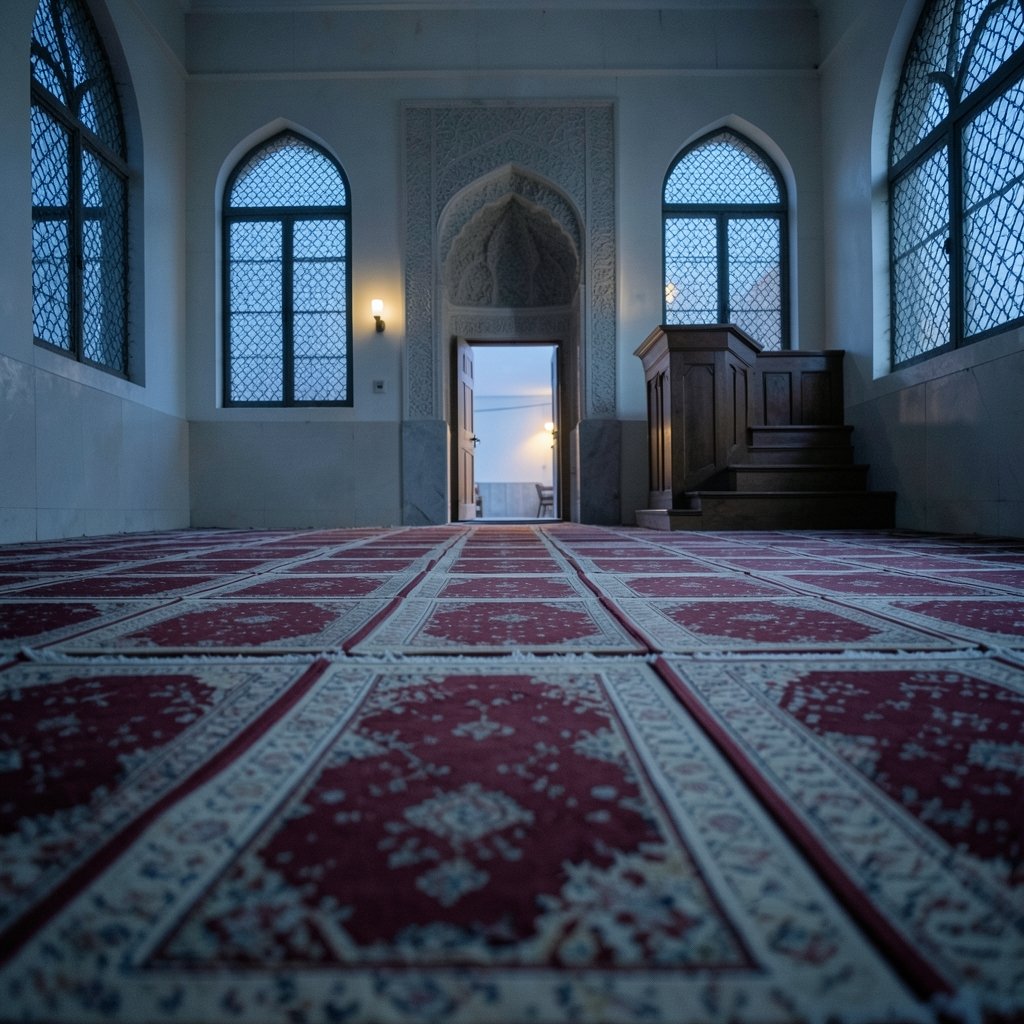
What makes Friday different from every other day in the Islamic week? For millions of Muslims, the answer comes down to one ritual: salat al-Juma, the Friday congregational prayer. It replaces the regular noon prayer, brings a whole community into one space, and comes wrapped in rules about who must attend, what the sermon must contain, and what happens when someone walks in late. It is also one of the most misunderstood practices among non-Muslims, who often assume it is simply a longer version of a daily prayer. It is not.
This article walks through what salat al-Juma actually is, how it is structured, who is obligated to attend, where the schools of law disagree, and the practical mistakes that trip people up. The goal is a clear, balanced picture rather than a single-school manual, because the details genuinely vary across traditions.
What Salat al-Juma Actually Is
Salat al-Juma is the congregational Friday prayer performed at the time of zuhr, the early afternoon prayer. It is a distinct ritual, not merely a zuhr prayer that happens to fall on Friday. For those obliged to attend, it substitutes for the regular zuhr prayer on that day.
The practice rests on the Quran. Surah al-Jumu’ah (Quran 62:9–10) instructs believers to hasten to the remembrance of God when the call to prayer is made on Friday and to leave off trade. After the prayer, the passage allows people to disperse and seek God’s bounty. That two-part movement, gathering and then dispersing, shapes the whole day.
Structurally, salat al-Juma consists of two rak’ahs of prayer preceded by a khutbah, a sermon delivered in two parts, typically from a minbar (pulpit). In most Sunni schools, the khutbah is not optional decoration. It is a condition of the prayer’s validity. Skip the sermon and you have not simply missed a nice speech; you may have missed the prayer itself.
That is the first thing newcomers get wrong. The khutbah is part of the package.
The Khutbah: More Than a Speech
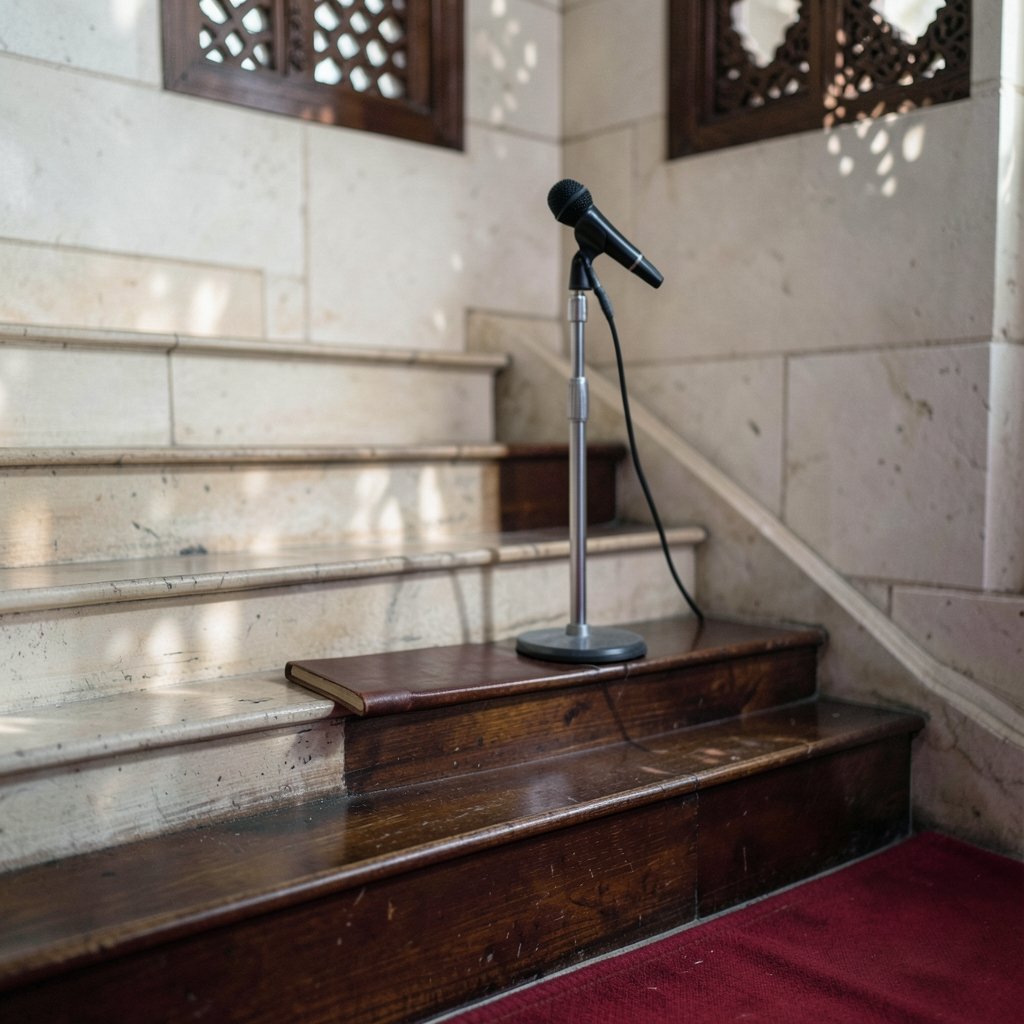
The sermon usually includes Quran recitation, praise of God, exhortation to the congregation, and often a supplication for the wider Muslim community. In some traditions it also includes prayers for rulers or public figures, a detail that has historically carried political weight.
In practice, the khutbah sets the tone for the entire gathering. A few practical observations are worth flagging:
- Arrive before the sermon starts. Latecomers who arrive mid-khutbah should still sit and listen rather than chatting or stepping over people. The sermon is the front half of the ritual, not a warm-up act.
- Silence is expected. Talking during the khutbah is widely discouraged, and in many communities it is treated as undermining the prayer’s purpose.
- The two parts are separated. The preacher typically sits briefly between the two halves. That pause is deliberate and should not be treated as a break for conversation.
- Language varies. In some communities the khutbah is delivered in Arabic; in others it is delivered in the local language, with Arabic reserved for Quranic passages and supplications. Practice differs widely by region and school.
One common mistake is treating the khutbah as a lecture to be evaluated rather than a ritual component to be attended. Another is arriving at the exact moment the prayer begins, having missed the sermon entirely, and then wondering why the prayer felt incomplete.
Who Must Attend, and Who Is Exempt
The general picture is consistent across the major schools: salat al-Juma is generally obligatory on adult, sane, resident Muslim men. Most schools exempt women, travelers, the sick, and others from the obligation, though women may attend. The Hanafi school and others differ on the precise conditions, so a single universal rule does not exist.
A useful way to think about it is that the obligation is real but conditional. The conditions are not loopholes. They reflect a ritual designed to be sustainable, one that does not demand attendance from people for whom the trip would be a genuine hardship.
Practical points that come up again and again:
- Women’s attendance is permitted, not prohibited. The exemption is from obligation, not from participation.
- Travelers are generally exempt while on the road, though definitions of travel vary by school.
- Illness and caregiving responsibilities are commonly recognized grounds for exemption.
- Local custom matters. In many communities, attendance patterns are shaped as much by work schedules and mosque capacity as by legal rulings.
The most frequent practical mistake here is treating an exemption as a prohibition. Someone exempt from the obligation has not been banned from attending.
Where the Schools of Law Disagree
The contested points are worth naming honestly rather than smoothing over. Sunni schools set minimum attendance numbers for the prayer’s validity, and those numbers differ. The Hanafi tradition commonly cites three or more people besides the imam; the Shafi’i school and others differ. These figures are school-specific, not universal, and readers should treat any single number presented as “the rule” with caution.
Twelver Shia practice adds another layer. Friday prayer is held, but its obligation during the occultation of the Imam is debated among scholars. Some treat it as optional or contingent on a qualified leader. That debate is real and ongoing, not a settled footnote.
When Eid falls on a Friday, several schools hold that attending one of the two prayers suffices, though rulings differ. Again, the variation is the story.
| Question | General Sunni Picture | Notes |
|---|---|---|
| Minimum attendees | Varies by school | Hanafi tradition commonly cites three besides the imam |
| Khutbah required for validity | Yes, in most Sunni schools | Treated as a condition, not an extra |
| Women’s obligation | Generally exempt, may attend | Exemption is from obligation, not participation |
| Traveler obligation | Generally exempt | Definitions of travel vary |
| Eid on a Friday | Attending one prayer may suffice | Rulings differ by school |
The table is a map, not a verdict. Anyone making a real decision should consult a qualified scholar in their own tradition.
Timing, Place, and the Shape of the Day
Salat al-Juma is held at the time of zuhr on Friday. Some traditions allow earlier timing. In practice, the day has a rhythm: preparation, gathering, sermon, prayer, then dispersal. The Quranic passage itself supports that final step, allowing people to return to work and trade after the prayer.
For visitors and newcomers, a few practical tips go a long way:
- Check the mosque’s schedule. Start times vary widely by community and season.
- Dress modestly and arrive early. Seating fills up, and arriving early avoids the awkward shuffle during the sermon.
- Follow the community’s norms on where to sit and how the space is organized. Many mosques separate men’s and women’s areas, though arrangements differ.
- Do not treat it as a spectator event. It is a participatory ritual, and the congregation’s behavior reflects that.
The most common practical error among curious outsiders is arriving mid-sermon without knowing what is happening and then talking. The second most common is assuming the prayer is a quick stop when the full gathering, sermon included, takes considerably longer.
Salat al-Juma in Public Life
In many Muslim-majority countries, Friday prayer is a recognized public institution. In some states, attendance is regulated or state-supported. The specifics vary widely by country, and generalizing across them is risky. What is consistent is that Friday prayer functions as a weekly anchor for community life, a moment when work pauses and people gather.
That social dimension is easy to underestimate. Salat al-Juma is a religious obligation, but it is also a recurring civic rhythm. It creates a predictable weekly gathering point in communities that may have few others.
Common Mistakes and What Actually Works
Practical experience across communities points to a handful of recurring errors. None of them are exotic; most come from treating the prayer as a smaller version of a daily prayer.
Mistake one: skipping the khutbah. The sermon is part of the ritual in most Sunni schools. Arriving only for the two rak’ahs misses the point.
Mistake two: talking during the sermon. This is widely discouraged and undermines the gathering for everyone nearby.
Mistake three: assuming one school’s rules are universal. Minimum attendance numbers, timing, and exemption details differ. Presenting one school’s position as “the Islamic rule” is inaccurate.
Mistake four: treating exemptions as prohibitions. Women, travelers, and the sick are generally exempt from obligation, not barred from attending.
Mistake five: ignoring local custom. Mosque schedules, language of the sermon, and seating arrangements vary. Following the community’s norms is more useful than importing assumptions.
What actually works is simpler: arrive early, listen to the sermon, follow the community’s lead, and ask questions afterward rather than during. That approach respects the ritual and gets you a clearer understanding of it than any amount of pre-reading.
Conclusion
Salat al-Juma is a weekly ritual with a clear structure and a genuinely varied legal landscape. It is two rak’ahs preceded by a two-part sermon, held at zuhr time on Friday, generally obligatory on adult, sane, resident Muslim men, with recognized exemptions for women, travelers, the sick, and others. The schools of law disagree on minimum attendance numbers, on some timing questions, and on how Eid conflicts are handled. Those disagreements are part of the tradition, not a flaw in it.
For anyone trying to understand the practice, the practical takeaways are straightforward. The khutbah matters. The exemptions are real. Local custom shapes far more of the experience than abstract rules do. And the best way to learn the ritual is to attend with respect, arrive early, and listen.
For readers who want to go deeper into related practices and community resources, occcy.com is a useful starting point.
Frequently Asked Questions
What is salat al-Juma?
Salat al-Juma is the congregational Friday prayer in Islam, performed at the time of zuhr. It consists of two rak’ahs preceded by a khutbah, a sermon delivered in two parts. For those obliged to attend, it replaces the regular zuhr prayer on Friday. It is a distinct ritual rather than a Friday-timed version of the daily noon prayer.
Is attending salat al-Juma obligatory for everyone?
No. The general picture across the major schools is that it is obligatory on adult, sane, resident Muslim men. Most schools exempt women, travelers, the sick, and others from the obligation, though women may attend. The Hanafi school and others differ on precise conditions, so the details are school-specific rather than universal.
What happens if you miss the khutbah?
In most Sunni schools, the khutbah is a condition of the prayer’s validity, so missing it entirely is a serious matter rather than a minor omission. Latecomers who arrive mid-sermon should still sit and listen quietly. Practices vary by community, so asking locally is the practical move.
Do women have to attend Friday prayer?
Women are generally exempt from the obligation, but they may attend. The exemption is from obligation, not a prohibition on participation. Attendance patterns vary widely by community and are shaped by local custom, mosque arrangements, and personal circumstances as much as by legal rulings.
How many people are needed for the prayer to be valid?
The Sunni schools set minimum attendance numbers, and those numbers differ. The Hanafi tradition commonly cites three or more people besides the imam, while the Shafi’i school and others differ. These figures are school-specific, and presenting any single number as the universal rule would be inaccurate.
What happens when Eid falls on a Friday?
Several schools hold that attending one of the two prayers, Eid or Friday, suffices when they coincide, though rulings differ across traditions. The practical guidance is to follow the position of one’s own school or local scholar rather than assuming a single answer applies everywhere.



