

What happens when a security team gets 4,000 alerts in a single day and has staff to investigate only a fraction? That question drives the security orchestration debate. Security orchestration promises to connect scattered tools, automate repetitive work, and let analysts focus on real threats. But it is not the only path. SIEM platforms, XDR suites, managed detection services, and manual processes all compete for the same budget line. (Best internet security australia)
This article compares orchestration against those alternatives in practical terms. It covers where each approach wins, where it quietly fails, and the mistakes teams make when rolling one out. No vendor hype, just the trade-offs that show up after the purchase order is signed. (Steam deck out of stock alternatives 2026)
What Security Orchestration Actually Does
Security orchestration is the coordination layer that ties separate security tools together and runs response steps automatically. It usually lives inside a SOAR platform, short for security orchestration, automation and response. The orchestration part handles integration: pulling alerts from a SIEM, checking an endpoint tool, querying threat intelligence, and opening a ticket. The automation part runs playbooks, which are predefined workflows triggered by specific conditions.
A typical playbook looks like this:
- An alert fires for a suspicious login from a new country.
- The platform enriches it with user identity, device posture, and IP reputation data.
- It checks whether the account has privileged access.
- If risk is high, it disables the session and notifies the on-call analyst.
- It logs every action for audit purposes.
The appeal is obvious. Humans are slow and inconsistent at steps two through five, especially at 3 a.m. Machines are fast and repeatable. The catch is that playbooks only work as well as the integrations behind them, and integrations break when vendors change APIs. Anyone who has maintained a large automation library knows the quiet maintenance tax that comes with it.
The Main Alternatives, Side by Side
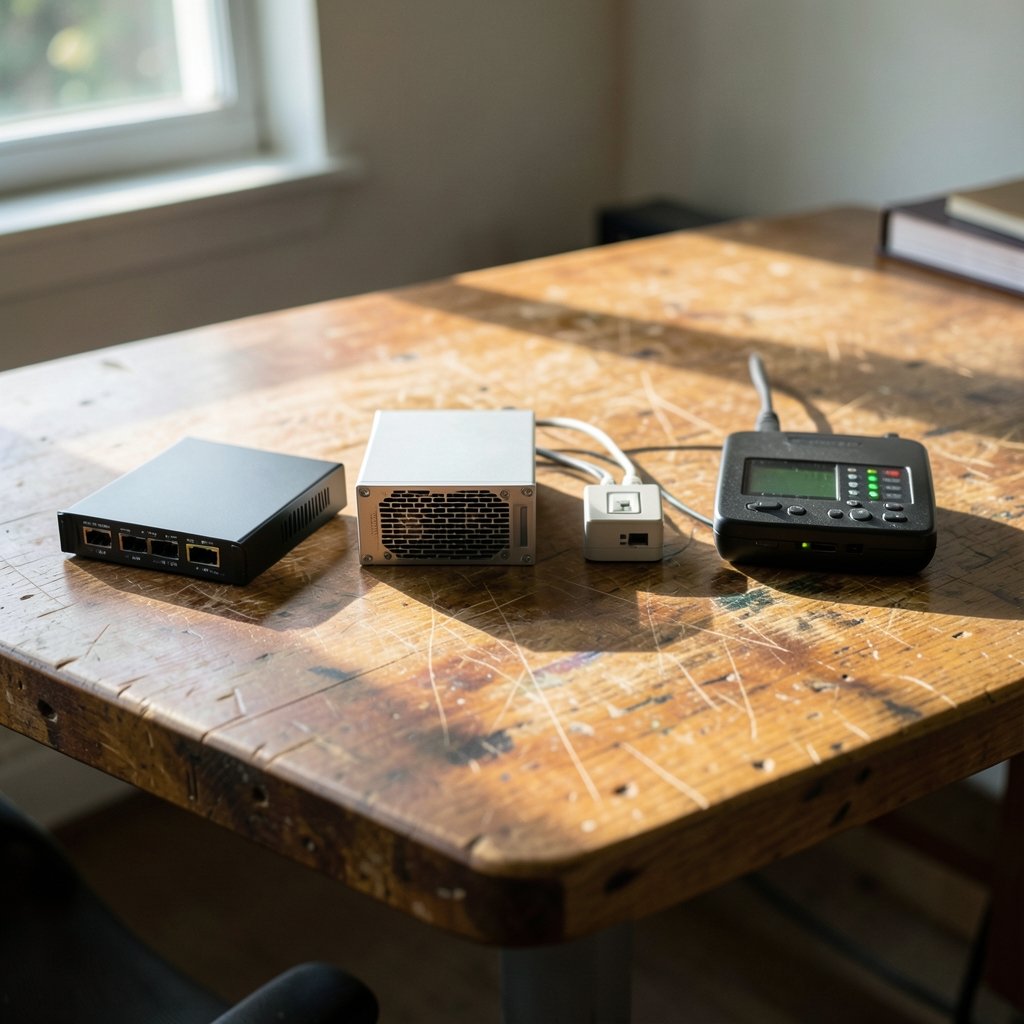
Orchestration rarely gets evaluated in isolation. It competes against several approaches that overlap with it to varying degrees.
| Approach | Core strength | Main weakness | Best fit |
|---|---|---|---|
| SOAR / orchestration | Automates multi-tool workflows | Integration and playbook maintenance | Mature SOCs with many tools |
| SIEM | Log collection, correlation, alerting | Detection-heavy, limited automated response | Teams needing visibility first |
| XDR | Tight integration across endpoint, network, cloud | Often vendor-locked | Teams consolidating vendors |
| MDR services | Human expertise on demand | Less control, recurring cost | Lean teams without 24/7 staff |
| Manual processes | Cheap, flexible, transparent | Slow, inconsistent, burns staff | Very small teams, low alert volume |
The table hides an important truth: these categories increasingly blur. Many SIEM platforms now ship automation features. Many XDR products include playbook engines. The real question is not which category wins but which combination fits a team’s size, tool stack, and maturity.
SIEM: Visibility Before Automation
A SIEM collects logs, correlates events, and generates alerts. It answers the question “what is happening?” far better than “what should we do about it?” That distinction matters. Teams that buy orchestration before they have solid visibility often automate responses to alerts they do not fully trust, which creates its own problems.
The practical pattern that works: get the SIEM producing clean, tuned alerts first. Then automate the responses to the top five noisiest alert types. Skipping straight to a giant automation project usually ends with playbooks nobody trusts. The same logic applies to any technology purchase: match the tool to actual need, not to the spec sheet.
XDR: Consolidation as an Alternative
Extended detection and response bundles endpoint, network, email, and cloud telemetry into one product with built-in detection and response. For teams drowning in tool sprawl, XDR is genuinely attractive because it removes integration work entirely. One vendor, one agent, one console.
The trade-off is lock-in. XDR works best when most telemetry comes from one vendor. Teams with mixed environments, or with regulatory pressure to keep data in specific tools, often find orchestration more flexible. A useful rule of thumb: if more than 70 percent of a team’s security stack comes from one vendor, XDR deserves serious consideration. If the stack is a patchwork, orchestration usually earns its keep. (How much social security will i get at 62)
MDR: Buying Expertise Instead of Building It
Managed detection and response outsources monitoring and response to a specialist provider. For small teams that cannot staff a 24/7 rotation, this is often the most honest answer. No amount of automation replaces a human who knows what a real intrusion looks like at 3 a.m.
The catch is control and cost. Providers follow their own playbooks, and customization is limited. Teams with unusual compliance requirements or highly sensitive data sometimes find that MDR conflicts with internal policy. The best results come when MDR and internal orchestration cooperate: the provider handles triage, and internal playbooks handle environment-specific remediation.
Where Orchestration Genuinely Wins
Orchestration shines in specific, measurable situations. Phishing triage is the classic example. A good playbook pulls the reported email, extracts URLs and attachments, runs them against sandboxes and threat intelligence, checks whether other users received the same message, and quarantines it if needed. What takes an analyst 20 minutes manually takes the platform 90 seconds.
Other strong use cases include:
- Containment speed. Isolating a compromised endpoint the moment a high-confidence detection fires.
- Enrichment at scale. Adding context to every alert so analysts start with answers, not questions.
- Audit trails. Logging every automated action for compliance reviews.
- Consistency. Making sure every analyst handles the same alert type the same way.
The mistake teams make here is automating everything at once. Experienced practitioners start narrow, measure false positive rates, and expand only after a playbook proves reliable for several weeks. Automation that fires incorrectly erodes trust fast, and once analysts stop trusting a playbook, they route around it.
Where Orchestration Falls Short
Honesty matters more than advocacy here. Orchestration has real limits.
Integration debt. Every tool in the stack needs a working integration. Vendors deprecate APIs, change authentication, and rename fields. A playbook library of 200 workflows can consume meaningful engineering time just to keep running.
Alert quality dependency. Automation amplifies whatever the detection layer produces. If the SIEM generates noisy alerts, orchestration just responds to noise faster. Teams often discover this the hard way.
Skill requirements. Building good playbooks requires scripting ability, API knowledge, and an understanding of incident response. It is not a point-and-click exercise, despite what marketing materials suggest.
Cost. Licensing for SOAR platforms can be substantial, and the total cost includes integration work, maintenance, and training. Smaller teams sometimes find the math does not work.
The same scrutiny applies to enterprise tooling generally: total cost of ownership beats sticker price every time. Subscription and maintenance models can quietly outweigh the initial purchase price.
A Practical Decision Framework
Rather than asking “orchestration or something else,” mature teams ask a sequence of questions.
- Is detection tuned? If alerts are noisy, fix detection first. Automation on top of noise makes things worse.
- How many tools need coordination? Fewer than five tools suggests XDR or a bundled suite may be simpler.
- Is there 24/7 coverage? If not, MDR may deliver more value than any automation platform.
- Is there engineering capacity? Playbook maintenance is ongoing work, not a one-time project.
- What is the response time requirement? Regulatory or contractual deadlines for containment push toward automation.
Teams that answer these questions honestly usually find the decision makes itself. The worst outcomes come from buying orchestration because it sounds advanced, then discovering nobody has time to build the playbooks.
Common Mistakes and What Actually Works
Several failure patterns repeat across organizations of every size.
Buying before designing. Teams purchase a platform, then ask what to automate. The better order is to document the top ten manual workflows, measure how long each takes, and automate the slowest, most repetitive ones first.
Automating without guardrails. Every automated action that can disrupt business needs a rollback path and a human approval step for high-impact changes. Disabling accounts and isolating endpoints should never be fully unattended without careful testing.
Ignoring the runbook-to-playbook gap. Written runbooks are often vague (“investigate the alert”). Playbooks need exact steps, exact API calls, and exact conditions. The translation work is where most projects stall.
Skipping measurement. Track mean time to detect, mean time to respond, and false positive rates before and after automation. Without baseline numbers, nobody can prove the investment worked.
What actually works, in practice, looks unglamorous: start small, pick high-volume low-risk alerts, involve the analysts who will use the playbooks daily, and review performance monthly. Teams that follow this path typically automate 30 to 50 percent of tier-one work within a year, which frees real hours for deeper investigation.
How the Alternatives Combine
The most effective setups rarely pick one approach. A common pattern for mid-sized teams combines a tuned SIEM for visibility, a lightweight orchestration layer for the top alert types, and an MDR provider for after-hours coverage. Larger teams often run XDR for endpoint-centric threats alongside orchestration for cross-tool workflows.
The unifying principle is layered defense with clear ownership. Each layer should have a defined job. When layers overlap without coordination, teams duplicate work and gaps still appear. When they complement each other, response gets faster without adding headcount. (NIST Cybersecurity Framework)
Identity and access tooling deserves a place in that layering discussion too. Machine identities, service accounts, and non-human credentials are increasingly common attack paths, and dedicated platforms now address them. Non-human identity security is worth reading about alongside any orchestration evaluation.
Conclusion
Security orchestration is a powerful multiplier, but it is a multiplier of whatever already exists. Point it at clean detections and a well-integrated stack, and it transforms response speed. Point it at noisy alerts and a patchwork of fragile integrations, and it multiplies the chaos. SIEM, XDR, and MDR each solve real problems that orchestration does not, and the strongest programs combine them deliberately rather than betting everything on one category.
The practical takeaway is simple. Fix visibility first, measure the manual workflows that hurt most, automate narrowly, and expand only when the numbers prove it works. Teams that resist the urge to buy the biggest platform and instead match tools to their actual maturity end up with faster response, happier analysts, and far fewer abandoned playbooks.
FAQ
What is the difference between SOAR and SIEM?
A SIEM collects and correlates logs to detect threats. SOAR platforms take those alerts and automate the response steps across multiple tools. Many vendors now bundle both, but the core jobs remain distinct: detection versus coordinated action.
Is XDR a replacement for security orchestration?
Not usually. XDR excels at consolidating telemetry from endpoint, network, and cloud into one platform, but it works best when that telemetry comes mostly from one vendor. Orchestration stays useful for coordinating tools from multiple vendors and for environment-specific workflows.
How much does security orchestration cost?
Costs vary widely by platform size and integration count. Beyond licensing, teams should budget for integration engineering, playbook maintenance, and analyst training. The maintenance line item is the one most often underestimated during budgeting.
When should a small team skip orchestration entirely?
Small teams with low alert volume, few tools, and no 24/7 coverage often get more value from a managed detection and response service. Orchestration makes the most sense once manual triage becomes a measurable bottleneck and engineering capacity exists to maintain playbooks.
What should be automated first?
Start with high-volume, low-risk alerts such as phishing reports, known-bad IP matches, and repetitive enrichment tasks. Avoid automating destructive actions like account disablement or endpoint isolation until playbooks have proven reliable over several weeks of testing.
How do you measure whether orchestration is working?
Track mean time to detect, mean time to respond, false positive rates, and analyst hours saved per week. Establish baselines before automation begins. Without before-and-after numbers, it is impossible to separate real improvement from seasonal variation in alert volume.



