What happens when the water in your sink drains slower every day, and then one morning it stops draining at all? That gurgling sound and the faint rotten-egg smell are usually the first hint that something is wrong deep in the sewer line — the buried pipe that carries everything from your home to the public main. The good news is that most sewer line problems are fixable, and many are preventable with a few habits and the right tools.
This guide walks through what sewer line cleaning actually involves, from a simple drain snake to a high-pressure jetting truck, so you can tell the difference between a clog you can handle and a job that needs a pro.
What Is Sewer Line Cleaning, Exactly?
Sewer line cleaning is the process of removing blockages, buildup, and debris from the pipe that runs between a building and the main sewer. It is not the same as clearing a sink trap or plunging a toilet. The sewer line is a larger pipe, often buried several feet underground, and it carries waste from every drain in the house at once.
There are two broad categories of cleaning:
- Maintenance cleaning — routine work done before a problem appears, usually on public mains and commercial systems.
- Emergency cleaning — reactive work after a backup, slow drain, or overflow.
Public utilities do the first kind constantly. A wastewater district crew working from a manhole uses high-pressure water to remove debris so wastewater can move safely through the system, and the district describes this as routine preventive maintenance that reduces the risk of backups or overflows. That is the same principle a homeowner or plumber applies to a private lateral, just at a smaller scale.
What Causes a Sewer Line to Clog?

Most blockages fall into a handful of familiar categories. Knowing which one you are dealing with changes both the method and the cost.
| Cause | What Happens | Typical Fix |
|---|---|---|
| Grease and fat | Cools and hardens on pipe walls, narrowing the line | Jetting or enzyme treatment |
| Tree roots | Roots find moisture and force their way into joints and cracks | Cutting nozzle or rooter |
| Flushable wipes and paper | Do not break down, snag on rough pipe | Auger or vacuum |
| Soap scum and hair | Coats the pipe over years | Jetting |
| Settled debris and grit | Collects in low spots and sags | Flushing and vacuuming |
| Collapsed or offset pipe | Structural failure, not just a clog | Repair or lining |
Grease deserves special mention. It does not just sit in one spot. It coats the upper walls of the pipe, and over time that coating hardens and traps everything else passing by. Anaerobic bacteria living in the slime on pipe interiors also produce hydrogen sulfide, the gas behind the “rotten egg” smell that customers complain about most, and it shows up in low spots where wastewater turns stagnant. So a smell is not only unpleasant — it is a signal that something is sitting in the line longer than it should.
Tree roots are the other classic culprit. Roots seek moisture, and a sewer line is a reliable water source. Even a hairline crack at a joint is enough for a root to enter and expand.
How Do You Know Your Sewer Line Is Clogged?
The warning signs tend to arrive in a predictable order:
- One fixture drains slowly. A single slow sink is often a local clog.
- Several fixtures drain slowly at once. This points to the main line, not a single trap.
- Gurgling. Air is being pulled through water somewhere it should not be.
- Sewage smell indoors. Gas is backing up into the house.
- Water pooling near the foundation or in the yard. The line may be blocked or broken underground.
- Backups in the lowest drain. Usually the basement floor drain or a ground-floor shower.
A useful rule of thumb: if plunging one fixture fixes it, the problem was local. If plunging one drain makes another one gurgle or back up, stop and treat it as a main line issue.
The Main Sewer Line Cleaning Methods, Compared
Different tools solve different problems. Here is how the common options stack up.
| Method | Best For | Limits |
|---|---|---|
| Plunger | A single fixture, soft clog | Does nothing for the main line |
| Hand auger or drain snake | Small clogs close to the access point | Struggles with roots and long runs |
| Power auger (rooter) | Breaking up roots and solid blockages | Can scrape pipe walls; not a full clean |
| Hydro-jetting | Grease, sludge, scale, general cleaning | Needs professional equipment |
| Vacuum (vactor) truck | Removing loosened sludge and debris | Usually paired with jetting |
| Camera inspection | Finding the cause and location | Diagnoses, does not clean |
| Enzymatic treatment | Light organic buildup, maintenance | Slow; not for a real blockage |
Snake or Auger: The DIY Starting Point
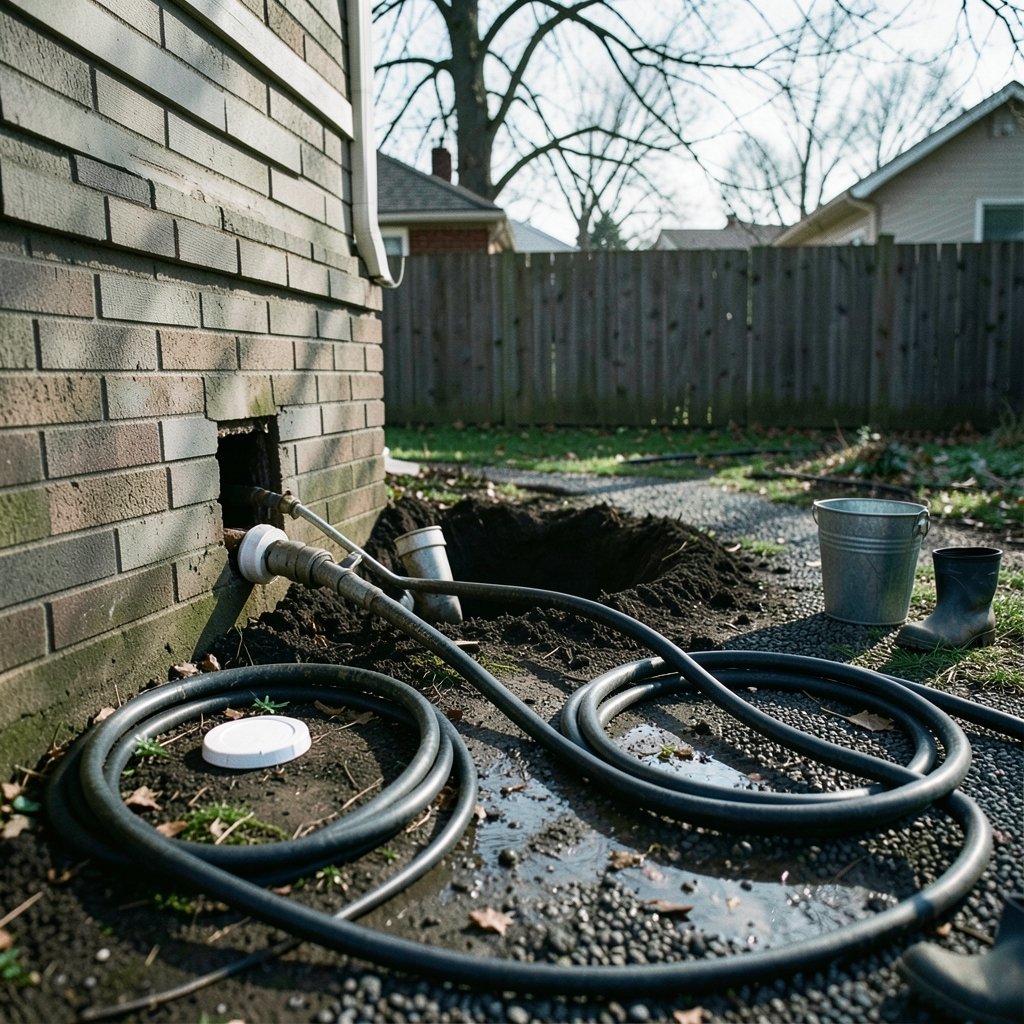
A sewer snake (also called a plumber’s auger) is the standard first tool. The process is straightforward: locate the sewer cleanout — the capped access point, usually near the foundation or at the property line — feed the cable into the line, and work it through the blockage. Wear gloves and eye protection, and go slowly so you do not damage the pipe.
The mistake most people make here is forcing a manual snake through a root mass. A hand auger will bend or kink before it cuts through roots. If the cable keeps stopping at the same distance, you have found a hard obstruction, and that is the point to stop and call someone.
Hydro-Jetting: The Workhorse of Real Cleaning
Hydro-jetting is essentially power washing for pipes. A special nozzle on a heavy-duty hose fires concentrated streams of water forward and backward, scouring the pipe walls all the way around. Different nozzles exist for different jobs — one style for grease removal, another for cutting roots.
This is the method most professionals reach for because it cleans rather than just pokes a hole. As one trenchless technology resource puts it, high-pressure water jet cleaning is an efficient, economical, and environmentally safe way to remove blockages, buildup, and debris from both water and sewer pipelines to increase flow capacity. The same source notes that jetting units are designed to clean pipes from 20 mm to 600 mm in diameter without damaging the walls, and are tested for use in asbestos, mild steel, ductile iron, cast iron, and PE pipe.
That last point matters for older homes. A pipe that has been in the ground for sixty years may be fragile, and pressure settings need to match the material.
Vacuum Trucks: When Jetting Alone Isn’t Enough
On larger systems, jetting and vacuuming work as a pair. Industrial vacuumation uses a high-powered vacuum truck to pull sludge from pipelines into a tank for later disposal, and it is described as a non-invasive way to clean combined or separate sewer systems, leachate lines, lift stations, manholes, and junction boxes. Used together with jetting, the water loosens the material and the vacuum hauls it away instead of letting it settle downstream.
Homeowners rarely see this equipment on their own lateral, but it is common on commercial properties, apartment buildings, and anything with a grease interceptor.
Camera Inspection: Finding the Actual Cause
Cleaning without inspecting is guesswork. A CCTV camera pushed through the line shows roots, cracks, offsets, and bellies where the pipe has sagged. Inspection is standard practice before any rehabilitation work, because a liner cannot be installed over debris or roots, and the exact position of each lateral connection has to be known in advance.
If your line clogs twice in a year, insist on a camera inspection. Two clogs in the same place usually mean a structural problem, not bad luck.
What Does Professional Sewer Line Cleaning Involve?
A typical professional visit follows a set sequence:
- Locate the cleanout and any access points.
- Assess the blockage — often with a camera.
- Jet or auger the line using pressure and nozzles matched to the pipe material.
- Vacuum out loosened debris so it does not resettle.
- Re-inspect to confirm the line is clear and check for damage.
- Report findings — including anything that needs repair.
Cost varies widely by region, line length, access difficulty, and whether a camera is included. Ask for the scope in writing before work starts. A quote that covers jetting but not debris removal can leave you calling again in a month.
Mistakes That Make Things Worse
Some well-intentioned fixes cause real damage. Watch for these:
- Pouring chemical drain cleaner into a fully blocked main. The caustic liquid sits in the pipe, can damage older fittings, and creates a hazard for whoever opens the line later.
- Flushing “flushable” wipes. They do not break down the way toilet paper does, and they snag on roots and rough joints.
- Pouring grease down the drain, even with hot water. It cools somewhere downstream and coats the walls.
- Using too much pressure on an old pipe. A cast-iron line with thin walls can crack under a jetting nozzle set for modern PVC.
- Ignoring a recurring smell. Hydrogen sulfide is a warning, not just an annoyance.
For general household upkeep, the same discipline that keeps appliances running well applies to plumbing: small, regular attention beats one big emergency. The logic behind choosing a machine that actually cleans properly, as laid out in this guide to picking the dishwasher that actually cleans best, is the same logic that says match the tool to the job rather than guessing.
Preventing Sewer Line Problems Before They Start
Prevention is unglamorous and highly effective. A few habits go a long way:
- Screen the drains. Hair catchers in showers and strainers in sinks stop the biggest offenders at the source.
- Scrape plates before rinsing. Grease belongs in the trash, not the drain.
- Know where your cleanout is. In an emergency, minutes matter.
- Flush the line periodically if you have a long run or a property with mature trees.
- Deal with roots early. A root cut today is cheaper than a collapsed pipe next spring.
For anyone who likes keeping a household running on schedule, the same preventive mindset shows up elsewhere — the way a homeowner compares a home equity loan versus a line of credit before a big repair bill lands, or the way a careful buyer reads the details before committing. Sewer maintenance rewards the same planning instinct.
When to Call a Professional
Call a pro when:
- More than one fixture backs up at once.
- You see or smell sewage inside the house.
- Water pools in the yard above the line.
- A manual snake hits a hard stop.
- The same line clogs more than once in twelve months.
- Your home is older and the pipe material is unknown.
A backup that reaches flooring or drywall is a health issue, not just a plumbing one. Wastewater carries pathogens, and porous materials that soak it up usually need to be removed rather than cleaned.
Conclusion
Sewer line cleaning comes down to matching the tool to the blockage. A single slow sink is a plunger job. A line full of grease and scale needs hydro-jetting. A recurring clog needs a camera and an honest conversation about repair. The homeowners who avoid the worst outcomes are not the ones with the newest pipes — they are the ones who act on the first gurgle instead of waiting for the backup, keep grease and wipes out of the drain, and ask for an inspection when a clog comes back.
Frequently Asked Questions
How often should a sewer line be cleaned?
Most homes do not need a fixed schedule. Cleaning every 18 to 24 months makes sense for properties with mature trees, older cast-iron or clay pipe, or a history of slow drains. Homes with newer PVC and no tree cover can often go years without routine cleaning. Let the behavior of your drains set the interval.
Can I clean my own sewer line?
You can clear a simple, soft clog with a hand auger through the cleanout. You cannot safely replicate hydro-jetting at home. The pressure required to scour pipe walls is high enough to injure a person or crack a fragile pipe, and the equipment is not sold for consumer use. Know your limit, and stop when the snake hits something solid.
Does chemical drain cleaner work on a main line blockage?
Rarely, and it is a poor choice for a full blockage. Chemical cleaners work on small clumps of hair or soap scum near a trap. In a main line, the liquid cannot reach the blockage and instead sits against the pipe walls. It also creates a burn hazard for the plumber who opens the line afterward.
Why does my sewer line keep clogging in the same spot?
A repeat clog in one location almost always means a physical defect: a root intrusion, a sag where debris settles, an offset joint, or a crack. Cleaning removes the symptom. A camera inspection finds the cause, and repair or lining fixes it for good.
Is hydro-jetting safe for old pipes?
It can be, when the pressure and nozzle are matched to the pipe material and condition. Jetting equipment is designed to clean pipe walls without damage across a range of materials, including cast iron and ductile iron. The risk comes from using full pressure on a deteriorated line. That is why a camera check before jetting an old pipe is worth the extra cost.
What is the difference between a sewer snake and hydro-jetting?
A snake is a mechanical cable that punches through or pulls back a blockage, leaving the pipe walls coated. Hydro-jetting uses high-pressure water to scour the full circumference of the pipe and flush the debris away. Snakes are cheaper and good for emergencies; jetting cleans more thoroughly and is better for grease and long-term buildup.