Quick Answer: What are the benefits and limitations of silicon carbon batteries for everyday users?
Silicon carbon batteries promise more energy in the same space, so phones, laptops, and power tools could run longer or charge faster without getting bulkier. In practice, those gains show up mostly in newer premium devices, while cycle life, price, and limited availability still hold the technology back for budget buyers.
These cells are a variation on standard lithium-ion chemistry, swapping the graphite anode for a silicon-carbon composite. They are not a new battery category like solid-state, and they will not change how you plug anything in.
Before paying extra for a device advertised with silicon anode tech, compare real runtime tests, expected battery lifespan in charge cycles, replacement cost, charging speed, warranty terms, and whether independent reviews confirm the manufacturer’s claims.
Silicon has long been the great tease of battery chemistry. Researchers have known for decades that it can hold far more lithium than graphite, yet every attempt to use it in a commercial cell ran into the same wall: the material swells, cracks, and wears out. What changed recently is the engineering around that problem. Composite anodes that trap silicon particles inside a carbon scaffold have moved from lab benches into shipping products, and that shift is why the term silicon carbon battery now appears in product pages rather than just academic papers.
What a Silicon Carbon Battery Actually Is
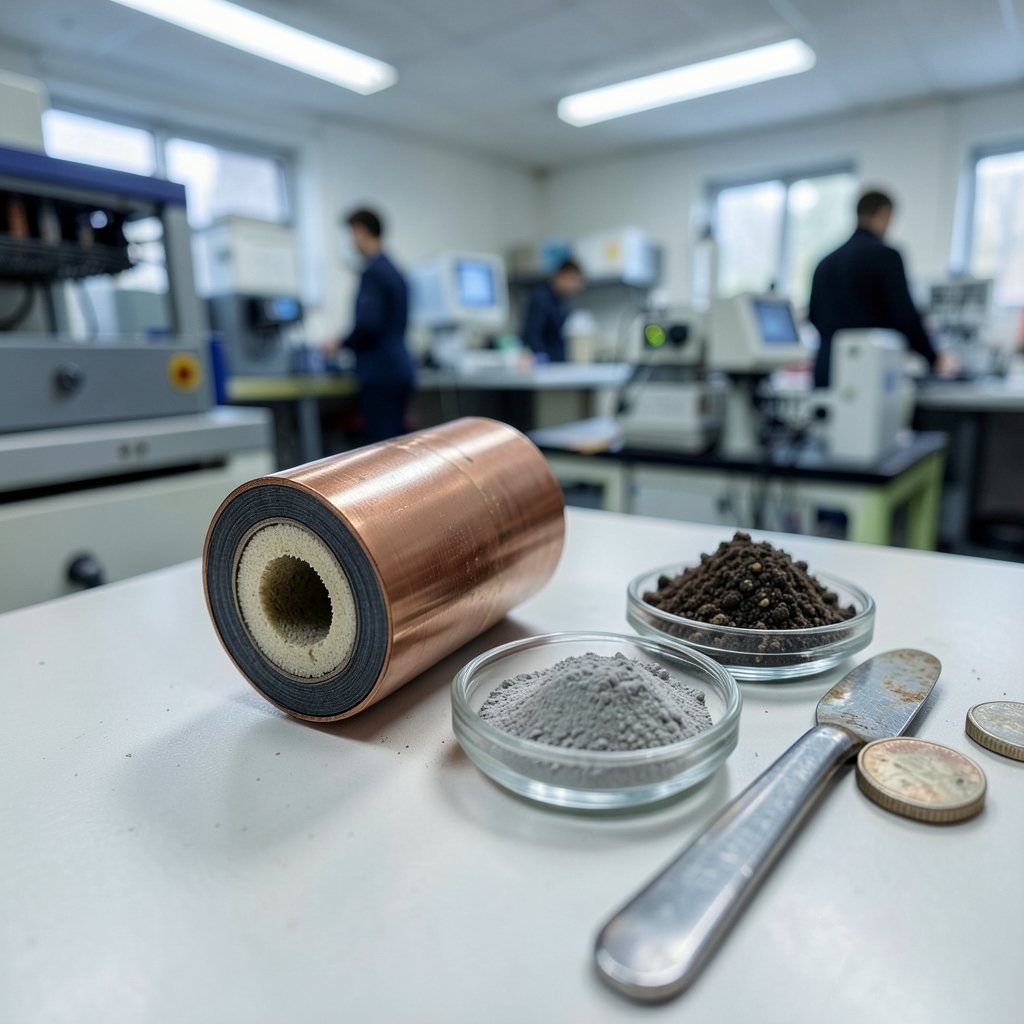
A conventional lithium-ion cell uses an anode made almost entirely of graphite. A silicon carbon battery replaces part of that graphite with silicon, usually as nano-scale particles embedded in a carbon matrix. The cathode, electrolyte, and overall cell format stay largely the same.
That detail matters for everyday users. These cells are drop-in improvements to existing lithium-ion production lines, not a reinvention of the battery. Device makers can adopt them without redesigning charging circuits or safety systems, which is why they are appearing first in phones, power tools, and drones rather than in entirely new product categories.
The theoretical numbers explain the interest. Silicon can store roughly ten times more lithium per gram than graphite, and that gap is the entire commercial motivation behind a decade of anode research. For a primer on how chip-level efficiency and battery chemistry now compete for space inside devices, see this comparison of Intel vs Apple silicon, where the same trade-off between performance and heat plays out.
The Genuine Benefits for Ordinary Buyers
More Runtime Without a Thicker Device
The headline benefit is energy density: more watt-hours packed into the same physical volume. In practice, that means a phone can stay the same thickness while lasting noticeably longer, or a manufacturer can shave a millimeter off the chassis and keep yesterday’s battery life. For power tools, the payoff is more torque per charge in a battery pack that still fits the same handle.
Faster Charging in Some Designs
Silicon’s structure allows lithium ions to move in and out more readily than graphite layers do, and several vendors market faster charge times as a result. Treat those claims carefully. Real charging speed depends on the charger, the thermal design, and the battery management software, not the anode alone. A silicon carbon cell paired with a conservative charging profile may charge no faster than a good graphite cell.
Less Reliance on Graphite Supply Chains
Graphite is the single largest input by mass in most lithium-ion cells, and anode-grade supply is concentrated among a small number of producers. Silicon is one of the most abundant elements in the earth’s crust. Reducing graphite content per cell is a supply-chain argument as much as a performance one, and it is a big part of why governments and manufacturers are funding anode research.
Better Cold-Weather Behavior in Some Cells
Some silicon-dominant designs report improved performance at low temperatures compared with graphite anodes. This is one of the more useful everyday benefits if you live somewhere with real winters, though it varies enormously between cell designs and should be checked in independent testing rather than assumed.
The Limitations That Still Matter
Cycle Life Is the Big One
Every charge and discharge cycle stresses a battery. Silicon expands substantially as it absorbs lithium, and that expansion, repeated hundreds of times, is what degrades the anode. Carbon composites soften the problem, but they do not erase it. A well-engineered silicon carbon cell may match graphite for cycle life; a poorly engineered one will not. Since most people judge a battery by how it performs in year three, not week one, this is the limitation to watch.
Price Premium
New anode materials cost more per kilowatt-hour than mature graphite. Early silicon carbon cells carry a premium that shows up in device prices, and that premium is hardest to justify in budget products where a few dollars of bill-of-materials cost decides the retail price. Expect the technology to trickle down from flagship devices over several product generations.
Limited Real-World Data
Public, independent testing of silicon carbon cells in consumer devices is thin. Most performance figures come from manufacturers and their material suppliers, and vendor claims are measured under favorable conditions. That does not make them false, but it does mean buyers should look for third-party teardowns and long-term reviews before treating a spec sheet as fact.
Charging and Thermal Complexity
Silicon-rich anodes can be more sensitive to overcharging and to heat. Battery management systems have to be tuned accordingly, and a poorly matched charger can accelerate wear. In practice this means sticking with the manufacturer’s charger is more important than it used to be.
Not a Miracle Chemistry
Silicon carbon is an incremental improvement to lithium-ion, not a leap to solid-state or lithium-sulfur. Buyers expecting a doubling of battery life will be disappointed. Realistic gains are in the range of meaningful but modest percentages, and they vary by design. (Lithium-ion battery)
How Silicon Carbon Compares With What You Already Own
| Feature | Graphite lithium-ion | Silicon carbon lithium-ion |
|---|---|---|
| Energy density | Baseline | Higher, design-dependent |
| Cycle life | Well established | Improving, varies widely |
| Cost per kWh | Lower | Higher today |
| Charging speed | Mature, predictable | Potentially faster |
| Supply chain maturity | Very mature | Scaling up |
| Real-world track record | Decades | A few product generations |
The honest read of that table is that graphite still wins on cost and proven durability, while silicon carbon wins on energy density and future headroom. For most buyers today, the choice is made for them by whichever device they purchase.
Practical Tips Before You Buy
First, ignore the chemistry label and look at watt-hours. A device with a bigger graphite battery can beat a smaller silicon carbon one, and watt-hours are the number that actually predicts runtime.
Second, check the rated cycle count in the warranty. If a manufacturer will not state one, that silence is information.
Third, read long-term reviews, not launch reviews. Battery degradation shows up after six to twelve months, and early reviews cannot see it.
Fourth, keep using the supplied charger. Silicon-rich cells are less forgiving of mismatched voltage and heat than graphite ones.
Fifth, be skeptical of “graphene” and “silicon” marketing language that appears without a watt-hour figure or cycle rating attached. Vague chemistry claims are cheap to print.
A common mistake is assuming a silicon carbon battery will make an old device feel new. It will not fix software that drains power or a screen that runs hot. Another is buying an early-adopter product at full price when the second generation, usually a year later, tends to fix the first generation’s cycle-life weaknesses.
For a broader look at how quickly consumer tech claims outrun independent verification, this piece on AI article generator features and limitations covers the same pattern of impressive demos meeting messier reality.
Where You Will Actually Encounter These Cells
The most likely places are flagship smartphones, cordless power tools, drones, and some laptops. Electric vehicles are the biggest long-term market, but automotive qualification cycles are long and automakers are conservative about new anode materials, so consumer electronics will lead adoption. (EPA: Electricity Storage)
Wearables are a wildcard. Small batteries benefit disproportionately from energy density gains, and a few percent more capacity can mean the difference between a one-day and a two-day smartwatch. If any category surprises buyers first, it will probably be that one.
There is also a geopolitical dimension. Rules that restrict which hardware can be sold in which market, such as the Starlink South Africa users cut off licensing 30 percent rule 2026 situation, show how supply and regulation shape what technology reaches consumers. Battery materials face similar pressures, and anode supply diversification is partly a policy goal.
What to Expect Over the Next Few Years
Three trends are worth watching. First, silicon content in anodes is rising gradually, from a few percent of the anode up toward dominant shares, as manufacturers gain confidence in cycle life. Second, costs are falling as production scales, which is the usual path for any new cell material. Third, independent testing is catching up, and the gap between vendor claims and measured performance will become much easier for ordinary buyers to see.
The realistic expectation is that silicon carbon cells become the default in premium devices within a few product cycles and spread downward from there. They will not make charging cables disappear, and they will not end battery anxiety. They will make devices a bit thinner, a bit longer-lasting, and, for a while, a bit more expensive.
Conclusion
Silicon carbon batteries are a real improvement, just not a revolution. For everyday users, the benefits are longer runtime in the same space, potentially faster charging, and a supply chain that leans less on graphite. The limitations are equally real: higher cost, uncertain long-term durability, thin independent data, and a strong temptation among marketers to overstate the gains. The practical approach is to buy on watt-hours, cycle ratings, and long-term reviews rather than chemistry buzzwords, and to treat any battery claim without a number attached as advertising rather than engineering. If you are shopping this year, the technology is worth having in a device you plan to keep, provided the price premium is modest and the warranty is clear.
Frequently Asked Questions
Are silicon carbon batteries safe?
They use the same basic lithium-ion chemistry as the cells already in your devices, so the safety profile is broadly comparable. The main difference is that silicon-rich anodes need well-tuned battery management to handle heat and overcharging, which is why using the manufacturer’s charger matters more than it once did.
Do silicon carbon batteries last longer than normal lithium-ion?
They store more energy for their size, so a device can run longer per charge. Whether the battery itself lasts more years is a separate question. That depends on cycle life, which varies widely between designs and is the area where early products have the most to prove.
Will my next phone definitely have one?
Not necessarily. Adoption is concentrated in flagship and premium devices first, because the cells cost more per kilowatt-hour. Budget phones will likely keep standard graphite cells for several more product generations.
Can silicon carbon batteries be recycled?
Yes, through existing lithium-ion recycling streams, since the cell format and most materials are familiar. The complication is that recycling processes are optimized for graphite anodes, and recovering silicon-carbon composites at scale is still an emerging area rather than a settled one.
Why do these batteries sometimes lose capacity faster?
Silicon expands as it absorbs lithium, and repeated expansion stresses the anode structure. Composite designs with carbon scaffolding reduce that stress, but poorly engineered cells can still degrade faster than graphite equivalents, especially when charged aggressively or run hot.
Is it worth paying extra for a device with a silicon carbon battery?
Only if the premium is small and the device otherwise fits your needs. Compare watt-hours, rated charge cycles, and warranty terms against a graphite alternative. If the manufacturer cannot state a cycle rating, the extra money is buying marketing rather than verified durability.