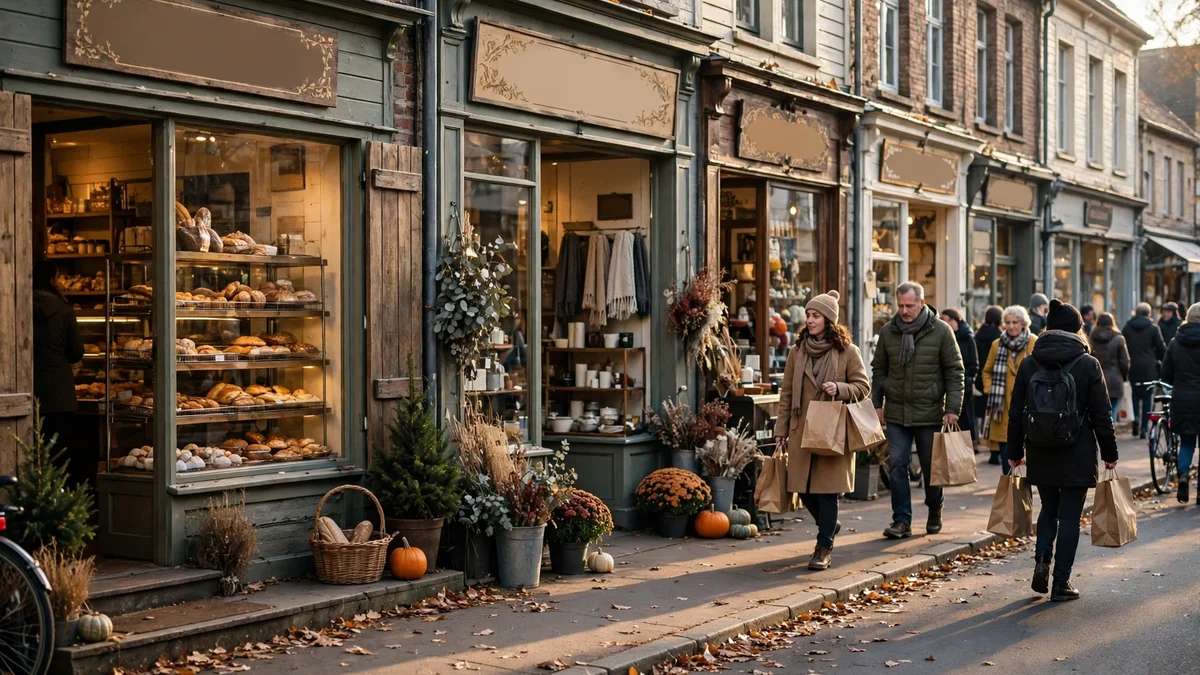
Small Business Saturday 2026 falls on Saturday, November 28, and it arrives carrying more weight than a single shopping day. It sits between Black Friday and Cyber Monday, in the middle of the biggest shopping weekend of the year, and it asks shoppers to spend a share of their holiday money with the independent shops, restaurants and service businesses on their own streets. For the owners of those businesses, the day has become a genuine commercial event, not just a feel-good slogan.
The numbers behind this year’s event point in the same direction. Shoppers are expected to spend about $118 billion with small businesses over the whole 2026 holiday season, according to the Intuit QuickBooks Holiday Shopping Survey, and 88 percent of consumers say they are likely to shop at small businesses this season, the highest level recorded since 2012 in the American Express Shop Small Impact Study. Those are intentions, not receipts, and the surveys behind them have limits. But the trend they describe is consistent: people say they want more of their holiday spending to stay local.
Forbes framed the story as a Main Street success, and the figures support the broad shape of that claim, though the details depend on which survey you read.
Key takeaways
- Small Business Saturday 2026 is on November 28, the Saturday after Thanksgiving, between Black Friday on November 27 and Cyber Monday on November 30.
- The Intuit QuickBooks Holiday Shopping Survey projects about $118 billion in holiday spending with small businesses in 2026, up 8.3 percent on last year, with small businesses taking 43 percent of holiday budgets.
- American Express reports that 88 percent of consumers are likely to shop at small businesses this holiday season, the highest level since 2012.
- Single-day spending estimates vary: about $18 billion in 2025 against about $22 billion in 2024, both survey-based estimates rather than counted sales.
- The Small Business Administration says roughly 68 cents of every dollar spent at a small business stays in the local community, and that the event has generated an estimated $241 billion since 2012.
| Detail | What we know | Source |
|---|---|---|
| Date in 2026 | Saturday, November 28 | SBA; American Express |
| Holiday spending with small businesses | About $118 billion projected, up 8.3 percent on last year | Intuit QuickBooks survey |
| Share of holiday budgets | 43 percent, up from 41 percent in 2025 and 36 percent in 2024 | Intuit QuickBooks survey |
| Consumers likely to shop small | 88 percent, highest since 2012 | American Express Shop Small Impact Study |
| Spending on the day itself | About $18 billion in 2025, about $22 billion in 2024, survey estimates | American Express consumer surveys |
| Cumulative since 2012 | An estimated $241 billion | SBA; American Express |
Where the day came from
Small Business Saturday was created by American Express in 2010, in the middle of the recession that followed the financial crisis. Small businesses had been hit hardest by the downturn, and the company, whose business depends on small merchants accepting its cards, wanted to steer some of the holiday spending that Black Friday sends to big chains and Cyber Monday sends online toward the shops on a town’s own streets. The first event took place on November 27, 2010, in Roslindale Village, a neighbourhood of Boston, Massachusetts, in partnership with the National Trust for Historic Preservation and Boston’s mayor.
The idea stuck. The U.S. Small Business Administration began officially co-sponsoring the day in 2011, and it has been held every year since on the Saturday after Thanksgiving. American Express registered the name as a trademark and built its year-round “Shop Small” campaign around it, with a free Shop Small Map that helps shoppers find participating businesses nearby.
The 2026 numbers, and what they actually measure
The headline figure for 2026 comes from the Intuit QuickBooks Holiday Shopping Survey, released on October 19, 2026. The survey asked 1,002 small business owners, managers and decision makers, and 6,000 adult consumers, about their holiday plans. Shoppers in that survey plan to spend $278 billion in total this holiday season, up from an estimated $263 billion last year, and about $118 billion of that total is expected to go directly to small businesses, an increase of 8.3 percent on last year and the highest figure in the three years the survey has run.
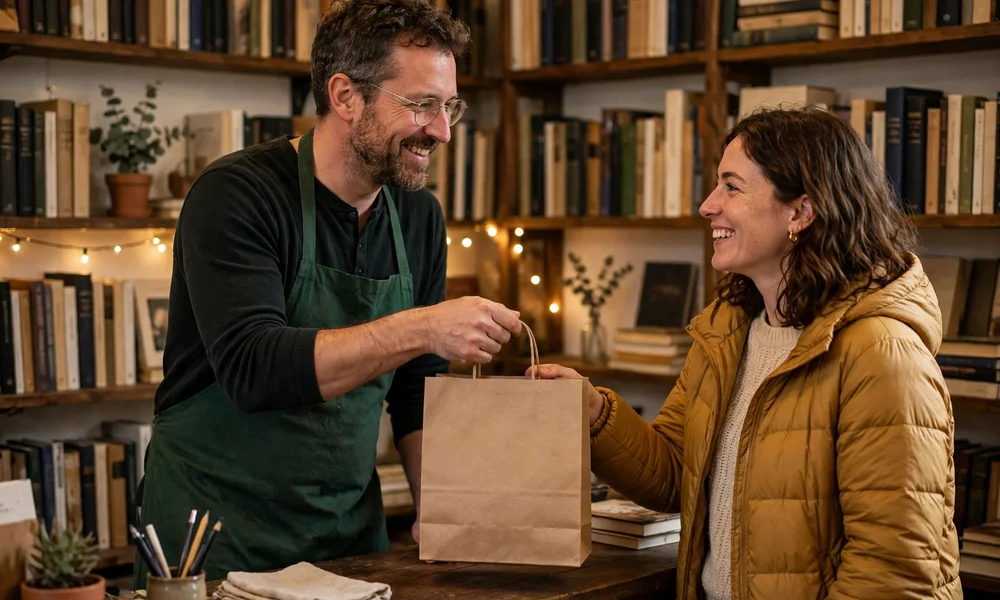
The share matters as much as the total. Shoppers say they will direct 43 percent of their holiday budgets to small businesses on average, up from 41 percent in 2025 and 36 percent in 2024. The same survey found that 89 percent of shoppers say supporting small businesses is important this season, and 76 percent of owners expect more holiday revenue than last year.
A second set of figures comes from the American Express Shop Small Impact Study for 2026: 88 percent of U.S. consumers are likely to shop at small businesses this holiday season, the highest level since 2012. The Small Business Administration adds that roughly 70 percent of owners surveyed said this year’s holiday spending will affect their ability to grow in 2027.
There is an honest caveat, and it applies to every number in this article. These figures come from surveys in which consumers report what they spent or plan to spend. They are not receipts and not card data. The 2024 single-day survey, run by the consultancy Teneo, asked 2,601 adults the day after the event and projected the answers to the population using census estimates. The direction of the season-long trend is clear; the exact single-day total is not.
Why the money stays local
The Small Business Administration’s argument is simple: for every dollar spent at a U.S. small business, roughly 68 cents remain in the local community, the agency says. The shopkeeper pays local staff, buys from local suppliers, and spends the profit nearby, while money spent at a chain is far more likely to leave town the same day.
The scale of the sector makes that argument matter. America’s roughly 36 million small businesses make up 99 percent of all U.S. businesses, according to the SBA. They employ nearly half of the nation’s private-sector workforce and generate more than 40 percent of U.S. gross domestic product. Occupied storefronts also keep sidewalks busy, and busy sidewalks attract more visitors to the surrounding blocks. A shop that survives the holiday season is a shop that stays open in February, when the footfall drops and the rent does not.
What the mixed picture means for owners
Owners should read the 2026 figures with both eyes open. The season-long outlook is the strongest in the survey’s three-year run, but the single-day picture is softer: shoppers said they spent about $18 billion on Small Business Saturday in 2025, down from about $22 billion in 2024. That gap between intention and spending is the real story for owners to plan around.
Customer relationships are the other advantage small businesses hold, and the holiday season is the time to use them. Keeping track of who bought what, and following up after the sale, is exactly what a good customer system is for, and our guide to the best CRM software for small business in 2027 sets out the options that fit a small team and a small budget.
What Small Business Saturday means for shoppers and owners
For shoppers, the day is a chance to put a share of the holiday budget where its effect is most visible. The gifts bought on Small Business Saturday tend to be the personal ones, chosen by hand: a book from the shop where the owner recommends the next read, a jar of honey from the farm stall, a handmade ornament, a voucher for the local cafe.
The holiday season is the moment when many small businesses make the profit that carries them through the quiet months. Our report on how your company runs on Black Friday logic looks at the hidden costs of running a business on constant discounting and urgency, a habit that hurts small firms more than big ones. Small Business Saturday works best when it is not just another sale, but a day when the shop’s normal strengths, knowledge, service and local roots, are the offer.
A Small Business Saturday checklist
- Plan a walking route before the morning rush, choosing streets with clusters of owner-run storefronts rather than driving between single shops.
- Set a budget for local spending in advance, so the day’s shopping is deliberate rather than impulse-driven.
- Buy services as well as goods: gift certificates for a barber, tailor, bike mechanic or massage therapist count just as much.
- Ask the owner for a recommendation instead of defaulting to the bestseller; local knowledge is the product small shops sell best.
- Keep receipts and note the shops you liked, so the ones worth returning to are easy to find in January.
- Tell a friend about a shop you found, since word of mouth is how most small businesses win new customers.
Frequently asked questions
When is Small Business Saturday 2026?
Small Business Saturday 2026 is on Saturday, November 28, the day after Black Friday on November 27 and two days before Cyber Monday on November 30. It is always held on the Saturday after Thanksgiving in the United States.
Who started Small Business Saturday?
American Express created Small Business Saturday in 2010, during the recession, to bring more holiday spending to small businesses. The U.S. Small Business Administration has officially co-sponsored it since 2011. The first event was held in Roslindale Village, Boston, Massachusetts.
How much do shoppers spend on Small Business Saturday?
Estimates vary because the figures come from consumer surveys, not counted sales. About $18 billion was spent on the day in 2025, against about $22 billion in 2024, according to American Express consumer surveys. Over the whole 2026 holiday season, the Intuit QuickBooks survey projects about $118 billion in spending with small businesses.
How much of the money spent locally stays local?
The Small Business Administration says roughly 68 cents of every dollar spent at a U.S. small business remains in the local community, through local wages, local suppliers and local spending by the owner. The agency describes this as a multiplier effect.
Can any small business take part in Small Business Saturday?
Yes. Any independent business can take part for free. American Express offers a free Shop Small Map that helps shoppers find participating businesses nearby, and the SBA publishes guidance for owners on making the most of the day.
Does Small Business Saturday help owners beyond the day itself?
That is the aim. Roughly 70 percent of owners surveyed said this year’s holiday spending will affect their ability to grow in 2027, and the season’s revenue often carries a small business through the quieter months that follow. Planning ahead helps: our guide to how to create an AI policy for your small business is one example of preparation that pays off long after the holiday rush ends.
The bottom line
Small Business Saturday 2026 arrives with the strongest season-long outlook in the short history of the surveys that measure it: about $118 billion projected for small businesses, a 43 percent share of holiday budgets, and 88 percent of consumers saying they are likely to shop small. Those are intentions rather than receipts, and the softer single-day figures from 2025 are a reminder that goodwill alone does not ring the till.
For shoppers, the day is a simple choice with a visible result: spend a share of the holiday budget on the street where you live, and the shops you value are more likely to be there next year. For owners, it is the biggest single opportunity of the season to turn attention into lasting customers. Main Street does not need a slogan. It needs a Saturday when people show up, and this year the surveys say they plan to.