
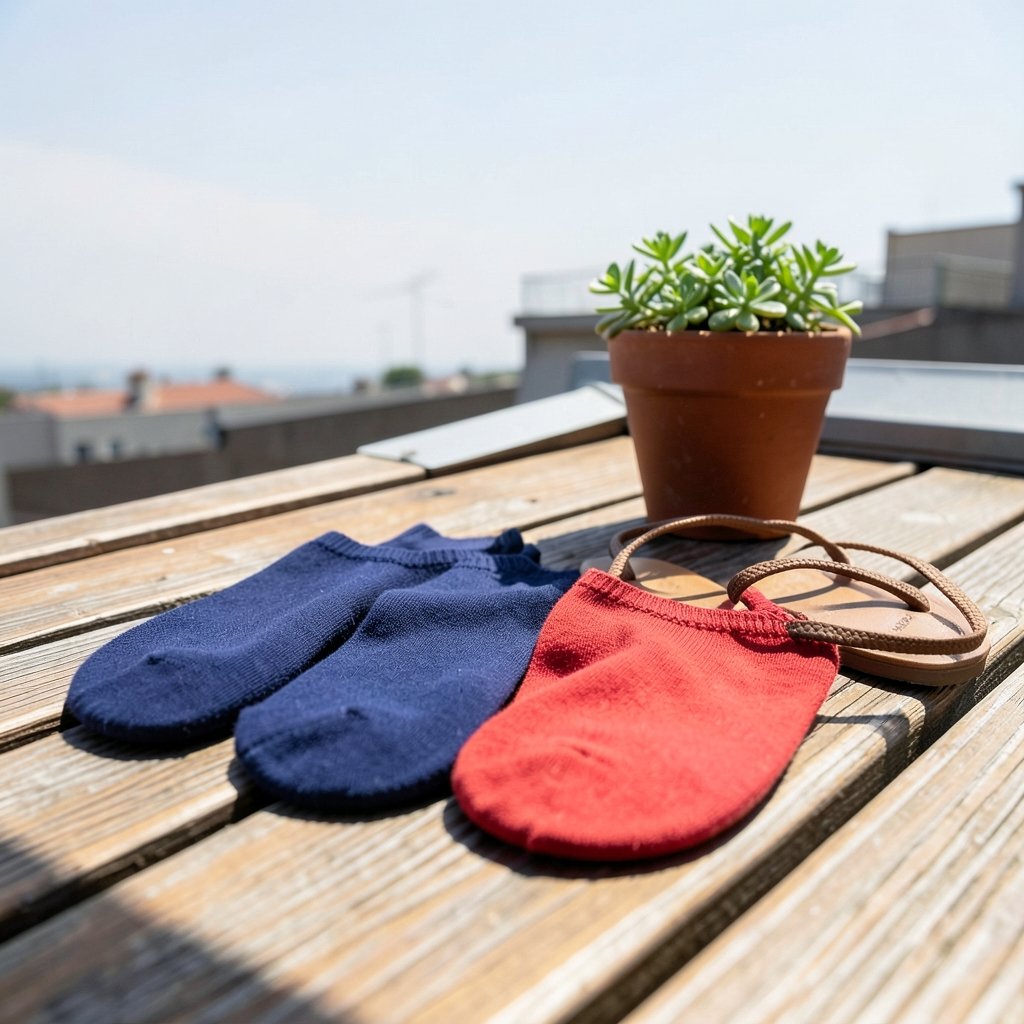
Why would anyone wear socks with a gap between the big toe and the rest? The first time most people see a pair of tabi socks, the reaction is a mix of curiosity and mild confusion. The second reaction, usually, is “wait, do these actually feel good?” The short answer is yes, and the longer answer involves four centuries of Japanese footwear design, a modern running trend, and a surprisingly practical piece of clothing that solves problems regular socks never even try to solve. (Set up backup immutability that actually stops ransomware)
What Are Tabi Socks, Exactly?
Tabi (足袋) are split-toe socks or footwear with a separate compartment for the big toe. The word itself is a neat little compound: 足 means “foot” and 袋 means “bag,” so tabi literally translates to “foot bag.” That is about as honest as clothing names get.
The split serves a mechanical purpose, not a decorative one. Traditional Japanese sandals, including zōri and geta, are held on the foot by a thong that passes between the big toe and the second toe. A normal sock would either bunch up under that thong or slide around. A tabi sock lets the thong sit exactly where it needs to sit, against skin, while the rest of the foot stays covered. It is a small design decision with a very specific job.
One terminology caution worth flagging early: traditional tabi and modern tabi socks are related but not identical. Traditional tabi are structured footwear, often with a separate sole and a metal clasp closure. Modern tabi socks are usually knit cotton or cotton-blend socks with an elasticated ankle. Sources sometimes blur the two, and that blurring causes real confusion when you are trying to buy a pair.
A Short History of the Foot Bag
Tabi are generally dated to roughly the 15th to 16th century in Japan, evolving from earlier, simpler foot coverings. Exact dates are debated among sources, so treat any century-level claim as approximate rather than precise. What is clearer is the direction of travel: what began as a basic covering developed into a structured garment with a distinct sole.
Jika-tabi are the outdoor branch of the family. These are tabi with rubber soles, built for work rather than ceremony, and they remain in use as occupational footwear in construction, farming, and other trades where grip and toe articulation matter. If you have ever seen a photograph of Japanese construction workers wearing what look like split-toe boots, that is jika-tabi.
Traditional tabi are made of cotton or silk, often with a separate sole stitched on. They close at the ankle with small metal clasps called kohaze (こはぜ), which hook into loops sewn into the fabric. Anyone who has handled a vintage pair knows the sound: a soft, precise click that is unmistakably tabi. Modern sock-style tabi replaced the kohaze with elastic, which is faster to put on and far more forgiving of sizing errors.
White Tabi, Formal Dress, and the Tea Room
In formal Japanese dress, tabi are not optional accessories. They are part of the uniform. White tabi are conventional in formal settings, and they appear in the tea ceremony and in traditional performing arts, where the cleanliness and precision of the foot covering is part of the presentation. The reasoning is practical as well as aesthetic: in a tea room, you are kneeling and moving on tatami in socks, and a clean white tabi signals care.
This is where the cultural weight of tabi sits. A pair of white tabi communicates formality the way a pressed shirt does in Western business dress. It is a signal, and it is read instantly by anyone who knows the code.
How Modern Tabi Socks Became a Running Item
Split-toe socks moved out of the tea room and into the gym in the 2010s, when they became a fashion and running item. The trend was partly tied to minimalist or “barefoot” running footwear, which is built around a split toe and needs a sock that matches the shape of the shoe. Treat that decade as an approximate marker of a general trend rather than a dated event.
The appeal for runners is straightforward. A split toe lets the big toe move independently, which changes how the foot pushes off. Whether that translates into measurable performance gains is a separate question, and one that is genuinely hard to answer with confidence. Reliable, dated statistics on current tabi production or market size are difficult to source, so any quantitative claim about the modern tabi market should be treated with suspicion unless it comes from a primary industry or government source.
What is safe to say is this: tabi socks found a second life because they solve a fit problem. If your shoe has a split toe, you need a sock with a split toe. The fashion trend followed the functional need, not the other way around.
Traditional Tabi vs. Modern Tabi Socks
The two categories get mixed up constantly, so a direct comparison helps.
| Feature | Traditional tabi | Modern tabi socks |
|---|---|---|
| Material | Cotton or silk, often with a separate sole | Cotton or cotton-blend knit |
| Fastening | Metal kohaze clasps hooking into loops | Elasticated ankle |
| Sole | Separate sole; rubber on jika-tabi | None |
| Typical use | Formal dress, tea ceremony, performing arts, work (jika-tabi) | Casual wear, running, barefoot-style shoes |
| Sizing | Often given in centimeters | Standard sock sizing, often in centimeters in Japan |
The sizing note matters more than it looks. Japanese footwear and sock sizing follows JIS conventions, and tabi sizing is often given in centimeters rather than the S/M/L labels Western buyers expect. Which specific JIS standard applies to tabi is not something to state casually; the safest approach is to measure your foot in centimeters and match that number, rather than trusting a converted letter size.
What Actually Works in Practice
Here is where firsthand experience matters more than product copy. A few practical points that come up again and again for people trying tabi socks for the first time:
Measure in centimeters. Stand on a piece of paper, mark the tip of your longest toe and your heel, and measure the distance. Tabi sizing is built around that number. Guessing from your usual shoe size is the single most common mistake.
Expect an adjustment period. The fabric between your toes feels strange for the first few hours. Most people stop noticing it within a day. If it still feels wrong after a week, the size is probably off, not the design.
Check the toe gap alignment. The split should sit cleanly between the big toe and the second toe, with no bunching. If the gap pulls or twists, the sock is either too small or cut for a different foot shape.
Wash them inside out and gently. The seam between the toes is the first place a cheap pair fails. Turning them inside out protects that seam, and it also stops lint from packing into the toe compartment.
Do not expect them to fix your running form. Tabi socks accommodate a split-toe shoe. They do not correct pronation, and they will not make you faster on their own. Buy them for fit and comfort, not for a performance miracle.
Match the sock to the shoe, not the other way around. A split-toe sock in a regular shoe is fine, but the fabric between the toes will compress and can become uncomfortable over a long day. The design shines when the footwear is built for it.
The Care and Keeping of a Pair
Tabi socks are not fragile, but they are more structured than a tube sock, and the weak points are predictable. The toe seam takes repeated stress. The elastic at the ankle loses tension over time. The fabric between the toes is a trap for lint and stray fibers. (Backup immutability limitations worm storage cant protect)
A reasonable routine: wash on a gentle cycle or by hand in cool water, skip the dryer, and reshape them while damp. Heat is the enemy of elastic and of cotton blends generally. If you wear them for running, rotate at least two pairs so each has time to dry out fully between uses. Damp socks stored in a gym bag are how smells start.
For traditional tabi with kohaze clasps, the care is different. The metal needs to stay dry to avoid corrosion, and the fabric benefits from being aired rather than machine washed. Treat them like the formal garment they are.
Why the Split Toe Still Makes Sense
There is a temptation to file tabi socks under “quaint traditional clothing that survives as a curiosity.” That reading misses the point. The split toe is a functional solution to a real problem, and it has now survived several centuries and one complete reinvention as athletic wear. Very few garments manage that.
The design also has a quiet lesson in it for anyone interested in how clothing works. A sock is not a passive tube. It interacts with the shoe, the sandal, the ground, and the shape of the foot. Tabi socks simply acknowledge that interaction instead of ignoring it. The big toe is a separate structure on the human foot, and a garment that respects that structure fits better than one that flattens it.
That is the whole argument, and it holds up whether you are wearing white tabi to a tea ceremony or a cotton pair to a trail run. The gap is the point.
Conclusion
Tabi socks are one of those rare items where tradition and function line up neatly. The split toe exists because Japanese sandals needed a thong to pass between the toes, and it survived because the human foot actually has a big toe that benefits from moving on its own. Traditional tabi, with their silk or cotton bodies, separate soles, and kohaze clasps, belong to formal Japanese dress and to the tea room. Modern tabi socks, knit and elasticated, belong to casual wear and to the barefoot-running movement that adopted the split-toe shape in the 2010s.
If you are buying a pair, the practical advice is unglamorous but reliable: measure your foot in centimeters, check that the toe gap sits cleanly, wash them gently and inside out, and match the sock to footwear that was built for a split toe. Do that, and the strange-looking sock with the gap in it stops being strange and starts being the pair you reach for first. The foot bag has been doing its job for centuries. It will probably keep doing it.
Frequently Asked Questions
What is the difference between tabi and tabi socks?
Traditional tabi are structured footwear made of cotton or silk, often with a separate sole and metal kohaze clasps at the ankle. Modern tabi socks are knit cotton or cotton-blend socks with a split toe and an elasticated ankle. They share the split-toe shape and the general purpose, but they are different garments with different construction and care needs. (Keyboard spacebar rattling fix silence noisy stabilizer)
Why do tabi socks have a split toe?
The split lets the thong of a zōri or geta sandal pass between the big toe and the second toe while the rest of the foot stays covered. Without the gap, the thong would sit on top of the fabric and the sock would bunch or slide. The design is a direct response to how traditional Japanese sandals are worn.
Are tabi socks good for running?
They are useful if your running shoe has a split-toe design, because the sock needs to match the shape of the shoe. Whether they improve performance is a separate and much harder question to answer. Buy them for fit and comfort rather than expecting a measurable speed gain.
How do I choose the right size?
Measure your foot in centimeters by standing on paper and marking the tip of your longest toe and your heel. Tabi sizing is often given in centimeters, following Japanese sizing conventions, so matching that number is more reliable than converting from your usual letter size. If the toe gap pulls or twists, the size is wrong.
Can I wear tabi socks with regular shoes?
Yes, but the fabric between the toes will compress in a shoe that was not built for a split toe, which can become uncomfortable over a long day. They work best with footwear designed around the split-toe shape. In regular shoes, a standard sock is usually the more comfortable choice.
How should I wash tabi socks?
Turn them inside out, wash in cool water on a gentle cycle or by hand, and skip the dryer. Heat damages elastic and cotton blends, and the toe seam is the first place a cheap pair fails. Reshape them while damp. Traditional tabi with metal clasps should be aired and kept dry rather than machine washed.



