

A hairdresser in a small town told me she waited forty minutes for a client who never arrived. The diary showed a full morning, the phone stayed quiet, and the chair stayed empty. When she checked later, the appointment had been made for the wrong stylist, on that stylist day off, with no reminder sent and no way for the client to move it. The page had taken a simple request and turned it into a booking that could not work.
This is my view, formed from watching small service businesses lose hours they can never sell again. An appointment page does not sell a seat, a table, or a room. It sells the working time of a named person. When that page fails, the loss is a hole in the day of a practitioner who was ready, paid, and waiting, while the next client could not get in because the diary said the slot was taken.
The rest of this piece explains what a bad appointment page costs, where that cost hides, and why the fix is smaller than most owners think. The point is simple: a page that books the wrong person, the wrong length of time, or a time that does not exist is the most expensive page a service business owns, because the time it wastes cannot be sold tomorrow.
Key takeaways
- An appointment sells the working time of a named person, so a bad page wastes practitioner hours that can never be resold.
- Most of the damage comes from stale diaries, missing reminders, and no working way to move or cancel a visit.
- A wrong service length is worse than a wrong price, because it pushes every later appointment in the day out of shape.
- The visible cost is the empty chair. The hidden cost is the client who books with a rival and the staff member who loses trust in the diary.
- The fix is to sync each person diary live, show the real length and price of each service, and test the whole flow with a real booking.
What a bad appointment page actually does to a day
An appointment page has one job: turn a visitor who has already chosen a service into a visitor with a confirmed time, a named practitioner, and a clear record of both. The page either takes that booking in a few minutes or loses the visitor to a rival. Most appointment pages fail in quiet ways, and the owner never sees it, because the visitor simply leaves or the diary fills with times that cannot work.
The first failure is the stale diary. A visitor picks a Tuesday, sees open times, and chooses one, only to learn later that the practitioner is on holiday that week. The page was showing times from a diary that nobody had updated. The visitor has no reason to start again, and the business has no record that a willing client ever tried.
The second failure is the wrong person. An appointment is a promise that a named person will be free at a stated time for a stated service. When the page lets a visitor book a colour appointment with a stylist who does not do colour, the promise breaks before the day begins. Someone has to ring the client and offer another time, and many clients do not wait for the second offer.
The third failure is the wrong length. A haircut that takes forty five minutes and a colour appointment that takes two hours are two different services, even when the same person delivers both. When the page books every service into the same thirty minute slot, the day collapses by mid morning. Each appointment starts late, each client waits, and the last client is turned away or rushed.
How the money leaks out, hour by hour
The visible cost is the empty chair, and it is the smallest part of the bill. A clinic that runs eight appointments a day and loses two a day to a bad page is losing ten appointments a week. At sixty pounds per appointment, that is six hundred pounds a week, or more than thirty thousand pounds a year, gone through a page the owner already paid to build.
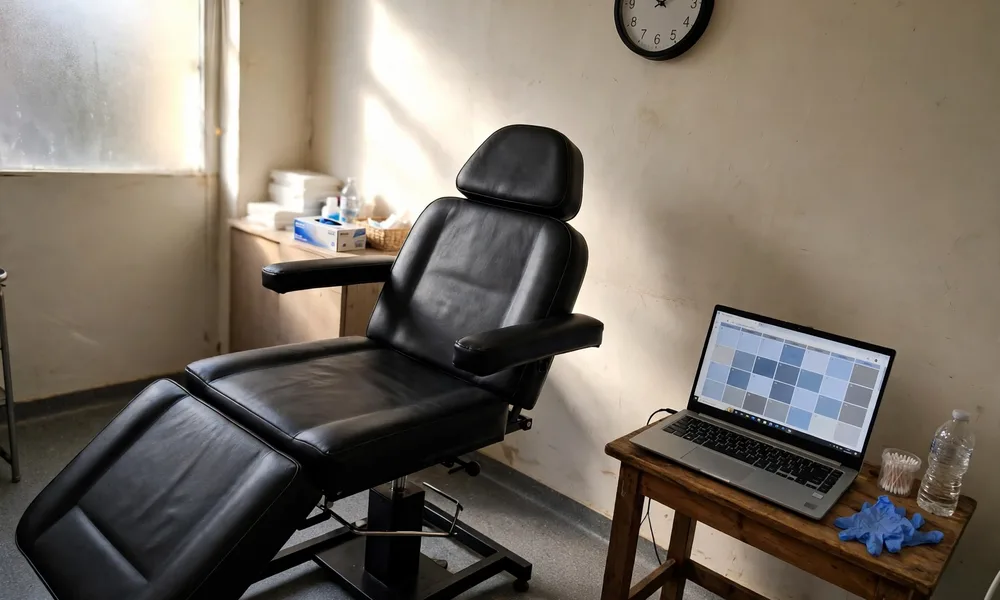
The second cost is the idle practitioner. A room, a table, or a seat can be sold again tomorrow. An hour of a therapist, a tutor, or a stylist cannot. When a client fails to arrive because the reminder never came, the practitioner still has to be paid, the room still has to be heated and cleaned, and the hour still passes.
Most missed appointments are forgotten appointments, not cancelled ones. A reminder sent the day before, with the service, the person, the time, and the address, cuts them sharply. A page that sends no reminder, or sends one with the wrong time, creates the no show and then blames the client for it.
Why person time is different from booking inventory
It helps to hold the distinction clearly. An appointment is a reserved time with a named person for a named service, agreed through the business website. A booking is wider: it can reserve a table, a room, a seat, or a place on a tour, usually with a price and a payment step. The person is the point of an appointment.
That distinction is why the cost of a bad appointment page is different from the cost of a bad booking page. A booking page that fails loses a seat that another visitor could have taken. An appointment page that fails loses the working time of a specific person, and that time cannot be transferred to another practitioner, another room, or another day.
The caveats that matter
Not every empty slot is the fault of the page, and an honest opinion should say so. Some clients will always cancel late, some will always forget, and some will always prefer to ring. A good page reduces those losses. It does not remove them. The table below sets out what is known and where the line sits, and the figures in this piece are illustrations, not industry averages.
| Detail | What is known |
|---|---|
| Stale diary | Times already taken, or times when the practitioner is away, are the most common cause of a failed booking. |
| Wrong person | A booking with a practitioner who cannot deliver that service has to be remade by phone, and many clients do not wait. |
| Wrong length | A service booked into too short a slot pushes every later appointment out of shape. |
| Missing confirmation | Without a written record, some visitors book again, some ring to check, and some book elsewhere. |
| Missing reminder | Most missed appointments are forgotten appointments, and a reminder the day before cuts them. |
| No way to move a visit | A visitor who can move an appointment usually will, which frees the old slot. |
| Double booking | When page and diary disagree, two clients arrive for one person, and one is turned away. |
| Idle practitioner time | An hour of a named person cannot be resold later, so it can never be recovered. |
Checklist: judging an appointment page honestly
Use this list on the live page, as a visitor, on a phone, before deciding whether the page is good enough. The setup guide for an appointment page walks through the same checks in practical order, and it is worth reading alongside this list.
- Each service shows a plain name, a length in minutes, and a price before any personal details are asked for.
- Each practitioner shows only the times when that person is actually free, pulled live from that person diary.
- The confirm step shows the service, the person, the date, the time, and the place in one clear summary.
- A confirmation arrives at once by email or text, with a link that works to move or cancel the visit.
- A reminder arrives the day before, with the service, the person, the time, and the address in it.
- A test booking made as a customer, on a phone, blocks the slot at once in every place the diary appears.
Frequently asked questions
Is an appointment page the same as a booking page?
No. An appointment page books a time with a named person for a named service, such as a consultation, a treatment, or a lesson. A booking page is wider and can also book a thing, such as a seat, a table, or a room, with capacity and payment as central parts of the job. A business that only sells one to one time slots should judge its page as an appointment page, not as a booking page.
What is the single most expensive failure on an appointment page?
A stale diary, because it creates failures that the owner never sees. A visitor who picks a time that turns out to be taken will rarely try again, and the business has no record that the visitor ever tried. A page that shows real availability, pulled live from each person diary, removes that failure at the source.
Why do so many appointments end as no shows?
Most missed appointments are forgotten appointments, not cancelled ones. A reminder sent the day before, with the service, the person, the time, and the address, cuts them sharply. A page that sends no reminder, or sends one with the wrong time, creates the no show and then blames the client for it.
Should an appointment page take payment at booking?
It depends on the service. Many appointment pages work with time alone and take no payment at the point of booking, which is one of the ways they differ from booking pages. The page should state the rule plainly near the confirm button, so the visitor knows what happens next and what happens if the visit is cancelled late.
How can a small business measure what a bad page costs?
Count three things over one full week: the empty slots that were never filled, the bookings that had to be remade by phone, and the staff hours spent ringing clients to confirm times. Multiply the empty slots by the price of the service, and add the staff time at its hourly cost. That total is the weekly cost of the page as it stands.
What tools help keep an appointment page honest?
The best AI tools for appointment booking cover the calendar, reminder, and confirmation work behind the page, but no tool fixes a page that shows the wrong person, the wrong length, or a stale diary. Choose the tool that fits the services and the people the business actually has, then test the whole flow as a customer before launch and again after every change.
The bottom line
A bad appointment page is not a design flaw that sits quietly in the corner of a website. It is a leak in the only part of the site where a visitor turns into a client with a named practitioner, a confirmed time, and a written record. The service was good, the price was fair, and the client was ready. The page then booked a time that could not work, and the client walked away. The practitioner waited, the hour passed, and no later booking could recover it.
The fix is smaller than most owners think. Sync each person diary live, show the real length and price of each service, send a confirmation at once and a reminder the day before, and give every visitor a working link to move or cancel. Then test the whole page as a customer on a phone, including a real booking and a real move, and test it again after every change.
Note: the figures in this piece are illustrations based on the examples given, not industry averages.


