

A bad website rarely looks broken. The pages load, the colours match, and the logo sits neatly at the top. Yet the phone stays quiet, the contact form stays empty, and visitors leave after a few seconds. The owner blames the design, the hosting, or the lack of traffic. The real problem is often quieter and harder to see: the words on the page do not say anything that would make a stranger trust the business, understand the offer, or take the next step.
Copy is the part of a website that does the selling. Design can attract attention, and speed can keep a visitor from leaving, but only words can explain what the business does, who it helps, what it costs, and why it is worth choosing over the business listed just below it in the search results. When those words are vague, full of jargon, or written to impress rather than to inform, the website stops selling.
This is an argument that copy deserves the same attention as design and speed, because copy is where most small business websites quietly lose money. The cost is not a single lost sale. It is a steady leak: every visitor who does not understand the offer, every visitor who does not trust the claim, and every visitor who cannot find the price or the next step. Each one leaves without a trace, and the business pays for the traffic that brought them there.
Key takeaways
- Bad copy costs money in lost enquiries, not in design fees: visitors leave without complaining.
- Vague words, jargon, and empty claims make a business sound like every other business.
- Visitors need a clear offer, a clear price signal, and a clear next step on every main page.
- Good copy answers the exact questions a customer would ask before spending money.
- Fixing the words is usually cheaper than a redesign, and it improves every visit at once.
What bad copy actually costs
The first cost of bad copy is confusion. A visitor arrives with a simple question: can this business solve my problem, and at what cost? Bad copy answers with general statements about quality, passion, and excellence, none of which answer the question. The visitor reads the homepage, learns that the business is committed to customer satisfaction, and still does not know what it sells, who it serves, or how much it charges. Confusion does not make people ask for clarification. It makes them leave, because the next result promises a clearer answer.
The second cost is distrust. Empty claims are easy to write and easy to spot. Every business claims to be the best, the leading choice, and the trusted partner, so those words carry no weight at all. A visitor who reads them does not feel reassured. They feel that the business has nothing specific to say, and they wonder what is being hidden. Specific words build trust: a real price range, a real delivery time, a real example of past work, and a real answer to a hard question. Vague words do the opposite, and they do it on every page.
The third cost is the most expensive, because it is invisible. A website with bad copy still pays for hosting, still pays for advertising, and still pays for the time spent answering the same questions by phone that the website should have answered. The owner sees the bills and assumes the website is a cost centre. In truth, the website is a sales tool that was never given the words to sell with. The money spent bringing visitors to a page that cannot convert them is money spent on a leak, and the leak grows with every campaign that sends more people to the same unclear page.
A landing page shows this pattern clearly, because a landing page has one job and the words either do it or they do not. How a landing page is built for one job in 2027 explains why focus matters: one audience, one offer, and one next step, written in the language that audience actually uses. Bad copy breaks that focus by trying to speak to everyone at once, and a page that speaks to everyone persuades no one in particular.
Why words are the sales team
Most small businesses cannot afford a salesperson on every page, so the words have to do that job. Good copy works the same way. It starts with the customer problem, not with the business history. It names the result the customer wants, states what is included, gives a sense of cost, and then asks for a small, clear next step. Bad copy starts with the business, stays with the business, and never quite reaches the customer at all.
The difference shows up in small details. A good headline tells the visitor what will happen if they stay. A bad headline tells them the business name and a slogan. A good services description names who it is for and what changes after the work is done. A bad one lists features without saying who needs them or why they matter. A good call to action tells the visitor exactly what happens next: a call back within a day, a free quote, or a booked visit. A bad one says contact us, and leaves the visitor to guess what that will involve, how long it will take, and whether anyone will reply.
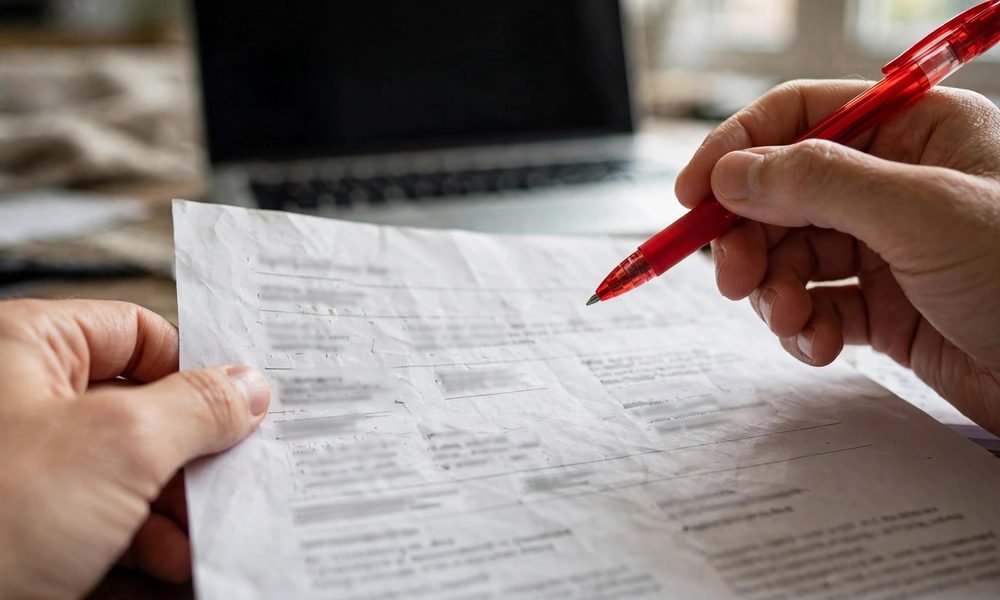
Jargon is the most common way good businesses write bad copy. Every trade has its own language, and that language feels natural to the person who wrote it. To a customer, it feels like a wall. A visitor who does not understand the words will not ask for a translation. They will assume the business is not for them, or that the price will be higher than they can afford, or that the process will be too complicated. Plain words are not dumbing down. They are a sign of respect for a busy stranger who has given the business a few seconds of attention.
The human cost of unclear words
Behind every unclear page is a real person trying to make a decision, often under pressure. A parent looking for a tutor, a homeowner looking for a repair, or a small firm looking for an accountant is not browsing for pleasure. They are trying to solve a problem, and they are comparing several businesses at once. The business with the clearest words wins, not because it is the cheapest or the largest, but because it is the easiest to trust.
The about page is where this trust is often won or lost, because it is the page a careful visitor checks before spending money. How an about page answers the trust questions buyers ask shows that visitors want three simple answers: who is behind the business, why they should be trusted, and what happens if they choose this business. Copy that answers those questions with specifics, names, and real experience will beat copy that offers only a mission statement and a stock photograph.
The caveats that matter
Bad copy is only one part of a bad website, and it helps to keep that in proportion. The wider cost of a bad website covers the full picture, including slow pages and confusing design, and it shows how those problems combine. Copy is the part a business can often fix first, because it needs no new technology and no new design, only honest words about a real offer.
| Detail | What is known |
|---|---|
| First cost | Confusion: visitors leave when the offer, price, or next step is unclear. |
| Second cost | Distrust: empty claims and jargon make a business sound like every rival. |
| Hidden cost | Wasted traffic: advertising sends visitors to a page that cannot convert them. |
| Staff cost | More basic questions by phone and email that the website should have answered. |
| Trust test | Visitors check the about page before spending, looking for specifics and proof. |
| Cheapest test | Ask a real customer to read the page and state the offer, cost, and next step. |
| What copy cannot fix | A weak offer, an unfair price, or a service that disappoints customers. |
| What to fix first | The homepage, the main service page, and the contact page, in that order. |
Checklist: judging website copy honestly
- Read the homepage aloud and ask whether a stranger would know what the business sells within ten seconds.
- Circle every claim on the main pages and ask what proof, number, or example supports it.
- Check that each main page states the next step clearly, and says what happens after the visitor takes it.
- Remove jargon and replace it with the plain words a customer would use to describe the same problem.
- Compare the copy with the questions customers actually ask, and add the answers that are missing.
- Ask one real customer to read the site and repeat back the offer, the cost, and the next step.
Frequently asked questions
How can a business tell if its copy is bad?
Watch what visitors do. If they arrive, stay for a few seconds, and leave without contacting the business, the words are not doing their job.
Is bad copy worse than bad design?
They harm a business in different ways, and both matter. Bad design drives visitors away before they read anything. Bad copy keeps them on the page but fails to persuade them. A site needs both to work: design that welcomes the visitor, and words that explain why they should stay and act.
Should a small business hire a copywriter?
It can help, but it is not always needed. A business owner who knows the customers well can often write better copy than an outsider, because they know the exact questions and worries.
How long should website copy be?
As long as the decision requires. A simple service needs a short, clear page. A large purchase needs more detail, more proof, and more answers to doubts. Length is not the test. Usefulness is the test: every sentence should answer a question, remove a doubt, or move the visitor toward the next step.
Does copy affect search rankings?
Yes, indirectly. Clear copy that answers real questions keeps visitors on the page longer and helps them find what they need, which search engines notice.
What should a business fix first?
Start with the homepage, then the main service page, then the contact page. Those three pages do most of the work. Fix the headline, the offer, and the next step on each one before rewriting the rest of the site, and measure enquiries before and after the change.
The bottom line
The real cost of bad website copy is not a bill. It is the quiet accumulation of visitors who never understood the offer, never trusted the claim, and never took the next step. Each one is a small loss on its own, and together they add up to a website that looks busy in the analytics and empty in the order book.
The fix is less dramatic than a rebuild and more useful than a new feature. Read the site as a stranger would, remove the words that say nothing, add the answers customers actually need, and test the result with real people. A business that writes clearly is a business that is easy to buy from, and easy to buy from is the most valuable thing a small website can be.
Note: This is an opinion about website copy for small businesses, not a copywriting service or a guarantee of results. Test any rewrite with real customers before judging whether it has worked.



