
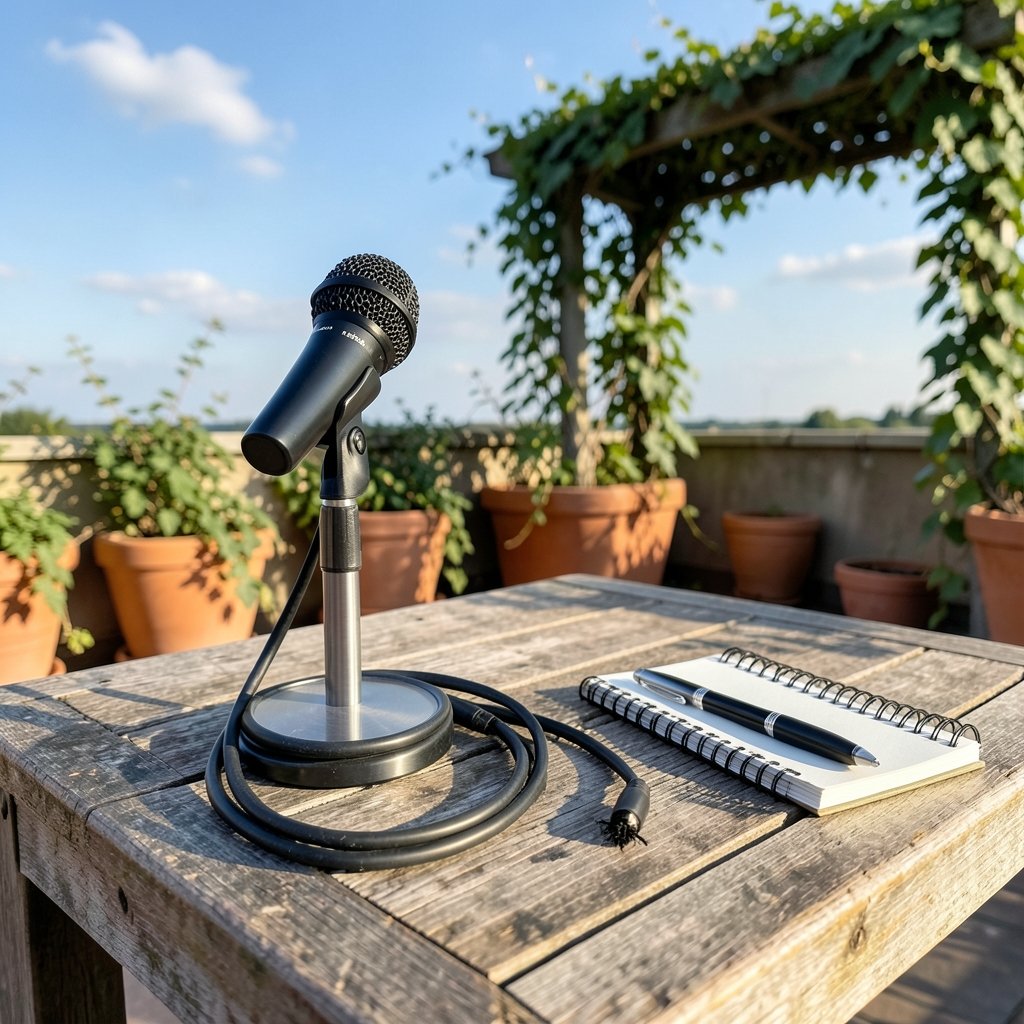
Quick Answer: Is this thing on?
Yes. “Is this thing on?” is a spoken check used by performers, speakers, and broadcasters to confirm that a microphone or sound system is live and working. You will hear it at the start of talks, comedy sets, podcasts, and radio shows, usually followed by “testing, testing” or a tap on the mic. It also works as a joke and as a metaphor for asking whether anyone is listening at all.
The phrase is not a technical standard; it is a habit of speech. It sits alongside other mic-check lines like “testing, 1-2-3” and “check, one, two.” People use it literally in a room with a microphone and figuratively in group chats, meetings, and emails.
Before relying on it, check the microphone, the channel or input, the gain level, the speakers, the room’s feedback risk, and whether the audience can actually hear you.
Why a Simple Question Says So Much

Have you ever watched someone walk up to a microphone, lean in, and ask, “Is this thing on?” The room usually laughs. The speaker relaxes. And somewhere in the back, a sound engineer sighs, because the answer was yes the whole time.
The phrase is short, but it carries a lot. It is a practical test, a comedy reflex, and a small confession of nerves rolled into four words. It shows up in conference halls and basements, on podcasts and radio, and in group chats where someone has just sent a message into silence.
Understanding the phrase means understanding three things at once: what it does technically, why it became a cultural shorthand, and how to handle the moment better than tapping the mic and hoping. This guide covers all three, with the practical details that separate a smooth soundcheck from an awkward one.
What the Phrase Actually Means
“Is this thing on?” checks the channel of communication, not the content. The speaker is not asking a question about the topic. The speaker is asking whether the equipment in front of them is working well enough to deliver words to other people.
Linguists have a term for this kind of talk. A phatic expression is language used to manage the channel or the social connection rather than to pass along information. “Can you hear me?” and “Hello, is anyone there?” belong to the same family. If you want the full academic picture, the entry on phatic expression explains how these small phrases do social and technical work at the same time.
The phrase also has a second life as a joke. Comedians use it to break the ice. Presenters use it to fill an awkward pause while the laptop wakes up. And in text form, it has become a way to ask, half-seriously, whether a message landed in a quiet group chat. The literal meaning and the comic meaning have grown so close that a single delivery can carry both.
Where the Phrase Comes From
Tracing the exact origin of a spoken phrase is harder than it sounds. It is widely tied to vaudeville, early radio, and live performance, but there is no clean, dated first use that everyone agrees on. Anyone who claims a precise birth year is probably guessing.
What is clear is the setting. Once amplification became common in theaters, churches, lecture halls, and radio studios, every performer faced the same small moment of doubt: is the system on? The question was practical before it was funny. The joke came later, when audiences started recognizing the ritual.
That pattern is common with phrases born on stage. A working line becomes a familiar line, and a familiar line becomes a punchline. Today the phrase is more likely to appear as a knowing wink than a genuine question, even when the microphone genuinely is not on.
The Technical Side: What a Mic Check Is Really Testing
When someone asks whether the thing is on, a sound engineer hears a checklist. A proper check covers several separate systems, and any one of them can fail.
| What is checked | What can go wrong | How to test it |
|---|---|---|
| Microphone | Dead battery, loose cable, muted switch | Speak at normal volume, watch the level meter |
| Channel or input | Wrong input selected, channel muted | Confirm the correct channel is open |
| Gain and levels | Too quiet, too hot, clipping | Ask for a level check and adjust the gain |
| Speakers and monitors | Unpowered, wrong output, blown driver | Listen in the room rather than only at the desk |
| Feedback risk | Mic too close to speakers | Walk the room while speaking |
| Recording or stream | Not armed, wrong source | Record a short test and play it back |
The most common mistake is the tap on the microphone. It feels like a test, but it mostly produces a dull thud that tells you almost nothing about speech. Worse, a hard tap can damage a sensitive capsule. The better habit is to talk. Say a sentence at the volume you will actually use, and let the engineer hear the real thing. (Firefox costs nothing download but mozilla worth paying)
The other classic hazard is feedback, the howl that happens when amplified sound from a speaker re-enters the microphone and gets amplified again. The audio feedback entry explains the loop clearly: sound goes in, comes out louder, goes back in, and the cycle escalates. A quick check helps catch it before the audience does. It is why engineers ask performers to speak while they walk the room, and why “testing, testing” is often followed by a wince. (Sound check)
In broadcast settings, the question is often answered by a light rather than a voice. A tally light on a camera or microphone shows which source is live, so nobody has to ask. The tally light entry covers how these on-air indicators work. In studios, the rule is simple: trust the light, not the feeling. (Home assistant vs smartthings which smart home platform fits)
How the Phrase Became a Cultural Shortcut
The phrase spread because it fits almost any situation where a message might not be getting through. A teacher at the back of a noisy classroom. A host opening a livestream. A person sending a third message into a group chat with no replies. Each one is a version of the same check.
It also works as a title. Comedy specials, podcasts, radio segments, and articles have all borrowed it because it signals self-awareness. The speaker is admitting the setup might fail, which makes the audience root for them. That small vulnerability is part of why the line still gets laughs after a century of use.
There is a useful lesson in that for anyone who presents. Acknowledging the equipment out loud can buy goodwill. But doing it well takes a light touch. The phrase works best as a quick aside, not as the opening of a five-minute apology for the venue’s sound system.
Practical Tips for the Moment It Happens
Whether you are the speaker, the host, or the person running the sound, a few habits make the check faster and less awkward.
- Check before the room fills. Test the mic, the levels, and the playback while the space is quiet, so problems surface early.
- Speak, do not tap. Use a normal sentence at normal volume, and watch the meter rather than guessing.
- Say something useful. Instead of counting, state your name and the first line of your talk. You will rehearse and test at once.
- Walk the room. Feedback and dead spots show up in person, not at the mixing desk.
- Agree on a signal. A thumbs-up to the engineer beats a shouted question mid-sentence.
- Have a backup plan. A spare mic, a spare cable, and a phone recording can save a session.
The most common mistakes are all small: forgetting the mic is muted, standing directly in front of a speaker, holding the mic too far away, or trusting a green light without listening. None of them are dramatic. All of them are avoidable with a two-minute check. (Occupational Noise Exposure)
If your setup involves streaming or recording, the same discipline applies. A tool like OBS Studio is free, but a clean stream still depends on checking sources and levels before you go live, as this breakdown of what OBS Studio really costs you in setup time explains. The software is rarely the problem; the unchecked input usually is.
When the Question Is Not About Sound at All
The phrase has escaped the stage. In workplaces, it shows up when someone posts an update and hears nothing back. In group chats, it is the nudge after a message sits unread. In meetings, it is the half-joke before a presenter realizes their screen is not shared.
In these settings, the phrase is doing the same job as always: checking the channel. It is a polite way of saying, “I am not sure this is reaching anyone.” That makes it useful, and also a little risky. Said too often, it can read as insecurity or as passive aggression. Said once, with a smile, it resets the room.
There is a modern twist, too. With so much text now generated by machines, people have started asking a related question: is this thing real? Readers who want to spot synthetic writing can learn how to tell if something is written by AI, which covers the tells in tone, structure, and detail. The spirit is the same as the mic check. Before you respond, confirm the channel is what you think it is.
How to Answer the Question Well
If someone asks whether the thing is on, the worst response is silence. The second worst is a vague “I think so.” A good answer is specific and immediate.
Say what you checked, what you found, and what you changed. “The mic is live, the level is good, and I turned down the monitor” tells the speaker everything they need. If something is broken, say that too, and offer the fix or the alternative. The goal is not to reassure. The goal is to make the next minute work.
For the person holding the microphone, the same principle applies in reverse. Ask once, listen for the answer, and then trust it. Repeatedly asking the same question signals nervousness and eats time. One clear check, one clear confirmation, and then begin.
Conclusion
“Is this thing on?” is one of those rare phrases that works on every level at once. It is a real technical check, a piece of stagecraft, a comedy reflex, and a metaphor for every message sent into uncertain silence. It has survived because the doubt behind it never goes away. Any time people speak through equipment to a room full of strangers, someone will wonder whether the channel is open.
The practical takeaway is simple. Skip the tap, speak a real sentence, watch the meter, walk the room, and agree on a signal with whoever runs the sound. Do that, and the question becomes a formality instead of a punchline. And when you hear it from the stage, answer quickly and clearly. The person asking is not really worried about the microphone. They are worried about being heard.
Frequently Asked Questions
Why do people say “testing, testing” during a mic check?
It is a short, repeatable phrase with plenty of vowel and consonant sounds, so it reveals whether a microphone is picking up speech clearly. The repetition also gives the engineer a few seconds to watch the level meter and adjust the gain before the real performance starts. (How to identify clothing from an image)
Is tapping the microphone a good way to test it?
No. A tap produces a dull thud that says little about how speech will sound, and a hard tap can damage a sensitive capsule. Speaking a normal sentence at normal volume is a better test and takes about the same amount of time.
What causes the loud howl during a soundcheck?
That howl is feedback, a loop where sound from a speaker re-enters the microphone, gets amplified, and repeats. It happens most often when the mic is close to a speaker or the gain is set too high. Walking the room while speaking is the standard way to catch it early.
Does the phrase have a known first use?
There is no widely agreed, dated first use. The phrase is commonly associated with vaudeville, early radio, and live performance, but claims of a precise origin year should be treated with caution unless a dictionary or corpus source backs them up.
What does it mean when someone types it in a group chat?
It usually means the sender is checking whether anyone is reading or responding. It is a playful version of the same question a performer asks on stage: is this channel reaching anyone? A quick reply, even a short one, settles it.
How can a speaker avoid an awkward start?
Check the equipment before the room fills, speak a real sentence instead of counting, confirm the level with the engineer, and agree on a simple hand signal for problems. A two-minute check before the audience arrives prevents most of the awkward moments people fear.



