

Quick Answer: What is today date?
Today’s date is the calendar day currently in effect where you are standing, and it is written in most of the world as a day, a month name, and a year. You can confirm it in seconds on a phone’s lock screen, a computer’s system clock, a search engine result, or a printed calendar.
The answer is not identical for everyone at the same moment. Because time zones span from UTC−12:00 to UTC+14:00, two places on Earth can be on different calendar dates right now, and occasionally they are two days apart. The date also depends on which calendar you mean: the Gregorian calendar used in most countries, the lunar Hijri calendar, or the lunisolar Hebrew calendar all give different numbers for the same day. (Calendar)
Before you rely on a date for anything important, check the time zone your device is set to, the calendar system in use where you are, whether the date is written in day-first or month-first order, and whether the source updates automatically or was frozen when a page was published.
Why “today” is a trickier question than it sounds
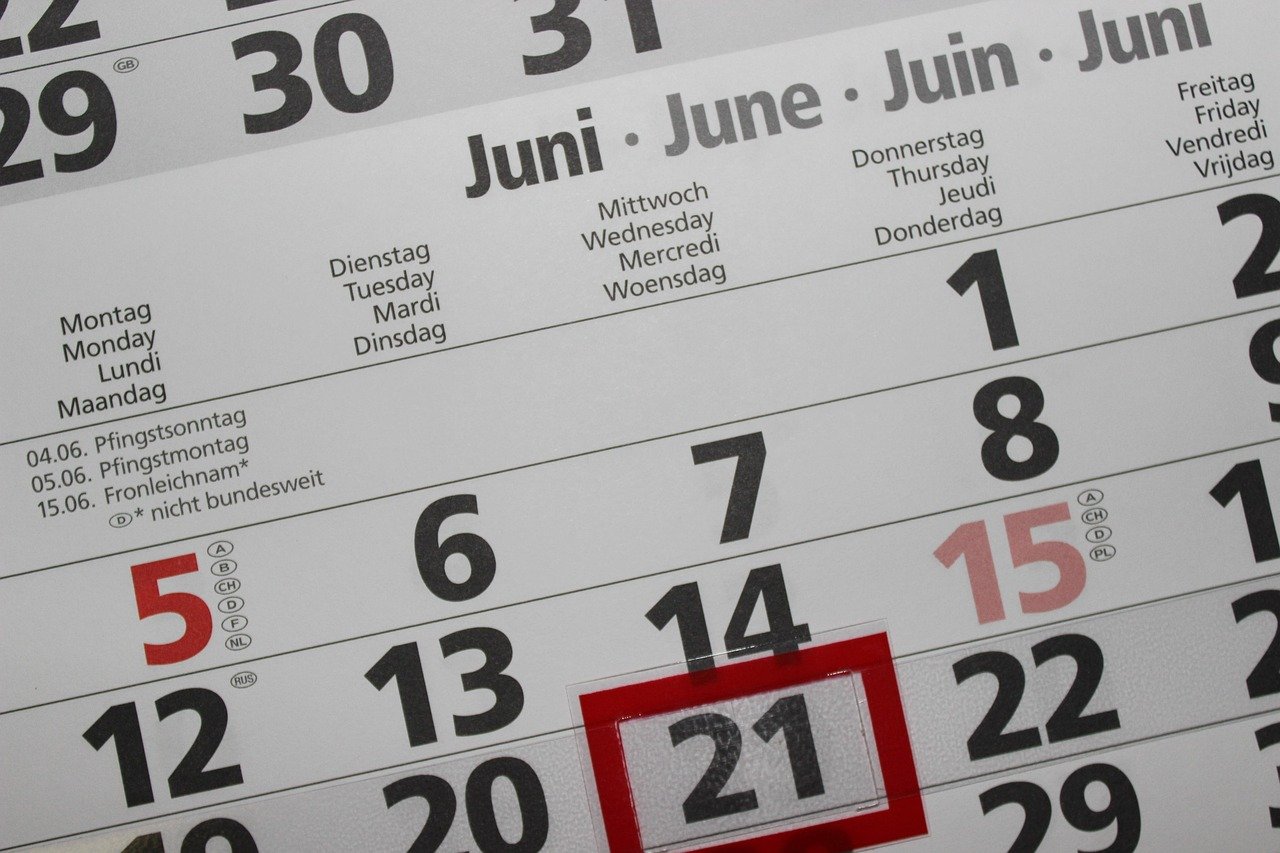
Ask someone the date and they will glance at their phone. Easy. But that little number on the lock screen is the end of a long chain of decisions made by astronomers, standards bodies, and software engineers, and the chain occasionally produces surprises.
The calendar most of us use is the Gregorian calendar, introduced by papal bull in 1582 to fix drift in the older Julian calendar. The reform dropped ten days and changed the leap-year rule so that century years are leap years only when divisible by 400. That is why 2000 had a 29 February and 1900 did not. The system approximates the tropical year at 365.2425 days, close enough that it drifts by roughly a day every few thousand years.
Then there is the clock itself. Coordinated Universal Time (UTC) is the global reference, built from atomic time and adjusted with leap seconds to stay within 0.9 seconds of Earth’s actual rotation. The first leap second was added in 1972 and the most recent in 2016, though the international bodies that govern timekeeping have agreed to phase leap seconds out by 2035.
None of this changes what day it is for you right now. But it explains why “today” is a local answer to a global question, and why the date on a website can be wrong while the date on your wrist is right.
The fastest ways to check today’s date
Most people just want the number. Here are the routes that actually work, ranked by reliability.
- Your phone’s lock screen or status bar. Updates automatically, follows your network’s time zone, and is almost always correct unless you have manually overridden the time zone.
- Your computer’s system clock. Reliable, but check the time zone setting in the corner. A laptop carried across an ocean can stay on the old zone for hours.
- A search engine. Typing the question into a search box returns a date based on your approximate location, which is usually right but can be off near a border or if you are on a VPN.
- A world clock or time zone converter. Best when you need the date somewhere else, not where you are.
- A printed calendar on the wall. Charming, and wrong roughly once a month if nobody flips the page.
The pattern is clear: the closer the source is to the device that knows your location and time zone, the more trustworthy it is. If you want a deeper walkthrough of reading and writing dates without errors, this guide to what today’s date is and how to verify it covers formats and time zones in more detail. (Time and Frequency Division)
How the date is written around the world
This is where confusion actually causes damage. The same eight characters can mean two different days depending on where the writer grew up.
| Format | Example | Mainly used in |
|---|---|---|
| Day-month-year | 08/11/2026 | UK, Ireland, most of Europe, Australia, Latin America |
| Month-day-year | 11/08/2026 | United States, Philippines, parts of Canada |
| Year-month-day (ISO 8601) | 2026-11-08 | International standards, science, software, East Asia |
The all-numeric year-first form is defined by ISO 8601, the international standard for representing dates and times. It exists precisely because the other two orders collide. When a date is written as 2026-11-08, there is no ambiguity: the year comes first, then the month, then the day, and the values are always zero-padded to two digits.
In practice, the safest habit is to spell the month out. “8 November 2026” cannot be misread by anyone. If you must use numbers, lead with the year.
A real-world mistake worth avoiding: booking travel through a site that displays dates in one format while the confirmation email uses another. People have missed flights over 03/04 versus 04/03. If a date matters, write it out in words and confirm it back to whoever sent it.
Time zones: why someone is always on a different date
At any given instant, the world is split across dates. When it is just after midnight in Auckland, it is still the previous morning in Los Angeles. The maximum spread is 26 hours, which means two places can be two calendar days apart.
A few practical consequences:
- Deadlines. “Due Friday” means different moments for a team in Tokyo and a team in Toronto. Always attach a time zone.
- Releases and launches. Software, games, and product drops often become available at a set UTC moment, which lands on different local dates. If you are tracking something like the Steam Machine release date in 2026, check whether the announced time is UTC or local.
- New Year’s Eve. Someone is always celebrating first, and someone is always last. Sydney gets there about 18 hours before New York.
If you need to know what the date will be a set number of days ahead, counting is easier than it looks but easy to fumble at month boundaries. A calculator for the exact date 45 days from today, including the day of the week, removes the guesswork.
The date in other calendar systems
The Gregorian date is not the only date. Several major calendars run on entirely different arithmetic, and knowing this prevents genuine misunderstandings.
The Islamic (Hijri) calendar is lunar, with twelve months of 29 or 30 days. Its year runs about 11 days shorter than the Gregorian year, so Islamic holidays drift earlier each year relative to the Western calendar. The Hebrew calendar is lunisolar, adding a leap month seven times in a 19-year cycle to keep festivals in their proper season.
There is also Unix time, the number of seconds elapsed since 1 January 1970 at 00:00:00 UTC. Computers use it because a single integer avoids all the ambiguity of formatted dates. When a system shows the wrong date, the underlying Unix timestamp is often fine and the display layer is the problem.
For everyday purposes, the practical rule is simple: if you are dealing with a religious holiday, a legal document, or a cultural event tied to a non-Gregorian calendar, look up the converted date rather than estimating. The conversion is not a fixed offset.
Common mistakes people make with dates
These come up constantly, and each one has a cheap fix.
Assuming a web page’s date is live. Many articles say “today” but were published months ago. A page that reads “as of today, the deadline is Friday” is meaningless without a stated publication date. Always look for an explicit date stamp.
Trusting a device that crossed a time zone. Phones usually update automatically, but laptops and smartwatches sometimes lag. If the date looks off by one, check the time zone setting first, not the calendar.
Writing dates numerically in international correspondence. This is the single biggest source of date errors in business. Spell the month.
Forgetting leap years in calculations. 2028 is a leap year, so February has 29 days. Any date arithmetic that crosses February in a leap year needs care.
Confusing 12 a.m. and 12 p.m. Midnight is the start of the new day. Noon is the middle of it. Plenty of people have shown up twelve hours early because of this one.
Using “today” in anything that will be read later. Emails, contracts, and articles should carry an explicit date. “Today” is a word that expires.
How to state the date clearly in writing
If the goal is to be understood, a few habits do most of the work.
Write the month as a word or abbreviation whenever the audience is international. Use the ISO 8601 format when the audience is technical, because it sorts correctly and cannot be misread. Include the time zone whenever a time accompanies the date, and use a recognised abbreviation or UTC offset rather than a nickname like “EST” that some readers will interpret differently.
For deadlines, give both the date and the day of the week. “Friday, 13 November 2026, 17:00 UTC” leaves nothing to interpretation. For anything archival, state the date of publication or the date the information was accurate.
One more habit worth building: when you quote a date from a source, copy it exactly as written and note the format. If a press release says “11/08/2026,” do not silently convert it. Ask, or write both readings out.
Dates in entertainment and product timelines
Date confusion is not confined to business. It shows up constantly in the things people search for.
Rumours about upcoming hardware illustrate the problem perfectly. Speculation about a PS6 release date in 2026 and separate chatter about PS6 release date rumours often cite “sources” without a firm date, and readers mistake a rumoured window for an announced one. The same pattern applies to game ports, where a Pokémon Ruby and Sapphire Switch release date leak for 2026 should be treated as unconfirmed until an official date exists.
The lesson generalises: a date attached to a rumour is not a date. Check whether the source is the company itself, a regulatory filing, or a secondhand claim.
Conclusion
Today’s date is whatever your local calendar says right now, and for most people that is the Gregorian date shown on a phone that has already synced to the correct time zone. The simplicity is real, but it sits on top of a global timekeeping system with genuine complexity underneath: leap seconds, UTC offsets spanning 26 hours, competing calendar systems, and a dozen ways to write the same day.
The practical takeaway is not to memorise the machinery. It is to build three small habits. Spell the month when writing to anyone outside your country. Attach a time zone whenever a time matters. And state dates explicitly in anything that will outlive the moment, because “today” stops being true tomorrow.
Do those three things and you will avoid nearly every date mistake that causes real trouble. The rest is just checking your lock screen.
Frequently asked questions
Is today’s date the same everywhere in the world?
No. Because time zones range from UTC−12:00 to UTC+14:00, the local calendar date can differ by up to two days across the globe at the same instant. When it is already tomorrow in New Zealand, it is still yesterday in Hawaii.
Why does my computer show a different date from my phone?
Almost always a time zone setting. Computers sometimes keep the zone they were configured with in another location, while phones update from the mobile network. Check the time zone before assuming the clock is broken.
What is the ISO format for today’s date?
ISO 8601 writes dates as year-month-day with zero-padded values, so 8 November 2026 becomes 2026-11-08. The year-first order removes the ambiguity between day-first and month-first conventions.
Do leap years affect how I calculate a future date?
Yes, whenever your calculation crosses February. A leap year adds 29 February, shifting every subsequent date by one day compared with a common year. 2028 is the next leap year.
What date is it in the Islamic calendar?
It depends on the day, because the Hijri calendar is lunar and its year runs about 11 days shorter than the Gregorian year. The offset shifts every year, so use a converter rather than applying a fixed number.
How can I tell if a web page’s date is current?
Look for an explicit published or updated date near the headline or at the bottom of the page. If a page says “today” without a date stamp, treat the information as frozen at an unknown moment and verify it elsewhere.



