
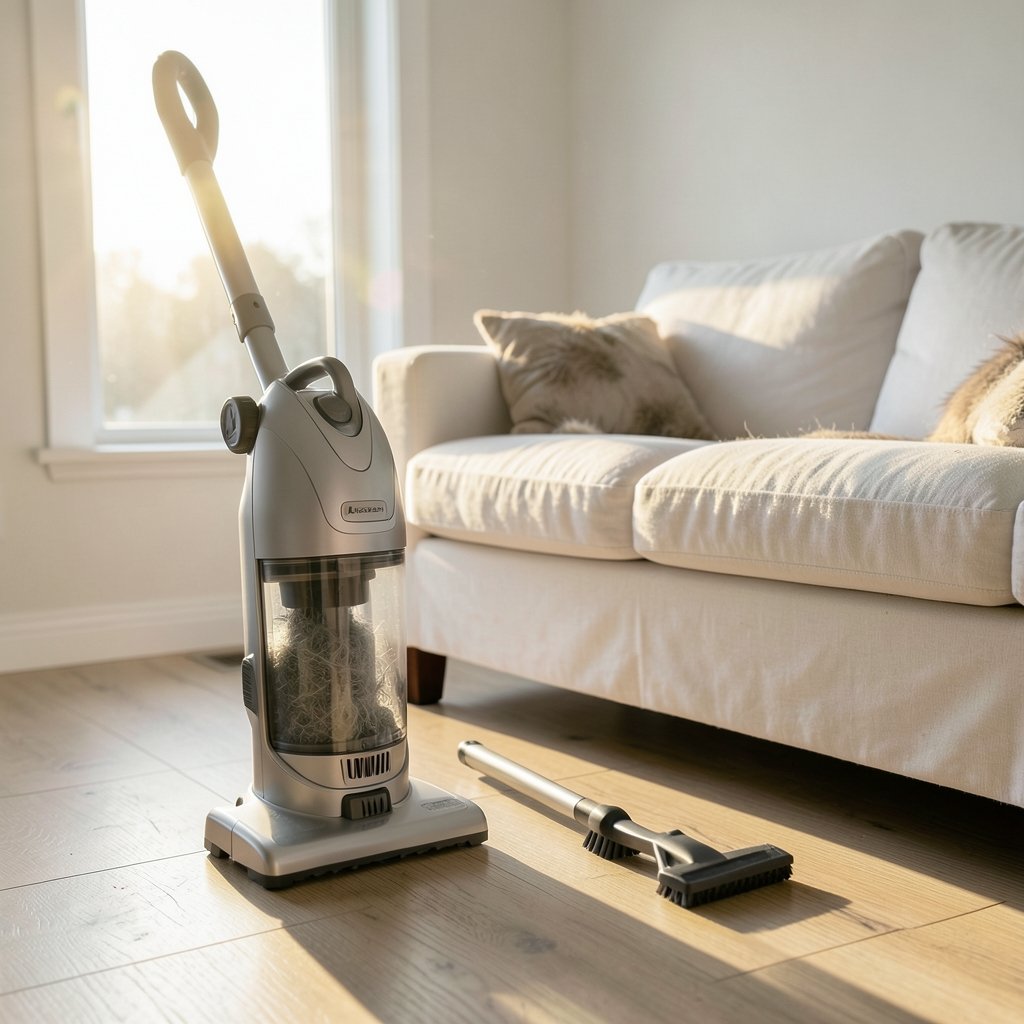
What if the thing standing between you and a fur-free couch isn’t more suction, but the right kind of suction?
That’s the uncomfortable truth about shopping for a pet hair vacuum. Walk down any aisle or scroll any product page and you’ll see big numbers, bold claims, and a cheerful golden retriever staring back at you. None of that tells you whether the brush roll will jam solid with hair by week two, or whether the exhaust will launch a cloud of dander straight into your face.
This guide cuts through the noise. It covers what genuinely separates a good pet vacuum from a mediocre one, which design types suit which homes, the mistakes almost everyone makes, and how to keep a vacuum performing long after the honeymoon phase ends.
Why Pet Hair Is Two Problems, Not One
Most people think of pet mess as visible fur. The bigger issue is often invisible.
Pet dander, the flakes of shed skin that animals constantly produce, is a common indoor allergen, and those particles are small enough to stay airborne and settle deep into fabric. A vacuum that picks up fur but blows fine particles back into the room is solving half the problem. That’s why filtration deserves as much attention as raw pickup power.
A true HEPA filter is rated to capture at least 99.97% of particles at 0.3 micrometers in diameter. That rating is the standard most manufacturers reference when they use the term, and it’s the benchmark worth looking for on the box. Vague phrases like “HEPA-style,” “HEPA-like,” or “high-efficiency” don’t carry the same meaning.
Here’s the practical takeaway: if anyone in the house sneezes around the dog or reacts to the cat, filtration is not a bonus feature. It’s the feature.
The Design Types and What They’re Good At
No single vacuum wins everywhere. The right pick depends on your floors, your pets, and how much patience you have for maintenance.
| Type | Best for | Watch out for |
|---|---|---|
| Upright with powered brush roll | Wall-to-wall carpet, embedded hair | Heavy; brush rolls tangle without tangle-resistant design |
| Canister | Hard floors, stairs, above-floor cleaning | Bulkier to store and drag around |
| Cordless stick | Quick daily cleanups, hard floors, low-pile rugs | Short runtime on max power; small bins |
| Robot vacuum | Maintenance cleaning between deep cleans | Struggles with heavy shedding and long hair tangles |
A long-standing rule of thumb in the category: uprights with powered brush rolls tend to outperform canisters on carpet, because the agitation lifts hair that’s been pressed into the pile. Canisters and sticks shine on hard floors and for reaching under furniture and along baseboards.
For homes with a mix of surfaces, many pet owners end up with two tools: a capable upright or canister for the weekly deep clean, and a stick or robot for daily touch-ups. If you want to dig into specific machine categories, there are dedicated breakdowns of the best vacuums for pet hair that go model by model.
The Failure Mode Nobody Warns You About
Ask a long-haired pet owner what killed their last vacuum and you’ll usually hear the same answer: the brush roll.
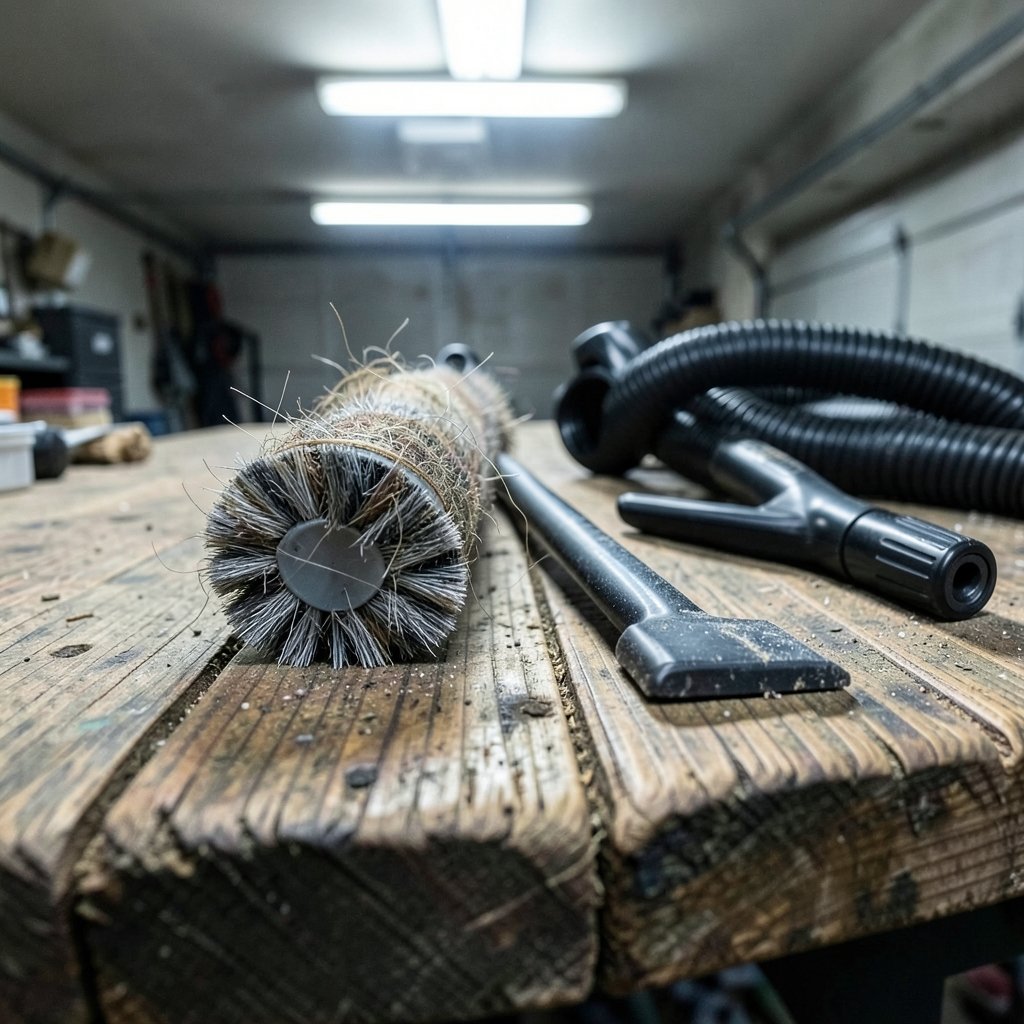
Long human hair and pet fur wrap around the rotating brush like thread on a spool. Once the roll is cocooned, pickup drops off a cliff and the motor starts working harder than it should. Designs with tangle-resistant brush rolls or easily removable rolls have become common since roughly 2018, and they make a real difference to how often you have to perform surgery with scissors.
Worth knowing: no independent standard measures “tangle resistance.” It’s a design claim, not a certified rating, so treat it as a strong hint rather than a guarantee. The same logic applies if you’re dealing with long hair specifically; a guide on whether a robot vacuum for long human hair actually works is a useful reality check before you spend money on automation.
Bagged or Bagless?
This one divides people, and both camps have a point.
Bagged vacuums tend to release fewer particles when you empty them, because the debris goes into a sealed bag you remove and toss. Bagless models save money on consumables but require careful emptying, ideally outdoors or into a lined bin, to avoid re-dispersing the very allergens you just collected.
If allergies are a factor, bagged has a quiet advantage. If convenience and cost matter more, bagless works fine as long as you’re not dumping the canister in the middle of the living room.
What the Specs Don’t Tell You
Manufacturer numbers deserve skepticism, and not because companies are lying. It’s because there’s no independent, standardized way to compare suction, airflow, or runtime across brands. A “60-minute runtime” might mean 60 minutes on the lowest setting with a non-motorized tool attached. Switch to max power with a motorized brush and that figure can drop sharply.
Typical cordless stick vacuums run somewhere in the 20 to 60 minute range depending on mode, with the real-world figure often landing at the low end. That’s fine for a daily lap around the kitchen. It’s not fine for a 2,500-square-foot house with three shedding dogs.
Weight matters too. Many full-size uprights land in the 15 to 20-plus pound range, and a vacuum you dread hauling out of the closet is a vacuum that stays in the closet. Pet owners who vacuum daily often do better with something light enough to grab without thinking.
One more thing: “pet mode” and bundled pet tools are marketing, not certification. A motorized mini brush or rubber nozzle genuinely helps on upholstery and car seats, but no independent body certifies a vacuum as “pet-rated.” Judge the tool by whether it reaches the places your pet actually sheds.
Practical Tips That Make Any Vacuum Work Better
Experience beats specs here. A few habits separate people whose vacuums last years from people who burn through one every eighteen months.
- Vacuum slowly. Rushing over carpet gives the brush roll no time to agitate and the airflow no time to lift. Two slow passes beat five fast ones.
- Go over high-shed areas twice, in different directions. Pet beds, the couch, and the strip of floor where your dog naps deserve the extra pass.
- Clear the brush roll weekly. Even tangle-resistant designs collect some wrap. Five minutes with scissors prevents a motor strain down the road.
- Wash or replace filters on schedule. A clogged filter strangles airflow and pushes fine dust back into the room. Rinseable filters need full drying time before reinstalling.
- Empty the bin before it’s full. Airflow drops as the canister fills, and a full bin means more particles escaping during emptying.
- Keep the vacuum’s exhaust pointed away from your face when working near pet beds, especially if you’re sensitive to dander.
Common mistakes worth naming: buying on suction alone, ignoring filter cost over time, and choosing a machine too heavy to use daily. All three are easy to avoid with ten minutes of honest thinking about your home.
Matching the Vacuum to Your Home
The right answer changes with your floors and your pets.
Carpeted home, heavy shedder. Prioritize an upright with a powered brush roll, strong filtration, and a brush roll you can remove without tools. Accept the weight.
Hard floors throughout. A canister or a good stick gives you reach and maneuverability without fighting a heavy upright on tile. Look for soft roller or rubber brush designs that don’t scatter debris.
Apartment with one cat. A cordless stick plus a handheld for the couch covers almost everything. Runtime limitations barely matter at that square footage.
Multiple long-haired pets. Tangle resistance jumps to the top of the list, and a bagged or carefully emptied bagless design helps if allergies are in play. If you’re also managing hair elsewhere in the house, small maintenance habits add up; the same principle behind guides like how to clean hair brushes so they stop looking and smelling gross applies to vacuum brush rolls.
Allergy sufferer in the household. Filtration first, then pickup. A HEPA-equipped vacuum with a sealed system is worth more than extra power.
Maintenance That Extends the Life of a Pet Vacuum
Pet hair is abrasive work. A vacuum in a pet home runs harder and more often than one in a pet-free house, so a little upkeep goes a long way.
Check the brush roll weekly and the filter monthly. Look for hair wrapped around the base of the roll where it meets the housing, a spot people routinely miss. Inspect the hose for clogs if suction suddenly drops; a single wad of fur can choke a hose completely. Wipe the exterior down occasionally, because dander film builds up on housings and handles.
And when a part wears out, replace it. A worn brush roll with flattened bristles stops agitating carpet properly, which makes a perfectly good vacuum feel broken.
Conclusion
The best vacuum for pet hair isn’t the one with the biggest number on the box. It’s the one with filtration that keeps dander out of the air, a brush roll that doesn’t turn into a hairball, and a weight and runtime that match how you actually live. Get those three right and the fur problem becomes a routine chore instead of a daily battle. Get them wrong and you’ll be back in the aisle in a year, staring at another golden retriever on another box.
Frequently Asked Questions
Do I really need a HEPA filter for pet hair?
For visible fur alone, no. For dander and allergy control, yes. A true HEPA filter captures at least 99.97% of particles at 0.3 micrometers, which is the size range where dander and fine dust matter most. If nobody in the house reacts to the pets, a good multi-layer filter can be adequate, but HEPA is the safer choice.
Is a robot vacuum good enough for pet hair?
It’s a useful supplement, not a replacement. Robots handle daily surface fur well on hard floors and low-pile carpet, but heavy shedding and long hair tend to clog their brushes and small bins. Most pet households do better pairing a robot for maintenance with a full-size vacuum for weekly deep cleans.
How often should I vacuum with pets in the house?
Daily in high-traffic areas if shedding is heavy, and at least two to three times a week everywhere else. Frequent light passes keep hair from embedding in carpet pile, which makes each session faster. Homes with allergy sufferers generally benefit from more frequent cleaning rather than more intense cleaning.
Why does my vacuum lose suction so quickly?
The usual suspects are a clogged filter, a full bin, a blocked hose, or hair wrapped around the brush roll. Check the filter first, then the hose, then the brush. Pet hair accelerates all of these problems, which is why a quick weekly inspection saves a lot of frustration.
Are “pet mode” and pet-specific tools worth paying extra for?
Sometimes. Motorized mini brushes and rubber nozzles genuinely help on upholstery, stairs, and car seats, and those are exactly the spots pet hair hides. But no independent body certifies “pet” performance, so evaluate the tools themselves rather than the label on the box.
What’s more important, suction power or brush roll design?
For carpet, brush roll design usually wins. A powered roll that agitates the pile lifts embedded hair that raw airflow alone leaves behind. For hard floors and above-floor cleaning, airflow and tool design matter more. Buy for your dominant floor type, not the highest number in the specs.



