

What if the difference between a tuxedo and a dinner suit came down to nothing more than which side of the Atlantic you’re standing on? That’s the surprising truth most people miss. The two words describe the same garment, but they carry different histories, different social baggage, and a few regional quirks that trip people up at exactly the wrong moment, like when an invitation says “black tie” and the guest is standing in a rental shop with no idea what to ask for. This guide cuts through the confusion, shows where the terms genuinely diverge, and explains why the answer matters less than the details most people overlook.
The Short Answer Most People Need
In everyday usage, tuxedo and dinner suit mean the same thing. Both describe a formal evening suit for men, usually black, with satin or grosgrain-faced lapels and a matching trouser stripe. The main difference is geography. “Dinner suit” is the standard British term. “Tuxedo,” often shortened to “tux,” is the American one. Dictionaries on both sides of the ocean treat the words as equivalent or very nearly so.
That equivalence matters because a lot of articles try to invent a hard technical distinction that doesn’t exist. There is no governing body that rules on menswear vocabulary. No standards organization defines where a dinner suit ends and a tuxedo begins. Anyone claiming a strict, rule-based separation is usually dressing up a regional preference as a universal law.
The practical takeaway: if someone invites you to a black-tie event and you ask for either a tuxedo or a dinner suit, you’ll get the right garment. The vocabulary is the easy part. The details are where people go wrong.
Where the Words Come From
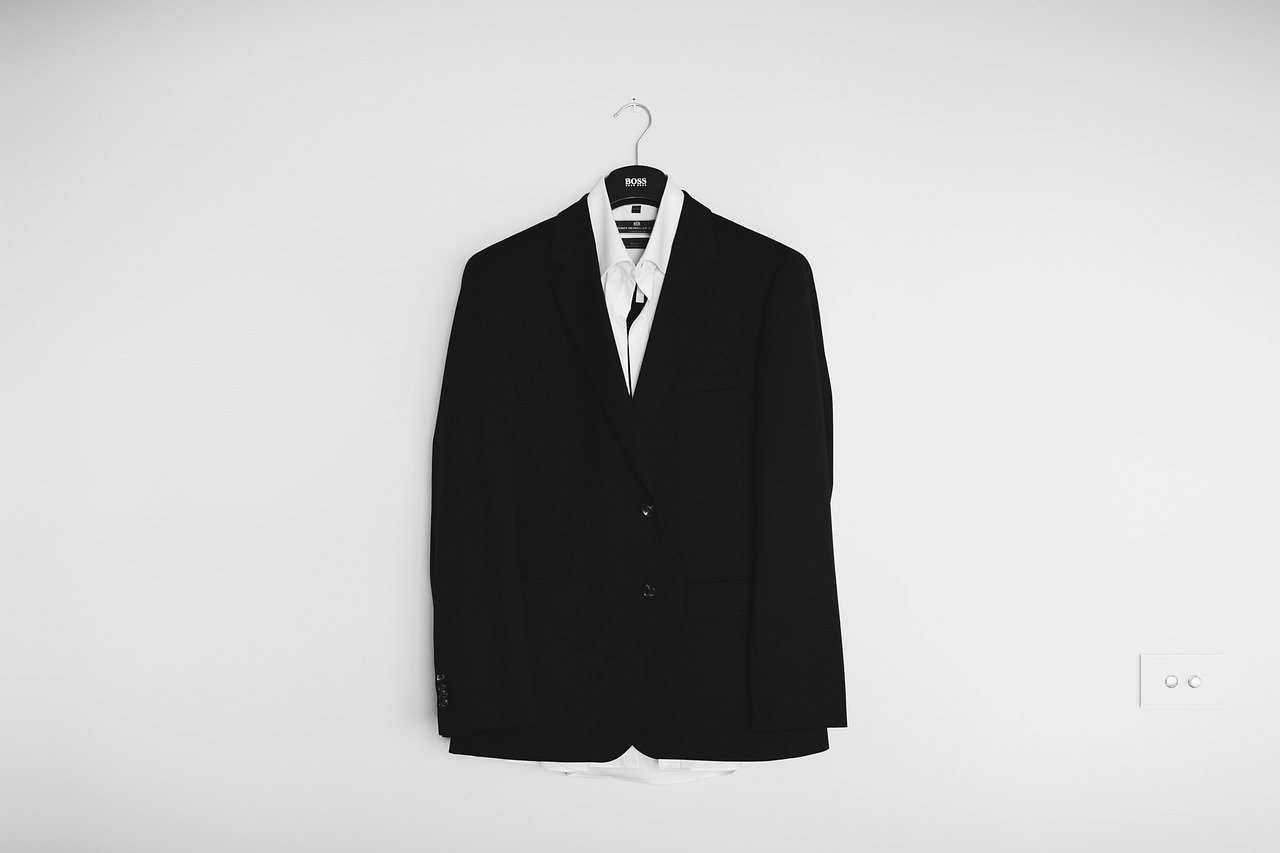
The history explains why two names exist for one item.
Tuxedo traces to Tuxedo Park, an upstate New York resort community where, according to popular tradition, the short evening jacket entered American society in the late 1880s. The most repeated version credits Griswold Lorillard at an 1886 autumn ball. That story is widely told but not firmly documented, so it’s best treated as tradition rather than settled fact. What’s clearer is the garment’s British ancestor: the dress lounge or dinner jacket, a short evening coat worn for informal evening dinners, as distinct from the tailcoat required for full formal dress.
So the British had the short jacket first and called it a dinner jacket. Americans adopted it, attached a place name to it, and called it a tuxedo. Both names stuck. Neither is more correct. If you want a parallel, think about how the same garment can be a “jumper” in Britain and a “sweater” in the US, or how speed terminology splits between regions in ways that confuse buyers, as covered in this breakdown of what the Mbps vs Gbps difference means for your actual internet speed. Vocabulary drift is normal. It rarely signals a different product.
Tuxedo vs Dinner Suit at a Glance
| Feature | Tuxedo (US usage) | Dinner Suit (UK usage) |
|---|---|---|
| Core meaning | Formal evening suit, black tie level | Formal evening suit, black tie level |
| Typical jacket | Black or midnight blue, satin or grosgrain lapels | Same construction and conventions |
| Trousers | Black with a single satin side stripe | Same |
| Neckwear | Black bow tie | Black bow tie |
| Shirt | Formal shirt, often with studs | Same |
| Regional home | United States | Britain, Australia, New Zealand |
| Formality level | Below white tie, above business dress | Identical position in the hierarchy |
The table makes the point bluntly: the columns match almost line for line. The real differences live in regional habit and in how strictly people read the rules.
The Formality Ladder Nobody Explains Properly
Formal evening dress has a codified hierarchy, set out in etiquette and dress-code literature rather than by any law. At the top sits white tie: tailcoat, white bow tie, the full works. One level down sits black tie, which is the tuxedo or dinner suit. Below that, the rules loosen considerably.
This ladder is why the terms get confused with formality itself. People hear “tuxedo” and assume maximum formality. In truth, a tuxedo is the second rung, not the top. Wearing one to a white-tie event is a mistake in the same way that wearing a business suit to a black-tie wedding is a mistake. The garment is right for its rung and wrong one rung up.
A useful habit: read the invitation, not the garment label. If it says white tie, you need tails. If it says black tie, you need a tuxedo or dinner suit. If it says “black tie optional,” you have room to move, and a dark suit will usually pass. Getting this hierarchy right matters more than which word you use for the jacket.
What Black Tie Actually Requires
Black-tie conventions are conventional, not legally fixed. Still, the standard build looks like this:
- Jacket: black or midnight blue, with satin or grosgrain-faced lapels.
- Trousers: black, with a single satin stripe down the side.
- Shirt: a formal dress shirt, often with studs rather than buttons.
- Neckwear: a black bow tie. Not a long tie, not a colored tie.
- Shoes: polished black leather, traditionally patent or highly buffed.
- Accessories: cufflinks, and optionally a pocket square kept simple.
Variations exist and are accepted in practice. A velvet jacket, a shawl collar instead of peaked lapels, or a midnight-blue suit instead of black all appear at real events without causing scandal. They sit outside the strictest reading of the rules, but the strictest reading is a minority sport. The core elements, jacket, trousers, bow tie, formal shirt, are what carry the look.
Midnight blue deserves a note. It’s a recognized alternative to black, on the widely repeated reasoning that it photographs as a deeper black under artificial light. Treat that as a styling claim rather than a hard rule. It’s a sensible choice for anyone who expects to be photographed under warm indoor lighting, and a harmless one for everyone else.
Common Mistakes People Actually Make
Knowing the terms is one thing. Wearing them well is another. These are the errors that show up again and again.
Mistake one: treating the trouser stripe as optional. A plain black dress trouser with a dinner jacket reads as a mismatched suit. The satin side stripe is one of the few details that signals black tie at a glance.
Mistake two: swapping the bow tie for a long tie. A long tie with a tuxedo looks like a business suit that lost its nerve. If you dislike bow ties, practice tying one rather than abandoning it. A pre-tied bow is acceptable in a pinch and far better than the alternative.
Mistake three: over-accessorizing. Cummerbunds, waistcoats, braces, and pocket squares can each work. Wearing all of them at once rarely does. Pick one or two and let the rest go.
Mistake four: ignoring fit. A rented tuxedo that’s two sizes off will look worse than a well-fitted dark suit. Shoulders should sit clean, the jacket should close without pulling, and the trouser break should be slight. Fit beats fabric every time.
Mistake five: assuming price equals correctness. An expensive jacket with the wrong lapel facing or a colored bow tie is still wrong. The rules are about proportion and restraint, not labels.
If you’re the type who likes understanding how small technical distinctions shape real-world outcomes, the same logic applies to hardware choices, as this look at where the real speed difference between NVMe and SATA SSDs shows up in gaming demonstrates. Details that seem cosmetic often carry the actual signal.
Regional Vocabulary Beyond the US and UK
The split isn’t purely American versus British. In Australia and New Zealand, dinner suit is the common term. “Tuxedo” is understood but less usual. The precise distribution varies and is worth checking if you’re buying for an event abroad, but the pattern holds: former British-influenced markets lean toward “dinner suit,” while American usage exports “tuxedo” through film, television, and retail.
This matters for shopping. Search a British retailer’s site for “tuxedo” and you may get fewer results than searching “dinner suit,” even though the stock is identical. Search an American site for “dinner suit” and you may see formalwear filtered oddly. If you’re buying online across borders, try both terms. The same principle applies to service terminology: knowing which word a region uses saves time, much like understanding the difference between a VPN and a proxy before you commit to one. The label changes; the underlying thing often doesn’t.
How to Choose and Buy Well
Practical guidance beats theory here. A few habits separate a good purchase from a regretted one.
Decide by event, not by word. Ask what the dress code says. Black tie means a tuxedo or dinner suit. Once you know that, the vocabulary question dissolves.
Buy fit before brand. Off-the-peg with a good tailor beats designer with a bad fit. Sleeve length, jacket waist, and trouser hem are the three adjustments that matter most.
Choose fabric for your climate and season. Wool travels well and works year-round in most climates. Velvet is a winter choice. Lighter weaves suit warm evenings.
Keep the palette tight. Black or midnight blue, white shirt, black bow tie, black shoes. Color belongs in the pocket square at most.
Own rather than rent if you’ll attend more than twice. The break-even point arrives quickly, and an owned suit fits better because it was altered for you.
Store it properly. A breathable garment bag, a shaped hanger, and a brush after each wear will keep the lapel facing crisp for years.
For anyone weighing bigger financial decisions alongside wardrobe ones, the same discipline of matching the tool to the job applies, whether that’s understanding how money actually moves between generations or comparing the speeds, fees, and safer routes for transferring money between banks. Good choices start with clear definitions.
Conclusion
The difference between a tuxedo and a dinner suit comes down to language, not construction. They name the same black-tie garment, with “dinner suit” dominant in Britain, Australia, and New Zealand, and “tuxedo” standard in the United States. The history runs through Tuxedo Park on one side and the British dinner jacket on the other, but both roads lead to the same jacket, the same satin-striped trousers, and the same black bow tie.
What actually separates a sharp appearance from a sloppy one isn’t the word on the label. It’s the formality ladder, the fit, the trouser stripe, and the restraint to stop accessorizing before the look tips over. Get those right and nobody at the event will care which term you used to buy the suit. Get them wrong and the vocabulary won’t save you.
Frequently Asked Questions
Is a tuxedo the same as a dinner suit?
Yes, in practical terms. Both describe a formal evening suit worn at the black-tie level, typically black or midnight blue with satin or grosgrain lapels and a striped trouser. “Dinner suit” is the British term and “tuxedo” is the American one. Dictionaries treat them as equivalent or near-equivalent, and no authority defines a hard technical difference.
Can I wear a dinner suit to a black-tie event?
Yes. A dinner suit is exactly what black tie calls for. Pair it with a black bow tie, a formal shirt, and polished black shoes. Avoid substituting a long tie or plain trousers without the satin stripe, since those details signal the dress code.
What is the difference between a tuxedo and a suit?
A regular suit is business or smart-casual wear, usually with notch lapels and no satin detailing. A tuxedo or dinner suit is formal evening wear, with satin or grosgrain-faced lapels, a satin trouser stripe, and a bow tie. The tuxedo sits one rung below white tie on the formality ladder and well above an ordinary business suit.
Why is it called a tuxedo in America?
The name is tied to Tuxedo Park, an upstate New York resort community where the short evening jacket is said to have entered American society in the late 1880s. The most repeated story credits Griswold Lorillard at an 1886 autumn ball, though that account is tradition rather than firmly documented history.
Is midnight blue acceptable for a tuxedo?
Yes, midnight blue is a recognized alternative to black. The common reasoning is that it photographs as a deeper black under artificial light, which is useful at evening events with indoor photography. It’s a styling preference rather than a strict rule, and it sits comfortably within black-tie conventions.
Do I need a bow tie with a dinner suit?
Yes, a black bow tie is the standard. A long tie with a dinner suit reads as a business suit missing its purpose. If tying a bow is difficult, a pre-tied version is acceptable and far better than abandoning the bow altogether. Practice a few times before the event and the knot becomes routine.



