

What is the one Traxxas buggy that has stayed in the catalog while fashions in radio-controlled racing came and went? It is the Bandit, a rear-motor, two-wheel-drive off-road buggy that has been part of the Traxxas lineup for decades. For a lot of hobbyists, it was the first hobby-grade car they ever owned. For others, it is the model they keep coming back to because it is cheap to fix, simple to understand, and quick enough to be fun on a driveway, a dirt lot, or a prepared track.
This article looks at Traxxas RC buggies in plain terms: what the Bandit is, how the brushed and brushless versions differ, how a buggy differs from the stadium trucks people often confuse it with, and what ownership actually costs in time and money. It also covers the practical stuff that catches newcomers out, like connectors, batteries, and the difference between a ready-to-run car and a kit.
Traxxas and the Ready-to-Run Revolution
Traxxas was founded in 1986 in McKinney, Texas, and built its reputation on electric radio-controlled vehicles. The company’s big contribution to the hobby was not any single chassis but a business idea: the ready-to-run car. Instead of buying a box of parts and spending weeks building it, a buyer could open the box, charge a battery, and drive.
That mattered because kit building was a real barrier. A traditional kit required soldering, painting, careful assembly, and a separate radio system. Ready-to-run cars arrived assembled, with the radio, speed control, and often a battery and charger included. The trade-off is that RTR cars use more proprietary parts and are less customizable out of the box. For most beginners, that trade is worth it.
The used market reflects this. Traxxas models dominate classified listings because so many were sold in the first place. If you are shopping second-hand, the same logic applies across the hobby: Australia’s second hand EV market and its 11,000 Carsales listings is a reminder that volume listings do not equal quality listings, and the same caution applies when buying a used RC car sight unseen.
Meet the Bandit: Traxxas’s Long-Running 2WD Buggy
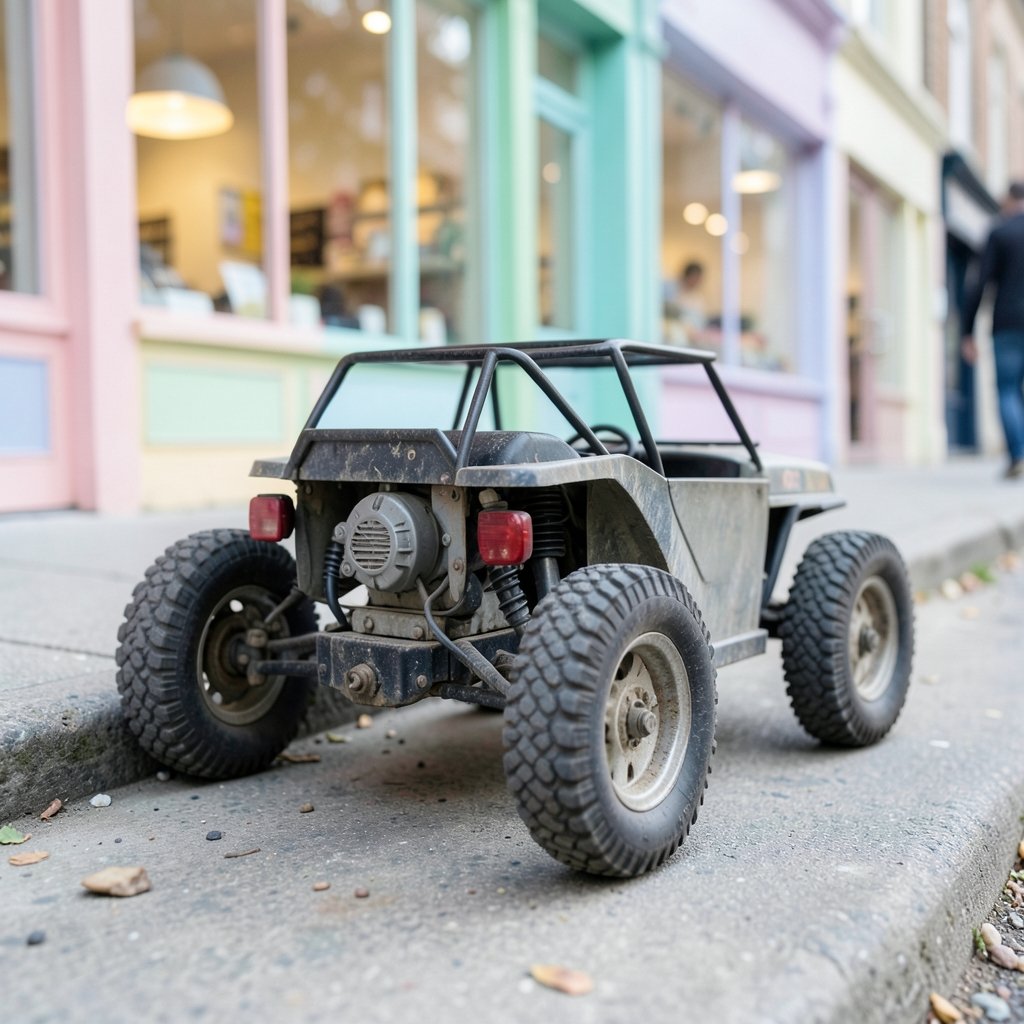
The Bandit is Traxxas’s classic two-wheel-drive electric buggy. It uses a rear-motor layout, which puts weight over the driven wheels and helps traction on loose surfaces. It is commonly described as 1/10 scale, though scale labeling in RC is approximate and not standardized between brands. A 1/10 buggy from one maker may be noticeably larger or smaller than another’s.
The Bandit’s design has barely changed in its essentials over the years, and that is part of its appeal. Parts are widely available, the layout is easy to work on, and a broken car is usually a cheap fix rather than a write-off. The exact introduction year is often cited as the mid-1990s, but treat any precise date with caution unless you have checked an official source, because model histories get repeated without verification.
Two versions matter most:
| Feature | Bandit (brushed) | Bandit VXL (brushless) |
|---|---|---|
| Motor type | Brushed | Brushless (Velineon system) |
| Typical speed | Moderate, beginner-friendly | Notably higher; manufacturer figures are marketing claims |
| Best for | First-time drivers, kids, tight spaces | Experienced drivers, open areas |
| Maintenance | Brushes wear; motor is cheap to replace | Less motor maintenance, more heat management |
| Cost | Lower | Higher |
The Bandit VXL uses Traxxas’s Velineon brushless motor and speed control. Brushless motors are more efficient and need less upkeep than brushed motors, but they also generate more heat and demand better battery management. Any top-speed number you see quoted for the VXL is a manufacturer figure measured under specific conditions. Real-world speed depends on gearing, battery voltage, surface, and temperature.
Buggy or Stadium Truck? Clearing Up the Confusion
One of the most common mix-ups in the Traxxas range is between the Bandit and the Rustler. The Rustler is a two-wheel-drive electric stadium truck, not a buggy. The two share a broadly similar rear-motor platform, which is exactly why people confuse them.
The difference is body style and stance. A buggy sits lower with an enclosed, wedge-shaped body and exposed wheels. A stadium truck sits a little higher with a pickup-style shell. In practice, on a rough back yard, the truck’s extra ground clearance helps. On a smooth track, the buggy’s lower center of gravity usually wins.
Then there is four-wheel drive. The classic Bandit has no 4WD sibling in the traditional buggy line. Traxxas’s 4WD off-road range leans toward short-course and truck platforms, such as the Slash 4X4 and Rustler 4X4. If a strict four-wheel-drive buggy is what you want, you will often end up looking at other brands or accepting a 4WD truck instead. Lineups change, so check the current catalog before committing.
What Ownership Actually Looks Like
Buying the car is the easy part. Living with it is where the real learning happens. Here is what experienced owners tend to agree on.
The connector question
Traxxas vehicles use the company’s proprietary iD connector and recommend its own battery packs. Third-party batteries work, but they need adapters. This is vendor lock-in, not a defect. It keeps things simple if you stay with Traxxas packs and mildly annoying if you want to use packs you already own. Decide early which way you want to go, because buying batteries twice is an expensive mistake.
Radio gear
Ready-to-run Traxxas models ship with either a TQ two-channel transmitter or a TQi 2.4 GHz telemetry-capable unit, depending on trim level. For a beginner, the basic TQ is perfectly adequate. The TQi adds tuning and telemetry features that many owners never use. Do not pay extra for a radio you will not explore.
The maintenance rhythm
A buggy that runs in dust and grit needs attention. The practical routine that works:
- Clean the car after every run, especially around the motor, bearings, and driveshafts.
- Check wheel nuts and screws for looseness before each session.
- Inspect tires for wear and replace them in pairs to keep handling balanced.
- Check gear mesh and slipper adjustment if the car starts sounding rough.
- Store batteries at the correct storage voltage rather than fully charged.
Skipping step one is the most common mistake. Grit in bearings quietly destroys them, and a seized bearing can take out a motor or a diff.
Where people go wrong
The classic beginner errors are consistent. Running a brushless car on tall grass overheats the motor. Charging a battery and leaving it charged for weeks shortens its life. Fitting the largest possible pinion for bragging rights cooks the speed control. And buying a fast car as a first car usually ends with a broken car and a frustrated owner. A brushed Bandit first, then an upgrade, teaches far more.
Speed, Surfaces, and Realistic Expectations
The Bandit is at home on dirt, hard-packed ground, and short grass. It is not a crawler and not a rock racer. On pavement it will spin the rear tires readily, which is fun but hard on tires. On a prepared off-road track, the buggy layout makes sense: light, simple, and easy to rotate.
Speed claims deserve skepticism. A brushless buggy on a high-voltage pack can be genuinely fast, but reaching that speed requires space, grip, and gearing that suits the surface. Most owners never reach that top speed because they do not have a large enough area. The honest framing is that the VXL is quicker than the brushed car and demands more respect, not that it hits a specific number every time.
If you are comparing against the wider market, it helps to understand how listings and valuations work. The same discipline that applies when judging a large pool of second-hand vehicle listings applies here: check condition, check completeness, and be suspicious of anything priced far below the norm.
Upgrades That Are Worth It (and Ones That Aren’t)
The Bandit’s long production run means an enormous aftermarket exists. Not all of it is worth buying.
Worth it: better tires for your actual surface, quality bearings, a stronger servo if you drive hard, and a proper charger. These improve reliability and driving feel immediately.
Marginal: cosmetic aluminum parts. They look great and add weight. On a lightweight buggy, added weight is a penalty, not a benefit.
Wasteful: upgrading a brushed car to brushless power before upgrading the drivetrain and your own driving skill. Power finds the weakest part and breaks it.
Buying Used: A Practical Checklist
A used Bandit is one of the safest entries into the hobby because parts are cheap and the design is well understood. Still, check the following before handing over money:
- Spin each wheel by hand and listen for gritty bearings.
- Check the chassis for cracks around the shock towers and bulkhead.
- Ask whether the motor has been overheated; discoloration is a clue.
- Confirm the radio, battery, and charger are included, since missing items change the value significantly.
- Test-drive it if possible, even briefly.
Conclusion
Traxxas RC buggies come down to one model, and that model has earned its place. The Bandit is not the fastest, the most sophisticated, or the most adjustable car on the market. It is simple, repairable, widely supported, and honest about what it is: a rear-motor two-wheel-drive buggy that teaches you how an RC car works without punishing you for every mistake.
Choose the brushed version if you are new, the VXL if you have space and experience, and either one if you want a car you can keep running for years. Understand the connector setup before you buy batteries, clean the car after every run, and resist the urge to add power before you add skill. Do those things and the Bandit will outlast your interest in almost anything else in the hobby.
Frequently Asked Questions
Is the Traxxas Bandit a buggy or a truck?
The Bandit is a buggy. It has a low, enclosed body with exposed wheels, which is the classic buggy layout. The Traxxas Rustler is the stadium truck, and because the two share a similar rear-motor platform, they are frequently confused.
What is the difference between the Bandit and the Bandit VXL?
The standard Bandit uses a brushed motor, which is cheaper and gentler for beginners. The Bandit VXL uses a brushless Velineon motor and speed control, giving more speed and less motor maintenance but demanding better heat and battery management.
Does Traxxas make a 4WD buggy?
Not in the classic buggy line. The traditional Bandit is two-wheel drive, and Traxxas’s four-wheel-drive off-road models lean toward short-course and truck platforms. Buyers wanting a strict 4WD buggy often look at other brands. Always check the current catalog, since lineups change.
Can I use my own batteries in a Traxxas car?
Yes, but you will likely need an adapter. Traxxas vehicles use a proprietary iD connector and recommend the company’s own packs. Third-party batteries work fine with the right adapter, but plan your battery strategy before buying so you do not end up purchasing packs twice.
How fast does a brushless Traxxas buggy go?
Any specific top-speed figure is a manufacturer claim measured under particular conditions. Real speed depends on gearing, battery voltage, surface, and temperature. The brushless version is noticeably quicker than the brushed car, but reaching that top speed needs open space and suitable gearing.
Is a used Traxxas Bandit a good first RC car?
Often, yes. Parts are cheap and widely available, the design is easy to work on, and there is plenty of community knowledge. Check bearings, chassis cracks, and whether the radio and charger are included, and test-drive it if you can before buying.



